TV Size for Living Rooms — Distance, Layout and Style
Choose a TV size that fits your room, sofa, style, and viewing habits.
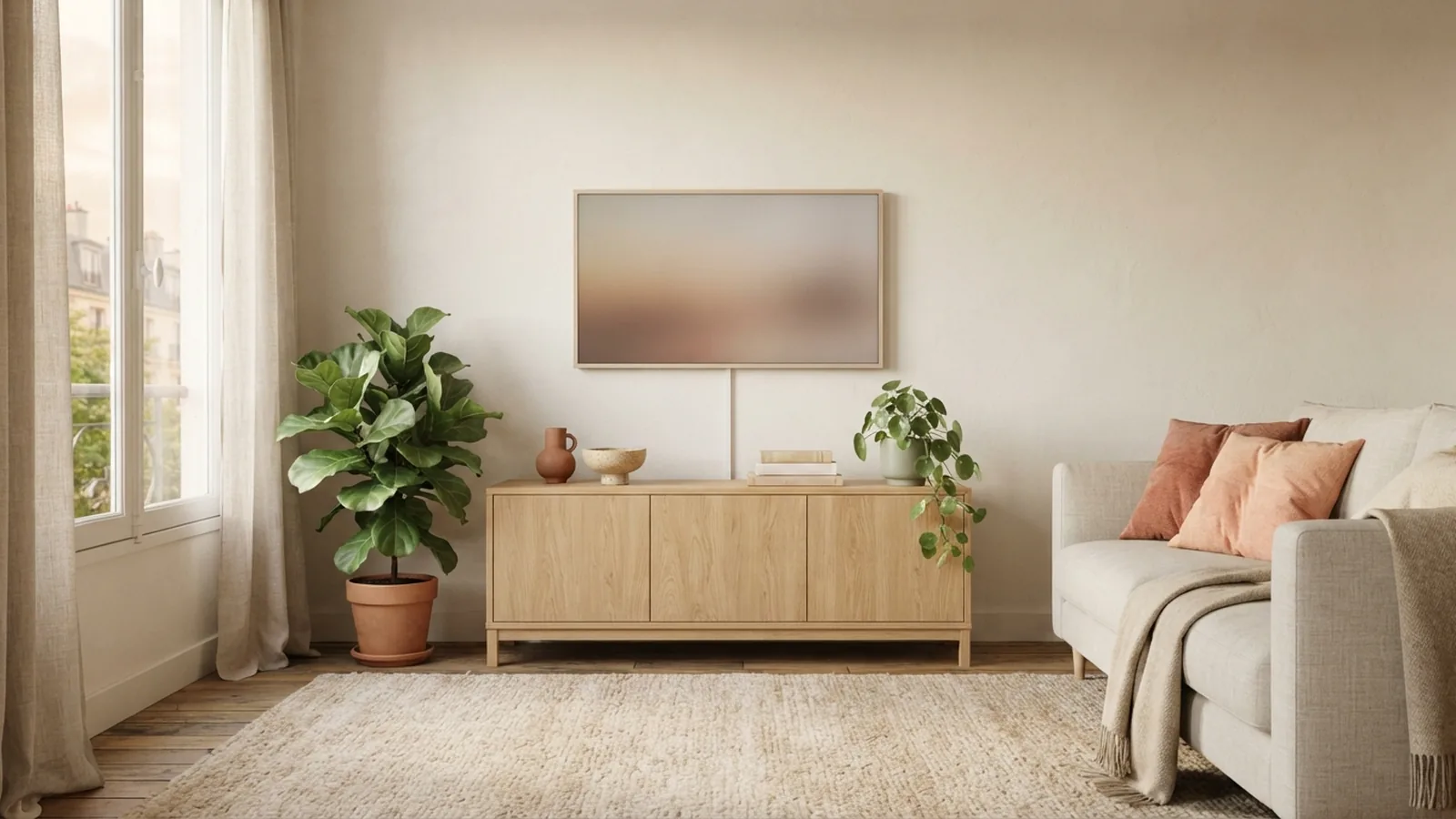
Understanding TV Size Measurements
If you ask, “what size tv for living room,” start with the screen measurement. TV sizes use a diagonal line from one corner to the other. The number appears in inches.
That number does not show the full set size. The frame, feet, and rear case add more space. Check the maker’s full width, height, and depth before you buy.
People also search for “what size tv for my living room” and “what is a good size tv for a living room.” For most homes, 55 or 65 inches works well. Smaller rooms may suit 43 or 50 inches. Larger rooms may handle 75 inches or more.
| Viewing distance | Useful TV size | Typical room fit |
|---|---|---|
| 1.8 to 2.2 metres | 43 to 55 inches | Small room or short sofa |
| 2.2 to 2.8 metres | 55 to 65 inches | Most living rooms |
| 2.8 to 3.5 metres | 65 to 75 inches | Large room or deep seating |
| Over 3.5 metres | 75 inches or more | Open-plan space |
This chart is a starting point, not a strict rule. A big screen feels more engaging from the same seat. A smaller screen can leave more room for artwork and storage.
There is no single “what size tv for living room calculator” that fits every home. Your seat position, eyesight, room light, and use all change the result.
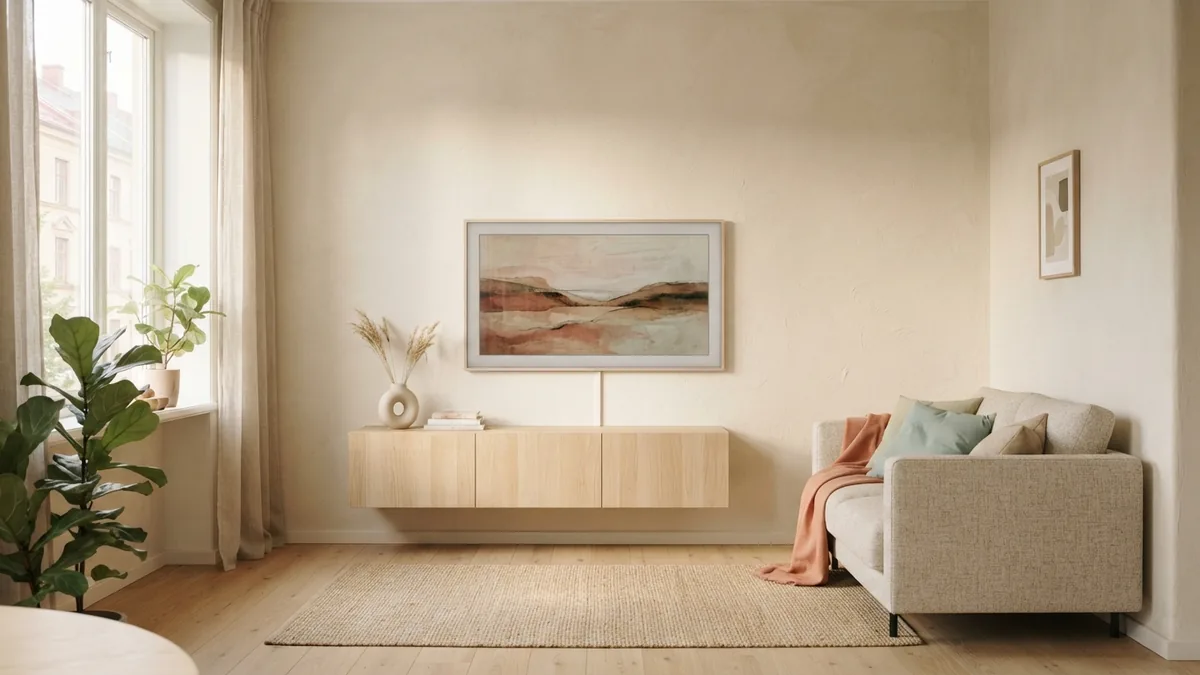
Determine the Ideal Viewing Distance
A common rule places your sofa 1.5 to 2.5 times the TV’s diagonal size away. Use the same unit for both numbers. A 65-inch TV suits a distance of about 8.1 to 13.5 feet.
Sit closer for films, games, and sports. Sit farther back for news or casual viewing. A sharp modern display can feel clear from a shorter distance.
To find what size tv should i get for my living room, measure from your eyes to the screen. Do not measure from the sofa back. Include a footstool if you often lean forward.
- A 50-inch TV suits about 6.25 to 10.4 feet.
- A 55-inch TV suits about 6.9 to 11.5 feet.
- A 65-inch TV suits about 8.1 to 13.5 feet.
- A 75-inch TV suits about 9.4 to 15.6 feet.
Use painter’s tape to mark the screen width on the wall. Place a chair at your usual viewing point. Turn your head across the marked area.
This quick test helps answer “what size tv is good for a living room” better than room length alone. It also shows if the screen feels too small from side seats.
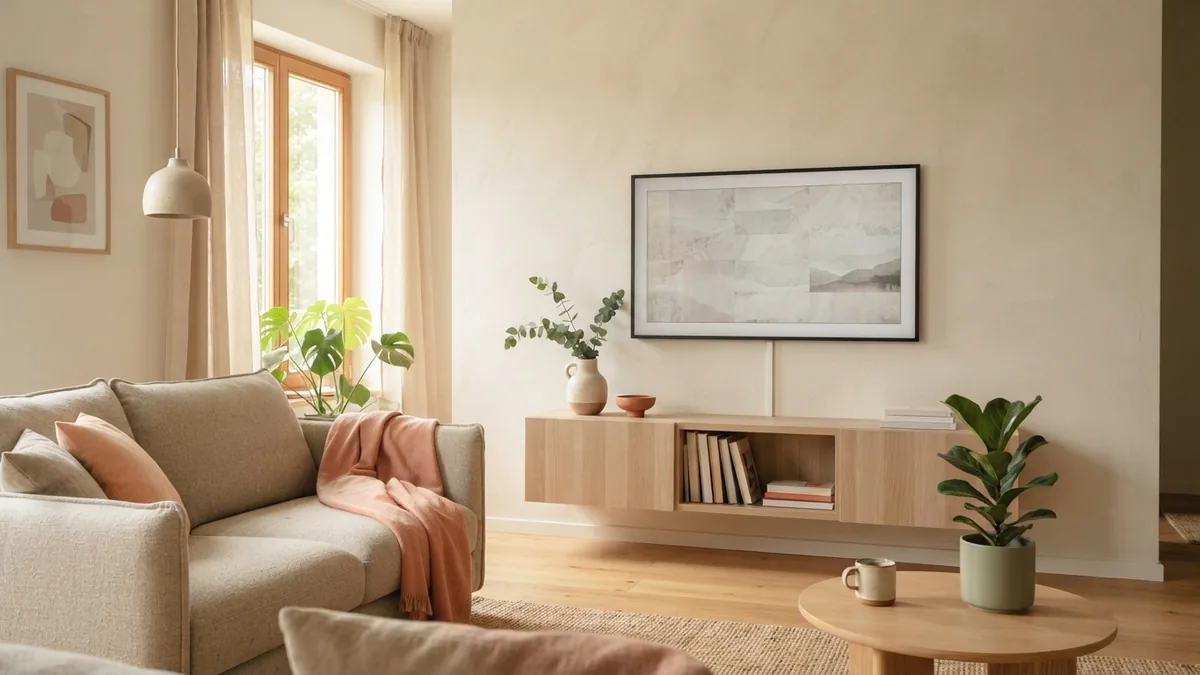
Choose a TV for Room Size, Use, and Furniture
Room size sets one limit, but the layout sets another. Check sofas, chairs, doors, walkways, and low tables. A large TV should not make people twist or block a clear path.
Sports often suit a larger picture. Films can support a cinema-like screen when seats sit close enough. Background viewing may work better with a smaller set.
For “what size tv should i get for living room” and “what size tv to get for living room,” compare the screen with your furniture. A narrow room may need a smaller set. A wide room may need a larger one to avoid a lost, tiny look.
- Mark the TV width with masking tape.
- Mark the screen height on the wall.
- Check the view from every regular seat.
- Measure doorways and stair turns.
- Leave space for air flow and cables.
Check the stand width if the TV will sit on a unit. Some feet sit near the outer edges. A central stand can suit a smaller cabinet.
These checks help with “what size flat screen tv for living room” searches. They also prevent a costly return after delivery.
If you want a simple “what size tv for living room chart,” use the table above. Then test the choice with tape before you order.
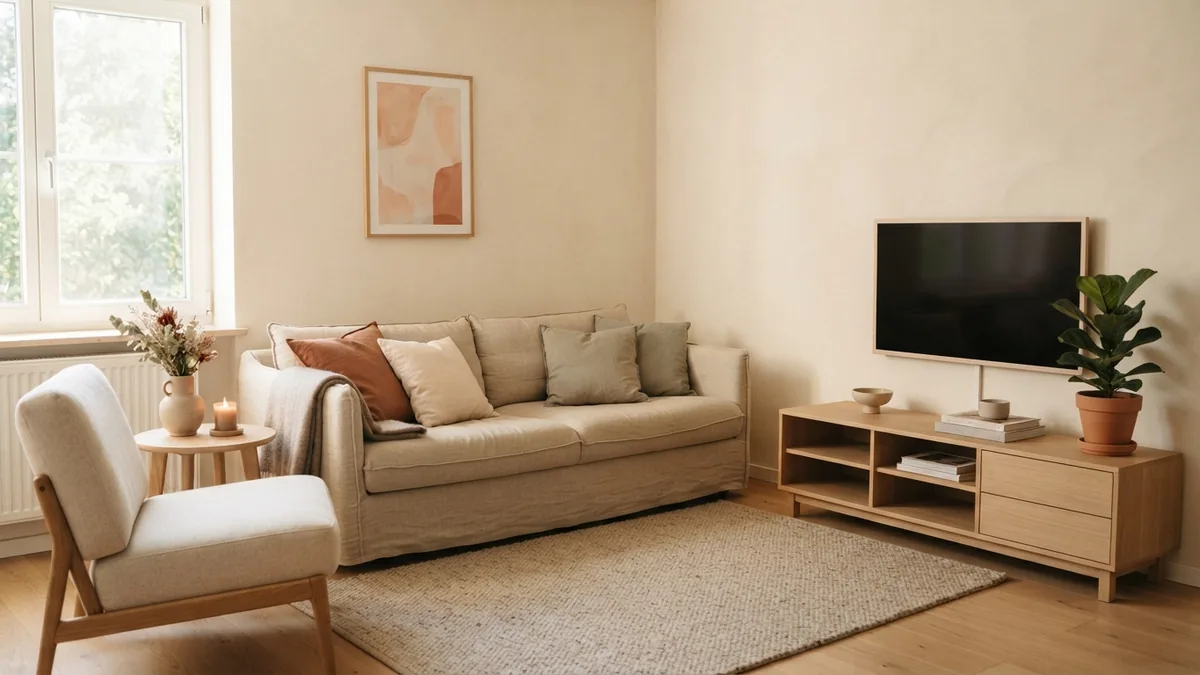
Fit the TV into Your Living Room Design
The TV should relate to the sofa, rug, wall, and storage. A small set can look lost above a wide unit. A huge set can overpower a narrow wall.
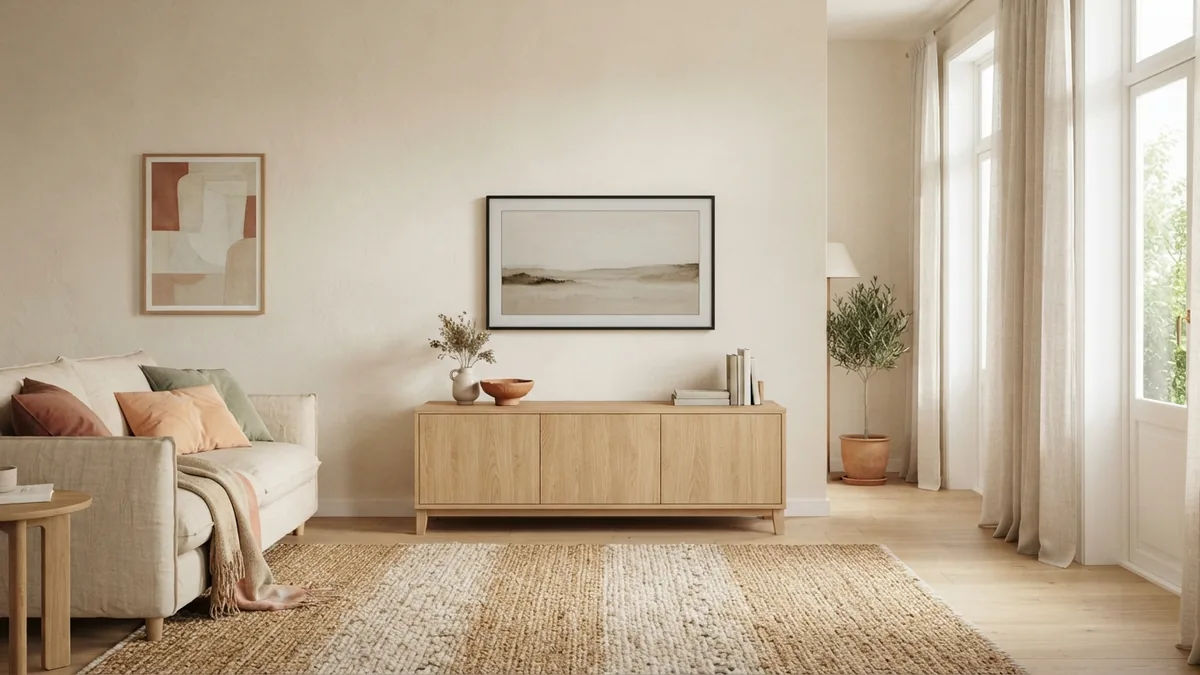
Keep the cabinet a little wider than the TV when possible. This gives the screen a steady base. It also creates space for small objects without crowding the display.
Many readers ask, “what is the best size tv for a living room?” The best size feels clear from the main seat and balanced on the wall. It should not force the rest of the room to shrink.
Wall mounting can free floor space and allow a larger screen. Check the wall type, mount rating, cable route, and viewing height first. Research the TV’s full dimensions before you drill.
- Place a low unit under a wall-mounted TV.
- Use drawers to store remotes and game gear.
- Add one large artwork piece beside the screen.
- Use pale wood to soften a dark display.
- Keep the area above the TV calm.
For “what to put under wall mounted tv in living room,” try a low cabinet, slim shelf, or closed storage. For “what to put above tv in living room,” use one large print or a narrow ledge. Keep enough empty wall space around the screen.
If you ask how to hide a tv in living room spaces, consider sliding panels or a cabinet. Framed artwork can cover the screen when it is off. Leave room for heat to escape.
Rugs also shape the layout. If you wonder how should rugs be placed in living room spaces, place at least the front sofa legs on the rug. A larger rug often joins the TV area more naturally.
Place the TV for Comfort and Low Glare
Where to put tv in living room layouts depends on the main sofa. Place the screen near the sofa’s centre line. Keep the viewing angle as straight as you can.
When deciding where to put my tv in my living room, check windows first. Where to put tv in living room with windows can be tricky. Avoid a wall that faces a bright window if glare reaches the screen.
For “where to put tv in living room with fireplace,” do not assume the chimney wall is best. Heat, high mounting, and awkward neck angles can make that spot poor. A side wall may offer a better view.
The same rule helps with “where to place tv in living room with fireplace.” Keep the screen at a comfortable eye level. Above a fireplace is often higher than the sofa view.
- Choose a wall with less direct daylight.
- Keep the screen close to the sofa centre.
- Check the view from side chairs.
- Avoid placing the TV beside a busy walkway.
- Hide cables inside safe channels or the wall.
To learn how to arrange tv in living room spaces, set the sofa first. Then place the rug, coffee table, and TV around that seat. Leave clear paths to doors and windows.
These steps answer “where do i put my tv in the living room” and “where should a tv be placed in a living room.” They also help with “how to place tv in living room” and “how to position tv in living room.”
Test the wall before mounting. Sit down at night and during daylight. Glare can change a good spot into a poor one.
Frequently asked questions
- What size TV should I get for my living room?
- A 55 or 65-inch TV suits many living rooms. Base the choice on sofa distance, room width, and your main viewing use.
- What is a good size TV for a living room?
- A good size gives a clear view without crowding the room. For many homes, 55 inches works at a medium distance and 65 inches suits a deeper room.
- Where should a TV be placed in a living room?
- Place it near the centre line of the main sofa. Avoid direct light from windows and check the view from side seats.
- Where should I put a TV in a living room with a fireplace?
- Do not place it above the fireplace by default. A side wall may offer a lower and more comfortable viewing height.
- How do I hide a TV in my living room?
- Use a cabinet with sliding panels, framed artwork, or a lift system. Keep vents open so heat can leave the unit.
- What is the right size rug for a living room TV area?
- Choose a rug that reaches at least the front legs of the main sofa. A larger rug can join the sofa, table, and TV area.
Related reading
Couch Placement — Comfort, Flow, and Style
Arrange couches for easy movement, good conversation, and a balanced room.
Small Kitchen Design — Light, Space and Smart Storage
Use light, smart storage, and slim furnishings to make a small kitchen feel more open.
Living Room Paint — Measurements and Buying Tips
Measure your walls, count coats, and buy the right amount of living room paint.