Where to Place a TV in a Small Living Room: Style-Smart Options
Get TV placement ideas that save space and keep your room looking sharp.
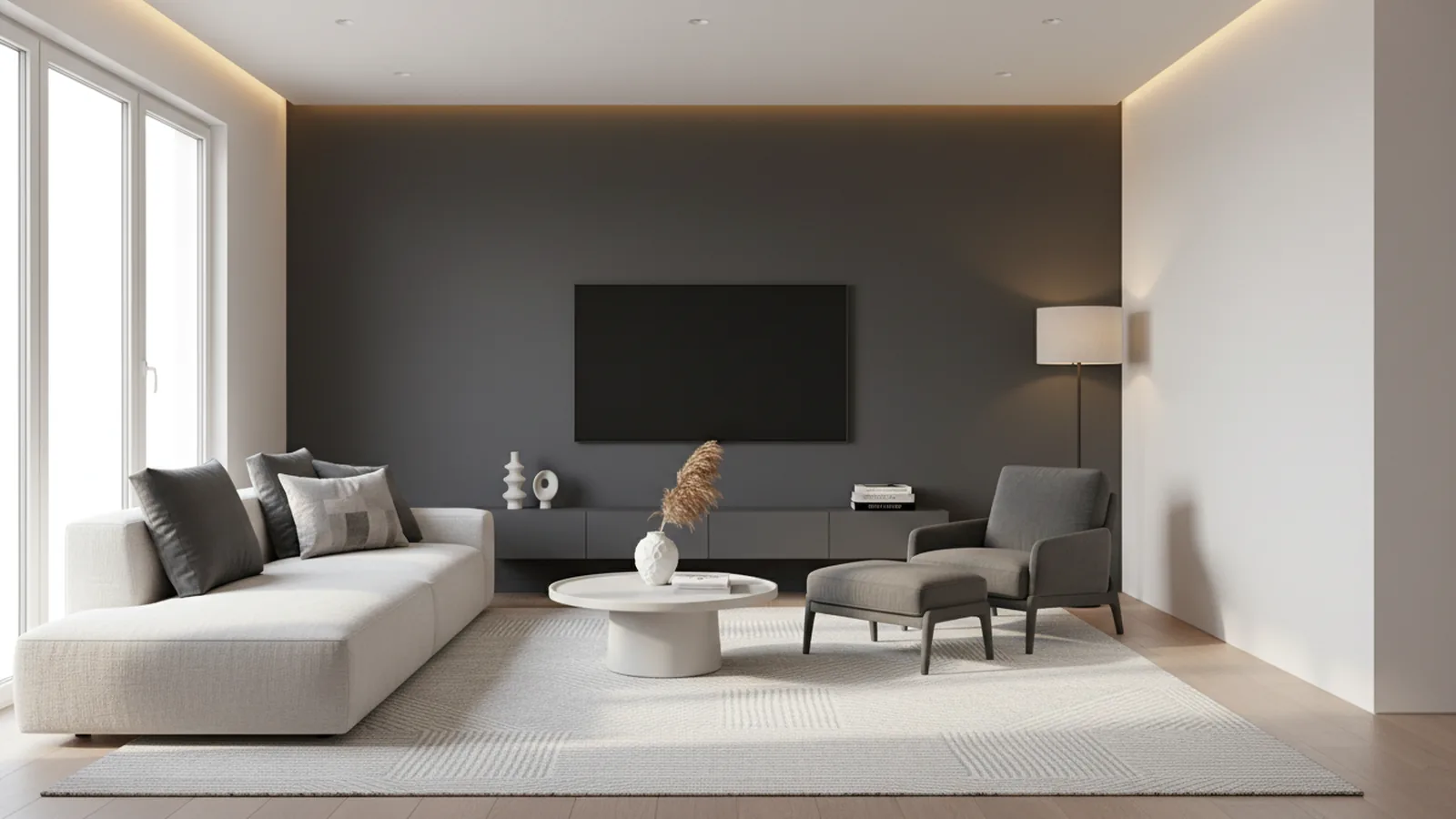
Start here: the best place to put a TV in a small living room
If you want the room to feel larger, start with this rule: place the TV on the wall that gives the clearest sightline from your main seating, then protect the walkway. In most small layouts, wall mounting is the fastest win because it frees floor space and keeps the room visually open. If you dislike the “floating rectangle” look, pair the mount with a low cabinet or sliding doors for a built-in feel. Either way, plan around how you actually watch, not just where the TV “fits.”
Before you buy hardware, measure the room like a designer. Then test viewing angle and distance from the couch, not from the door or a random corner. This helps with the practical question behind “where to place a tv in a small living room” and the style question behind “where to put tv in small living room.”
- Pick the main seating first, then measure from the couch to where the TV will land.
- Avoid blocking a doorway or narrowing a traffic path below about 30–36 inches.
- Choose wall placement that lets you keep other furniture tight and intentional.
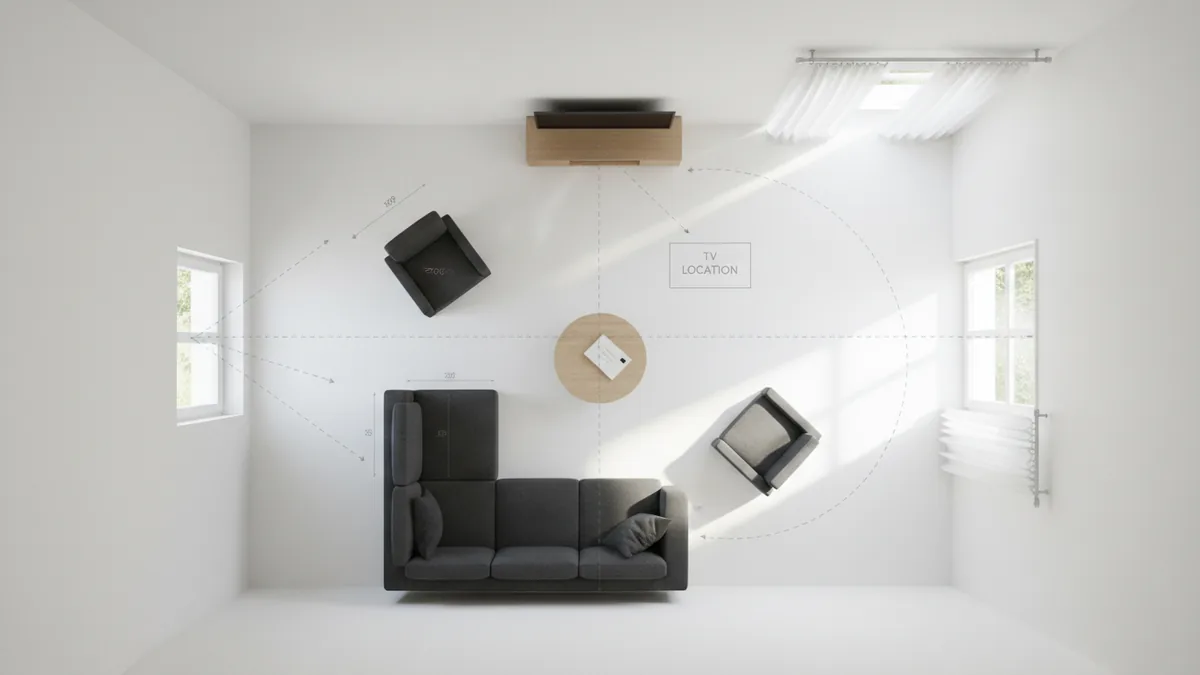
Understanding TV placement challenges in small rooms
Small living rooms have three common constraints: limited wall space, tight circulation, and competing focal points. A TV can easily become the biggest object in the room, which pulls attention away from everything else. If you place it too high, viewers strain their neck. If you place it too low, it looks awkward and feels cluttered.
Layout also matters more than people expect. For example, a narrow room with a sectional often forces the TV into a compromise corner, where one viewer watches from an angle. In that case, the “best” option might still be wall mounting, but with careful centering relative to the primary seat. This is the real answer to “where to put a tv in small room” when multiple people sit in different spots.
Light can be an extra headache. A TV on a sunny wall invites glare, and glare makes even the best placement feel wrong. If you can’t move the TV, plan for window shades, an anti-glare screen, or repositioning the seating to reduce reflections.
| Problem | What it causes | Typical fix |
|---|---|---|
| Too much floor clutter | Room feels smaller | Mount TV or use slim cabinetry |
| Bad viewing angle | Neck strain, off-axis viewing | Center TV to primary seat line of sight |
| Glare from windows | Low contrast, annoying reflections | Change wall, use shades, adjust seating |
| Blocked walkways | Awkward traffic flow | Keep a clear path near doors |
Creative solutions for small-space TV placement
Once you understand the constraints, you can choose a placement style that fits your room. For many homes, the most space-saving solution is wall mounting with a simple low media setup below. Another strong option is a TV set into a narrow credenza or console, especially when you want a “warm” living-room look rather than a tech wall.
If your room has an awkward alcove, don’t fight it. You can frame the TV opening with slim trim and install shelves on the sides for books and small decor. That approach keeps the TV aligned with the room’s architectural lines, which makes it feel intentional instead of pasted on.
For open-plan spaces, consider a placement that defines the living zone without shrinking it. Mounting the TV on a wall that faces the seating area can separate the living zone visually while keeping the floor usable. You can also use a media console with a floating look, like legs or a thin base panel, to reduce visual weight.
- Wall mount and keep the floor clear. Use a wall bracket that sits close to the wall for a clean profile.
- Use a narrow console under the TV. Aim for shallow depth so chairs can move comfortably.
- Build a framed niche. If you have an existing recess, treat it like built-in storage.
- Choose the right seating line. Decide where the main viewer sits, then center the TV for that person.
Integrating the TV with furniture you already own (or will buy)
Integration is how you make a TV feel like part of the room. Start by looking at your existing pieces: credenzas, shelves, bookcases, and media consoles. If you already have a low storage unit, placing the TV directly above it can create a balanced “center” point. This works especially well in small living room design layouts where you want storage without extra bulk.
If you are shopping, prioritize furniture with the right proportions. A standard deep media cabinet can swallow a small room. Instead, look for shallow consoles, open shelves with consistent spacing, or cabinets with a narrow footprint. The goal is to keep the TV and storage aligned so the eye sees one cohesive object, not separate pieces competing for attention.
Credenzas and bookshelves can also do double duty. Use the TV as the visual anchor, then keep shelves to the sides for books and decor. If you need outlets for devices, plan them inside the cabinet or behind a media panel. Cable management should be part of the integration, not an afterthought.
- Match TV width to furniture width so edges line up.
- Keep shelving height consistent to avoid a “stacked” look.
- Hide power strips and speaker wires inside the cabinet.
Camouflaging techniques for TVs that look good when off
Concealing a TV is not only about hiding it. It is also about making the wall look finished when the screen is dark. A strong baseline is to paint the wall behind the TV in a color close to the room’s palette. When the TV blends into the background, it stops competing with art, lighting, and textures.
Another approach is to use cabinetry or a media wall design that visually frames the TV. If you can swing the budget, custom millwork can create a seamless opening that makes the TV feel built in. You can even add doors that close when not in use, so the surface reads as cabinetry instead of electronics. This is one of the most effective ways to handle the question behind “where to put tv in small living room” when you want style first.
Sliding doors also work well for flexibility. They let you watch while keeping the look tidy at night. For small rooms, choose a system that slides smoothly without stealing space from doorways or hall paths.
| Camouflage method | Best for | What to plan |
|---|---|---|
| Paint-matched wall behind TV | Minimal, modern rooms | Get close color match and use matte paint |
| Custom millwork frame | Rooms that need a focal statement | Plan trim thickness and outlet access |
| Sliding doors | Families and multipurpose rooms | Confirm door travel path and clearances |
| Cabinet with doors | Budget-conscious concealment | Allow airflow and avoid heat buildup |
Design tips for balancing space, style, and comfort
Placement is not just about fitting the TV. It is about creating a comfortable viewing zone that does not crush the room. Start with height. A common approach is to position the center of the screen near eye level when seated. If your seating is lower or higher than average, adjust accordingly so viewers do not tilt their head.
Next, check distance. A good starting point is about 1.5 to 2.5 times the TV screen size for comfortable viewing. For smaller rooms, this often means you cannot chase the “biggest screen” fantasy. Choose a size that keeps you from sitting too close, or you will feel the image more than you enjoy it.
Viewing angle matters too. If your seating is offset, you may want a mount that allows slight swivel or repositioning chairs. It is easier to adjust furniture than to regret an awkward layout later.
- Measure couch-to-wall distance before you commit to any TV size.
- Set the TV height based on seated eye level, not standing eye level.
- Keep the path to the main door clear so the room feels calm.
- Use soft lighting so the TV wall does not become the only bright spot.
Additional considerations for TV placement in a small living room
Power and cables are a practical detail that affects the final look. Plan where your streaming box, game console, and soundbar will sit. If the TV is on the wall, consider running cables inside the wall or using a discreet raceway along the baseboard. The cleaner the wiring, the more your layout reads as intentional.
Sound also changes with placement. Mounting the TV can make dialogue sound flatter, so a small soundbar or wall-friendly speaker setup helps. If the TV is inside cabinetry, check that the doors do not block sound too much. Ventilation matters too, especially with enclosed cabinets.
Finally, think about how often you use the TV and what else the room does. If the living room doubles as a reading nook, a concealed TV keeps the space feeling quiet. If it is a social room, you may accept a more visible setup as long as you choose a viewing angle that works for most people.
When you are ready to decide, choose the option that matches your priorities. If you value openness, wall mounting plus a slim console is hard to beat. If you value calm, look at concealment with cabinetry or sliding doors. Either way, your best answer to “where to place a tv in a small living room” is the placement that protects flow, supports comfort, and looks like it belongs.
Frequently asked questions
- Where to place a TV in a small living room for the best viewing comfort?
- Center the TV to the main seated viewing position, then match the TV height to seated eye level. Check that the TV is not too high and not angled far off-axis from the couch.
- Where to put TV in small living room if my layout has tight walkways?
- Choose a wall that keeps a clear path to the door and allows chairs to pass. Wall mounting with a slim media console often keeps circulation smooth.
- Where to put a TV in a small room when I also need storage?
- Integrate the TV into a credenza or shelf unit so storage sits around it. Built-in or custom millwork can hide devices and reduce clutter.
- How can I conceal a TV in a small living room without making it feel busy?
- Paint the wall behind the TV a similar color to the room palette. Then frame it with cabinetry or use sliding doors so the wall looks finished when the TV is off.
- What viewing distance should I use for a small living room TV?
- Use a practical rule of thumb: sit about 1.5 to 2.5 times the screen size from the TV. If your room is shorter, consider a smaller screen for comfort.
- Do I need special mounting for small living room TV placement?
- You usually need a wall bracket that supports your TV weight and allows fine height adjustment. If your seating is off to the side, a mount with slight swivel can help.
Related reading
Room Painting Costs — What Shapes Your Quote
Room painting often costs $200–$1,000. See what drives the price and how to compare quotes.
Kitchen Cabinet Tops — Style, Texture and Seasonal Charm
Style cabinet tops with balanced layers, useful texture, and decor that suits your kitchen.
Couch Placement—Flow, Focus and Comfort
Place your couch to frame a focal point, keep paths clear, and make the room feel balanced.