Console Tables — Placement, Styling and Smart Storage
Choose the right spot, size, and styling for a console table that works.
Where a Console Table Works Best
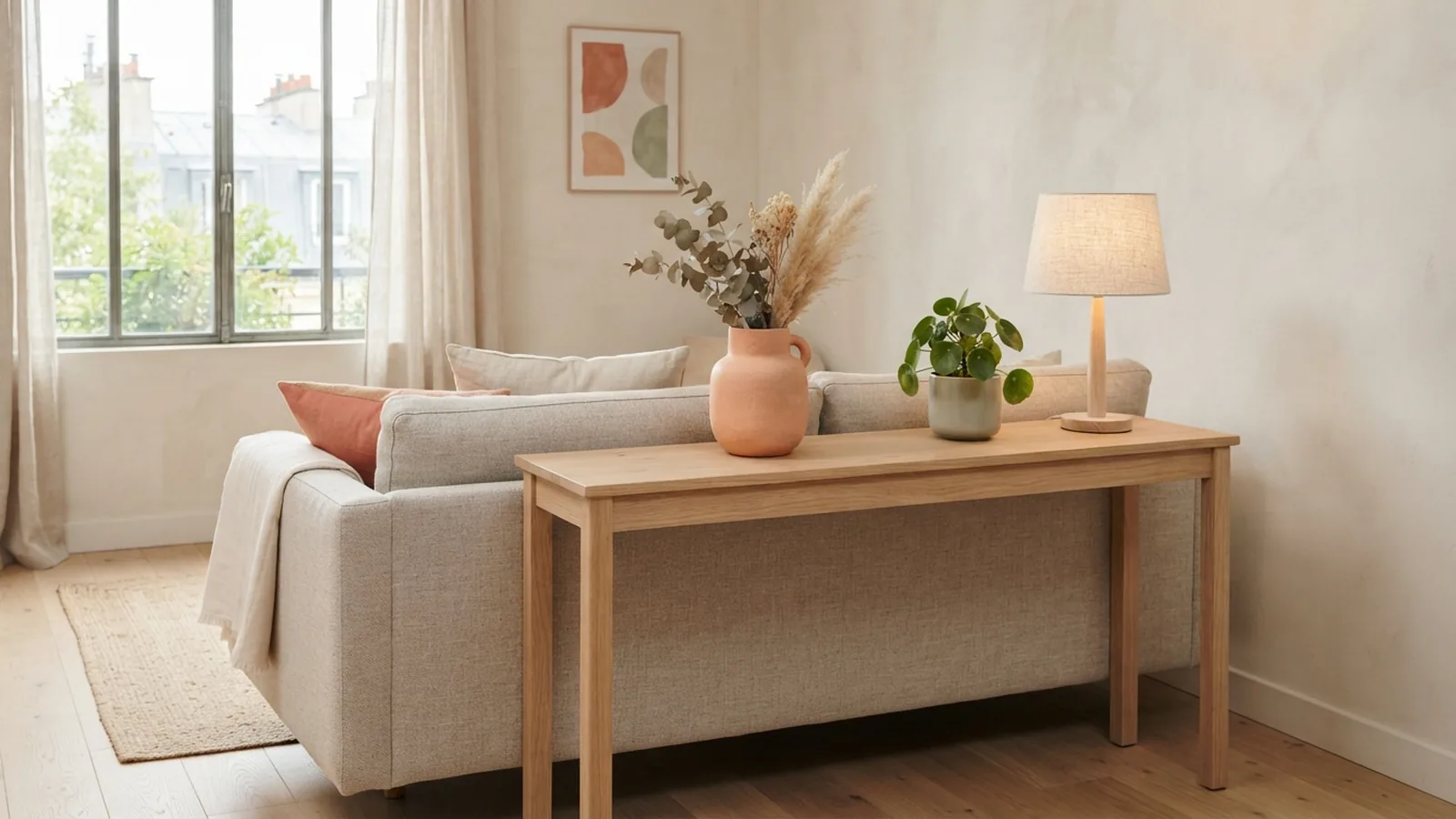
The best place for a console table is along a blank wall, beside an entry, or behind a floating sofa. Choose a spot where the table adds a useful surface without narrowing the path through the room. Think about what you need it to do before choosing its position. A good placement looks intentional and makes daily routines easier.
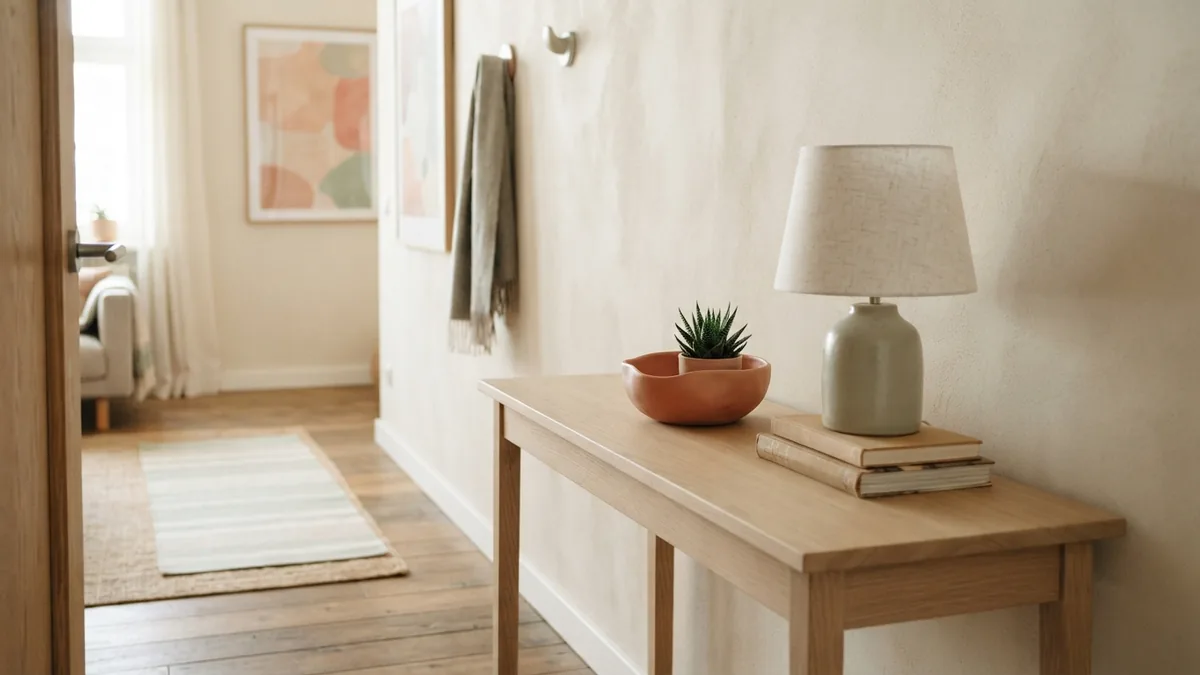
Near an entry, a console can hold keys, a small tray, and a lamp. Along a blank wall, it can add height and give art or a mirror a clear focal point. Behind a sofa that sits away from the wall, a narrow table can define the seating area and hold reading lights or drinks. Keep the table clear of doors, vents, and spots where people need to turn or pass.
In a compact living room, one well-chosen table often works better than several small pieces. If you are asking what the table in the living room is called, the name depends on its shape and use. A long, shallow table is usually called a console table. A low table in front of the sofa is more often called a coffee table.
- By the entry: Keep everyday items close to the door.
- Along a blank wall: Add a lamp, art, or a mirror.
- Behind a floating sofa: Create a useful edge for the seating area.
Measure First and Protect Room Flow
Measure the available wall or sofa before you shop. Note the full width, depth, and height, then mark the table’s outline with painter’s tape. Walk past the taped area from every direction. Open nearby doors and drawers to check for clashes.
Leave enough space for people to pass without turning sideways or bumping into furniture. In many living rooms, about 30 to 36 inches of clear walkway feels comfortable. Treat that as a starting point, not a strict rule. A narrow route may need more space if it serves an entry or a busy doorway.
Check the table height against nearby furniture. A table behind a sofa usually looks best when its top sits close to the sofa back, or slightly lower. For a wall table, choose a height that feels right beside the art, mirror, or lamp above it. These small checks help the piece feel balanced rather than squeezed in.
Decorate the Table with Balance
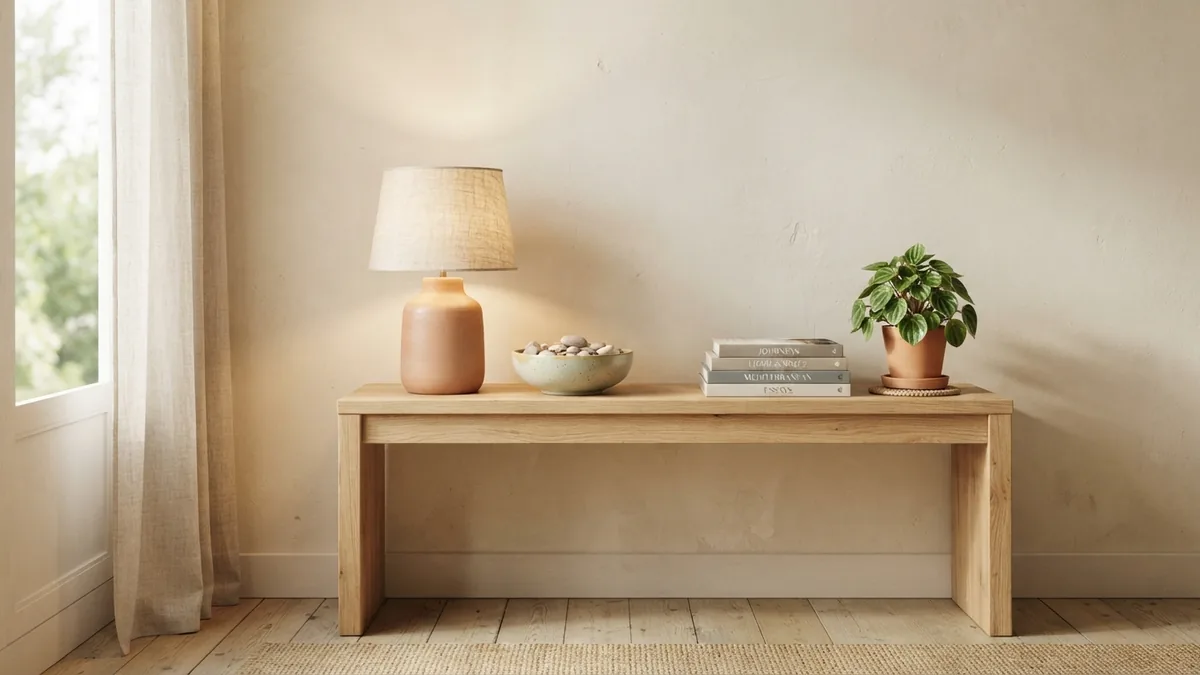
Start with one larger object, such as a lamp, vase, or framed mirror. Then add a few smaller pieces at different heights. A stack of books, a ceramic bowl, or a plant can add texture without making the surface feel crowded. Leave some open space for items you use each day.
For a simple way to decorate a console table in the living room, group objects in odd numbers and vary their height. A lamp beside a low bowl and a small plant gives the eye a clear path across the surface. Repeat one or two colors already found in the room. Natural materials, such as pale wood and matte ceramic, make the display feel calm.
Lighting can make a console useful after sunset, too. Pick a lamp with a stable base and a shade that suits the table’s width. Keep cords tucked behind furniture and away from walkways. If you add a mirror above the table, check what it reflects before fixing it in place.
People often use “side table” for a smaller table beside a chair or sofa. The same styling ideas apply, but scale matters. One lamp, a coaster, and a small plant may be enough. To decorate a side table in a living room, leave room for a drink or book instead of filling every inch.
- Choose one tall piece, one low piece, and one small accent.
- Keep useful items within easy reach.
- Leave clear surface space for everyday use.
Use Storage Without Adding Clutter
Decide what the table needs to store before picking a style. A drawer can hide keys, remotes, and chargers. An open shelf suits baskets, books, or folded throws. If you need to keep small items out of sight, choose a table with drawers or a basket that fits beneath it.
Be realistic about the storage you will use. Open shelves look tidy when items are grouped in a few baskets or stacks. They can feel messy when every object is on view. A slim table with one drawer may serve a small room better than a deep cabinet that blocks the walkway.
Keep the top surface for the things you reach for often. Put less-used items in drawers or baskets, and avoid turning the table into a drop zone for everything. A small tray can gather keys or remotes in one place. That makes the surface easier to clear and clean.
Balance an Off-Center Room
When a sofa, fireplace, or window sits off-center, do not force the table to create false symmetry. Instead, use its position to balance the room’s visual weight. A larger lamp or vase can add presence on the lighter side. On the other side, a plant or a tall floor lamp may provide enough counterweight.
To decorate an off-center room, first identify its strongest features. Look at the main seating, windows, and paths through the space. Then group furniture around a clear focal point, rather than lining every item up against the walls. A console table can help link a sofa to nearby art or a reading corner.
Keep the display simple if the room already has bold art, patterned fabrics, or a large fireplace. A small number of calm objects will help the table fit in. If the room feels crowded, reduce the display before buying more decor. Clear space can be part of the design.
Mistakes That Make a Console Feel Awkward
The most common mistake is placing a table where people need to walk. Avoid busy doorways, tight turns, and narrow paths between the sofa and other furniture. A beautiful piece is not useful if people have to move around it. Test the route before setting the table in place.
Another mistake is choosing a table that feels too large for the room. A deep or wide piece can overpower a small wall and make the whole area seem cluttered. On a broad wall, a tiny table may look lost. Match the table’s size to the wall, nearby furniture, and the amount of open floor.
Too many small objects can also make a display feel untidy. Edit the surface until each item has space around it. Avoid placing fragile decor where bags, pets, or passing sleeves might knock it over. Check that lamps and plants do not block drawers or hide useful controls.
Alternatives for Rooms That Need Another Fit
If a console table does not suit the room, try a narrow bench, wall shelf, or small cabinet. A wall shelf keeps the floor clear and works well in a tight entry. A bench adds a seat as well as a place to set a bag. A cabinet provides more hidden storage but needs extra depth.
In a dining room, a console can hold serving dishes, candles, or a lamp when it sits clear of chairs and doorways. To decorate a console table in a dining room, keep the display low enough to avoid blocking views across the table. A bowl, a pair of candlesticks, and one vase can make a simple arrangement. Leave room for serving pieces when you host.
For the living room, a coffee table may work better if you need a surface close to the sofa. A side table suits a chair or sofa arm, while a console serves a wall or sofa back. Choose the piece that fits your daily habits and the room’s paths. The right furniture makes the space easier to use, not just fuller.
Frequently asked questions
- Where should I put a console table in my living room?
- Try it beside an entry, along a blank wall, or behind a floating sofa. Keep it out of busy paths and clear of doorways.
- How much space should I leave around a console table?
- Aim for about 30 to 36 inches of clear walking space where possible. Measure the route and test it before placing the table.
- How do I decorate a console table in a living room?
- Combine one taller item, such as a lamp or vase, with a few lower accents. Leave open space for keys, books, or other items you use.
- Can I put a console table behind a sofa?
- Yes, if the sofa floats away from the wall and the table does not narrow a walkway. Choose a table close to the sofa’s height or slightly lower.
- What can I use instead of a console table?
- A wall shelf, narrow bench, small cabinet, or side table may fit better. Pick one based on the room’s floor space and your storage needs.
Related reading
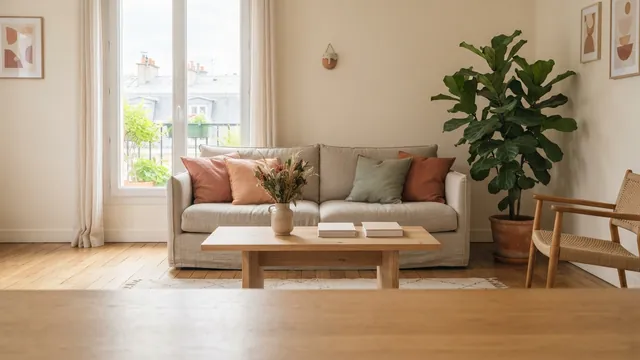
Modern Living Room: Balance and Warmth
Create a modern living room with calm color, useful furniture, and warm texture.
Bathroom Paint — When It’s Safe to Shower
Wait 24 to 36 hours before showering, then keep bathroom air moving.
Small Kitchen Costs — Prices, Choices and Budget Tips
Compare small kitchen prices, key cost drivers, and ways to keep a remodel on budget.