How to Decorate a TV Wall in Your Living Room
Color, shelves, art, and lighting tips to style your TV wall.
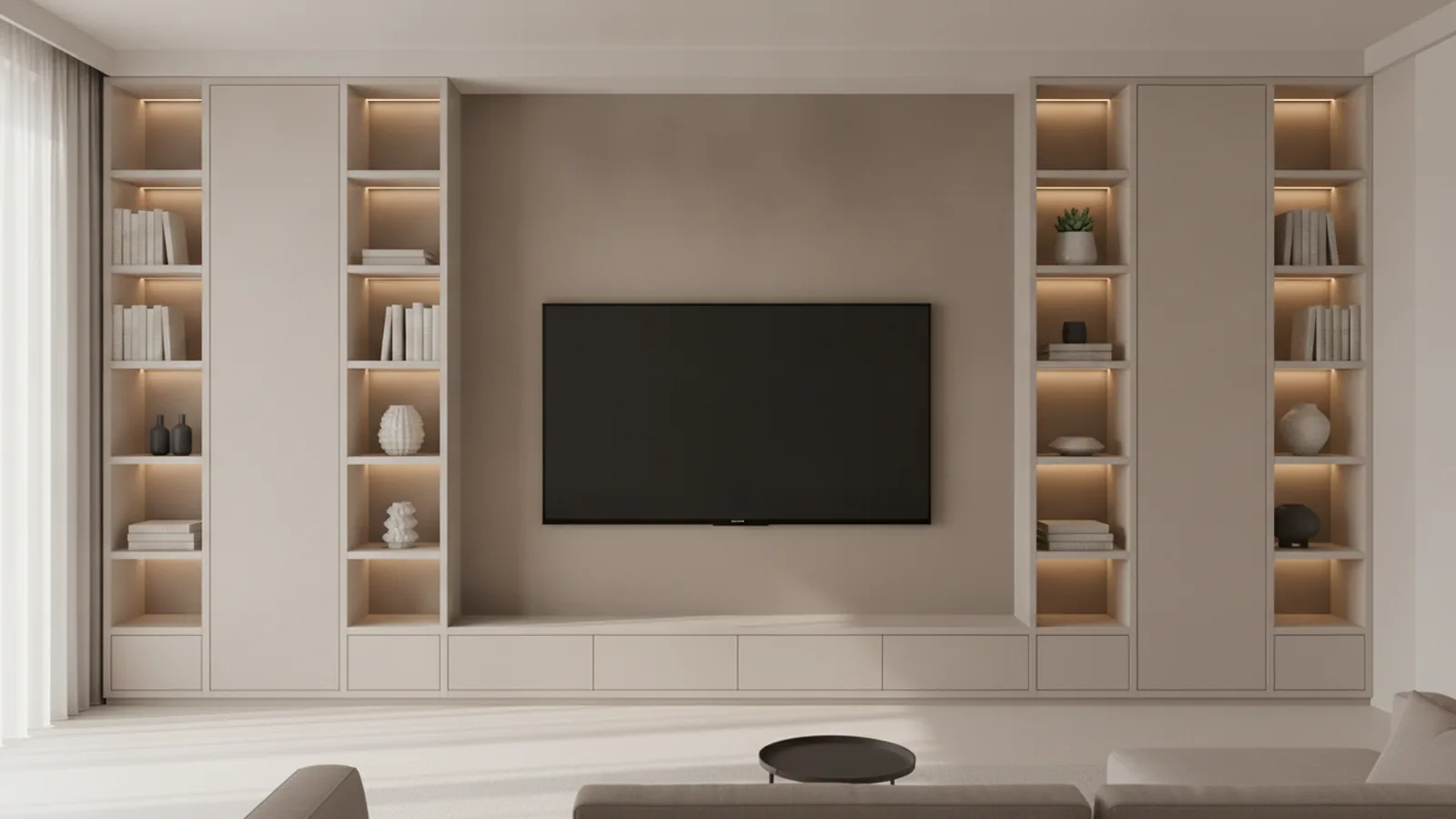
Start with a color plan that matches the whole living room
If you want your TV wall to look intentional, start with wall color ideas. Your TV is a dark rectangle, so the wall should either soften it or frame it. In most living rooms, warm off-whites and greiges make the TV feel less harsh. Cooler whites and slate tones can look sleek, but they may make the screen feel brighter at night.
Match the wall tone to your biggest surfaces first. Think sofa fabric, curtains, and the wood in the room. If you have oak or walnut, look for warm beige, taupe, or creamy white. For black accents or cool metals, try light gray or a soft blue-gray, then repeat the same undertone on shelves and decor.
Use a simple rule for shade contrast. Keep the wall within 2 to 3 shades of your dominant furniture color. Then add contrast with one element, like an accent wall panel, darker media cabinet, or a thin trim line. This approach prevents the TV wall from feeling like a separate “zone” inside the room.
For quick testing, tape a few paint swatches on the wall near the TV. Observe them at morning light and evening lamp light. If the wall turns too yellow or too gray after dark, adjust before you commit. This is one of the fastest ways to learn how to decorate a tv room without redoing it later.
- Warm rooms: creamy whites, beige, soft taupe, mushroom gray
- Cool rooms: clean white, light gray, blue-gray, charcoal accents
- Bold look: one accent wall in a deeper tone behind the TV

Use functional fixtures and shelving that fit the TV and the layout
Decor should support the TV, not fight it. That means choosing functional decor that matches both TV size and living room layout. Before you shop, measure the TV width and add margin for placement. Many people aim for the center of the screen at about eye level when seated. Then plan storage around that height.
Pick TV stand styles that match how you want to live. Closed cabinets hide remotes, consoles, and cables. Open shelves show decor, but they also show clutter fast. If you store games or streaming boxes, a media cabinet with a cable-ready back panel is usually the cleanest option.
When you design shelf design around the TV, keep the shelf depth practical. For small decor like books and vases, 8 to 10 inches usually works well. For media devices and thicker items, consider deeper shelving or one larger cabinet section. Also plan clearances so doors open and shelves don’t block airflow.
If you are using a wall unit, use spacing rules to keep it tidy. Aim for equal vertical gaps between shelves, and avoid mixing tiny objects on huge surfaces. A balanced approach is three “bands” across the wall: a main media zone for the TV, a middle band for decor, and a lower storage zone. This structure is a big part of how to design a tv room that feels calm.
- Match shelf depth to what you place: 8–10 in for decor, deeper for gear
- Choose closed storage if you hate visible cables
- Keep shelf gaps consistent for a neat grid look
- Plan for airflow behind the TV when using cabinets

Add decorative elements that soften the TV wall
Once the base is set, decorative accessories help the wall feel like part of the room, not just a mount point. Start with plants, vases, and books because they add shape and texture without looking themed. A single tall plant near one side of the TV can visually “balance” the screen. Smaller pots placed on shelves work better in groups of odd numbers, like 3.
Use height variety to create depth. Try one tall item, one medium piece, and one low accent on each side or shelf zone. Ceramic vases and woven baskets are especially good because they soften the TV’s straight edges. Books also do double duty as decor and functional storage, if you can keep their spines coordinated.
Try a controlled color mix for decorative elements. If your wall is neutral, bring in 2 to 3 accent colors from the room. For example, repeat curtain colors through framed art and book covers. If you already have patterned cushions, keep shelf decor mostly solid. This prevents visual overload and helps you avoid the “decor meets electronics” clash.
Lighting design is the hidden tool here. A small picture light on art, or a warm lamp near the console, reduces glare and makes decor look richer. Consider LED strips inside a cabinet or under a shelf for subtle glow. Keep the color temperature around warm white, so the wall looks cozy instead of clinical.
- Use plants to balance the TV’s rectangle
- Cluster decor in odd numbers for a natural look
- Repeat room accent colors in vases, art, and books
- Choose warm lighting to reduce glare

Incorporate art and photos for a personal, polished touch
Artwork can make a TV wall feel like a designed feature. It also helps the room avoid the “just mounted” look. Plan art placement around the TV by keeping frames consistent in style, even if the subjects differ. A matching frame finish, like black metal or light wood, ties everything together.
If you want family photos, use a method that looks intentional from across the room. A gallery layout works best when the TV sits in the center of the wall and the art forms a balanced arc on one or both sides. Keep photo mat colors similar, like warm white mats, and stick to one frame thickness. This makes living room how to decorate around a tv stand feel more like a curated display.
For a cleaner look, try one large piece rather than many small ones. One oversized artwork above or near the TV can anchor the wall quickly. If you prefer a set, use 3 to 5 frames with equal spacing and align their centers on a single height line. In most rooms, that line sits near eye level or slightly above when seated.
Also think about art “pairing” with the TV. If the TV is dark, choose art with light tones to lift the wall. If the wall is light, darker art can add contrast and drama. Either way, avoid placing very busy patterns right next to the screen if your living room already has heavy textiles.
| Art style | Best placement approach |
|---|---|
| Single large piece | Anchor above or to one side |
| Small gallery of photos | Use even frames and odd counts |
| Mix of art and shelves | Keep frame and shelf finishes aligned |

Balance technology and decor so the wall stays visually light
Clutter usually comes from visible boxes, scattered remotes, and too many competing objects. Start by hiding what you can. Use a cabinet with doors, a media console with drawers, or a wall shelf unit with a closed center. Cable management matters too. Route cables behind the wall unit or through a clean cable channel so no cords hang in front of decor.
Then apply a “less, but intentional” rule to the open areas. If a shelf has 12 items, it will look busy beside a TV. Instead, limit each shelf zone to 3 to 6 items. Leave some negative space so the wall can breathe. This is a practical way to decorate a tv room without sacrificing storage.
Keep consoles and TV stand styles aligned with the decor style. If your shelves are modern, avoid heavy ornate decor that looks out of place. If you use natural wood cabinets, choose ceramic and plant textures that match the warmth. The goal is consistency across materials, not matching every object.
Lighting can also make the wall feel lighter. Use warm ambient light rather than harsh overhead glare. Spotlights should aim at decor and art, not at the TV screen. If you mount wall lights, place them slightly to the side. This helps reduce reflections and keeps your living room how to decorate around a tv stand advice actually usable in real evenings.
- Hide gear with cabinets or drawers when possible
- Limit open shelf items per zone
- Manage cables behind the unit
- Use warm side lighting to reduce glare
Create a TV wall focal point with wallpaper or an accent wall
A strong focal point turns the TV wall into the room’s design feature. Wallpaper or an accent wall works especially well because it frames the screen with color and texture. Choose a pattern that complements the living room layout. If the room has lots of patterns, pick a subtle texture or large-scale pattern with low contrast. If the room is mostly solid colors, a more graphic wallpaper can work.
Consider the “frame” effect. You can use built-ins, floating shelves, or a simple picture-frame trim around the TV area. Then layer wallpaper behind it, so the TV looks like it belongs in a designed niche. This approach is also helpful for space planning. It can make a narrower room feel more intentional and wider visually.
Accent walls are not only for living rooms. For those searching decorate around a tv in bedroom, the same idea helps create calm focus. Bedrooms often benefit from softer colors, like dusty blue, warm taupe, or muted green. Choose a pattern that relaxes, not one that feels loud. Then keep shelf decor minimal so the room stays restful.
Finally, tie the accent wall to nearby decor. Repeat one color from the wallpaper in pillows, a rug, or a small vase. If the accent wall is cool, add warm wood or lamps to balance. When the colors connect, the wall looks designed rather than accidental.
- Pick an accent shade that matches the room’s undertone
- Choose a pattern scale that fits the wall size
- Frame the TV area with trim, shelves, or built-ins
- Repeat one wallpaper color in nearby decor
Frequently asked questions
- How do I decorate a TV wall in a living room without it looking cluttered?
- Use closed cabinets for gear, limit shelf decor per zone, and keep cable runs hidden. Add warm side lighting to soften the screen and make decor look intentional.
- What wall color ideas work best behind a TV?
- Most rooms look good with warm off-whites, greiges, and soft taupes. For drama, choose one accent wall tone that matches the room’s undertone.
- How should I decorate a TV room layout with shelves?
- Center the TV, then build shelf design in zones: media storage, decor band, and lower storage. Keep shelf gaps consistent and choose depths that fit your items.
- What is the easiest way to create a focal point around the TV?
- Use an accent wall or wallpaper behind the TV area, then frame it with trim or built-ins. Repeat a color from the accent in nearby decor for cohesion.
- Can I decorate around a TV in a bedroom the same way?
- Yes, but keep the vibe calmer. Choose softer wallpaper tones and use minimal decor so the wall feels restful at night.
- How do I decorate a living room TV stand area with art placement?
- Match frame finishes and mat colors, then balance art on one side or in a simple gallery. Keep spacing even and avoid placing very busy patterns right beside the screen.
Related reading
How to Choose Colors for Gray Kitchen Cabinets and Other Rooms
Find calm, warm color pairings for gray cabinets and every room nearby.
Room Painting Costs — What Shapes Your Quote
Room painting often costs $200–$1,000. See what drives the price and how to compare quotes.
Kitchen Cabinet Tops — Style, Texture and Seasonal Charm
Style cabinet tops with balanced layers, useful texture, and decor that suits your kitchen.