How to Organize a Small Kitchen Without Losing Counter Space
Make every shelf, drawer, and counter work harder in a small kitchen.
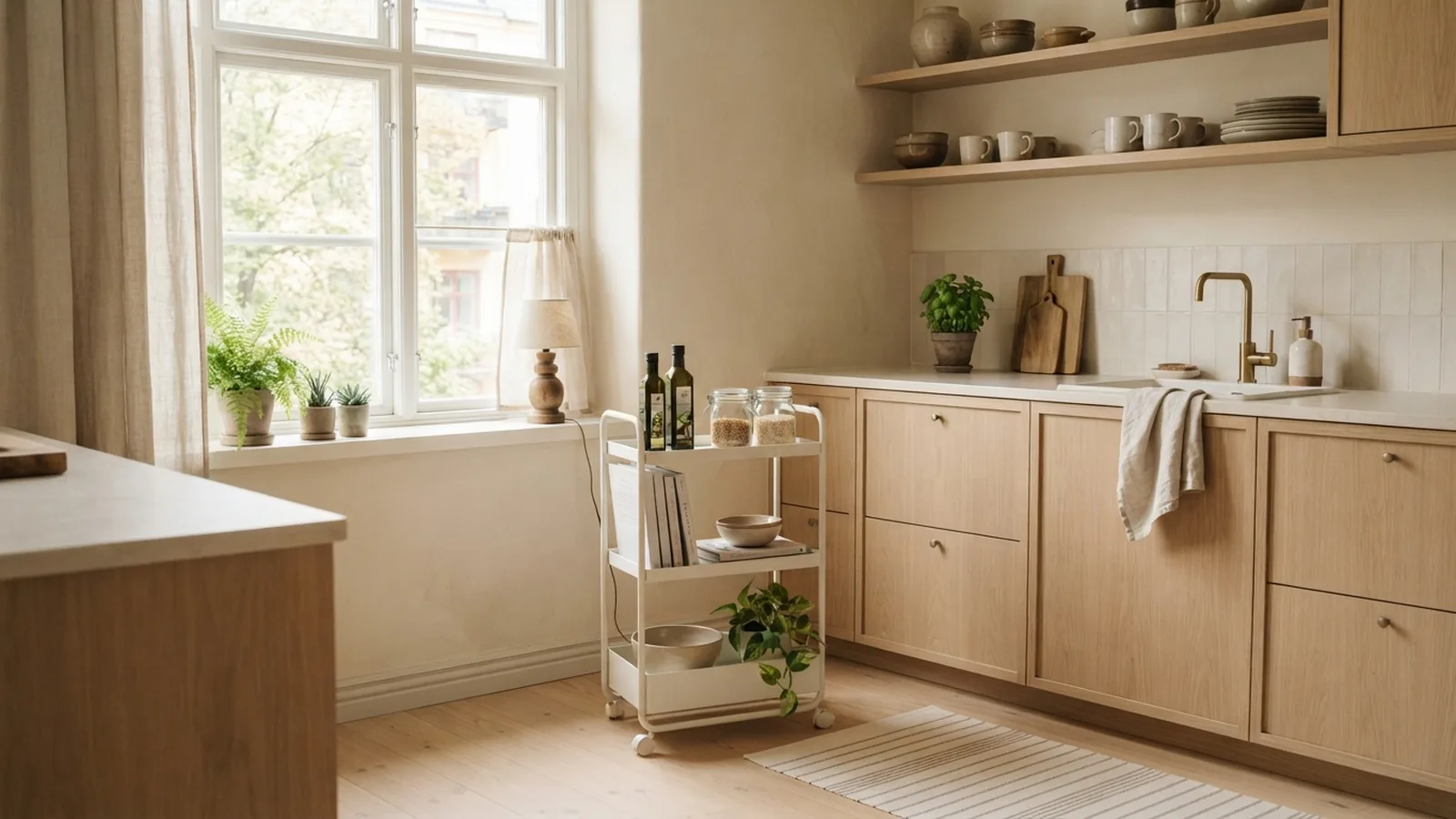
Understand the Real Challenges of a Small Kitchen
Learning how to organize a small kitchen starts with its limits. Most small kitchens lack storage, counter space, or both. Narrow paths can also make cooking feel cramped. A clear plan adds space without a full remodel.
Start with a quick sort before buying storage tools. Empty one drawer or cupboard at a time. Group items by task, then remove broken tools and duplicates. Keep items that suit your daily cooking habits.
Store daily items near the place where you use them. Put pans near the cooker. Keep plates near the sink or dishwasher. Store rare items on high shelves or outside the kitchen.
- Keep prep tools near the main work area.
- Store heavy pans on low shelves.
- Keep cleaning items away from food.
- Leave safe space around hot cooking areas.
This plan works well when you organize a small apartment kitchen. It also helps when you organize a very small kitchen. Start with what you own.
Use Vertical Space Without Blocking the Room
Maximizing vertical space in kitchen storage adds room without taking floor space. Look above counters, inside doors, and below shelves. These spots often hold useful items.
Fit a slim wall rack for utensils, cloths, or small pans. A rail with hooks can hold measuring cups and oven gloves. Keep the rack shallow, so it does not block movement.
A magnetic knife holder can free a drawer and clear the counter. Place it away from children and busy prep zones. Check that each knife sits firmly before use.
- Add a shelf riser inside a tall cupboard.
- Use strong hooks on a cabinet side.
- Hang light cups beneath a shelf.
- Place light baskets above wall cabinets.
Keep heavy objects low. Secure every wall fitting well. Leave safe space around the cooker and sink.
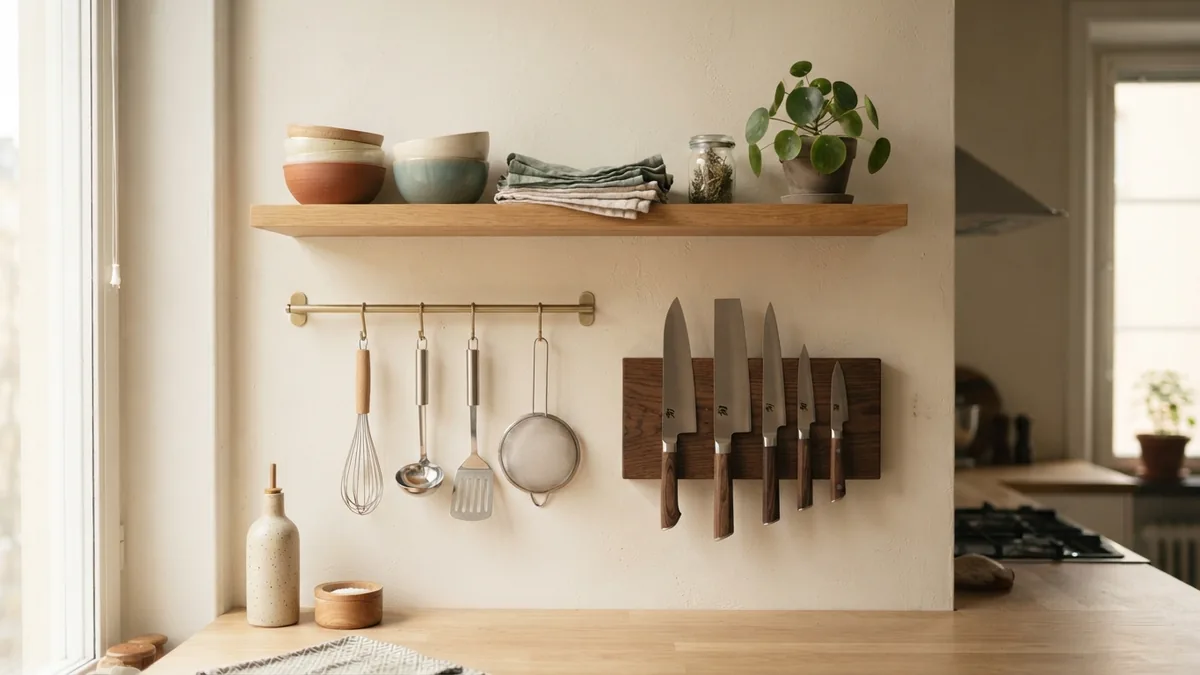
Choose Creative Storage Solutions That Fit
Creative storage solutions for kitchen spaces should solve one clear problem. First, spot the items that crowd your worktop or spill from drawers. Then measure the space they need.
A rolling cart can hold fruit, baking gear, or coffee supplies. Choose a narrow cart for a tight walkway. Roll it beside the counter during prep, then park it elsewhere.
Multifunctional furniture can add storage and work space. A small island with shelves gives you a prep area. A drop-leaf table works only when you need it. This approach can make a small apartment kitchen look bigger.
When you organize small kitchen appliances, group them by use. Keep the toaster and kettle near the power point. Store rare machines in a cart, high shelf, or deep drawer.
- Use a pegboard for boards and cooking tools.
- Fit a slim pull-out unit beside the fridge.
- Store baking trays upright with dividers.
- Use nesting bowls to reduce wasted space.
Measure width, depth, and door clearance before buying anything. A good fit matters more than a stylish tool.
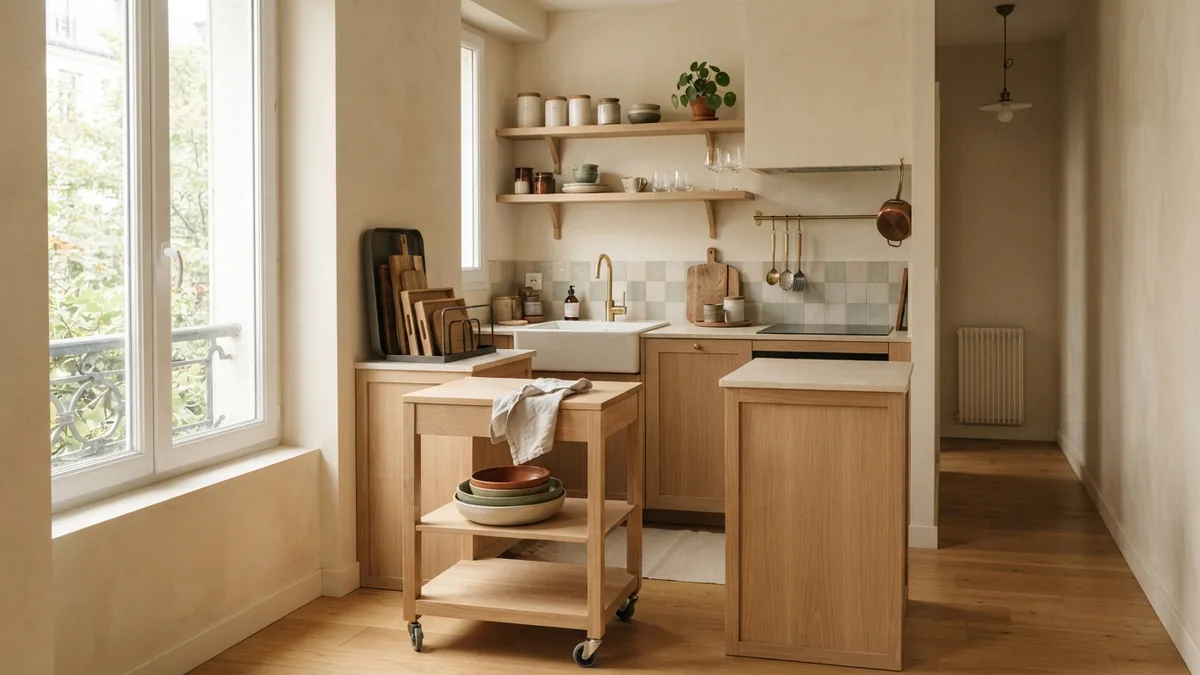
Organize Cabinets, Cupboards, and Pantry Items
Organizing small kitchen cabinets works best when each zone has one job. Keep plates, food, and cleaning items apart. Clear groups make each item easier to find.
Place often-used items between waist and eye level. Keep heavy pans on a low shelf. Put light serving pieces on higher shelves. Shelf risers can add a second level inside tall units.
When you organize small kitchen cabinets, use bins for loose packets. Add a turntable to a deep corner for oils and sauces. Fit a slim door rack for wraps and small jars.
When you organize small kitchen cupboards, avoid filling every gap. Leave room to pull items out with ease. This makes the daily reset much faster.
| Storage area | Best use | Helpful tool |
|---|---|---|
| Low shelf | Pans and heavy bowls | Vertical divider |
| Eye-level shelf | Daily plates and cups | Stacking shelf |
| Deep corner | Oils and sauces | Small turntable |
| Door space | Wraps and small tools | Slim rack |
These zones also help when you organize a small kitchen without cabinets. Use wall rails, carts, and open shelves instead. Keep food in sealed containers. Store breakable items on low, stable shelves.
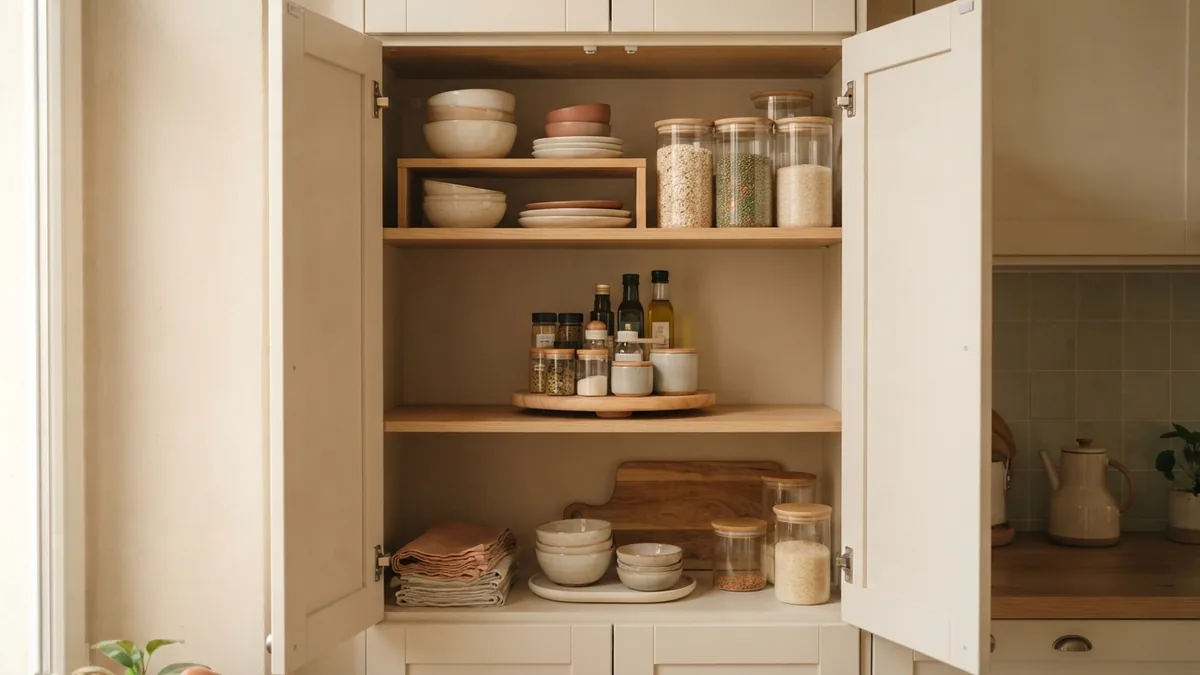
Organize a Small Kitchen Without a Pantry
Learning how to organize a small kitchen without a pantry starts with food zones. Reserve one shelf for breakfast foods. Use another shelf for baking goods. Keep daily snacks in one easy-to-reach bin.
If you need how to organize a small kitchen without pantry ideas, add a slim rolling cart. A cart can hold dry food, tins, and spare drinks. Choose clear bins only when their contents stay neat.
When you organize a small kitchen pantry, group food by type. Keep open packets in sealed tubs. Write the opening date on each tub with a simple marker.
- Use a narrow bookcase for dry goods.
- Store tins on stepped shelf risers.
- Place backup food in a lidded bench.
- Keep daily snacks in one front bin.
Do not hide food in many places. One clear food zone cuts waste and saves time.
Make the Counter Work Harder
Clear counters make a small kitchen look bigger. They also give you room to chop and serve food. Keep only daily tools on the worktop. One clear prep zone is enough for most meals.
To organize a small kitchen counter, group items by use. Keep the kettle and coffee items together. Move rarely used machines into a cabinet or cart. Use one tray for items that must stay out.
To organize small kitchen counter space, use the wall above it. Hang utensils on a rail. Store boards upright in a slim holder. Keep the area beside the sink clear.
Small appliances need a set home. Store the blender with other drink tools. Keep the mixer near baking supplies. Unplug and move items after use.
- Use a folding board over the sink.
- Choose a two-level stand for daily tools.
- Store oil bottles on one small tray.
- Keep at least one work area clear.
These steps show how to organize small kitchen appliances without losing prep space. They also make cleaning much faster.
Store Spices in a Small Kitchen
Good spice storage in a small kitchen keeps every jar visible. Start by removing old or empty jars. Then group spices by how you cook.
A tiered organizer works well inside a cupboard. It lets short jars sit above taller ones. A drawer divider can hold jars flat in neat rows.
Keep often-used spices near the cooker, but not above heat. Steam and heat can harm their flavor. Use one small box for baking spices and blends.
- Group herbs, heat, baking, and blends.
- Use a narrow rack inside a door.
- Keep jars away from direct heat.
- Return each jar to the same spot.
Clear order matters more than matching containers. Choose a system you can reset in seconds.
Maintain Order After the First Sort
Decluttering is not a single task. Kitchen items enter your home over time. Review drawers and shelves every few months.
Use a short reset after cooking. Return each tool to its zone. Wipe the clear counter. Remove food that no longer looks fresh.
When a new item enters, ask what it replaces. If nothing leaves, storage pressure will grow. This rule keeps your small kitchen usable.
- Do a five-minute reset each evening.
- Review one storage zone each month.
- Remove duplicates before buying tools.
- Move rare items out of prime space.
A small kitchen stays calm when every item has a home. Keep the system simple enough for daily life.
Step-by-step
- 01 Sort the kitchen
Empty one drawer or shelf at a time. Remove broken tools, duplicates, and items you never use.
- 02 Create storage zones
Group food, cookware, cleaning goods, and daily dishes by task. Place each group near its use point.
- 03 Add vertical storage
Use wall rails, shelf risers, door racks, and hooks. Check clearances before fixing anything in place.
- 04 Clear the counters
Keep one prep area open. Move rare appliances to a cart, cupboard, or high shelf.
- 05 Set a reset habit
Return each item after cooking. Review one storage zone every month.
Frequently asked questions
- How do you organize a small kitchen?
- Sort out duplicates first. Then create zones for cooking, food, cleaning, and daily dishes.
- How do you organize a small kitchen without a pantry?
- Use a slim cart, narrow bookcase, or lidded bench for dry food. Group each food type in one clear zone.
- How do you organize a small kitchen without cabinets?
- Use wall rails, open shelves, carts, and sealed bins. Keep heavy and breakable items low.
- How do you organize small kitchen cabinets?
- Give each shelf one job. Add shelf risers, dividers, bins, or a turntable where needed.
- How do you organize spices in a small kitchen?
- Use a tiered rack, drawer divider, or slim door shelf. Keep spices away from heat and steam.
- How do you make a small apartment kitchen look bigger?
- Clear most counter space and keep storage shallow. Use pale finishes, open sight lines, and one calm storage system.
Related reading
Kitchen Wall Décor — Style and Function
Make a bare kitchen wall feel warm, useful, and thoughtfully styled.
Bathroom Paint — Moisture, Finishes and Cost
Choose bathroom paint based on dampness, airflow, surface prep and finish.
Large Living Rooms — Comfort, Zones and Flow
Make a spacious living room feel warm, useful, and easy to move through.