Laundry Room Design — Flow, Storage, and Style
Plan a laundry room that feels spacious, useful, and easy to keep tidy.
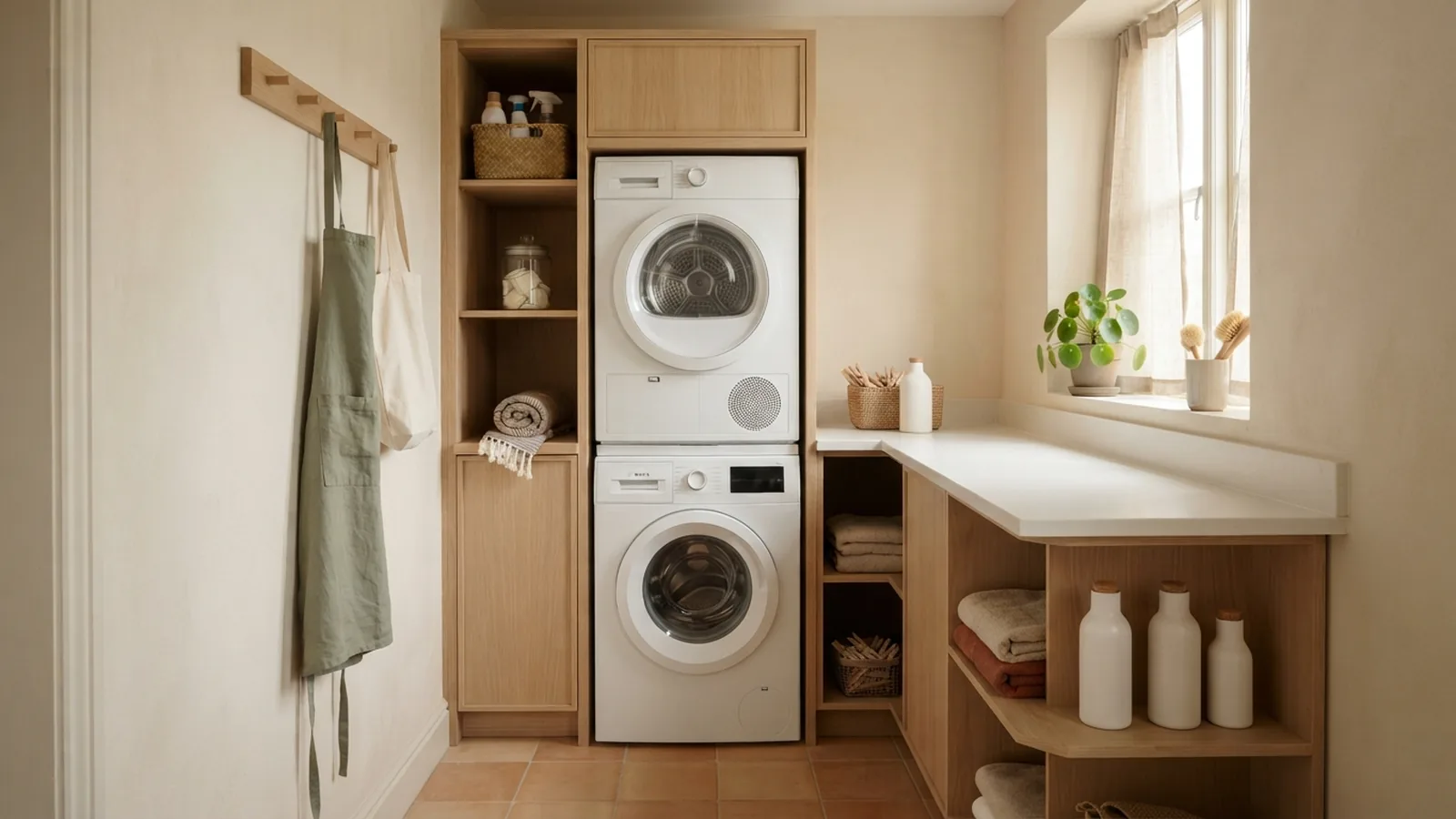
Start With the Work: What Makes a Laundry Room Good?
To design a laundry room well, start with the work you do there. Washing, drying, folding, hanging, and storing each need a clear place. A good room cuts down on steps and keeps clean clothes away from dirty items.
Measure the room before you shop for cabinets or machines. Note the door swing, window, water lines, drain, outlets, and ceiling height. Leave at least 90 centimetres in front of each machine for safe use and easy loading.
Think about noise, heat, and damp air too. A vented dryer needs a safe path for warm air. A window or fan helps control moisture. If you plan a floor drain, check local building rules first. A drain may be required in some homes, but rules vary by area and floor type.
| Zone | Useful feature | Planning tip |
|---|---|---|
| Wash | Machines and supply shelf | Keep detergent within easy reach |
| Dry | Hanging rail or drying rack | Place it near the dryer |
| Fold | Worktop at waist height | Allow space to stand on both sides |
| Store | Closed cupboards and bins | Keep daily items at eye level |
Plan a Layout That Keeps Movement Simple
When deciding how to design a laundry room layout, map the main path first. Clothes should move from hamper to washer, then to dryer, rack, or folding bench. Keep this path short and free from cabinet doors.
A side-by-side layout gives you one long worktop above the machines. It suits wider rooms and makes folding easy. A stacked layout saves floor space and leaves room for a tall cupboard or drying rail.
A galley room can work well when both walls carry a clear task. Put machines and water points on one side. Use the other side for shallow storage, hanging space, or a fold-down bench. Keep the walkway near 90 centimetres wide where possible.
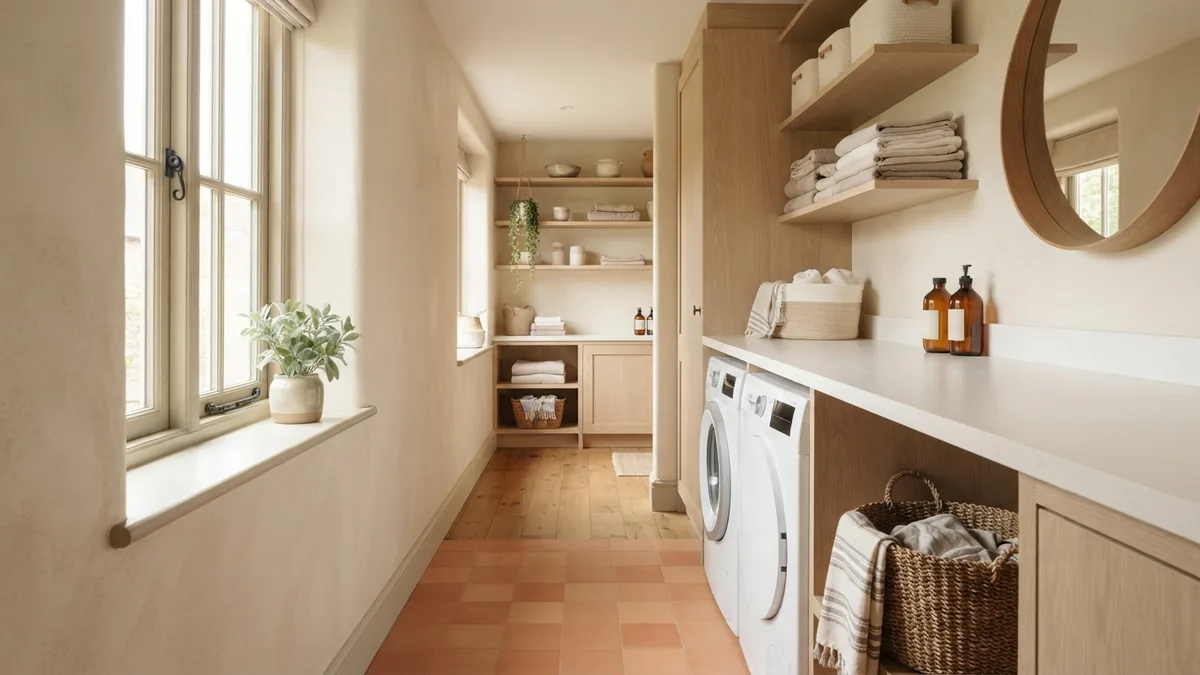
- Side by side: Best for broad rooms and large folding areas.
- Stacked: Best for narrow rooms with a tall ceiling.
- L-shaped: Best when one corner can hold a sink or bench.
- Pass-through: Best when the room links a kitchen, hall, or garden.
Make a Small Laundry Room Work Harder
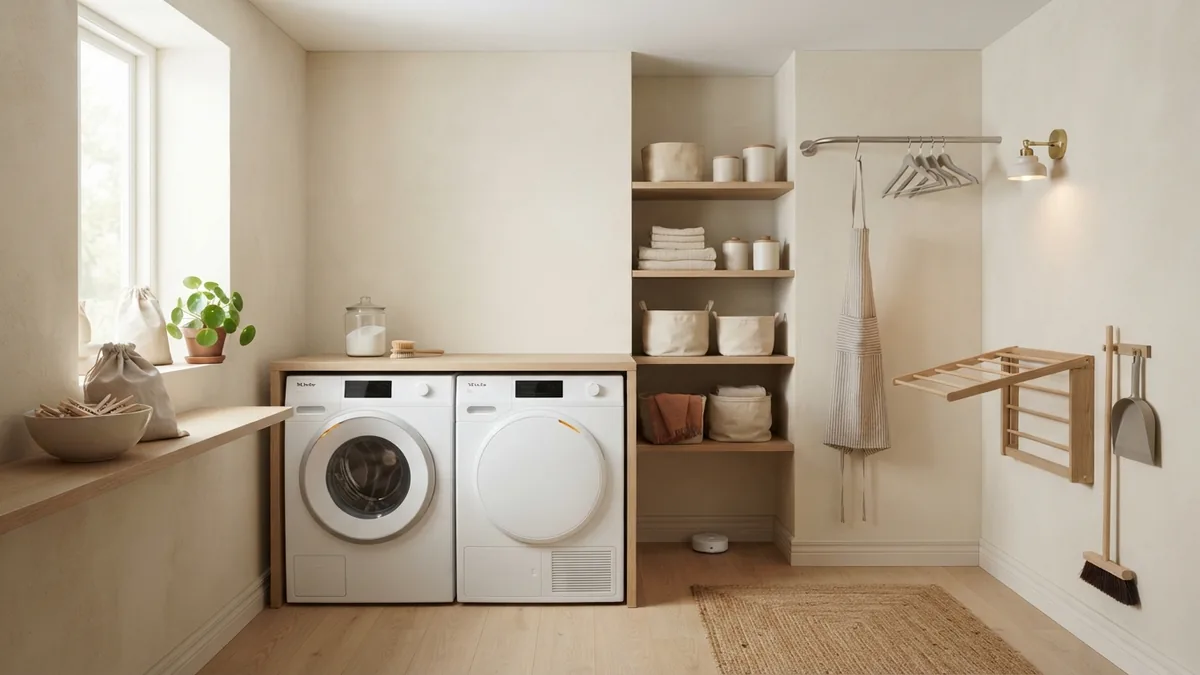
To organize a small laundry room, give each wall one clear job. Use the wall above the machines for shelves or cabinets. Use the door for slim hooks, a hanging rail, or a pocket organiser.
Choose storage that uses height rather than floor area. A cupboard that reaches the ceiling can hold spare linens and rare-use items. Keep daily supplies between waist and shoulder height. Store heavy items low, and avoid placing them above a washer.
A small room can look bigger when sight lines stay open. Use pale walls, one floor finish, and cabinets with flat fronts. A large mirror or glass door can also spread light through the room.
For a very small laundry room, choose a slim hamper with separate sections. Add a wall-mounted drying rack that folds flat. A narrow rolling cart can fill the gap beside a machine. It can also move out when you need more room.
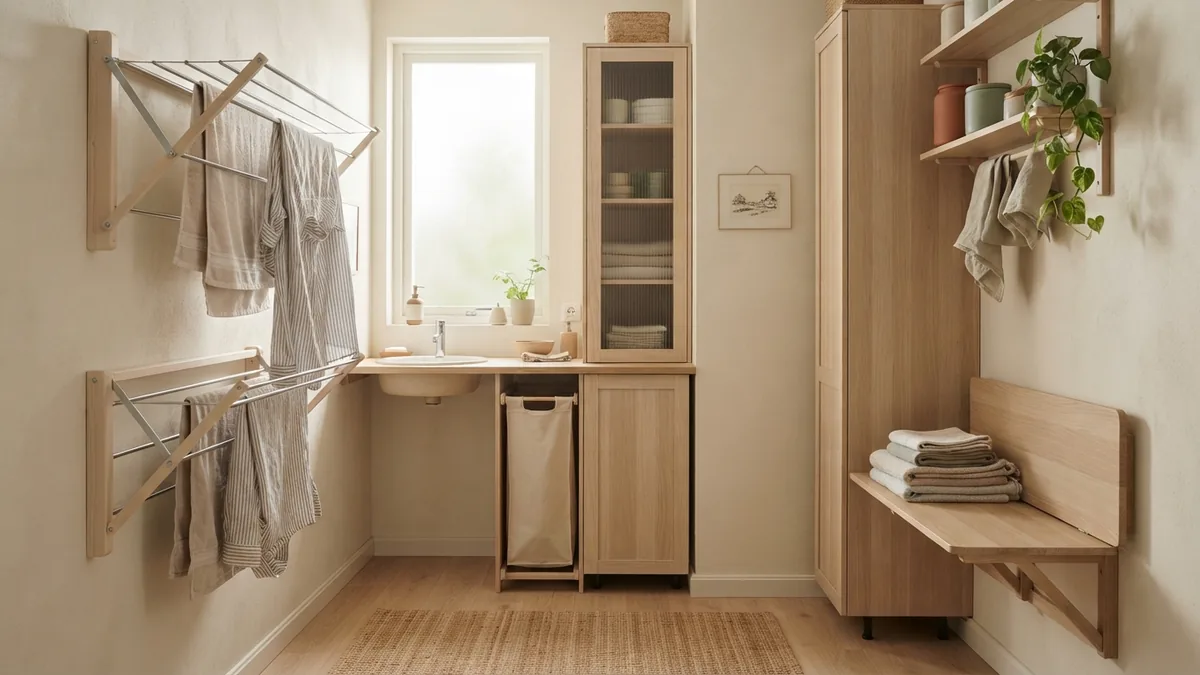
- Use a stacked washer and dryer where safe and suitable.
- Fit a fold-down bench instead of a fixed deep counter.
- Pick doors that slide, fold, or open away from the work zone.
- Use one open shelf for daily items and closed storage for the rest.
Choose Finishes That Handle Water and Wear
Surfaces in a laundry room need to handle spills, heat, damp air, and daily knocks. Quartz makes a strong worktop for folding and sorting. It has a smooth surface and needs little day-to-day care.
Tiles work well on floors, splash zones, and walls behind a sink. Porcelain tile is tough and comes in many calm stone or wood looks. Use a slip-resistant floor finish, since water and detergent can make smooth floors unsafe.
Warm materials stop the room from feeling cold or clinical. Pair pale tile with oak shelves, linen baskets, and brushed metal hooks. Seal grout well, and wipe spills soon after they happen.
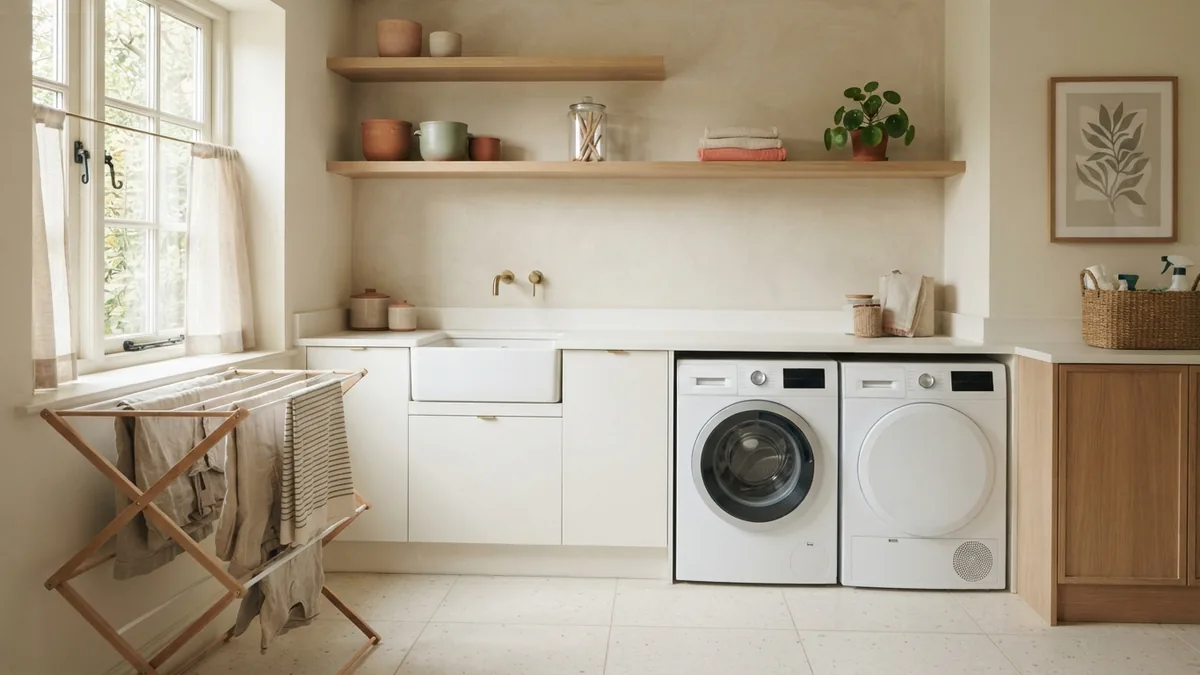
Keep the Floor Easy to Clean
Choose a floor with few deep joints and a finish that hides small marks. A medium-toned tile often looks cleaner between washes than pure white tile. Check that the floor can support the machines without excess movement.
Decorate a Small Laundry Room With Purpose
To decorate a small laundry room, start with light and calm colours. Warm white, oat, pale sage, and soft beige can make the room feel open. Add one muted terracotta or peach accent through a mat, basket, or small print.
Use decoration that also earns its place. A framed botanical print can soften a blank wall. A ceramic bowl can hold clips or small tools. A linen curtain can hide open shelves without making the room feel heavy.
Good lighting matters as much as colour. Combine soft ceiling light with task light under a shelf or cabinet. Use a warm bulb that shows fabric colours clearly. Keep cords hidden and choose fittings suited to damp areas.
If the laundry sits beside a kitchen, a tall cabinet can hide it from view. Matching doors can make the machines blend into the wider room. Leave enough air space around each appliance, and follow the maker's fitting rules.
Add Technology That Saves Time and Prevents Trouble
Modern laundry technologies can make care easier, but only when they solve a real need. Leak sensors can warn you when water reaches the floor. A smart plug can track power use, but it must suit the machine and local safety rules.
Some washers can send cycle alerts to a phone. This helps when the room sits far from the living area. Load sensors can also adjust water use for smaller loads. Treat these features as helpful extras, not a reason to ignore basic cleaning.
Maintenance tools matter more than flashy features. Add a small shelf for filters, cleaning cloths, and machine care items. Keep the drain filter easy to reach. Mark a simple monthly check on your home calendar.
Place a bright task light near the filter and detergent drawer. Keep a shutoff valve easy to find. These small choices improve safety and help you spot leaks early.
- Check hoses and fittings for leaks each month.
- Clean the dryer filter after every load.
- Run the washer's care cycle as the maker advises.
- Keep vents clear and avoid blocking air paths.
Build a Room That Feels Functional Every Day
The best laundry room supports the habits of everyone who uses it. Place hampers near the entry point. Put a rail near the dryer for shirts that need quick hanging. Add a seat only if it does not block the work path.
Set the folding bench at a comfortable height for the main user. About 90 centimetres often works, but body height matters more than a fixed rule. Test the height with a box before fitting the final worktop.
Group supplies by task rather than by product type. Keep wash items together, repair tools together, and cleaning cloths together. Use small trays inside drawers so loose items do not spread across the room.
Review the room after one month. Notice where clothes pile up, where doors clash, and which supplies are hard to reach. Small changes can make a small laundry room more functional without a full remodel.
Maximise Storage Without Losing Floor Space
Storage is the backbone of a useful laundry room. Without it, baskets and bottles take over the floor. Plan storage for three groups: daily supplies, backup stock, and household items that need a dry home.
Use deep cabinets for bulky items and shallow shelves for bottles. Add drawer dividers for pegs, sewing tools, and stain brushes. A lift-up worktop can cover a top-loading machine when it is not in use.
Use the back of the door for a slim rack. Fit hooks under shelves for spray bottles or brushes. A narrow gap beside a cabinet can hold a pull-out trolley. These laundry room storage solutions preserve walking space while adding useful capacity.
Keep the room easy to reset. Give every item one home, and leave a small empty shelf for new needs. A room with spare capacity stays tidy for longer.
- High storage: Spare bedding, towels, and seasonal items.
- Mid-level storage: Detergent, stain care, and daily tools.
- Low storage: Heavy bottles, bins, and cleaning gear.
- Open storage: Baskets, drying rails, and items used each day.
Step-by-step
- 01 Measure the room
Record the walls, door swing, window, outlets, water lines, and drain. Note the space needed in front of each machine.
- 02 Map the work zones
Place washing, drying, folding, and storage zones in order. Keep the main path short and free from door clashes.
- 03 Choose the machine layout
Use side-by-side machines for a broad folding bench. Choose stacked machines when floor space is tight.
- 04 Plan storage by use
Keep daily supplies at mid-level height. Use tall cabinets, door racks, and low bins for other items.
- 05 Select durable finishes
Choose quartz, porcelain tile, and slip-resistant flooring. Add warm wood and soft textiles to make the room feel inviting.
- 06 Add useful features
Fit task lighting, a drying rail, leak protection, and easy access to filters and shutoff valves. Test the room's flow before final fitting.
Frequently asked questions
- How do you design a laundry room layout?
- Map the path from hamper to washer, dryer, drying rail, and folding area. Keep about 90 centimetres in front of machines where possible.
- How do you organize a small laundry room?
- Give each wall one job, then use tall cabinets, door racks, and folding fittings. Keep daily supplies at easy reach and store backup items higher.
- How do you make a small laundry room look bigger?
- Use pale colours, one floor finish, open sight lines, and shallow storage. A mirror or glass-front cabinet can help spread light.
- What surfaces work best in a laundry room?
- Quartz suits folding benches because it is smooth and easy to care for. Porcelain tile works well for floors and splash zones.
- Is a floor drain required in a laundry room?
- There is no single rule for every home. Check local building codes, plumbing rules, and your home's floor type before planning one.
- How can technology improve a laundry room?
- Leak sensors, cycle alerts, task lights, and easy-to-reach shutoff valves can improve safety and upkeep. Choose features that support your real routine.
Related reading
Piano Room Decor — Style, Sound and Everyday Use
Make your piano room feel calm, useful, and beautifully connected to the rest of your home.
Room Squaring — Set the Floor Lines Right
Set accurate floor lines before you start laying planks or boards.
Interior Designer Qualifications — Education, Skills and Career Paths
Explore the education, skills, experience, and state rules needed for an interior design career.