How to Organize Small Kitchen Drawers (Real Strategies)
Quick, practical kitchen drawer organization strategies for small spaces.
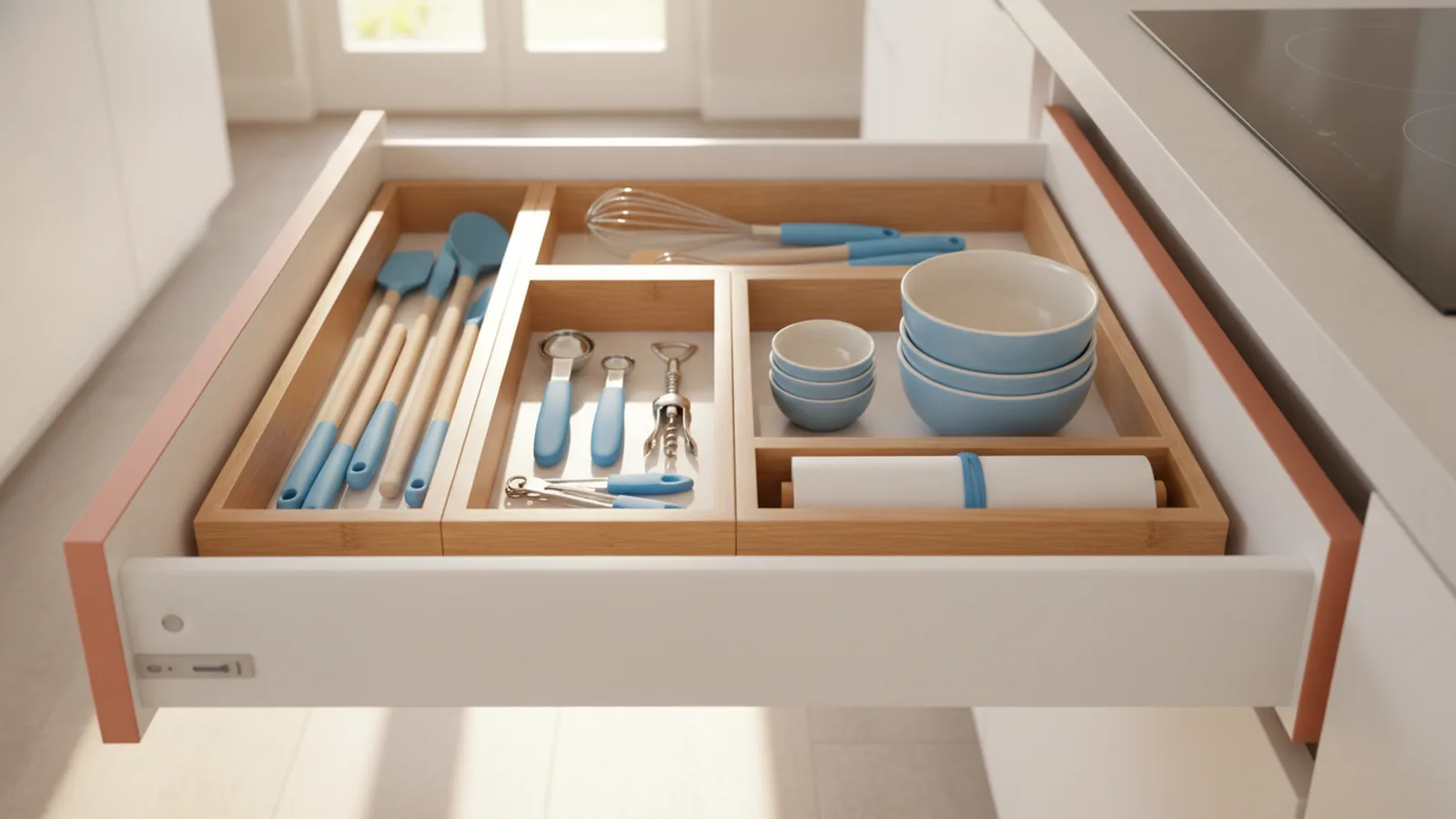
Start with a simple plan for your small drawer
If you want your kitchen drawers to feel easy to use, start by grouping items by type, then fit the right organizers to match each drawer’s size. Most people fail at this step and end up with a drawer “that sort of works.” It usually means items are mixed, containers are too large, or nothing is sized for the space you actually have.
In this guide, you’ll learn how to organize small kitchen drawers by mapping what you own, measuring drawer dimensions, and building storage that stays put. You’ll also get ideas for what to put in small kitchen drawers so everyday tools are reachable. Finally, you’ll learn a maintenance routine so your system survives busy weeks.
- Group items by use, not by brand
- Size organizers to your drawer, not your imagination
- Use dividers and trays to prevent “mixing” over time
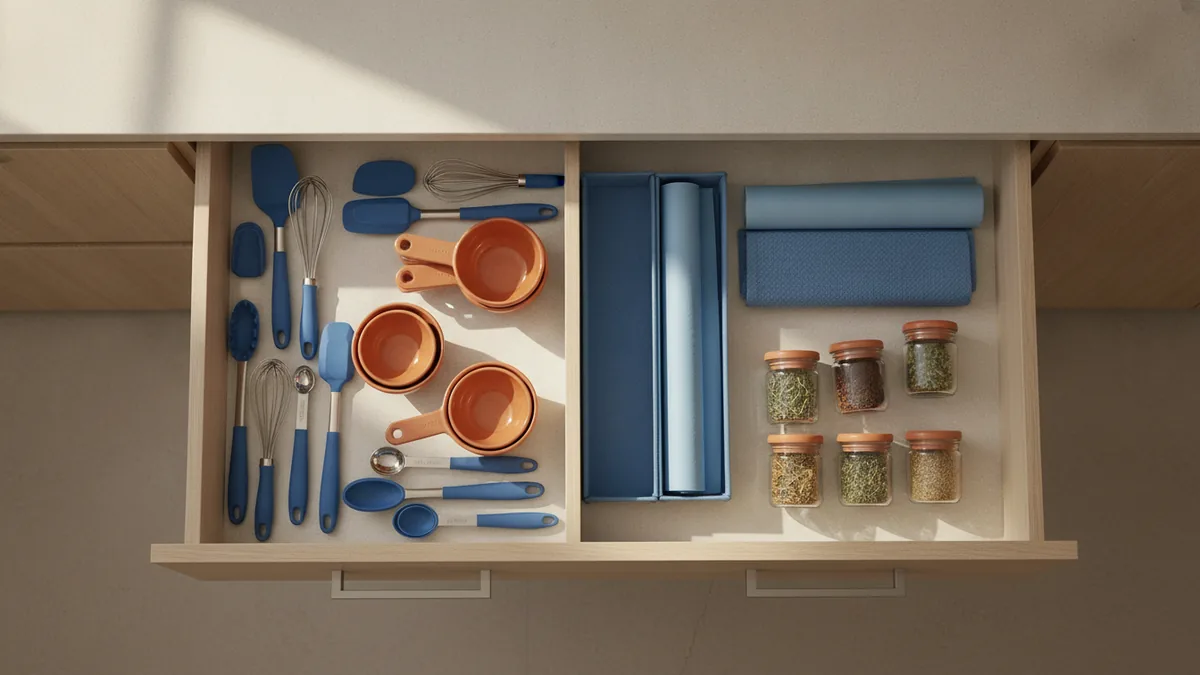
Assessing your drawer space before you buy anything
Start by identifying the types of items stored in kitchen drawers. Common categories include utensils, measuring tools, serving gadgets, extra packaging, batteries for devices, and small cooking tools like peelers or bottle openers. Empty the drawer fully so you can see what you truly have. If you only reorganize the current arrangement, you will carry hidden clutter forward.
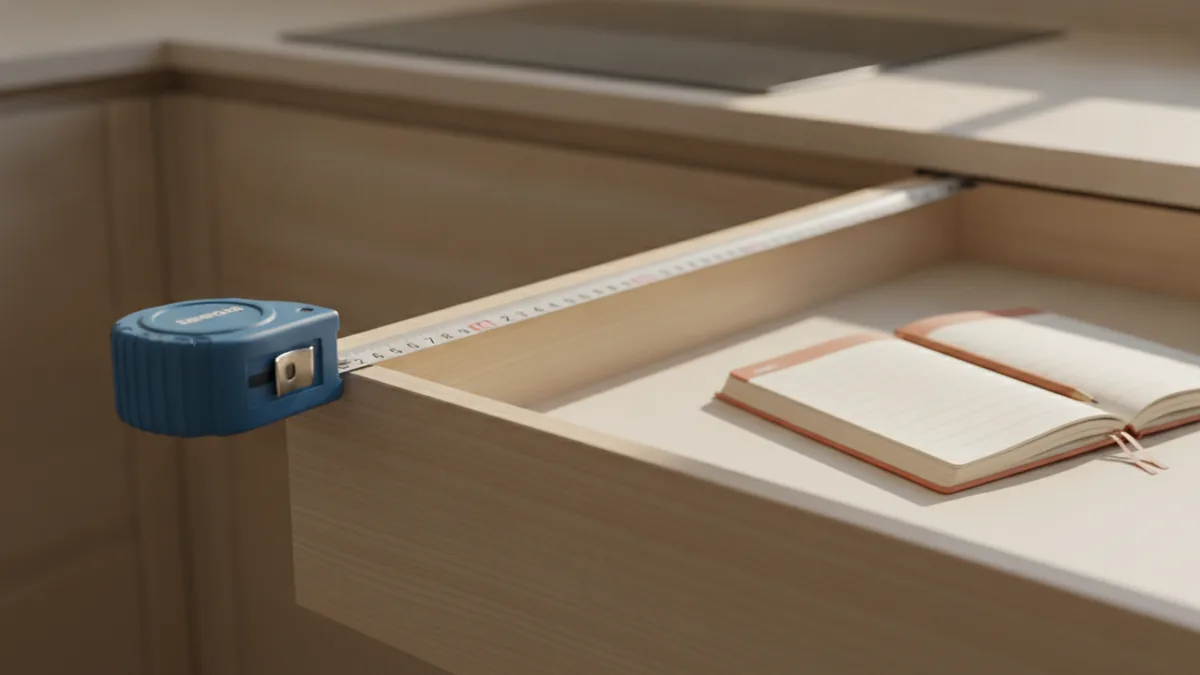
Next, measure each drawer. Use a tape measure and write down the usable interior length, width, and depth in inches. Then note any obstacles, like drawer dividers already built into the box, soft-close rails, or handles that limit how far containers can slide. For small drawers, depth matters most because shallow space forces you to choose low-profile trays and split compartments.
To decide what to put in small kitchen drawers, think in “frequency zones.” Place daily items in the most accessible drawer. For many kitchens, that means utensils and grab-and-go tools near the front of your base cabinets. Less-used tools can go deeper or into drawers that open a bit less often.
| Drawer type | Good contents | Typical organizers |
|---|---|---|
| Shallow top drawers | Utensil caps, small tools, spice scoops | Low trays, thin dividers |
| Middle drawers | Cooking gadgets, measuring cups, foil tools | Adjustable drawer dividers |
| Deep drawers | Extra utensils, larger serving tools | Bins, removable caddies |
Choosing the right organizers for each drawer category
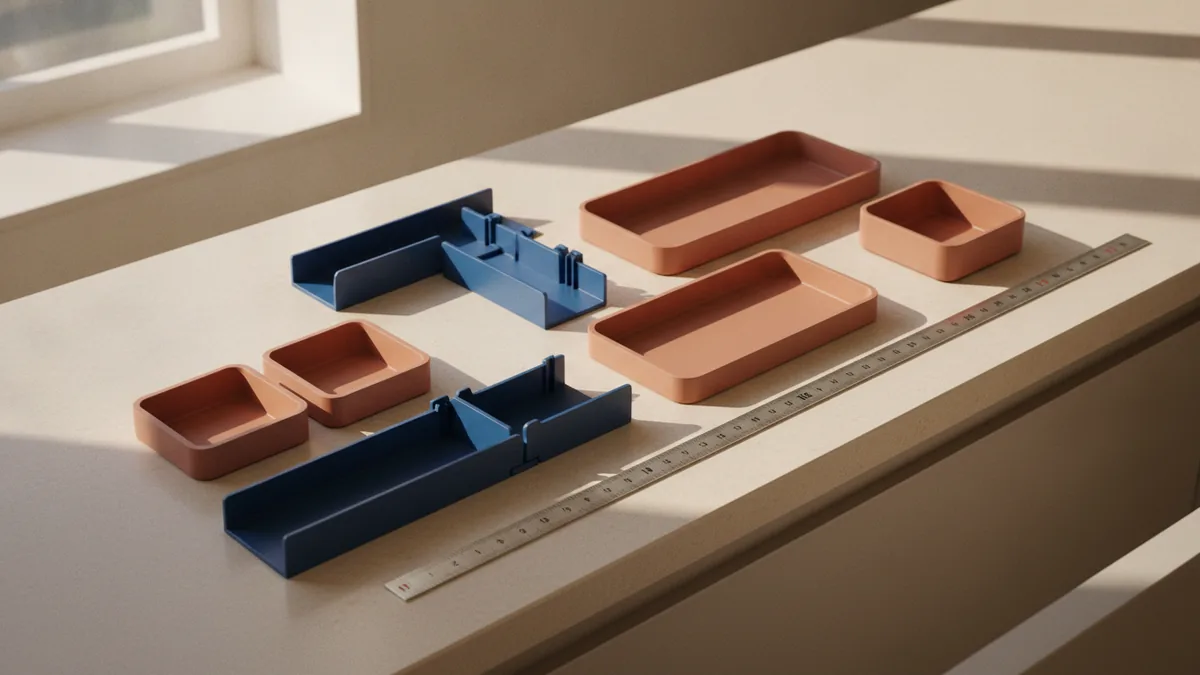
Once you know your item types and drawer dimensions, pick organizers that match how those items behave. Drawer dividers work best when items spill into each other if you do nothing. Trays help when you need a “landing zone” for similar objects. Bins are ideal for groups that grow over time, like extra gadgets or backups.
For kitchen storage solutions, choose modular tools if your drawers are irregular or narrow. Adjustable dividers let you change compartment widths as your needs shift. Removable trays make it easier to tidy during quick cleanups because you can lift everything out, wipe, and put it back.
Here’s a practical way to categorize before you organize. Make three groups: utensils, tools, and gadgets. Put utensils together by job (spoons, spatulas, whisks). Put tools by prep task (peelers, scissors, zesters). Put gadgets by event (bottle openers, can openers, specialty items). This approach supports kitchen drawer organization strategies because it reduces “where does this go?” moments.
- Utensils: separate by shape so they don’t wedge.
- Tools: keep handles facing the same direction.
- Gadgets: store in a bin so extras don’t spread.
Creative storage solutions that fit tight layouts
Small drawers often need multi-functional storage solutions instead of one “perfect” container. Look for organizers that do two jobs, like a tray with divider ridges, or a shallow caddy that can slide between compartments. If you frequently reach for two different tools in the same step, combine them into one removable unit.
Decluttering strategies make drawer organization easier because fewer objects means fewer compartments. Start with a quick “keep, donate, toss” pass. If you have multiple gadgets you rarely use, move duplicates into a less visible cabinet. Store only what supports your daily cooking workflow inside the drawer.
Space-saving hacks also help in kitchens where drawer depth limits options. For example, store lids and small flat items in a slim tray placed lengthwise so they sit flush. Use small containers for accessories like rubber bands, twist ties, and measuring spoons, so they don’t become loose clutter.
If you like labeling systems, add labels to the outside of removable bins or to divider tabs. Labels should be simple and readable from the drawer front. A good label prevents guesswork and reduces the urge to “just toss it in.” Even if you don’t label everything, labeling the categories you care about most helps a lot.
- Use removable trays for fast cleanups
- Keep specialty gadgets in one bin
- Use slim trays for flat items
Maximizing vertical space with stackable containers
When drawers are shallow, horizontal space can feel scarce. That’s when vertical space becomes your best friend. Instead of one wide compartment, split the drawer into stacked levels using stackable containers, drawer risers, or shelf-style organizers designed for drawers. This creates distinct “micro-zones” for small items.
Stackable containers work best when items have similar heights. For example, measuring spoons and small scoops can sit in a stack with a top tray for quick picks. If you stack containers that don’t match in height, the bottom level becomes harder to access and you’ll stop using it. Aim for a setup where you can reach the top container without moving the rest.
To maximize small spaces, keep weight and frequency in mind. Place heavier items on the bottom so drawers open smoothly and bins don’t shift. Put the most-used items at eye level inside the drawer, often the top layer. This improves usability and keeps “grab-and-toss” behavior from returning.
- Measure drawer depth and choose low-profile containers.
- Use stackable containers for items of similar height.
- Keep daily tools in the top layer for faster access.
- Use risers to create two usable levels.
Maintaining organization over time with quick routines
Even the best kitchen drawer organization strategies fail if you don’t maintain them. The goal is to make “putting it back” the easiest option. After organizing, do a one-week test. Pay attention to what people reach for most, and where items drift during the week.
Set a routine maintenance plan that takes five minutes. Each weekend, open each drawer and scan for mixed items. If you spot “wandering” tools, adjust compartments instead of fighting the habit. Often, a single missing divider or bin causes the whole system to break down.
Use a simple rule for resets. When a drawer gets messy, remove only the organizer, not everything in the drawer. Wipe the drawer base, return items to their bins, and check fit. If you do this, cleaning stays manageable and you won’t dread the next reset.
Finally, plan for seasonal changes and new purchases. Add a small “overflow” spot inside the drawer system, like a single back compartment or a labeled bin for extras. When a new gadget arrives, decide quickly where it belongs, and move one older item out if needed. This keeps your space useful and prevents the drawer from creeping back into clutter.
- Weekly scan for mixed items
- Adjust compartments when usage changes
- Use quick resets instead of full drawer rebuilds
Note: This guide focuses on organizing drawers. If you’re also planning to refresh drawer fronts, search for tips on how to paint kitchen drawers, but keep organization separate so you don’t trap clutter behind a new finish.
Frequently asked questions
- How do I organize small kitchen drawers if they’re too shallow?
- Use low-profile trays and drawer dividers, then create two levels with stackable containers or risers. Keep the most-used items in the top layer for easy access.
- What to put in small kitchen drawers for the best day-to-day use?
- Put utensils and your most-used prep tools closest to the front. Store specialty gadgets in one bin so extras don’t spread across compartments.
- What are the best kitchen drawer organization strategies for messy drawers?
- Start with full emptying, then rebuild with categorized compartments. Choose removable trays so quick resets are fast and realistic.
- Do labeling systems help with kitchen drawer organization?
- Yes. Label bins or divider tabs for the categories you rely on most. Clear labels reduce “temporary tossing” back into the wrong spot.
- How often should I maintain drawer organization?
- Do a five-minute scan weekly. Make small adjustments when you notice items repeatedly drifting out of their assigned spot.
Related reading

Room Painting Labor Costs — Rates and Budget Factors
See typical room-painting labor rates and learn what drives the final price.
Kitchen Renovation Costs — Price Ranges and Budget Factors
See typical kitchen remodel prices, key cost drivers, and ways to keep your budget on track.

Large Living Room Walls — Scale, Style, and Warmth
Use scale, art, texture, shelves, and light to make a large wall feel balanced.