Bedroom Color — Calm Shades for a Restful Space
Choose soothing bedroom colors that work with your light, decor, and daily routine.
How bedroom color can shape mood
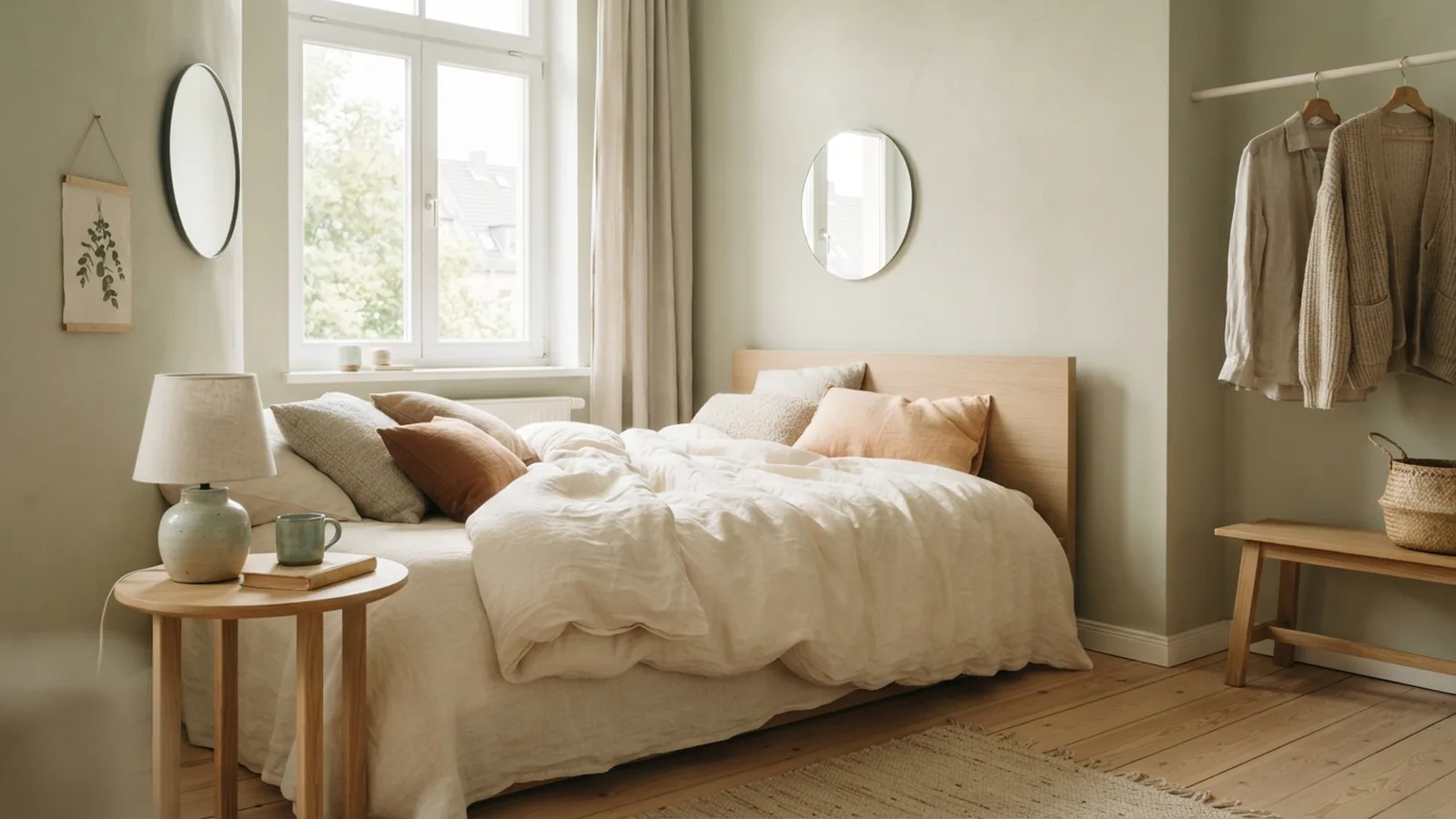
What is a good color for a bedroom? Start with a shade that feels restful and suits the room’s light. Soft blues, pale greens, gentle pinks, and warm neutrals are popular bedroom paint colors. Each can make a calm backdrop without taking over the space.
Bedroom color psychology looks at how color can affect mood and shape the feel of a room. Paint cannot promise better sleep. Still, calm shades can help a room feel settled and comfortable. That is a good place to begin.
Look at the whole room before you choose paint. Bedding, flooring, curtains, and lamps can all change how a shade looks. Pale blue may feel crisp beside white bedding, yet softer beside oak and linen. Your finishes matter.
- Soft blue can feel quiet and airy.
- Pale green brings a gentle, natural feel.
- Beige and cream add warmth with little color cast.
- Muted pink can make a room feel soft and welcoming.
Choose a bedroom color for the mood you want
First, name the feeling you want when you enter the room. For a cool, quiet look, try muted blue or green. For a warmer, cosier feel, consider cream, beige, or dusty pink. The right shade should feel good to you.
Light colors can make a small or shaded bedroom feel more open. They reflect more daylight than deep shades. Dark colors can feel snug, but may make a small room seem smaller. Test them before you commit.
Think about how you use the room, too. Sage walls may suit someone who likes a nature-inspired space. If you enjoy warm finishes, oat or sand tones may feel more at home. These are starting points, not rules.
Choose a shade you enjoy at different times of day. The best bedroom colors should suit your habits and furniture. If you read in bed, check the wall under your reading lamp. If you wake early, view it in morning light.
Popular bedroom paint colors for a restful space
Light blue is a familiar choice because it can feel calm and open. Look for softened shades, such as mist blue or pale slate, rather than bright blue. Muted tones are often easy to pair with wood, cream, and white.
Pale green offers a gentle link to the outdoors. Sage, eucalyptus, and soft olive work well with pale oak and natural fabrics. Check the undertone before choosing. Some greens lean yellow and warm, while others have a cooler cast.
Soft pink adds warmth without making a room feel bold. Try blush or dusty rose with cream bedding and light wood. Warm neutrals are another steady choice. Beige, cream, and soft taupe create a flexible base for new pillows or art.
What is a good color to paint a bedroom if you want a calm feel? A softened blue, green, or warm neutral is a strong place to start. Pick a shade that works with your room’s fixed finishes. Your favorite color matters, too.
- Blue: Try pale slate or mist blue for a soft, cool backdrop.
- Green: Use sage or eucalyptus for a muted, natural look.
- Pink: Choose blush or dusty rose for gentle warmth.
- Neutral: Consider cream, beige, or soft taupe for an easy-to-change base.
Test paint samples in your own bedroom
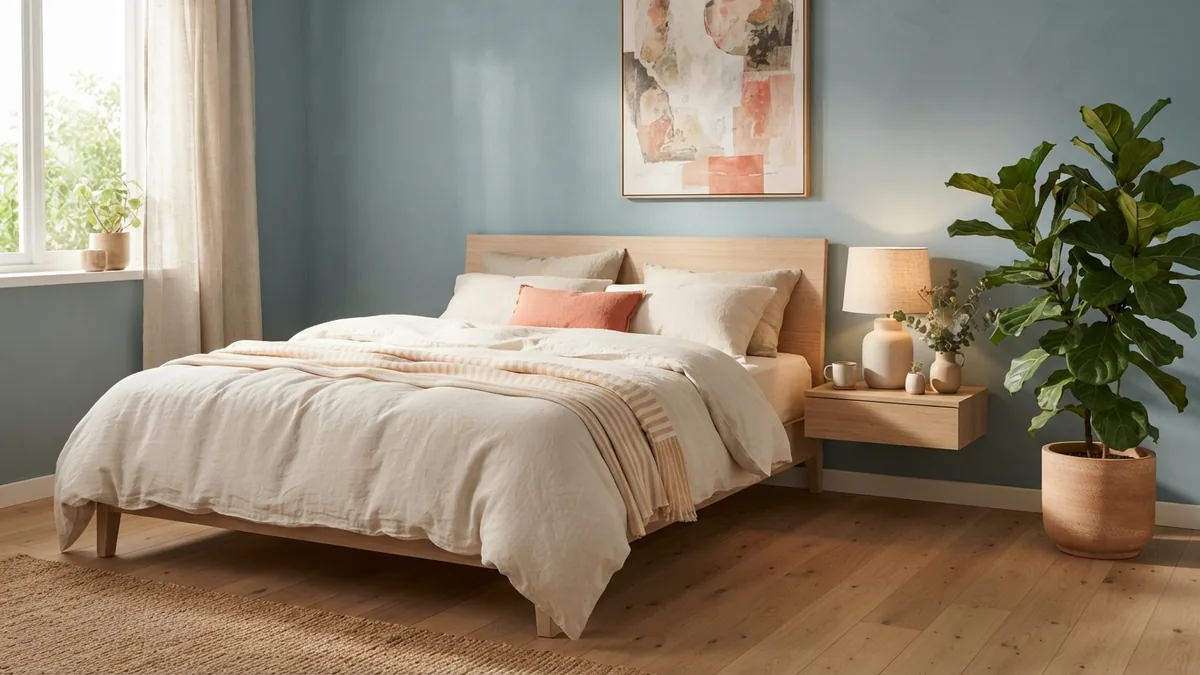
Paint samples matter because light can shift a color’s look. Daylight changes through the day, and lamps add their own warmth. The same paint may seem pale in morning sun and duller after sunset. Make your choice in the room itself.
Paint patches on more than one wall, or use large sample boards. Place them near the bed, window, and main furniture. Make each patch large enough to judge at a glance. A board about 30 by 30 centimetres gives you room to compare.
Check each sample in the morning, afternoon, and evening. View it with the lamps you use at night. Compare it with bedding, curtains, flooring, and wood finishes. A shade that works alone may clash with a fixed finish.
- Pick two or three shades that match your preferred mood.
- Apply each shade to a large patch or movable board.
- Check every sample in daylight and under evening lamps.
- Compare the paint with the room’s main finishes and fabrics.
- Choose the shade that feels right throughout the day.
Let samples dry before making a final choice. Wet paint can look different from its dry color. If you plan to use a matte finish, test that finish as well. Its sheen can change how light reflects from the wall.
Combine wall color with bedroom decor and light
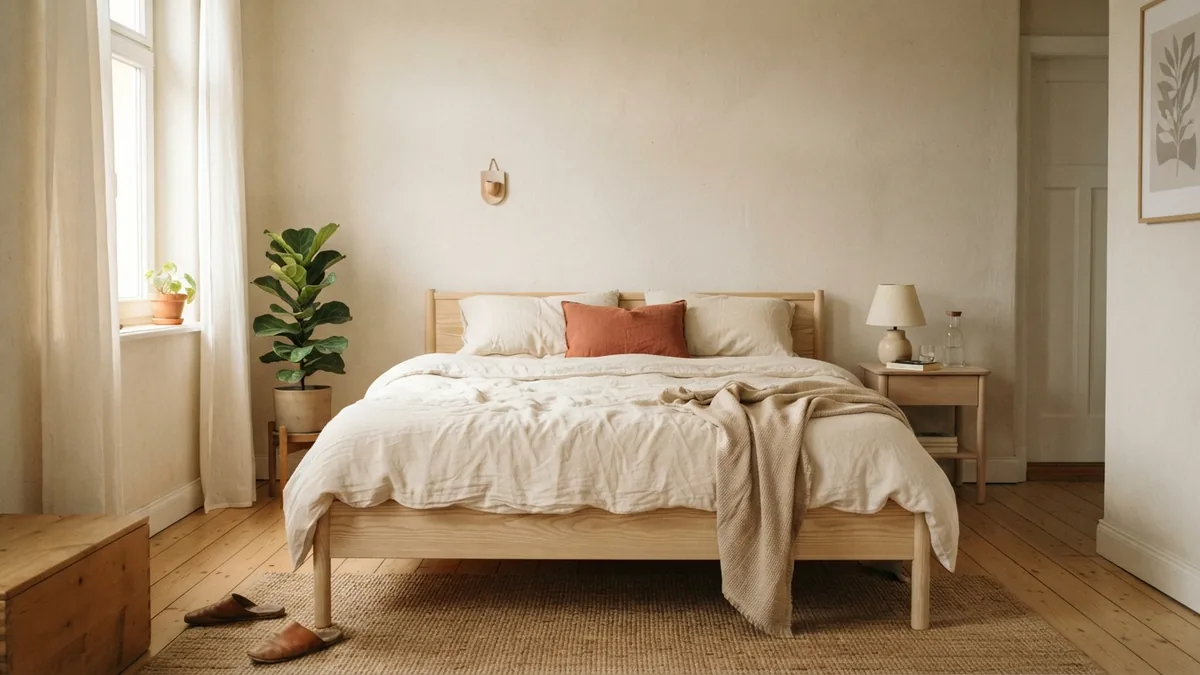
Use the room’s fixed features as your starting point. Floors, wardrobes, and large furniture can be costly to change. Let their color guide your wall choice. Creamy beige or muted green can sit well beside warm oak.
Build a simple color combination with one main wall shade, one supporting neutral, and one small accent. For example, pair pale sage walls with cream bedding and a few rust-colored cushions. Keep the accent small if you want a quiet feel.
Lighting matters as much as decor. North-facing rooms often receive cooler daylight, while warm bulbs can make pale shades look more yellow. If your bedroom has little natural light, test samples near the window and in the darkest corner.
Repeat a color in a few places to make the room feel joined up. A green wall might work with a plant pot or a cushion in a similar tone. Keep most large surfaces soft and simple. Then small details can add character without making the room feel busy.
Colors to use with care in a bedroom
Vibrant red and orange can feel lively and energizing. Dark purple can also feel strong in a small room. These shades are not wrong, but they may feel less restful across large walls. Use them in small accents if you enjoy their energy.
Bright shades can also change a lot under different light. A strong color may look striking in a sunny room, then feel intense at night. Test a sample before painting every wall. If the color feels too bold, try a softer or dustier version.
There is no single best bedroom color for everyone. Some people love a deep, cozy wall, while others prefer pale, open shades. Use samples to see how the color feels in your space. Choose the one you enjoy living with, not just the one that looks good on a chip.
Frequently asked questions
- What is a good color for a bedroom?
- Soft blue, pale green, warm beige, and cream are common calming choices. Pick a shade that suits your light and decor.
- What is a good color to paint a bedroom for better rest?
- Muted blue and green can create a calm feel. Paint alone cannot promise better sleep, so choose a shade that feels restful to you.
- Should a small bedroom be painted a light color?
- Light colors can make a small room feel more open. Deep shades can also feel cozy, but test them in your room first.
- How should I test bedroom paint colors?
- Paint large samples on more than one wall or use sample boards. Check them at different times of day and beside your main fabrics and finishes.
- Which colors should I avoid in a bedroom?
- There are no colors you must avoid. Bright red, orange, and dark purple can feel lively or intense across large walls, so test them first.
Related reading

Best Room Colors: Bedroom, Kitchen, Bathroom & More
Get room-by-room color picks using lighting, comfort, and color psychology.
Living Room Curtains — Color, Fabric and Fit
Choose curtains that suit your light, style, colors and windows.
Piano Room Decor — Style, Sound and Everyday Use
Make your piano room feel calm, useful, and beautifully connected to the rest of your home.