How to Paint a Bedroom: Color and Technique
Paint your bedroom with better color choices, clean prep, and smooth roller work.
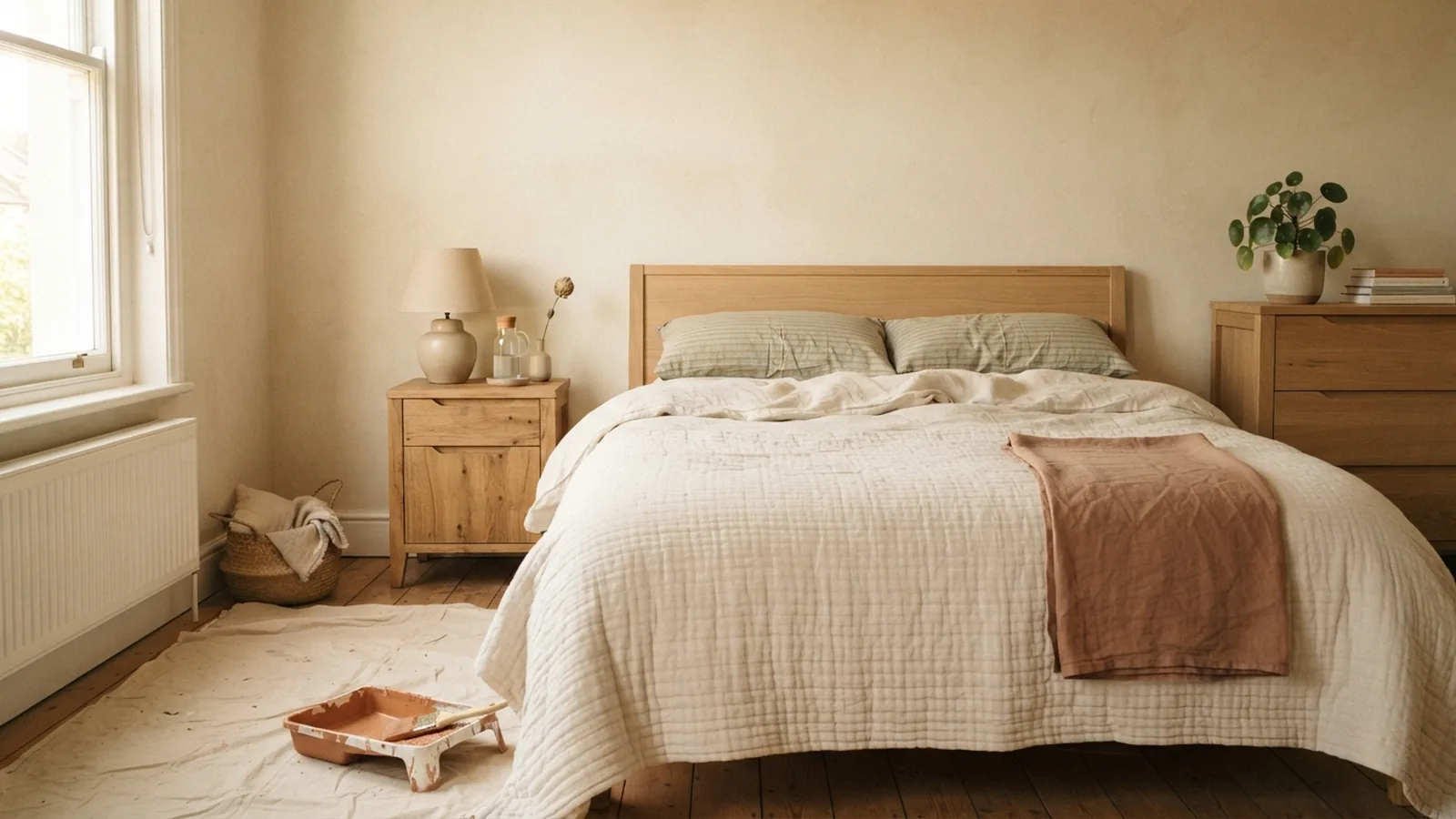
Choose a Bedroom Color That Works With Light
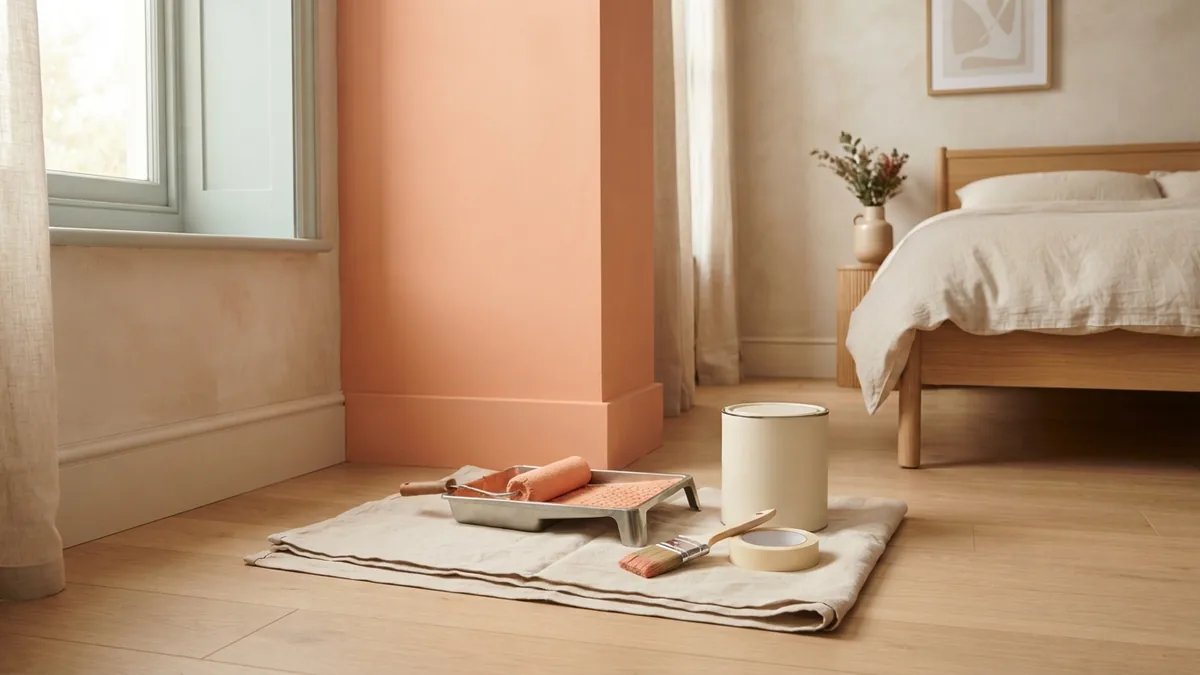
The best way to paint a bedroom starts with color, light, and sound wall prep. Pick your shade, gather your tools, clear the room, then paint the edges first. Most bedrooms need two coats for even color.
North-facing rooms often get cool, soft light. Warm beige, cream, muted peach, and pale terracotta can balance it. South-facing rooms get stronger light. Soft sage, oat, and warm white can feel calm there.
Artificial light also changes paint color. Warm bulbs bring out yellow and red tones. Cool bulbs can make pale colors look grey. Paint sample squares on two walls. View them in morning, afternoon, and evening light.
Color theory can guide your choice. Similar shades create a quiet room. Soft contrast adds more shape. Use the bed, curtains, floor, and wood tones as your base. The wall color should support these items.
- Use pale shades to make a small room feel more open.
- Use mid-tone colors to add warmth without heavy walls.
- Use a matte or low-sheen finish to hide small flaws.
- Use one deep accent wall for a calm focal point.
Ideas on how to paint a bedroom can include simple circles, dots, or a mural. Test the pattern on card first. For a Cape Cod bedroom, try soft white walls with muted blue-green trim. Keep the palette calm and low contrast.
Gather Tools and Work Out How Much Paint You Need
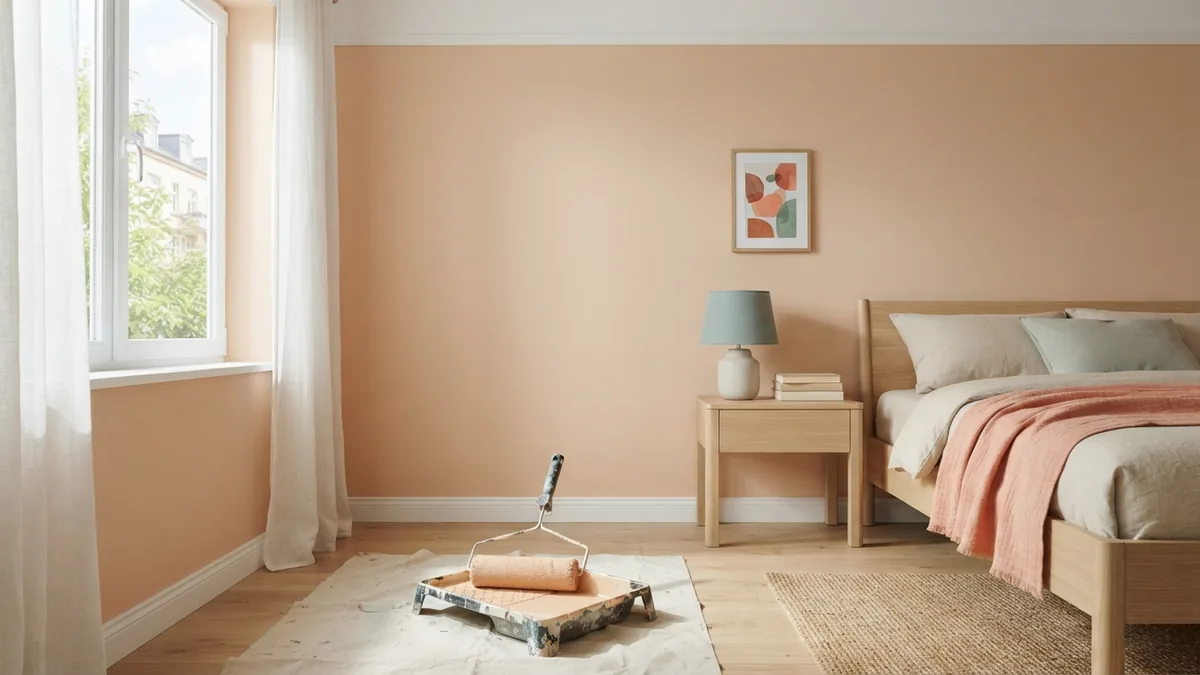
Good tools help you paint faster and leave fewer marks. Choose a quality angled brush for corners and trim. Add a roller with a sleeve suited to your wall texture. A short nap suits smooth walls. A longer nap holds more paint on textured walls.
You will also need a tray, masking tape, and drop cloths. Keep a small tub for touch-ups. Add filler, a filling knife, fine sandpaper, a sponge, and mild cleaner. A steady step stool helps you reach high corners.
To work out how much paint for a bedroom, measure each wall. Multiply the wall width by its height. Add the wall areas, then subtract large doors and windows. Most wall paint covers about 10 to 12 square metres per litre.
Four walls measuring 3 metres by 2.4 metres equal 28.8 square metres. Two coats need 57.6 square metres of coverage. At 10 square metres per litre, buy at least 5.8 litres. A 7.5 litre tin leaves spare paint for repairs.
Check the tin before buying. Coverage changes with paint type, wall texture, and old color. Dark walls may need primer or another coat. One larger tin often gives a closer color match than small tins.
| Tool | Main use |
|---|---|
| Angled brush | Cutting in edges and corners |
| Roller and sleeve | Covering broad wall areas |
| Paint tray | Loading paint onto the roller |
| Masking tape | Protecting trim and fittings |
| Drop cloth | Shielding floors and furniture |
Prepare the Bedroom Before Painting
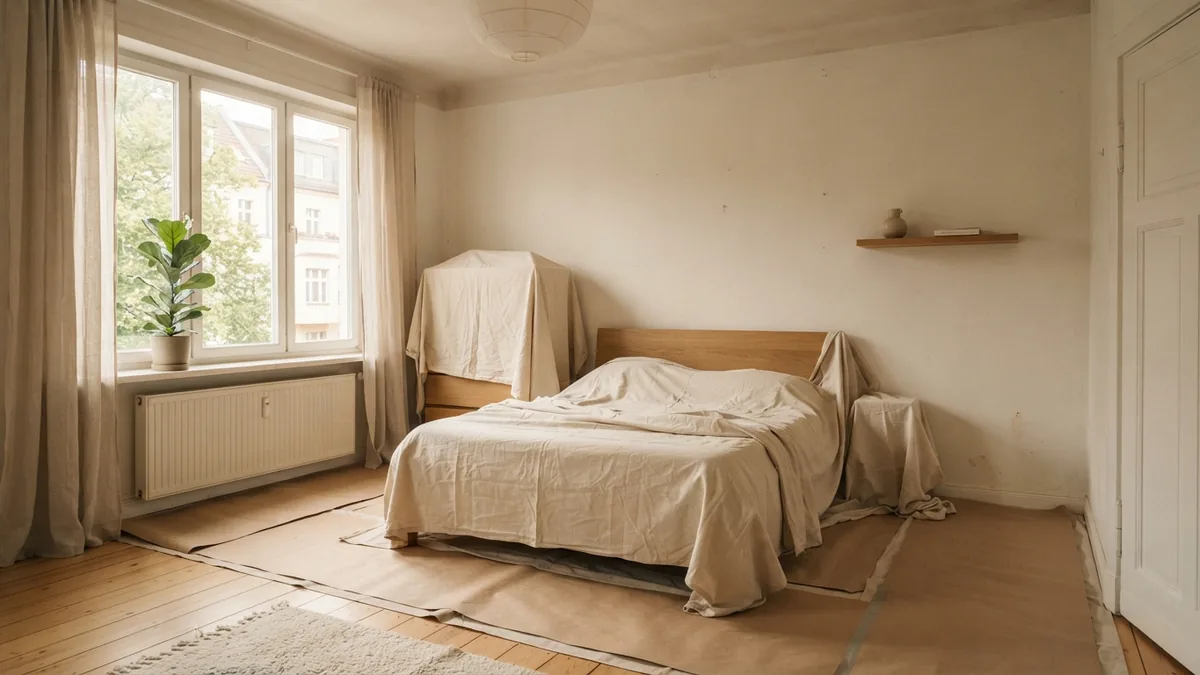
Preparation takes time, but it prevents most poor results. Remove small items, art, curtains, and switch covers. Move large furniture out when possible. If it must stay, place it in the room’s center. Cover it with a thick sheet.
Protect the floor with a sturdy drop cloth. Use tape along skirting boards, frames, and door casings. Press the tape edge down firmly. Loose edges let paint seep underneath.
Clean the walls before painting. Dust can stop paint from bonding well. Wipe greasy marks with warm water and mild soap. Let the wall dry fully before filling holes.
Inspect the surface under bright light. Fill nail holes, dents, and small cracks. Let the filler dry. Sand it smooth with fine paper. Remove dust with a clean, dry cloth.
Glossy paint needs a light sand so the new coat can grip. Flaking paint needs careful removal and more repair. Use primer on bare filler, stains, or strong color changes. This step helps the new shade look even.
Before work begins, turn off power near switches and sockets. Remove covers only if you know how to do so safely. Keep paint away from electrical parts. For older homes, check local advice on lead paint before sanding.
The U.S. Environmental Protection Agency’s lead paint guidance explains safe steps for older painted surfaces. It is the right source for homes built before modern lead limits.
Follow a Steady Bedroom Painting Process
Start at the ceiling line. Then work around windows, doors, corners, and skirting boards. This edge work is called cutting in. Use a loaded brush, but do not overload it. Aim for a neat line about 5 centimetres wide.
Work on one wall at a time. Pour paint into the tray, then load the roller evenly. Roll over the ridged tray area to remove extra paint. Too much paint causes drips and thick edges.
- Cut in one wall while the edge stays fresh.
- Load the roller and cover the wall in a wide W shape.
- Fill open areas with light, even passes.
- Finish with gentle strokes in one direction.
- Check for runs before moving to the next wall.
- Let the first coat dry for the time shown on the tin.
- Apply the second coat using the same order.
Two coats give better coverage and a more even sheen. They matter most when moving from dark walls to pale paint. Do not add a thick coat to save time. Thick paint can sag, crack, or stay soft.
To learn how to paint bedroom walls well, keep a wet edge. Do not stop in the middle of a wall. If a section dries, overlap it with light pressure. Strong pressure can create shiny roller tracks.
To paint a bedroom fast, prep the night before. Use two people for large rooms. One person can cut in while the other rolls. Speed should never replace drying time.
Add Detail With Ceilings, Patterns, and Furniture
Paint the ceiling before the walls when both need fresh color. Use a flat ceiling paint to limit glare. Cut in around the edges first. Then roll in small, even sections.
A tray ceiling needs careful lines at each level. Paint the recess first. Let it dry before painting the raised edge. For how to paint a tray ceiling in a bedroom, use tape only on dry, firm coats.
For bedroom walls in two different colors, mark the change with a level line. Apply low-tack tape after the first color dries. Press the edge down, then paint the second shade. Pull the tape away while the paint remains slightly soft.
Circles and polka dots need a simple template. Mark the center points with light pencil marks. Use a small foam tool for each dot. A bedroom mural needs a clear sketch and thin first coats.
When learning how to paint a bedroom set, remove hardware first. Clean and lightly sand each piece. Use a bonding primer, then apply thin coats. Let each coat cure before putting the furniture back in use.
Estimate Paint Costs for Apartments and Houses
The cost depends on wall size, paint quality, labor, repairs, and coats. A one-bedroom apartment needs less paint than a three-bedroom house. Ceilings, doors, trim, and tall walls raise the total.
For a rough estimate, measure the paint area first. Multiply litres needed by the paint price. Add primer, tools, filler, and delivery. Add labor if a decorator does the work.
| Project | What changes the price |
|---|---|
| One bedroom apartment | Room size, wall height, and surface repairs |
| Two bedroom apartment | Number of rooms, ceilings, trim, and coats |
| Three bedroom apartment | Total wall area and access for the work |
| Three bedroom house | Stairs, hallways, ceilings, and exterior access |
| Four bedroom house | More rooms, doors, trim, and labor hours |
Searches such as “how much is it to paint a bedroom” need local prices for a useful answer. The same applies to “how much to paint a 2 bedroom apartment” and “how much to paint a 3 bedroom house.” Ask for a written quote that lists prep, coats, paint, and cleanup.
For “how many hours to paint a room,” allow one day for a small room. Add time for repairs and drying. A two-bedroom apartment may take two to four days. These times assume normal access and two coats.
Clean Up and Keep the Finish Fresh
Clean tools soon after the final coat. Water-based paint usually needs warm water and mild soap. Oil-based paint needs the cleaner named on its tin. Work in fresh air and follow the label.
Scrape wet spills at once. Blot fabric rather than rubbing it deeper. Remove tape slowly while the edge remains soft. Let the walls dry before moving furniture against them.
Keep leftover paint in a sealed tin. Mark the room and color on the lid. Store it in a dry place away from heat. Use the spare paint for small marks after the finish cures.
Ventilate the bedroom until the paint smell fades. Avoid sleeping there while the room feels damp or poorly aired. If you ask, “Can I oil paint in my bedroom?”, use strong ventilation and follow the product safety sheet. Water-based wall paint is often the simpler choice indoors.
Step-by-step
- 01 Choose and test the color
Paint sample squares on two walls. Check them in morning, afternoon, and evening light.
- 02 Measure the walls
Add wall areas and subtract large openings. Plan enough paint for two coats.
- 03 Clear and repair the room
Remove furniture where possible. Clean, fill, sand, and prime damaged areas.
- 04 Protect surfaces
Cover floors and furniture. Tape trim, frames, and fittings.
- 05 Cut in the edges
Use an angled brush around ceilings, corners, doors, windows, and skirting boards.
- 06 Roll the walls
Work one wall at a time. Use light passes and keep a wet edge.
- 07 Apply the second coat
Wait for the label's drying time. Repeat the same order for even coverage.
- 08 Clean and store tools
Wash tools soon after painting. Seal leftover paint and store it in a dry place.
Frequently asked questions
- How do I paint a bedroom?
- Clear and repair the room first. Cut in the edges, roll the walls, let the first coat dry, then add a second coat.
- How much paint do I need for one bedroom?
- Measure each wall, add the areas, and allow two coats. Many paints cover about 10 to 12 square metres per litre.
- How much does it cost to paint a bedroom?
- The price depends on room size, paint type, repairs, and labor. Get a quote that lists prep, coats, materials, and cleanup.
- How long does it take to paint a two-bedroom apartment?
- Allow two to four days for normal prep, two coats, and drying. Repairs or high walls can add more time.
- What paint should I use for bedroom walls?
- A durable matte or low-sheen water-based wall paint suits most bedrooms. Choose a washable finish when walls need frequent cleaning.
- Is it safe to use oil paint in a bedroom?
- It can be safe when the product allows indoor use and the room has strong ventilation. Water-based paint is often easier for bedroom walls.
Related reading
Console Tables — Placement, Styling and Smart Storage
Choose the right spot, size, and styling for a console table that works.
Small Kitchen Costs — Prices, Choices and Budget Tips
Compare small kitchen prices, key cost drivers, and ways to keep a remodel on budget.
Dining Table Clearance — Space for Chairs and Walkways
Plan table and chair clearances for a dining area that feels comfortable.