Area Rugs — Size, Layout, and Room Balance
Choose a rug that fits your room, furniture, and daily routines.
Why the right rug size changes a room
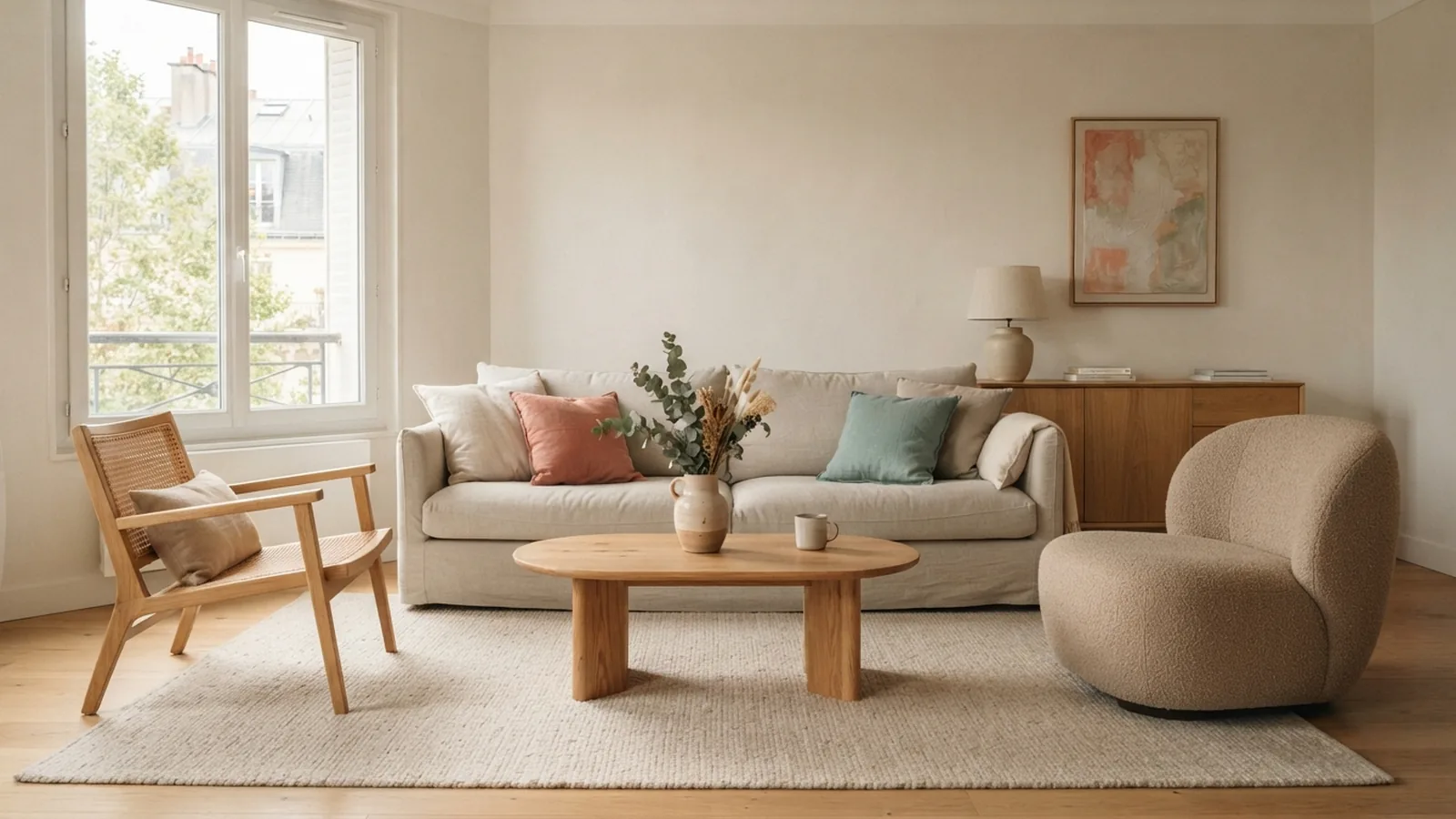
The best size area rug for a living room depends on room dimensions and furniture placement. For many medium rooms, an 8-by-10-foot rug lets the front legs of sofas and chairs rest on its edge. Larger living rooms may need a 9-by-12-foot rug to hold the full seating group. Small rooms can work well with a 5-by-7-foot rug beneath the coffee table.
A rug that is too small can make the seating area feel split apart. A larger rug often brings the sofa, chairs, and table together as one clear group. It also gives the room a steadier look. Aim to leave about 18 to 24 inches of bare floor between the rug and the walls when the room allows.
That gap is a useful starting point, not a strict rule. A narrow room may need less exposed floor, while a broad room may need more. The goal is to show enough flooring to frame the rug without making the rug feel like a small island. Think about how people walk through the space, too.
So, what size area rug for living room should you choose? Start with the furniture group, then check how the rug fits the room. The right choice should support the layout and leave clear paths around it.
Measure the room and furniture before you shop
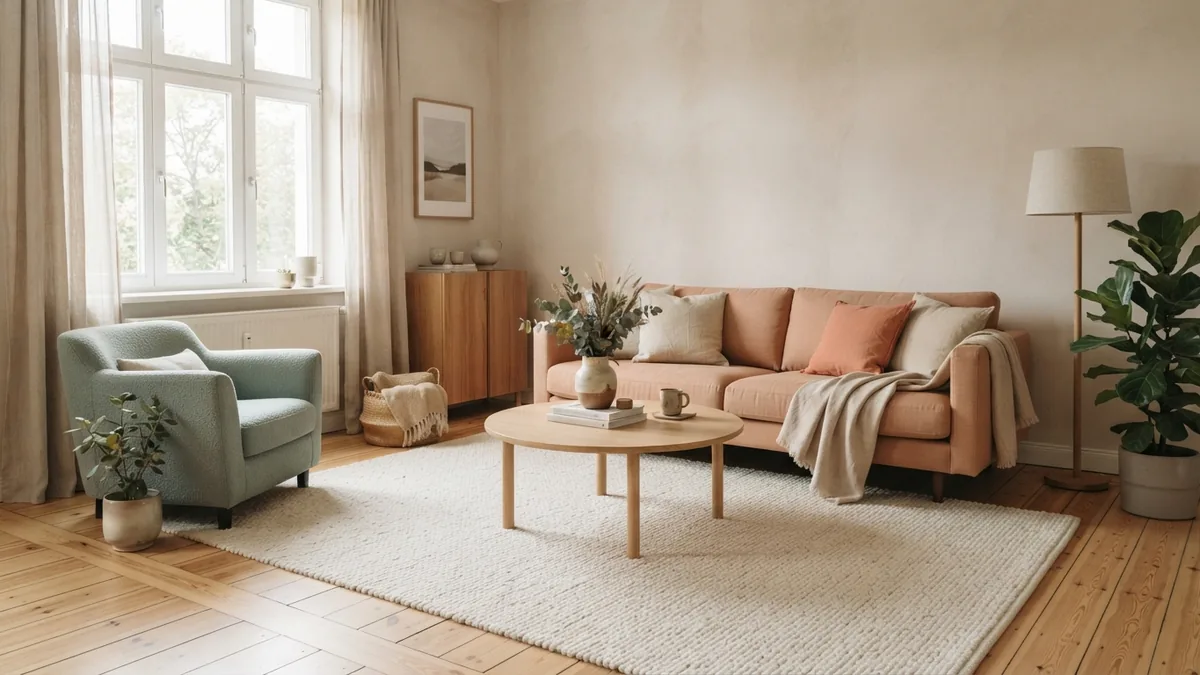
Measure the full room first, then note doors, fireplaces, built-in shelves, and walkways. These details can limit where a rug can sit. Measure the open floor area where the furniture belongs, rather than relying only on the room’s outside dimensions. Write down both measurements.
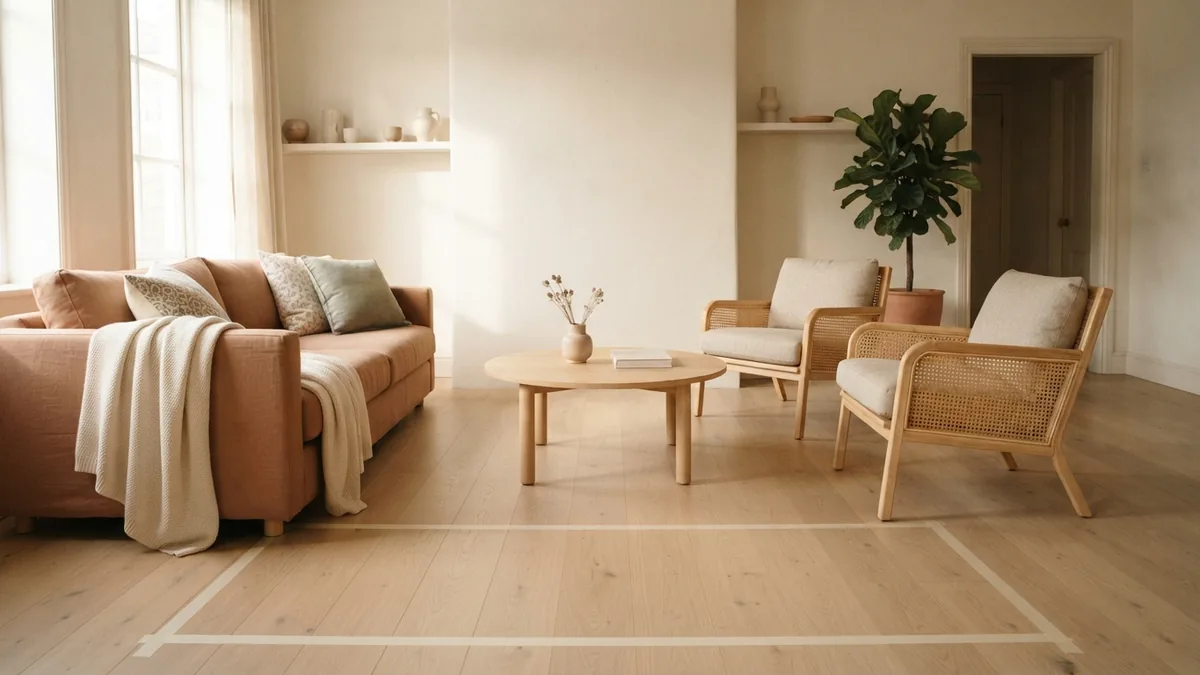
Next, measure the sofa and chairs as a group. Include the space between each piece, along with the coffee table. A simple outline made with painter’s tape can show how a rug size will look on the floor. Try more than one outline before you buy.
Keep walkways clear. A main route through the room should not force people to step on and off the rug at every turn. Also check door clearance, especially near an entry. A thick rug can catch a door even when its size looks right on paper.
- Measure the room’s length and width.
- Mark furniture edges and the main walking paths.
- Use tape to trace the rug’s planned edge.
- Check that doors open and chairs can move freely.
These steps make rug measurements more reliable than guessing from a store display. They also help you compare common sizes with your actual layout. Keep the notes on your phone or a sheet of paper while shopping.
Recommended rug sizes for living rooms
An 8-by-10-foot rug is a strong choice for many medium-sized living rooms. Place it so the front legs of the sofa and chairs sit on the rug. This links the seats without covering every inch of floor. Leave enough rug in front of the sofa for the coffee table.
In a larger room, consider a 9-by-12-foot rug. This size can fit all the main furniture when the room has enough floor space. It works well when the sofa, chairs, and table form one broad seating area. Check that the rug still leaves a visible border of floor.
For a small room, a 5-by-7-foot rug centered under the coffee table can define the seating area. It may not reach the sofa legs, so keep the furniture close to the rug’s edges. If the room feels cramped, try a larger rug before choosing a smaller one. More rug can make the grouping feel less scattered.
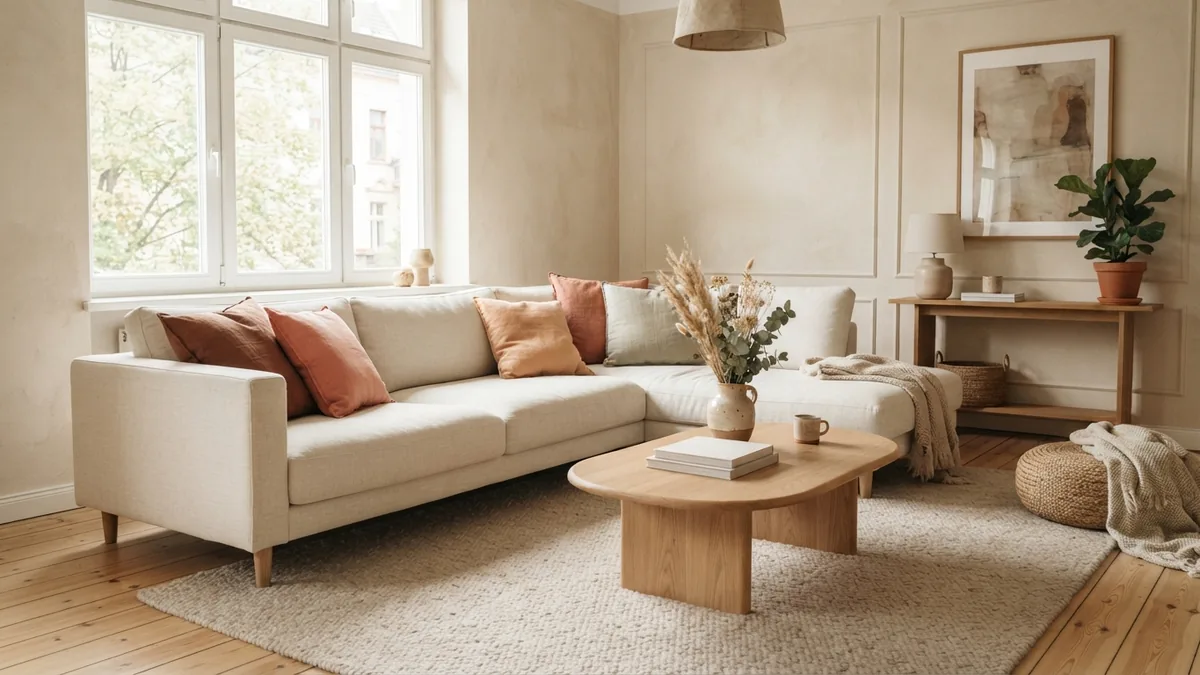
For a sectional, measure both sides of the L-shaped seat. An 8-by-10-foot rug may suit a compact sectional, while a larger one may need a 9-by-12-foot rug. Aim to place the sectional’s front legs on the rug. Check that the chaise does not block a walkway.
| Room or layout | Starting size | Furniture placement |
|---|---|---|
| Small living room | 5 by 7 feet | Center under the coffee table |
| Medium living room | 8 by 10 feet | Front legs of seats on the rug |
| Large living room | 9 by 12 feet | All main furniture on the rug, if it fits |
These sizes are starting points, not fixed answers. Furniture scale and room shape can change the best fit. When you sit down, the rug should feel connected to the seats, not far away from them.
Choose a layout that fits your furniture
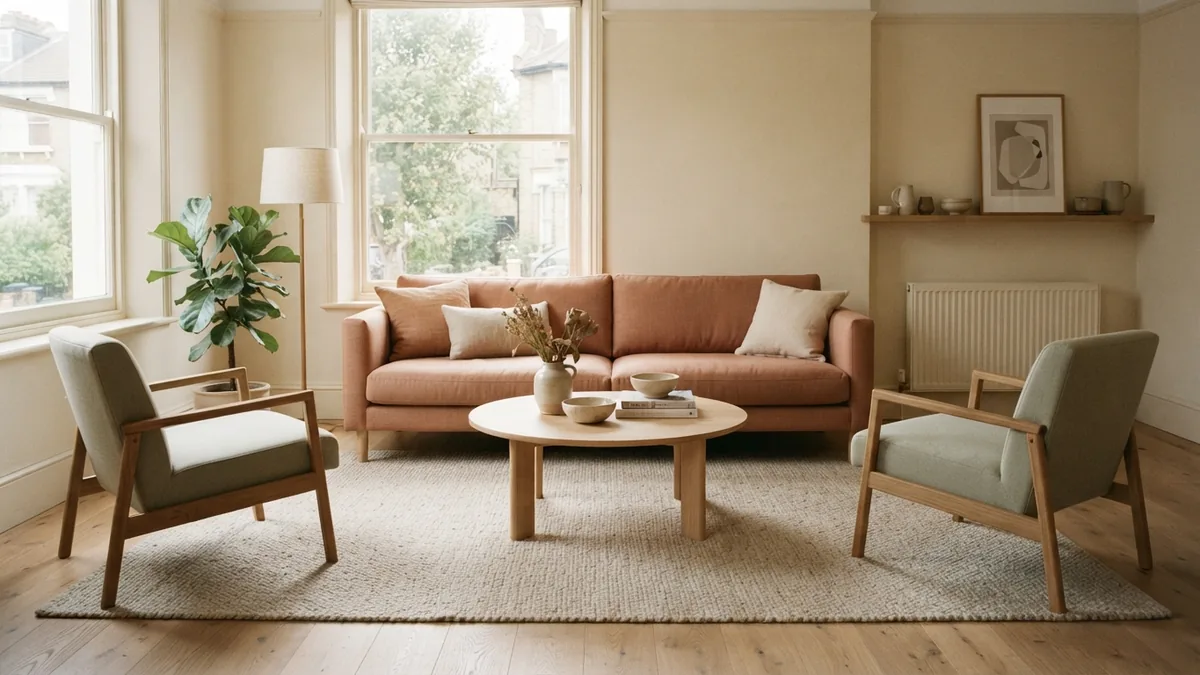
There are three common area rug layouts. The largest rug can sit beneath all furniture legs. This creates a strong, unified seating zone, but it needs more floor space. Measure carefully so the rug does not crowd the walls.
A second option puts only the front legs of each seat on the rug. This works well in many medium rooms and keeps the furniture linked. Place chairs close enough to the sofa that their front legs reach the rug, too. Keep the coffee table fully on the rug when possible.
A third layout places the rug under the coffee table alone. It can suit small rooms or layouts where furniture cannot move. Keep the table centered and leave a little space between the rug and nearby seats. If the rug looks detached, try moving it closer to the sofa.
For a sectional, line the rug up with the main seating edge. Let the rug extend beyond the open ends of the sectional when space permits. This gives the seating zone a clear boundary. Leave a safe route around the chaise or corner seat.
Choose one layout before buying. Mixing placement rules can make the room feel uneven. A quick tape outline lets you test how each option affects the walkways and the balance of the furniture.
Style rugs for living and dining areas
Color and pattern matter, but size comes first. Once the rug fits the furniture, choose a tone that suits the floor and upholstery. A pale rug can brighten a dim room, while a deeper tone can ground light furniture. Keep bold patterns in scale with the room.
Dining rugs need room for chairs to slide out. For a useful fit, the rug should extend about 24 inches beyond each edge of the dining table. Measure from the table’s full outline, not just its center. Then check that pulled-out chairs stay on the rug.
Match the rug shape to the table shape for a calm look. A round rug often works well with a round table, while a rectangular rug suits a long table. A square rug can fit a square table if the room allows enough space around it. Leave clear space for chair movement.
When choosing a rug for under a dining room table, account for the chairs in use. A rug that is too small can catch chair legs and make meals awkward. In an open-plan room, the dining rug can also mark the eating area apart from the living space. Keep both rug edges and walking paths clear.
Finally, consider how the room is used each day. A low-pile rug is often easier to clean beneath dining chairs. In a living room, a softer texture may feel better underfoot. The best choice fits the room, supports the furniture, and feels easy to live with.
Frequently asked questions
- What size area rug is best for a living room?
- An 8-by-10-foot rug suits many medium living rooms. For a large room, try 9 by 12 feet. In a small room, a 5-by-7-foot rug can sit beneath the coffee table.
- Should living room furniture sit on the rug?
- In many rooms, place the front legs of sofas and chairs on the rug. A larger room may fit all the main furniture on the rug.
- What size rug works with a sectional?
- An 8-by-10-foot rug can fit a compact sectional. A larger sectional may need 9 by 12 feet. Measure both sides and keep walkways open.
- How far should a dining room rug extend beyond the table?
- Aim for about 24 inches beyond each table edge. This gives chairs room to slide back while staying on the rug.
- Should a dining rug match the table shape?
- Matching shapes often looks balanced. Try a round rug with a round table, or a rectangular rug with a long table.
Related reading
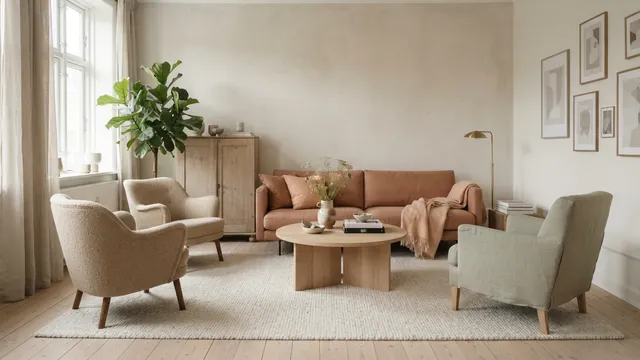
Living Room Rugs — Size, Placement, and Style
Find a rug size that anchors your seating and suits the room.
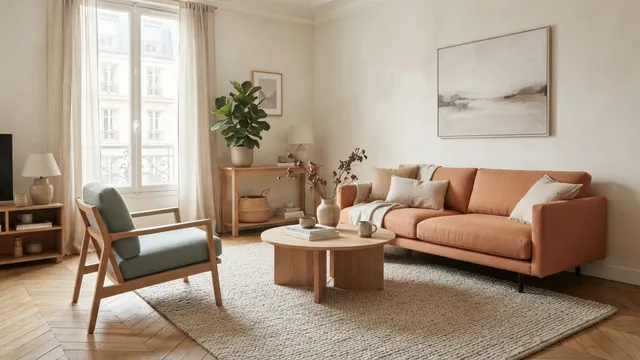
Living Room Rugs — Size, Placement and Balance
Size and place a rug to bring your seating area together.
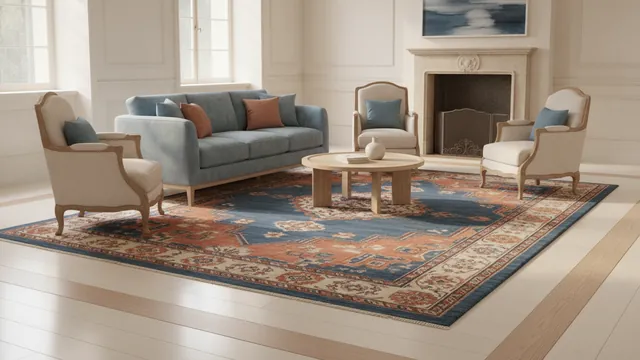
Can a Rug Be Too Big for a Room? Find the Right Size
Find the right rug size for balance, comfort, and better furniture placement.