How to Place an L-Shaped Sofa in Your Living Room
Plan the fit, protect walkways, and style your L-shaped sofa with balance.
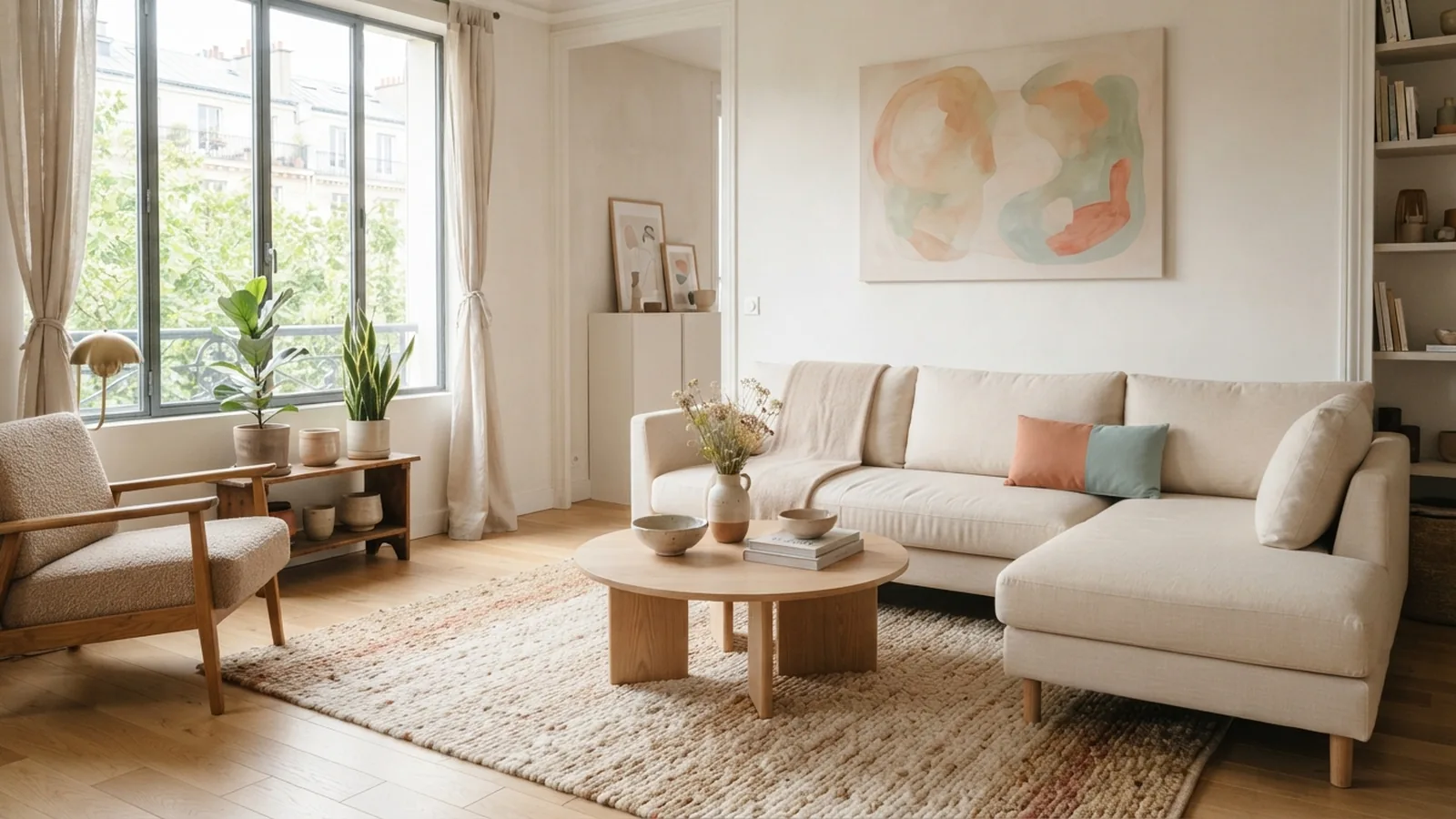
Understand What an L-Shaped Sofa Can Do
An L-shaped sofa can anchor a living room, mark a seating zone, or make a corner useful. Its two connected sides offer room to stretch out without needing several separate seats. The right placement depends on the room, not a fixed rule.
Start by noting which side holds the longer seat and where the chaise extends. Some models let you switch the chaise side, while others do not. Check this before planning around doors, windows, or a television.
Small rooms can suit compact L-shaped sofas, while larger rooms can take wider models. A low back often keeps a small space feeling open. A deeper sofa may feel cosy, but it needs more room around it.
- Use a corner to save open floor space.
- Use a central position to divide an open-plan room.
- Keep the sofa's long side in line with the room's main shape.
Plan the Room Before You Move Furniture
Measure the room, then mark doors, windows, radiators, and walkways on a quick sketch. Measure the sofa's full width and depth, including its chaise. Use masking tape on the floor to show its footprint before you move it.
Leave about 30 to 36 inches for a main walkway when the room allows. A path can be narrower in a tight home, but people should pass without turning sideways. Keep doors and drawers clear of the sofa's edges.
There is no single answer to what size sofa a living room needs. Compare the sofa's footprint with the room's usable floor area, not just its wall length. Leave enough space for a coffee table and a route through the room.
- Measure from wall to wall, then subtract deep shelves or other fixed items.
- Check the route from the entry to the seats and any adjoining room.
- Test the taped outline from several angles before buying or lifting.
Choose a Wall or a Floating Position
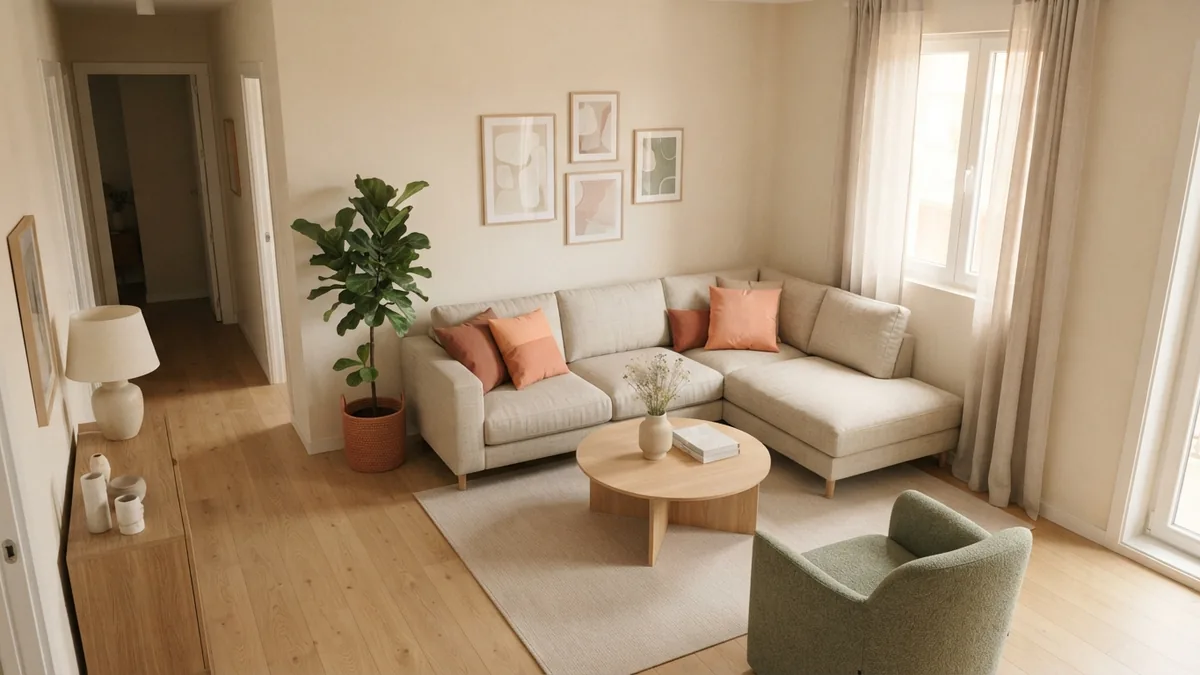
Placing the sofa against a wall is often the simplest choice in a small room. It keeps the center open and can make daily movement easier. Leave a small gap behind it if curtains, vents, or trim need space.
In a larger room, a sofa can float in the center instead. Set its back toward a dining area or entry to define the lounge zone. This works best when the sofa has a finished back and people can walk around it.
To float a sofa, begin with the rug and the room's main path. Place the sofa so its front seats face the focal point, such as a fireplace or screen. Keep a clear route behind it, then adjust the distance until the room feels connected.
Try these positions before settling on one:
- Corner placement: Put the sofa's two sides along adjoining walls.
- Wall placement: Set its long side against a clear wall, with the chaise projecting into the room.
- Floating placement: Bring it forward and use its back to shape a separate seating area.
Style the Sofa With Rugs, Color, and Light
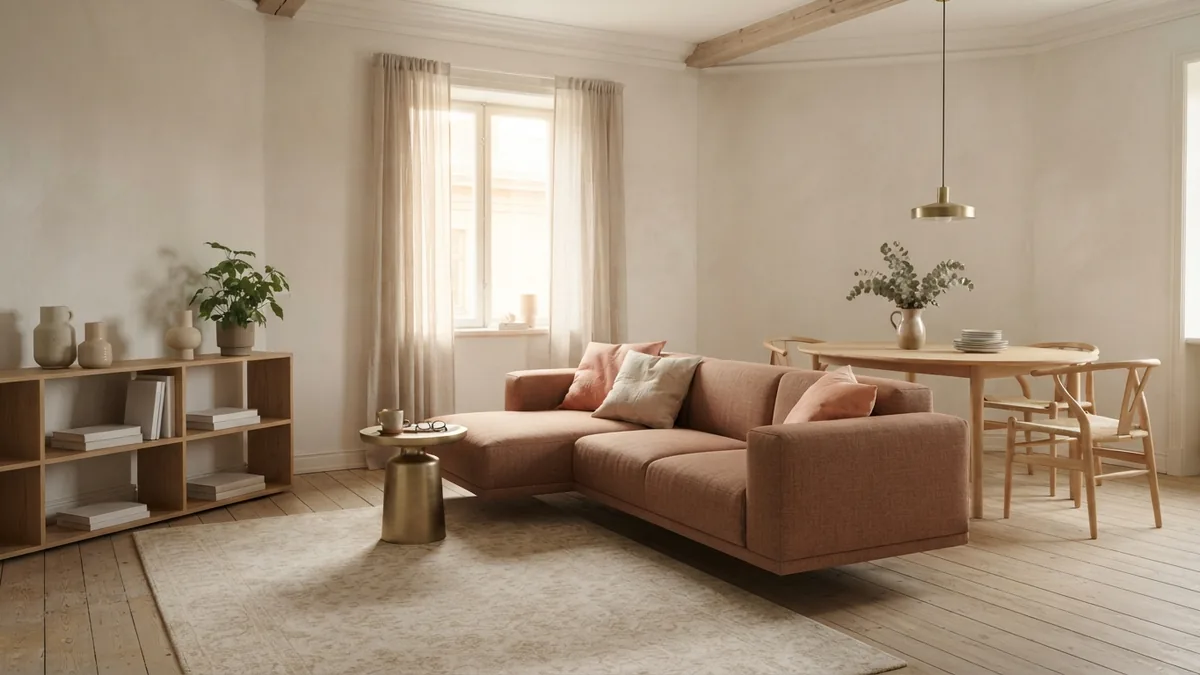
A rug helps define the seating area and adds warmth beneath a large sofa. Choose a size that reaches under the sofa's front feet and extends beyond its sides. A rug that is too small can make the whole arrangement feel cramped.
Use color to connect the sofa with the rest of the room. A neutral sofa can take patterned cushions, while a bold sofa often looks calmer with plain fabrics. Repeat one or two colors in a rug, curtains, or artwork for a joined-up look.
Think about how the sofa's color reads in natural light. A black sofa can feel heavy in a small room, so balance it with pale walls, a light rug, and warm wood. A Chesterfield's deep buttons and rolled arms already add detail, so keep nearby patterns simple.
Lighting matters, too. A floor lamp beside the chaise adds useful light without taking up much table space. Keep the sofa clear of windows when it blocks daylight or makes curtains hard to use.
Pair the Sofa With the Right Furniture
Choose a coffee table that fits the sofa's scale and leaves room to move. As a starting point, leave about 14 to 18 inches between the seat and table. A round table can soften the sharp corner of an L-shaped sofa.
Accent chairs can balance the sofa, but they should not crowd its open side. Angle one chair toward the sofa to support conversation. In a narrow room, a small stool or movable side table may work better.
Keep side tables near the seats people use most. A lamp, drink, or book should be within easy reach without blocking the walkway. Use a few chosen objects rather than filling every surface.
- Pair a broad sofa with a sturdy table that does not look undersized.
- Use light chairs to keep a compact room from feeling packed.
- Add a basket or low shelf only where it does not narrow a path.
Avoid These Common Sofa Placement Mistakes
The most common mistake is buying by sight alone. A sofa may look right in a showroom but overwhelm the room at home. Check the taped floor outline and measure stairways, halls, and door openings before delivery.
Do not block the room's natural route just to center the sofa. A clear path matters more than perfect symmetry. Also check that the chaise does not cover a vent or stop a door from opening.
Another misstep is pushing every seat against a wall. In a broad room, that can leave a large, empty center. Pulling the sofa forward can make the seating area feel more useful and welcoming.
Look at the setup from the doorway and from each seat. If the table feels far away or the TV angle strains your neck, shift the layout. Small changes can fix the room without buying anything new.
Final Checks for a Comfortable Layout
The best L-shaped sofa position balances comfort, clear movement, and the room's focal point. Measure first, test the footprint, and choose a wall or floating layout that suits your space. Then add the rug and smaller pieces around the sofa.
Live with the arrangement for a few days before making final changes. Notice where people walk and whether each seat feels easy to use. Move one item at a time so you can tell what improves the room.
Keep the layout flexible as your needs change. A movable chair or side table can help a room serve both quiet evenings and guests. Good placement makes the sofa feel like part of the room, not an obstacle.
Step-by-step
- 01 Measure the room and sofa
Record the room's dimensions and the sofa's full width and depth. Include the chaise, doors, windows, and fixed items in your plan.
- 02 Mark the sofa footprint
Use masking tape to outline the sofa on the floor. Check the outline from the doorway and test the walking routes.
- 03 Choose a wall or floating layout
Place the sofa against a wall or in a corner if floor space is limited. Float it in a larger room to define the lounge zone.
- 04 Add the rug and other furniture
Set the rug under the sofa's front feet, then add a suitably sized table and any accent chairs. Keep walkways clear.
- 05 Test and adjust the arrangement
Sit in each seat and check views, reach, and movement. Shift the furniture until the room feels comfortable to use.
Frequently asked questions
- Where should an L-shaped sofa go in a living room?
- Place it against a wall or in a corner when you need open floor space. In a larger room, float it to mark the lounge area while keeping clear paths around it.
- How do I know what size sofa will fit my living room?
- Measure the room and the sofa's full footprint, including the chaise. Mark the outline with tape, then check walkways, doors, and space for a table.
- How much space should I leave around an L-shaped sofa?
- Aim for about 30 to 36 inches on main walkways when the room allows. Leave roughly 14 to 18 inches between the seat and coffee table.
- Can I float an L-shaped sofa in a small living room?
- You can, if the room still has clear walking routes and the sofa does not crowd the table or doors. A wall or corner placement is often easier in a tight room.
- What furniture goes well with an L-shaped sofa?
- A coffee table sized to the seats, a rug that reaches under the front feet, and one or two accent chairs can work well. Leave enough open space to move around them.
Related reading
What Size Area Rug Fits a Living Room? Measure and Layout
Choose a rug that fits your room, furniture, and daily routines.
Where Should You Put a Console Table in a Living Room?
Choose the right spot, size, and styling for a console table that works.
How to Decorate a Modern Living Room — Layout, Color, and Warmth
Create a modern living room with calm color, useful furniture, and warm texture.