How to Place a Rug in a Living Room With Style
Set the right rug size, layout, and flow for a better living room.
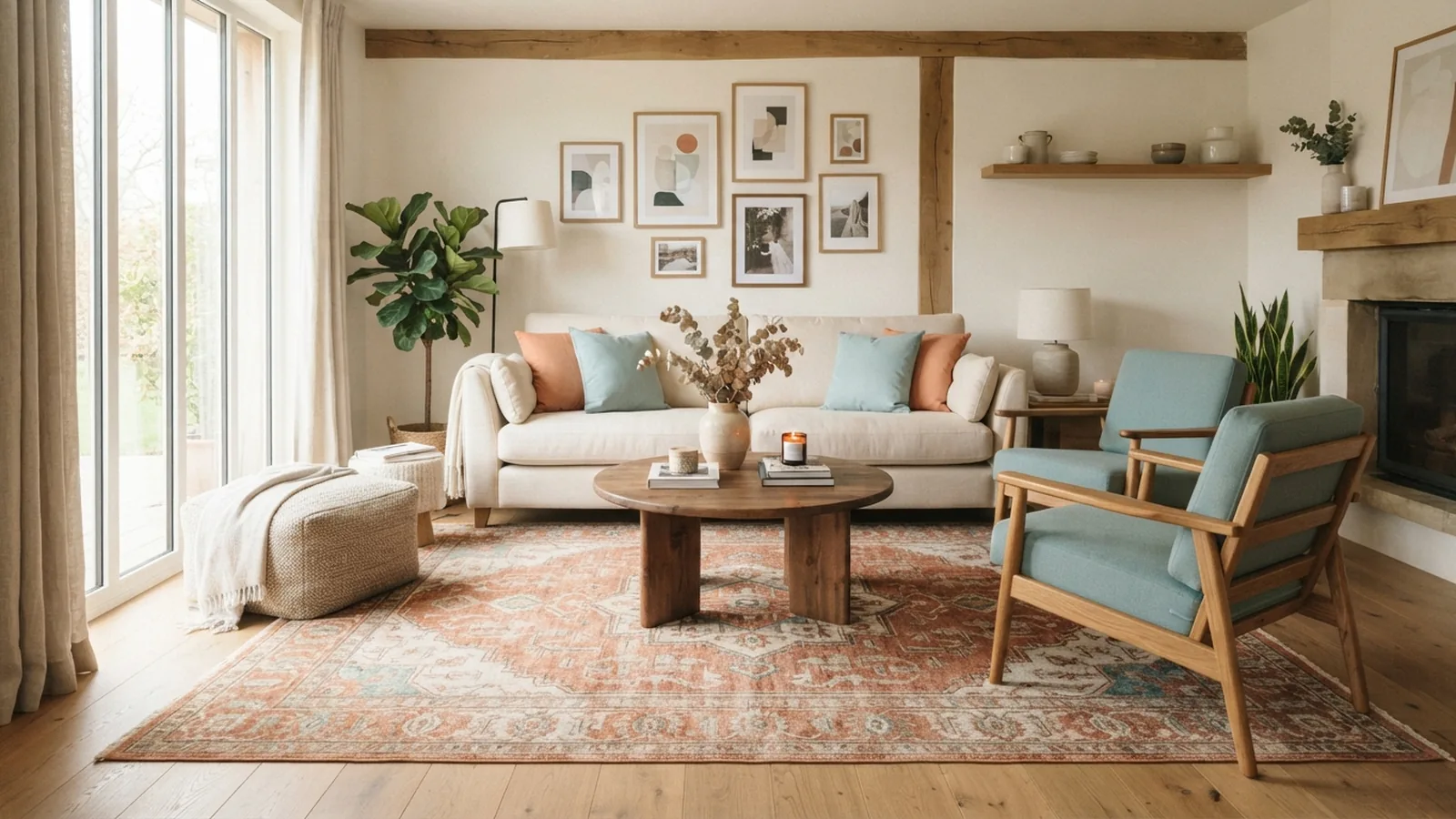
Understanding Rug Placement Basics
The best way to place a rug in a living room starts with the seating group. A rug should connect the sofa, chairs, and coffee table. It should also support easy movement through the room.
Think of the rug as a frame for your furniture arrangement. It marks the area for sitting, talking, and relaxing. The room feels calmer when each piece relates to the rug.
Before you buy, mark the planned rug edges with painter’s tape. Walk through the room from every door. Check the tape against vents, doors, and walking paths.
If you wonder where to place a rug in living room layouts, start with the furniture. Do not center the rug on empty floor space alone. Center it on the main activity area instead.
- Center the rug on the seating group.
- Keep doors and main paths clear.
- Face the rug’s long edge toward the sofa.
- Use a rug pad for grip and comfort.
Choosing the Right Rug Size
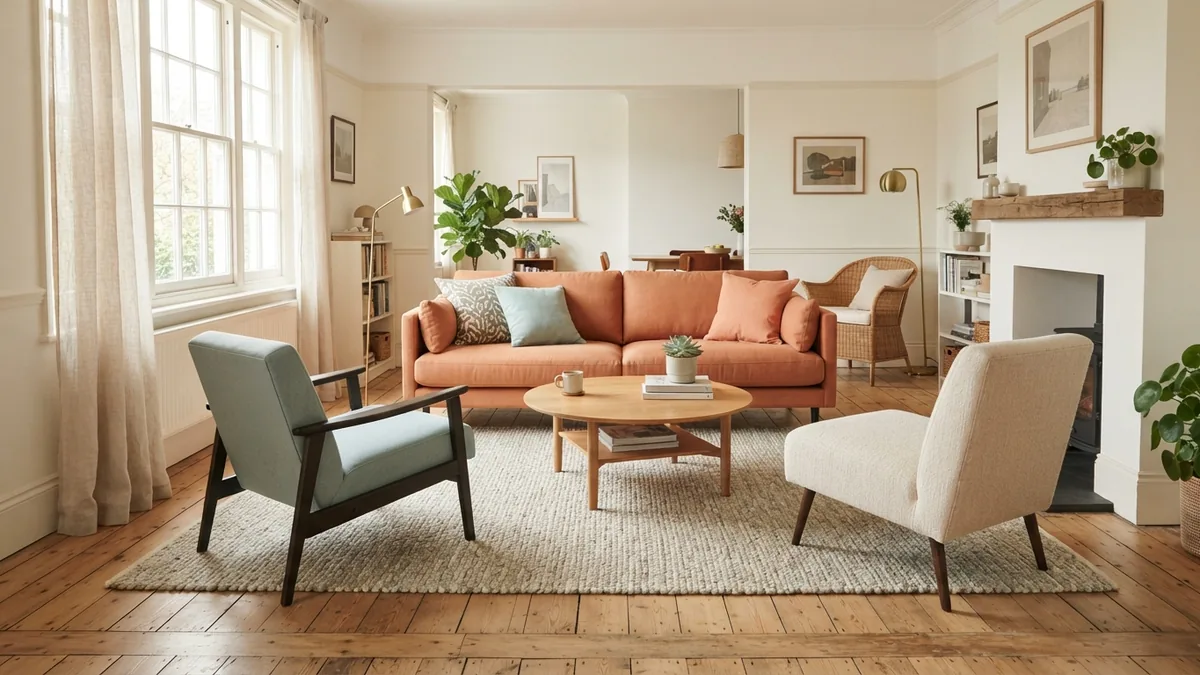
Rug size controls the balance of the whole room. A small rug can make furniture look scattered. A large rug can hide too much floor.
As a useful guide, leave 8 to 18 inches of exposed floor around the rug. This border gives the room a clean edge. Measure from the rug edge to each nearby wall or cabinet.
An 8-by-10-foot rug often suits a standard sofa and two chairs. A 9-by-12-foot rug fits a larger seating group. Treat these sizes as starting points, not fixed rules.
| Seating setup | Starting size | Furniture fit |
|---|---|---|
| Compact seating area | 5 by 8 feet | Front legs on the rug |
| Average living room | 8 by 10 feet | Most legs on the rug |
| Large seating group | 9 by 12 feet | Full group on the rug |
Use tape to test each size before you shop. Include the sofa depth and chair width. This step can prevent a costly sizing mistake.
A rug should extend beyond the coffee table on every side. Aim for at least 12 inches where space allows. Feet should land on the rug during normal use.
Different Rug Placement Layouts
There are three main rug layouts for a living room. The first puts every furniture leg on the rug. This choice creates one strong, joined seating area.
The second puts only the front legs on the rug. This layout suits many medium rooms. It saves floor space while keeping the furniture connected.
The third places the rug under the coffee table alone. Use this option when the room has very little open floor. The rug must still extend beyond the table.
- All legs on: Choose this for large rooms and open plans.
- Front legs on: Choose this for a balanced, flexible layout.
- Coffee table only: Choose this for small seating areas.
Keep enough rug beneath each front leg. This helps stop chairs from rocking. It also softens the hard line between rug and floor.
If you are learning how to place a rug in a small living room, test the front-leg layout first. It often gives the best mix of comfort and space. A coffee table layout works when every inch matters.
Aligning the Rug With Furniture
The rug should follow the shape and direction of the seating group. Align its edges with the sofa when possible. This makes the room look planned rather than random.
When learning how to place a rug with sectional furniture, begin at the inside corner. The rug should sit under the front legs on both sides. This links the sectional with the table.
For a large sectional, place all legs on a wide rug. For a smaller sectional, place the front half on the rug. Letting back legs sit on bare floor can save useful space.
The phrase how to place rug in living room with sectional points to one key rule. The rug must reach far enough into the sectional’s open side. Otherwise, the table and seats may feel split apart.
Measure the sectional’s full width and depth first. Add 12 to 24 inches beyond the coffee table. That extra space gives feet a soft landing.
Consider Room Shape and Flow
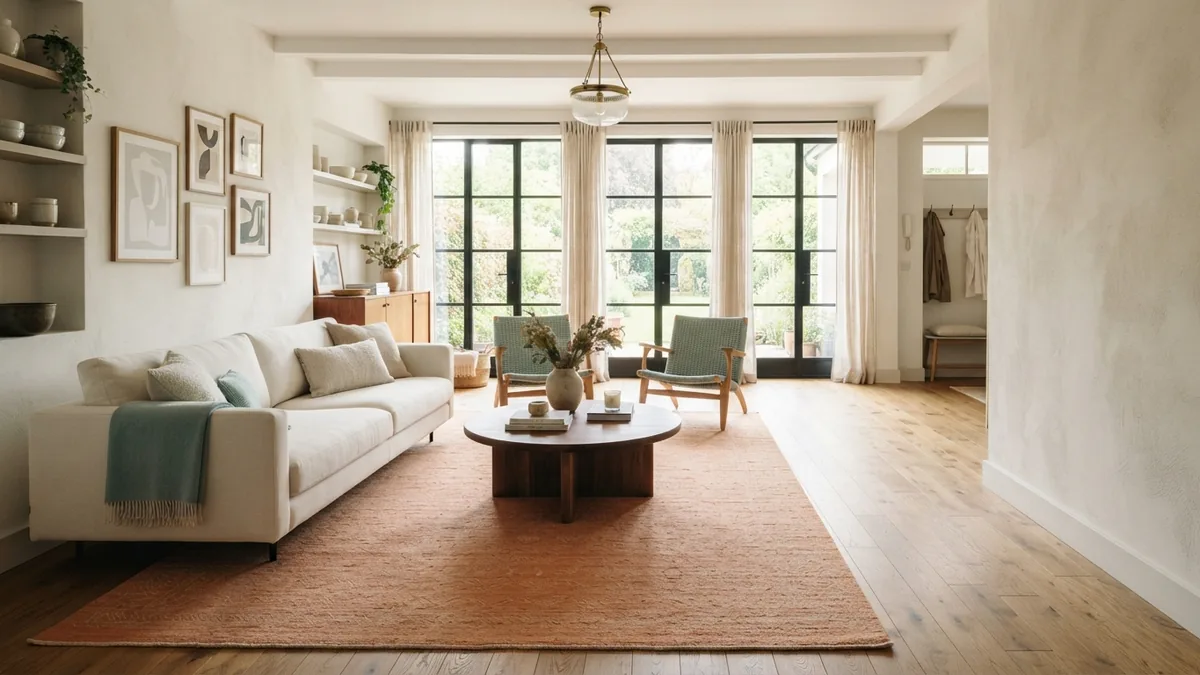
Room shape affects where to place rug in living room designs. Square rooms often look best with a centered rug. The rug can echo the room’s equal sides.
Rectangular rooms usually suit a rug that follows the room’s length. This direction supports the room’s main lines. It can also make a narrow space feel more open.
Entry points matter as much as wall shape. Keep the first few steps inside each door clear. Place the rug beside the path or beyond the entry zone.
Check the route between the sofa, doorway, windows, and nearby rooms. People should not need to step around a raised edge. Good placement guides movement without blocking it.
- Keep one clear route across the room.
- Do not put an edge where people turn often.
- Align long rugs with long rooms.
- Center square rugs on the seating group.
- Keep rug corners away from door swings.
Thick rugs need extra care near doors. A rug pad can add height. Test the door swing before you settle on the final position.
Common Placement Mistakes to Avoid
The most common mistake is choosing a rug that is too small. A tiny rug can leave the sofa and chairs floating apart. It may also shrink the visual weight of the seating group.
Another mistake is placing the rug too close to a wall. A narrow floor border can make the room feel cramped. Keep the exposed floor border even when possible.
Do not place a rug edge under one chair leg only. That position can make the chair rock. Shift the rug or move the chair fully onto the floor.
Ignoring door swings can cause daily problems. The door may catch the rug each time it opens. Check every nearby door before making your final choice.
- Do not size the rug by the coffee table alone.
- Do not block vents or heating units.
- Do not leave one main seat far outside the group.
- Do not skip a pad under a thick or loose rug.
Final Tips for Rug Styling
Once the rug sits well, adjust the furniture around it. Keep the coffee table centered with the sofa. Leave enough room for knees and clear walking routes.
Choose a pattern that supports the room’s scale. Large rooms can handle bold shapes. Small rooms often benefit from softer patterns and lighter tones.
Use the same rule when asking how to place a rug in a room beyond the living room. Start with the main activity area. Then check size, furniture contact, and movement.
Finish by walking through the room at different times of day. Look for curled corners, glare, and blocked paths. Make small shifts before you decide the layout is done.
The right rug does more than cover the floor. It joins the furniture and improves the room’s flow. Measure first, test with tape, and let the seating guide the final position.
Frequently asked questions
- How should I place a rug in a living room?
- Center the rug on the main seating group. Keep the sofa, chairs, and coffee table linked while leaving paths clear.
- Where should a rug go in a living room?
- Place it beneath the main seating area. Center it on the furniture rather than the room’s empty floor.
- How do you place a rug in a small living room?
- Use a front-legs-on layout when possible. A coffee table layout can work when floor space is very limited.
- How should I place a rug with a sectional?
- Set the rug under the sectional’s front legs on both sides. Make sure it reaches into the open area near the coffee table.
- How much floor should show around a living room rug?
- Leave about 8 to 18 inches of exposed floor around the rug. Keep the border even when the room allows it.
Related reading
Living Room Rugs — Size, Placement, and Style
Find a rug size that anchors your seating and suits the room.
How to Learn Interior Design on Your Own or Online
Learn interior design through clear principles, free courses, and hands-on home projects.
How to Turn a Plain Room Into a Personal Space
Make a plain room feel personal with color, texture, layout, and smart low-cost updates.