Can a Rug Be Too Big for a Room? Find the Right Size
Find the right rug size for balance, comfort, and better furniture placement.
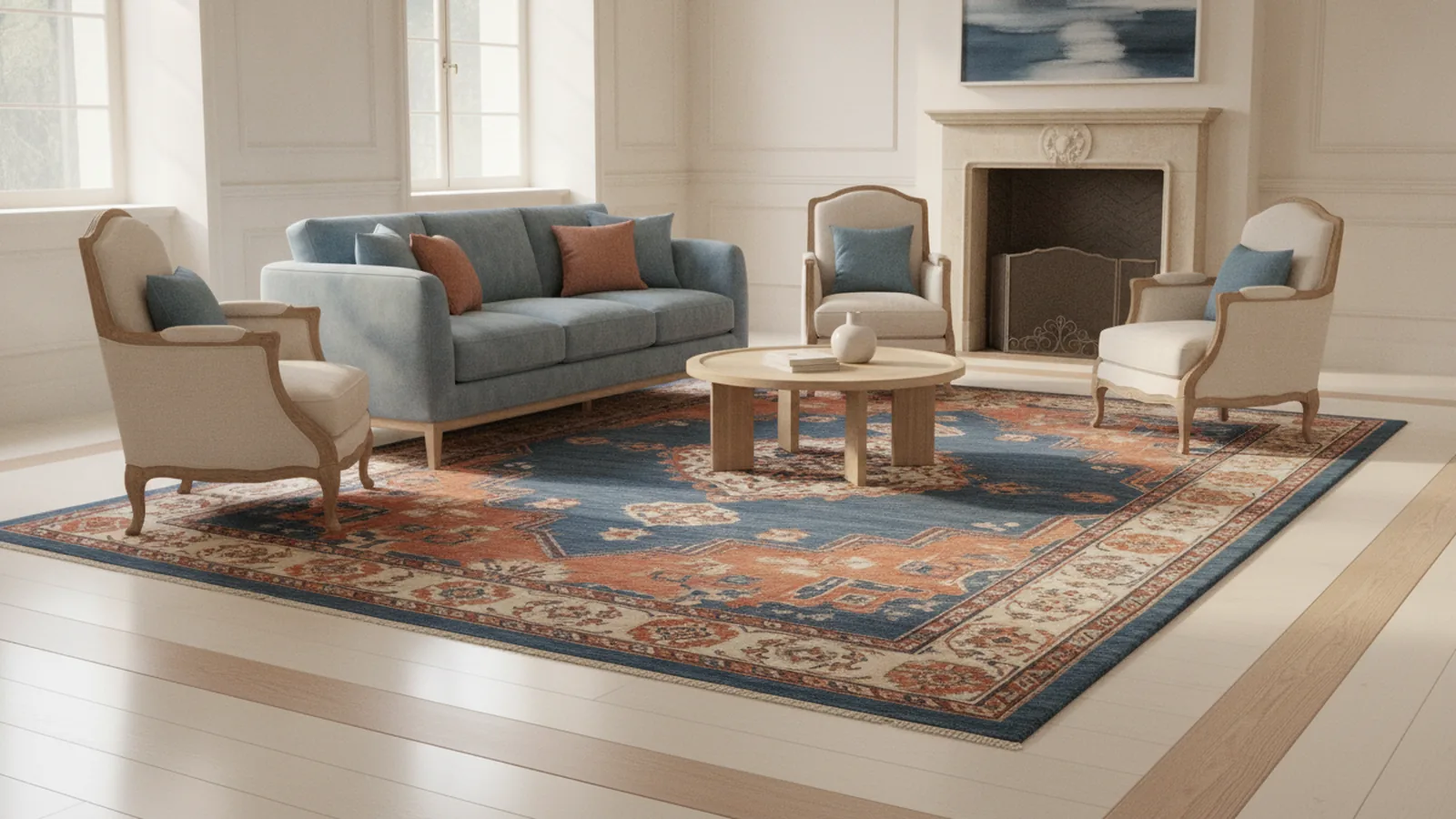
Can a Rug Be Too Big for a Room?
Yes, a rug can be too big for a room. An oversized rug may cover nearly every inch of floor. That can make the room feel tight, flat, or out of balance.
The right rug leaves a clear floor border around its edges. Aim for 12 to 18 inches of bare floor when the room allows it. This border frames the rug and helps the room breathe.
Size alone does not decide the result. A large rug can suit a large room with broad furniture. A smaller room may need a rug that supports the seating area without filling the whole floor.
Why Rug Size Changes Room Proportions
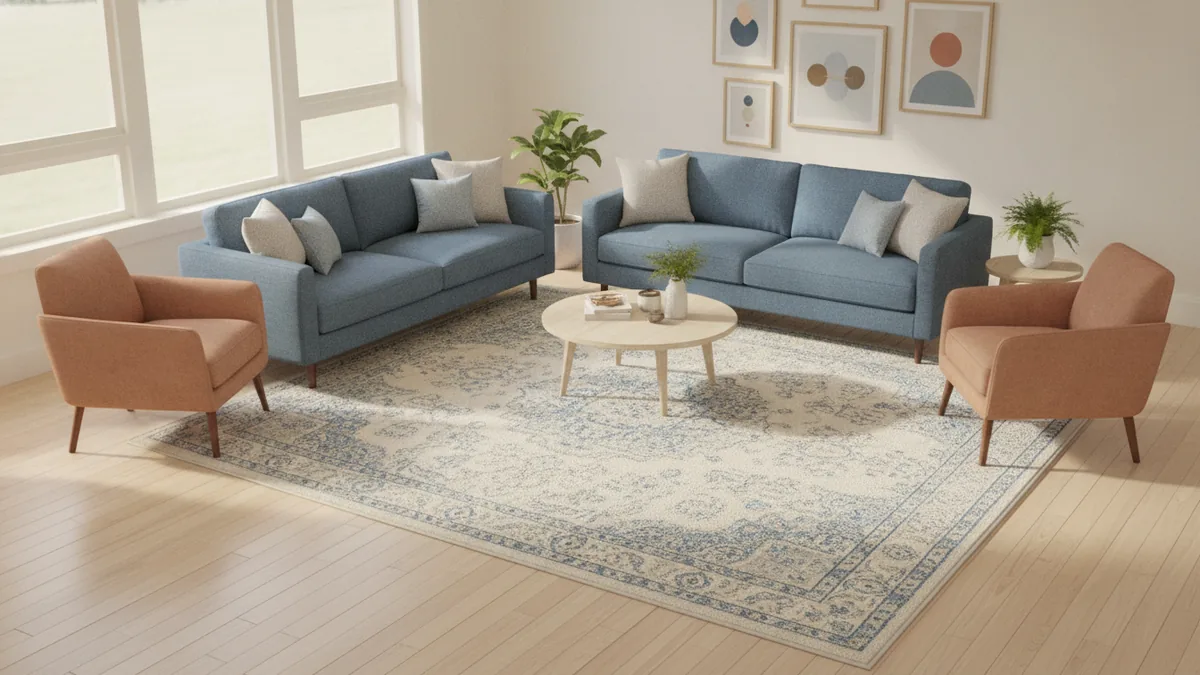
A rug creates a visual zone within a room. It can link chairs, sofas, and tables into one clear group. The right scale makes that group feel planned rather than scattered.
A rug that is too small can cause the furniture to look disconnected. A rug that is too large can hide the room's shape. Both problems weaken balance and reduce visual appeal.
Think of the rug as a frame. Its edges should support the furniture and leave enough floor around the frame. In most rooms, the rug should extend under the front legs of every major furniture piece.
| Rug position | Best use | What to watch |
|---|---|---|
| Under the coffee table | Small seating zones | Keep the sofa legs close to the rug edge |
| Front legs on the rug | Most living rooms | Keep all major seats aligned |
| All furniture on the rug | Large rooms | Keep a clear floor border around it |
Choose a Rug Size Based on the Room
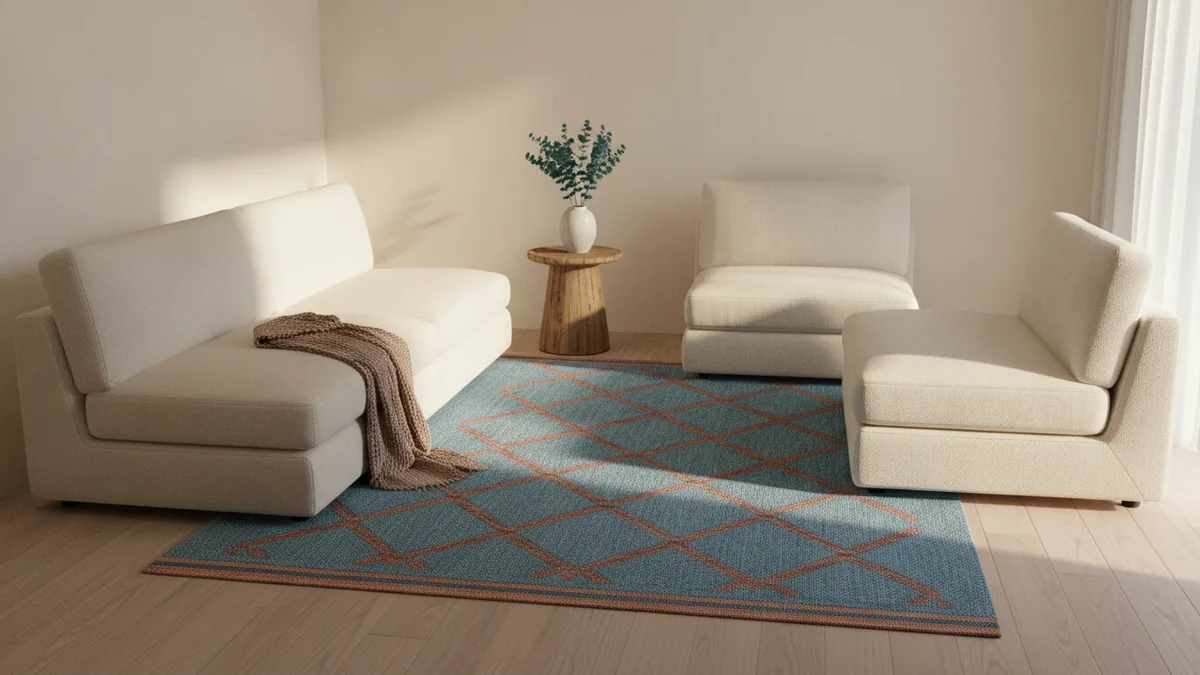
Start with the room's dimensions, then study the furniture placement. Measure the seating zone, not just the empty floor. A rug should serve the room's function first.
Small rugs often measure about 5 by 7 feet. They work beneath a small table or in a compact reading spot. Medium rugs often measure 6 by 9 feet or 8 by 10 feet. These sizes suit many living rooms and open seating areas.
Large rugs often measure 9 by 12 feet or more. They can anchor a wide seating group or a large open room. Check the room width before choosing one. You still need that 12 to 18 inch floor border.
- Small room: Use a rug that links the main seats without touching every wall.
- Medium room: Place the front legs of the sofa and chairs on the rug.
- Large room: Use a larger rug to hold the full seating group together.
- Dining area: Extend the rug beyond the chairs when they slide back.
For example, a 10 by 12 foot living room may suit an 8 by 10 foot rug. That leaves about 12 inches on two sides. A 9 by 12 foot rug may feel too close to the walls in that same room.
Match the Rug to Furniture Placement
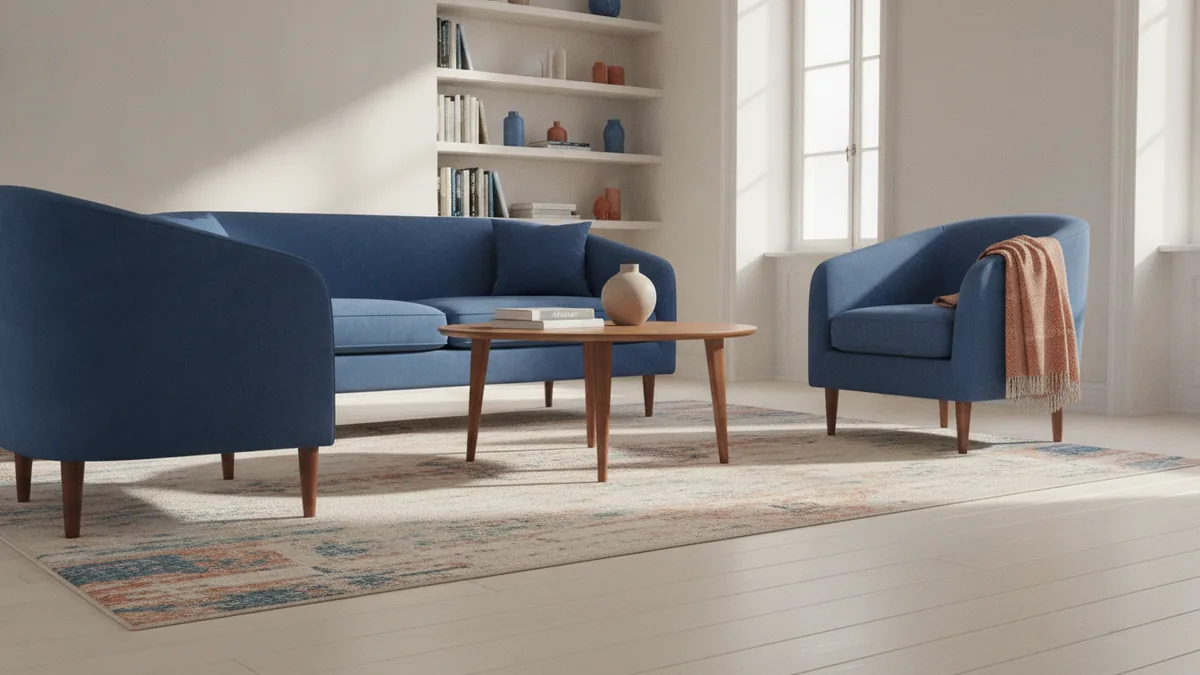
Furniture placement often matters more than the room's exact size. Mark the outer edges of the sofa, chairs, and table. Then choose a rug that reaches beneath the front legs of those pieces.
Keep the sofa fully on the rug when the room is wide enough. This choice creates a strong seating island. In a smaller room, place only the front legs on the rug. Keep the chair legs in the same zone for a clean line.
Dining rooms need extra space for movement. The rug should extend at least 24 inches beyond the table. This lets chairs stay on the rug as people sit down.
Bedrooms use a similar rule. A large rug can sit beneath the bed and reach beyond both sides. Two runners can work when a large rug would crowd the room.
Use Tape to Test the Size Before You Buy
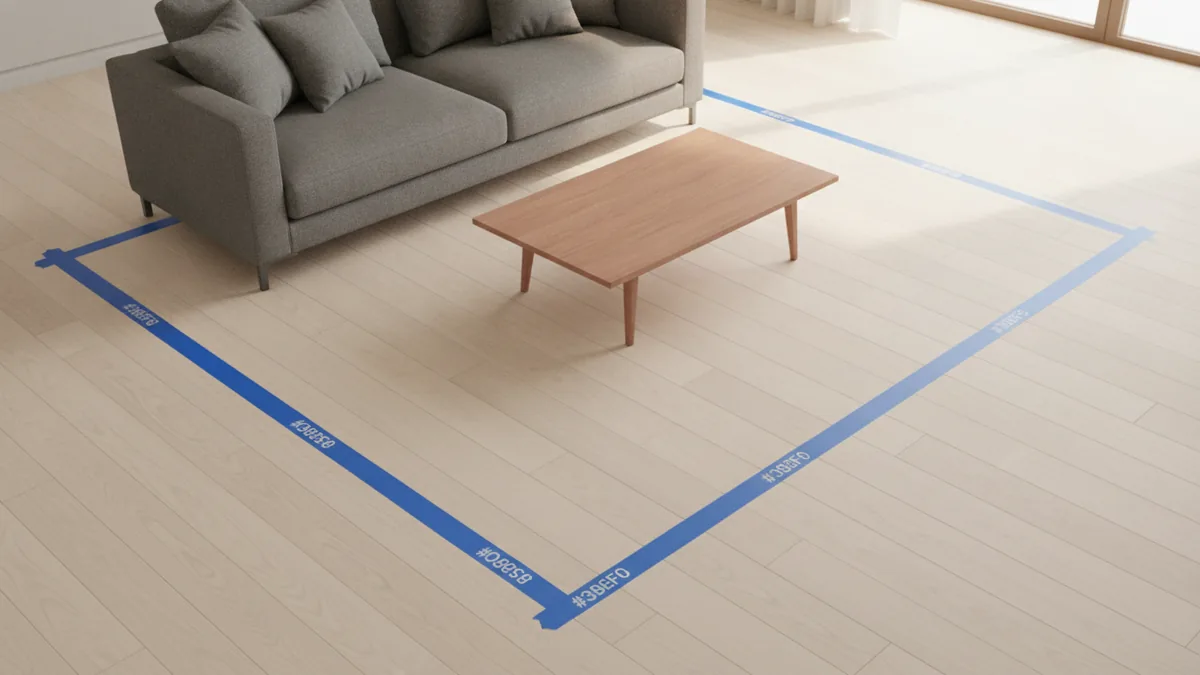
Painter's tape gives you a fast way to test rug size. It also shows whether doors, drawers, and walking paths still work. This step can prevent an expensive sizing mistake.
- Measure the rug size you are considering.
- Mark each corner with painter's tape.
- Place the tape under the planned furniture edges.
- Walk through the room and open nearby doors.
- Check the bare floor border from several viewpoints.
Stand at the room entrance and look toward the seating area. Then view the rug from each main seat. The outline should support the room without stealing attention from the furniture.
Use folded sheets or flat cardboard for a stronger test. These materials show the rug's full footprint. They also reveal how much floor remains around the edges.
Common Rug Sizing Mistakes to Avoid
The most common mistake is choosing a rug that is too small. A tiny rug beneath a coffee table can split the seating group apart. It may also make large furniture look heavier.
Another mistake is pushing the rug against every wall. This can erase the floor border and make the room feel cramped. Leave space around the rug unless the room has a special wall-to-wall plan.
Many shoppers also ignore door swings and walkways. A thick rug can stop a door from opening. A loose edge can become a trip point in a busy path.
- Do not size the rug from the coffee table alone.
- Do not mix front-leg placement with random chair placement.
- Do not skip tape testing in an open-plan room.
- Do not place a small rug inside a much larger seating group.
Color and pattern can change how large a rug appears. Dark tones may make a zone feel closer and warmer. Pale designs can make the same zone feel more open.
How to Make a Big Room Feel Cozy
A large rug is one of the best tools for making a big living room cozy. It gathers the seating into one warm zone. Choose a size that holds the sofa, chairs, and table together.
Use more than one seating group when the room has great width. A main rug can anchor the largest group. A smaller rug can define a reading chair or game table nearby.
Layering can add warmth without filling the full room with one huge rug. Place a smaller patterned rug over a larger plain base. Keep both rugs flat and aligned with the furniture.
- Group furniture around clear conversation areas.
- Use floor lamps and side tables to fill empty gaps.
- Place curtains near the ceiling to add height and softness.
- Repeat rug colors in pillows, art, and throws.
If you want to make a big room look smaller, create clear zones. Smaller zones break up long sight lines. They also make each part of the room easier to use.
Do not fill every open area with furniture. Leave paths between zones. Space still matters, even in a cozy room.
Final Sizing Check
Before you buy, compare the rug with the room, furniture, and walking paths. Check the 12 to 18 inch floor border first. Then confirm that the main furniture sits on the rug in a clear pattern.
Ask how the room should feel and function. A family room may need a broad, durable rug. A small lounge may need only a focused rug beneath its seats.
The best choice feels settled, not crowded. It gives furniture a shared base while keeping the room's shape visible. Measure twice, test with tape, and let proportion guide the final choice.
Frequently asked questions
- Can a rug be too big for a room?
- Yes. A rug can overwhelm a room when it leaves little bare floor around the edges. Aim for a 12 to 18 inch border when possible.
- Should a living room rug go under the furniture?
- Place the front legs of the sofa and chairs on the rug. In a large room, the full seating group can sit on the rug.
- How can I tell if a rug is the right size?
- Use painter's tape to mark the rug's planned corners. Walk around the outline and check doors, paths, and furniture placement.
- What rug size works best in a living room?
- An 8 by 10 foot rug suits many medium living rooms. Measure the room first and keep a clear floor border around the rug.
- How do you make a big room feel cozy?
- Create smaller seating zones with rugs, lighting, and side tables. Use warm colors and keep furniture grouped for easy conversation.
Related reading
Living Room Rugs — Size, Placement, and Style
Find a rug size that anchors your seating and suits the room.
Living Room Rugs — Size, Placement and Balance
Size and place a rug to bring your seating area together.
Furniture Layouts for Small Rooms (Without the Crowding)
Make a small room feel open, useful, and easy to live in.