How to Layer Rugs in a Living Room With Ease
Layer rugs with balance, texture, and a clear furniture plan.
Introduction to Rug Layering
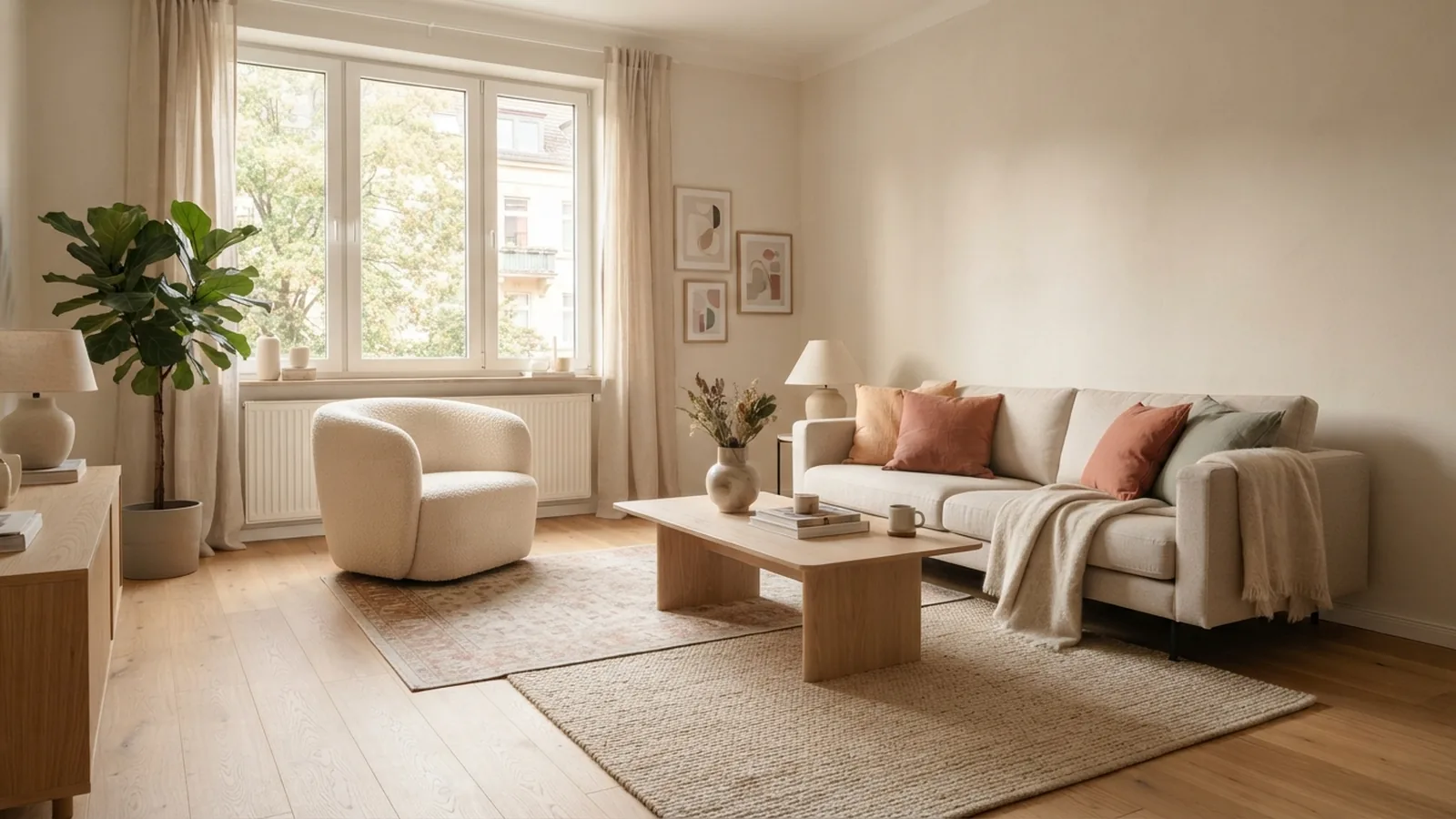
Learning how to layer rugs in living room spaces starts with a clear floor plan. A large rug anchors the main seating area. A smaller rug adds texture, color, or a clear zone.
Layering rugs in living room spaces can make a plain layout feel rich. It also adds warmth underfoot without replacing your furniture. The rugs should relate, but they do not need to match.
Begin with the sofa, chairs, coffee table, and walkways. Note where people walk most often. Then choose rugs that support the layout instead of blocking it.
- Use the base rug to anchor the seating group.
- Use the top rug to mark a smaller zone.
- Keep walkways open around each rug.
- Choose flat rugs that sit safely together.
Furniture size matters more than a fixed rug rule. The front legs of a sofa should usually rest on the base rug. This choice makes the seating area feel joined.
Choosing the Base Layer Rug
The base rug should cover most of the seating area. An 8-by-10-foot rug suits many apartment living rooms. A 9-by-12-foot rug works better with a larger sofa and chairs.
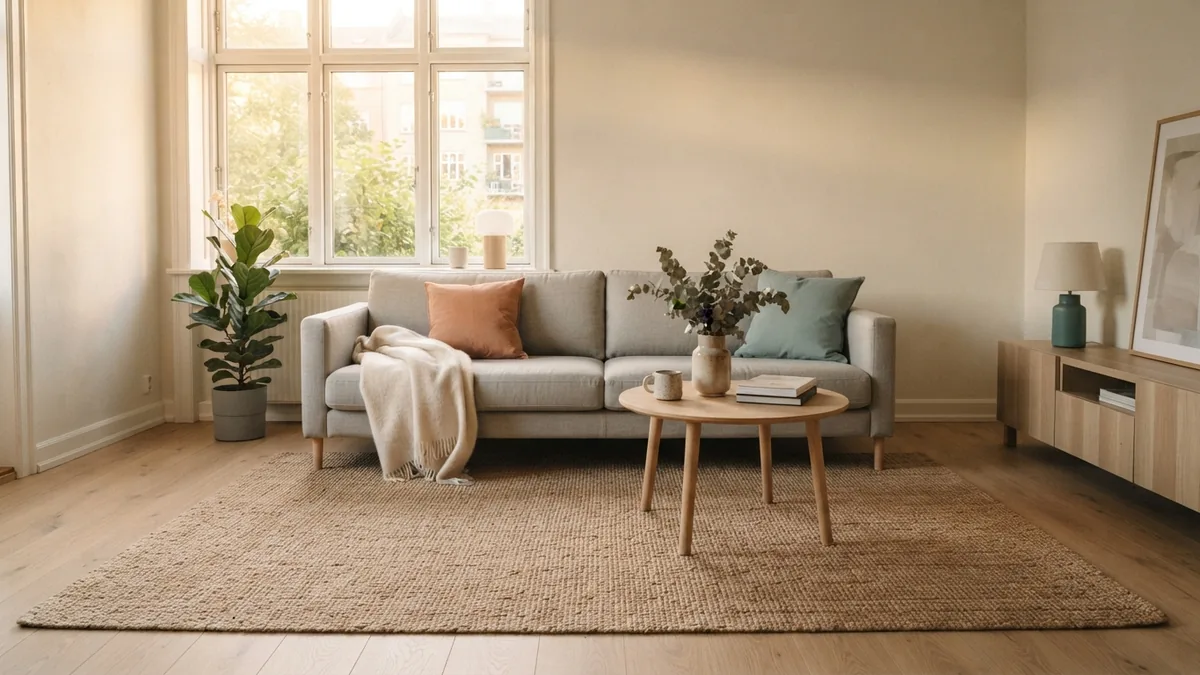
Natural fiber rugs make strong base layers. Jute is durable, calm, and easy to pair with other styles. Its woven surface also hides small marks from daily use.
Are jute rugs good for dining room spaces? They can work well in low-spill homes. Jute feels warm, but food spills may stain its rough fibers.
For a dining room, pick a tight weave and add a rug pad. The rug should extend at least 24 inches beyond the table. This space lets chairs move without catching the edge.
Choose a quiet base in oat, cream, sand, or soft beige. These shades suit many living room decor with rugs plans. They also leave room for a stronger top pattern.
Check the pile height before buying. A thick rug can catch doors or make tables wobble. Low-pile weaves often work best below a second rug.
How much of the base rug should show?
Let the base rug show on every side of the top rug. A border of 12 to 24 inches often looks balanced. Use a wider border in a large, open room.
Keep the base rug broad enough for the furniture. Chairs may sit fully on it or keep their back legs on the floor. Both layouts can work when the seating feels stable.
Selecting the Top Layer Rug
The top rug should usually be smaller than the base rug. This gap creates a clean border around the upper layer. It also keeps the room from feeling heavy.
A 5-by-7-foot rug suits a small seating group. A 6-by-9-foot rug can work in a larger room. Place it beneath the coffee table and near the front legs.
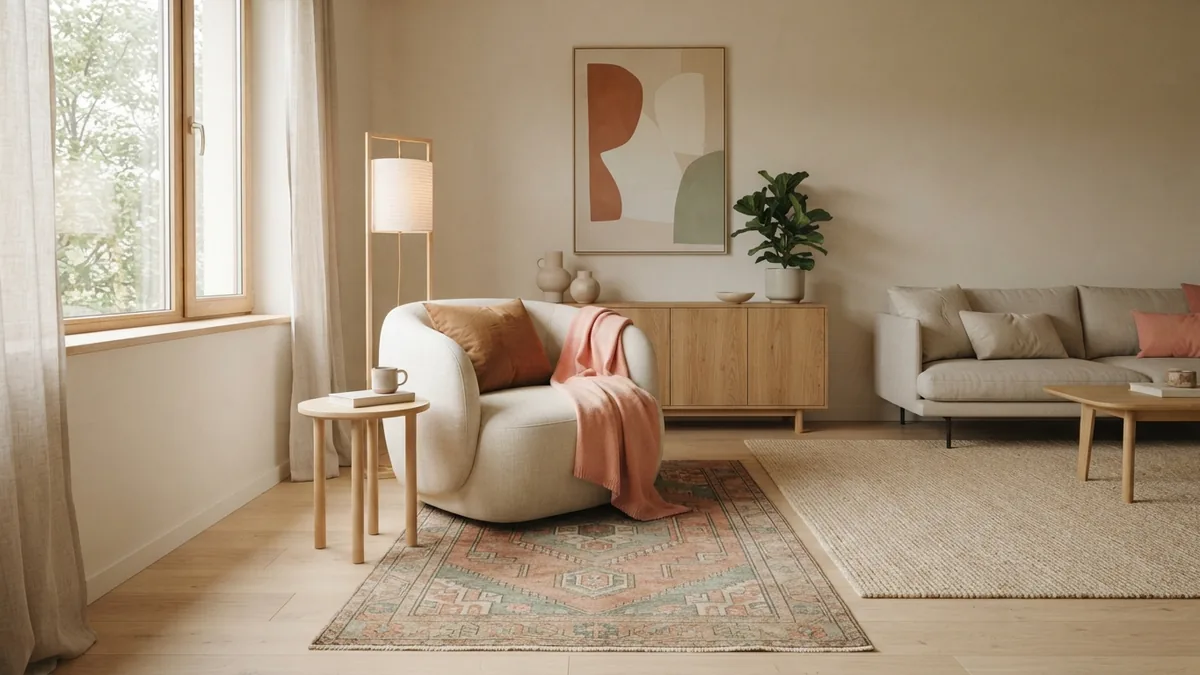
The best rugs for layering have different jobs. Let the base rug provide scale and calm. Let the top rug bring color, pattern, or soft texture.
- Jute beneath wool creates rough and soft contrast.
- Flatweave beneath a faded rug adds depth.
- A solid base supports a small geometric pattern.
- A neutral base suits a muted stripe or floral rug.
Pattern mixing works best when both rugs share one color. Try a cream jute rug with muted terracotta details. The shared cream tone keeps the pair linked.
Texture can create contrast without adding busy color. Pair a coarse base with a smooth wool rug. This mix feels rich but still calm.
Rug Layering Techniques and Room Zones
Centering both rugs is the easiest rug layering technique. It suits a sofa facing two chairs. Align the top rug with the coffee table for a calm focal point.
Asymmetry can feel more relaxed. Turn the top rug slightly or shift it toward one chair. Keep the base rug straight so the room still has a firm anchor.
A top rug can also mark a reading chair or a small work spot. This method helps define zones without adding a wall. Keep each zone large enough for its furniture.
Use texture as the main contrast when furniture has bold patterns. Use a pattern when the sofa and curtains feel plain. Change one main feature at a time.
| Room need | Base rug | Top rug |
|---|---|---|
| Warmth | Flat natural fiber | Soft wool or cotton |
| Color | Quiet beige weave | Muted terracotta pattern |
| Zone marking | Large neutral rug | Small rug under a chair |
| Calm style | Plain oat rug | Faded stripe or soft shape |
Keep the lower rug wider than the upper rug. A strong border makes the layers easy to read. It also keeps the floor plan from looking messy.
How to Combine Living and Dining Areas
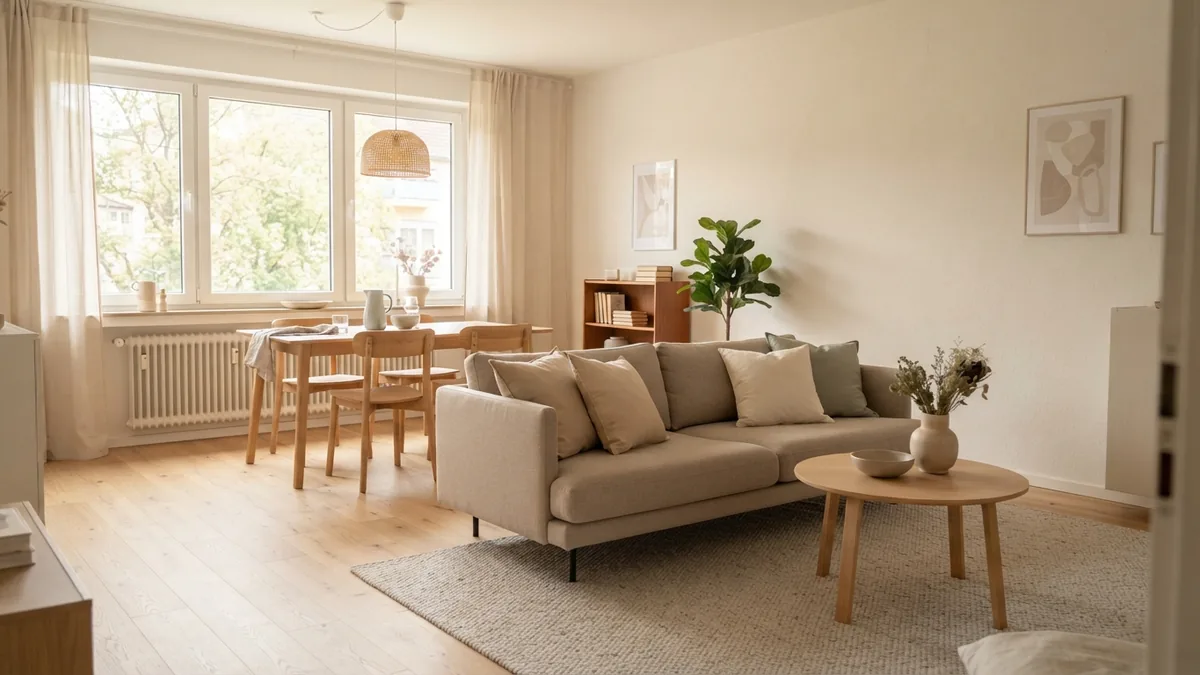
Many homes have an adjoining living room and dining room. The two areas should feel linked, not cloned. Shared colors can create flow without making every item match.
If you wonder how to combine living room and dining room spaces, start with one color story. Repeat soft beige, pale oak, or muted sage in both areas. Then give each zone its own rug, table, or light.
People also ask how to break up living room and dining room areas. Use rug edges, furniture direction, and lighting to mark each zone. Keep a clear path between the two spaces.
Should living room and dining room match? They should feel related, but exact matches can look flat. Let one room carry more pattern while the other stays quiet.
Should living room and dining room rugs match? No. They can share a color, weave, or design mood instead.
Should rugs in the same room match? Not always. A shared tone or texture is enough when the rugs serve different zones.
Dining and living room curtains can follow the same idea. Do dining and living room curtains need to match? No, but they should sit within one color family.
Do all curtains in a room have to match? No. Should all curtains in a room match? Only when a calm, uniform look matters most.
Should living room and dining room curtains match? They can, but nearby curtains need not be identical. Match the fabric weight or curtain rod finish instead.
Paint, Curtains, and Lights Across Open Rooms
Color can link open rooms without erasing their purpose. If you ask how to paint an adjoining living room dining room layout, begin with the sight lines. A single wall color often makes both zones feel larger.
Use one warm neutral across both rooms for a smooth backdrop. Add a deeper shade on one short wall if you need a visual break. Keep the trim color consistent for a clean edge.
Paint can also help break up a long room. Try a soft sage behind the dining table. Keep the living room walls warm cream.
Should dining room and kitchen lights match? They do not need to match exactly. Choose fixtures with a shared finish, shape, or warm bulb tone.
A woven pendant can suit the dining table. A simple floor lamp can serve the living room. Their sizes should differ, while their light color stays close.
Keep the dining light high enough for clear sight lines. Use dimmers when possible. Soft light helps the two zones feel connected at night.
Common Mistakes to Avoid
Too many rugs can make a small room feel crowded. Start with two rugs in one seating area. Add another only when it marks a useful zone.
Do not pair two loud patterns without a shared color. The eye needs one quiet element. A plain base gives a bold top rug room to stand out.
Watch for clashes with the furniture style. A formal sofa may fight a rough beach-style rug. Match the rug mood with the room’s wood, fabric, and shape.
- Do not place a tiny rug under a large sofa.
- Do not hide the top rug beneath most furniture.
- Do not place loose edges across a main walkway.
- Do not mix many strong colors at once.
Uneven rug heights can create a trip point. Use a firm pad below each rug. Tape the upper rug only when the pad maker allows it.
Dining rugs need extra care near chair legs. Test the chair movement before you settle on the size. A rug that catches each leg will soon feel frustrating.
Tips for a Cohesive Look
Repeat one color across rugs, curtains, and nearby furniture. Repeat one natural material, such as jute, oak, or linen. Small links make the whole plan feel planned.
Keep the strongest pattern on one main surface. A patterned top rug may need plain curtains. A bold curtain can pair with two quiet rugs.
Step back from the room after placing the rugs. Check the view from the doorway and each seat. The layers should guide the eye, not stop it.
Use samples when you can. View them in daylight and warm evening light. Colors can shift when the room changes.
Good layering leaves space around the furniture. It creates comfort without filling every open patch. Start with the base, add the top, and stop when each zone feels clear.
Step-by-step
- 01 Map the furniture
Mark the sofa, chairs, table, and main walkways. Use this plan to set the needed rug sizes.
- 02 Choose the base rug
Pick a broad, low-pile rug that anchors the seating group. Leave a visible border around the top rug.
- 03 Choose the top rug
Select a smaller rug with a new texture, color, or pattern. Link it to the base with one shared tone.
- 04 Set the rug position
Center the layers for a formal look, or offset the top rug for a relaxed feel. Keep the main paths open.
- 05 Link nearby rooms
Repeat one color or material in the dining area. Use different rugs and fixtures to keep each zone distinct.
- 06 Secure and review
Add suitable rug pads and test chair movement. View the room from the doorway before making final changes.
Frequently asked questions
- How do you layer rugs in a living room?
- Place a large, quiet rug beneath the seating group. Add a smaller rug above it, then center or offset the top layer.
- How to layer rugs living room spaces with furniture?
- Keep the sofa front legs on the base rug. Place the top rug beneath the coffee table and near the front legs.
- Are jute rugs good for dining room use?
- Jute rugs can work in low-spill dining rooms. Use a tight weave, a rug pad, and enough room for chairs to move.
- Do all curtains in a room have to match?
- No. Curtains can differ when they share a color family, fabric weight, or hardware finish.
- Should living room and dining room rugs match?
- No. Shared colors or textures can link them without making them identical.
- Should dining room and kitchen lights match?
- They do not need to match exactly. A shared finish, shape, or warm bulb tone can create a linked look.
Related reading
Room Squaring — Set the Floor Lines Right
Set accurate floor lines before you start laying planks or boards.
Interior Designer Qualifications — Education, Skills and Career Paths
Explore the education, skills, experience, and state rules needed for an interior design career.
Wood Flooring Direction — Light, Space, and Flow
Choose board direction with light, room shape, and nearby spaces in mind.