Bedroom Color Ideas for a Calm, Personal Space
Find a bedroom paint color that suits your light, style, and mood.
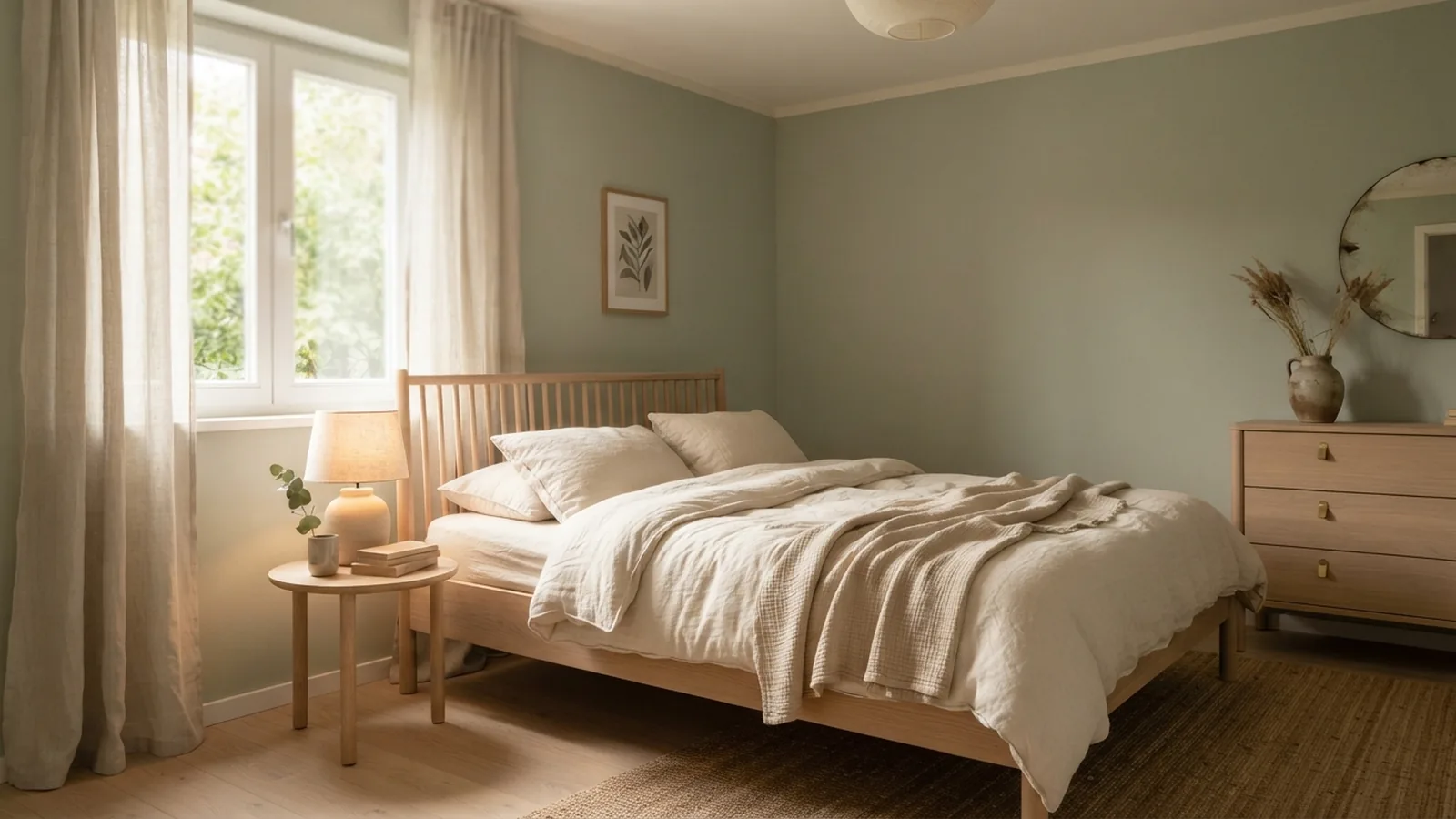
Understanding Color Psychology in the Bedroom
Color psychology shapes how a room feels. Your bedroom should support rest, comfort, and easy mornings. Soft shades often feel calm, while warm tones can feel snug and welcoming.
Blue is linked with calm and may support better sleep. Sage green adds a natural feel without looking too bold. Warm beige, cream, and taupe create a timeless backdrop.
Your own response matters most. A shade that feels peaceful to one person may feel dull to another. Use mood as a guide, then check the color in your own room.
If you ask, “what color should you paint a bedroom?”, start with the feeling you want. Then study your light, floor, furniture, and bedding. This makes it easier to choose with care.
Best Bedroom Colors for Relaxation
Soft blue is one of the best bedroom paint choices for rest. It can recall a clear sky or calm water. Pair it with white linen, pale oak, or woven baskets.
For blue bedroom walls, choose bedding in ivory, sand, or soft gray. If you have light blue bedroom walls, what color bedding works best? Try natural linen, cream, pale blush, or warm white.
Sage green is another strong choice. It brings a quiet link to nature. It looks balanced with cream, pale wood, clay, and muted brass.
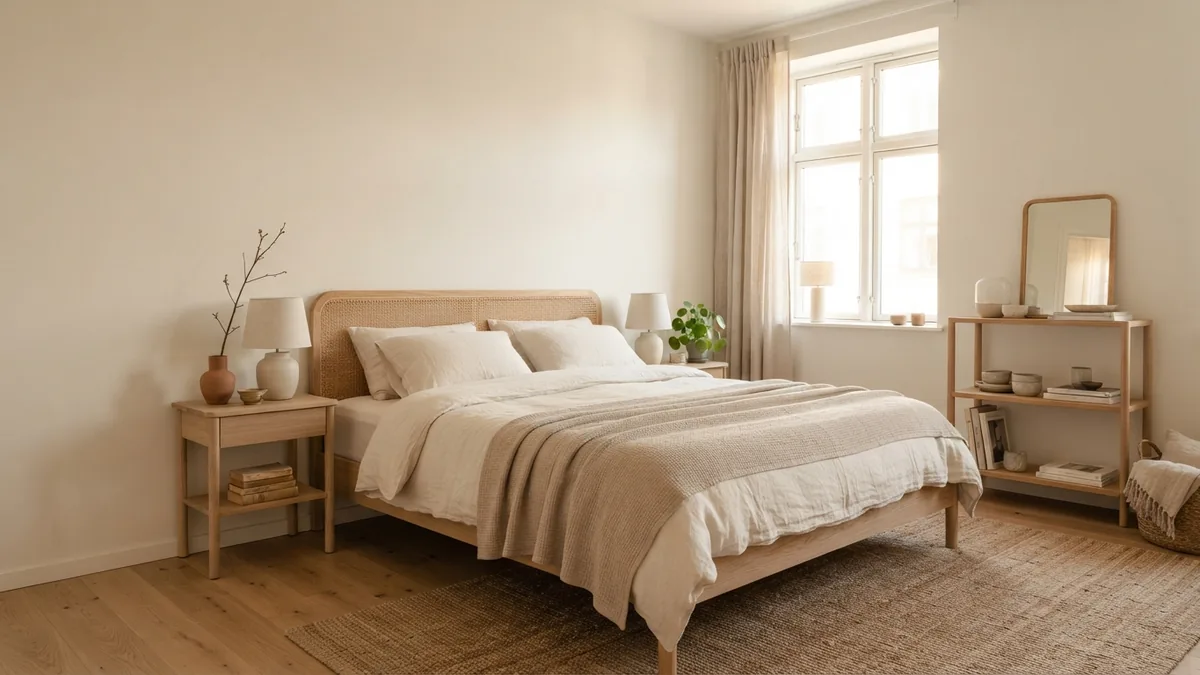
Warm neutrals suit bedrooms that need more comfort. Try oat, mushroom, sand, or soft beige. These shades add warmth without making a small room feel closed.
- Soft blue: Calm, airy, and easy to pair with light fabrics
- Sage green: Natural, gentle, and flexible with wood tones
- Warm beige: Cozy, simple, and timeless
- Dusty lavender: Soft, quiet, and suited to warm white trim
Energizing Colors for Brighter Mornings
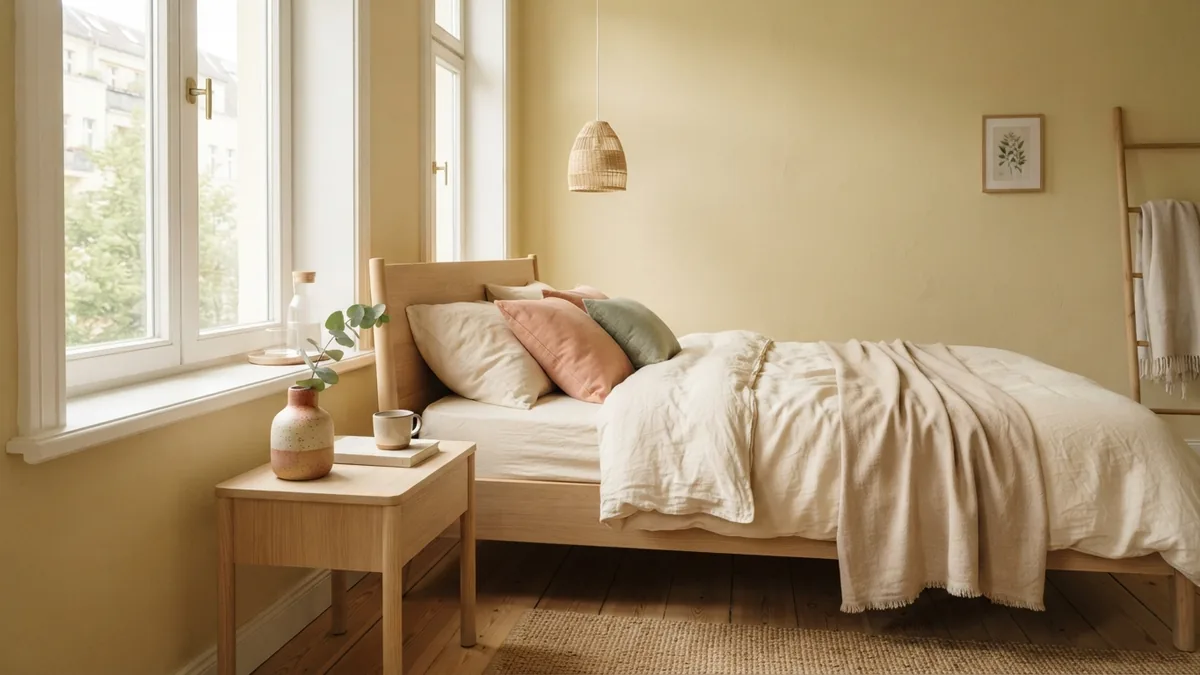
Some bedrooms need more lift than calm. Soft yellow can brighten a dark room and make mornings feel warmer. Choose butter yellow, straw, or muted ochre over sharp lemon yellow.
Warm peach and soft coral can also add energy. They bring life without the force of bright red. Use one accent wall if a full room feels too strong.
Natural light changes every paint color. North-facing rooms may need warm shades. South-facing rooms can handle softer or cooler colors.
Keep bright colors in balance. Cream bedding, linen curtains, and pale wood can soften a lively wall. Warm lamps can also help during dark mornings.
- Use pale yellow for a sunny, light mood.
- Choose muted coral near a dressing area.
- Paint one accent wall when the shade feels bold.
- Balance bright walls with cream, linen, or pale wood.
Romantic Bedroom Colors for Intimacy
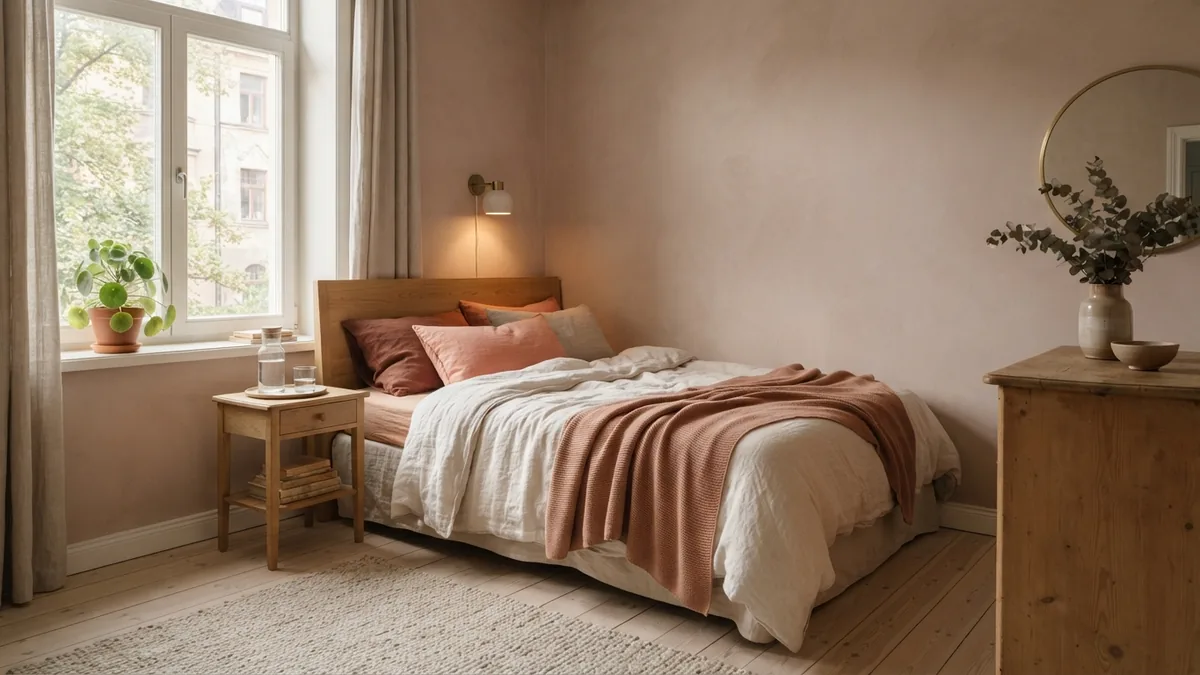
Blush gives a bedroom a gentle, warm mood. It works well with cream bedding, pale oak, and brushed metal. Choose dusty blush for a softer, more grown-up look.
Deep plum creates a richer mood. It suits larger rooms with strong daylight. Try it behind the bed or on a short wall.
Terracotta, muted mauve, and warm clay can also feel intimate. These shades feel earthy rather than sweet. Pair them with linen, soft lamps, and simple shapes.
Rich colors need room to breathe. Use a cream ceiling and light flooring to keep the space open. A few warm accents will look better than many competing shades.
Trendy Bedroom Color Combinations
Current bedroom schemes favor soft, natural color mixes. They pair warm neutrals with gentle accents. This style feels fresh without depending on a short trend.
| Wall color | Pair it with | Room mood |
|---|---|---|
| Soft blue | Ivory and pale oak | Calm and airy |
| Sage green | Warm white and clay | Natural and grounded |
| Warm beige | Rust and cream | Cozy and relaxed |
| Blush | Oat and walnut | Soft and intimate |
An accent wall adds depth without taking over the room. Place it behind the headboard for a clear focal point. Keep nearby walls lighter when the accent color is dark.
If you have white furniture, warm beige, sage, dusty blue, and muted terracotta can work well. So, what color to paint bedroom with white furniture? Pick a shade that adds warmth instead of making the room feel stark.
Practical Tips for Choosing Your Bedroom Color
Start by asking, “what color do I paint my bedroom?” Then list the room features that must stay. Include flooring, curtains, furniture, bedding, and trim.
To learn how to choose what color to paint your bedroom, narrow your list to three shades. Place large samples on more than one wall. View them in morning light, afternoon light, and lamplight.
Small cards can mislead you. Large samples show the true depth of a color. Leave them up for at least one day before you decide.
What color should I paint my bedroom walls? Use a soft shade when you want a calm backdrop. Use a deeper shade when you want more drama. The best color paint for a bedroom depends on light, size, and your comfort level.
Ask what color should I paint my bedroom furniture before you buy new pieces. White, pale oak, and warm gray suit many wall colors. If you repaint a piece, clean it first and use a suitable primer.
Door color deserves the same care. If you wonder how to paint bedroom doors, remove the handle, sand the surface, and clean away dust. Use a trim paint in thin coats. Let each coat dry before adding the next one.
What color to paint bedroom doors depends on the room style. Match the trim for a smooth look. Use a deeper version of the wall shade for a subtle focal point. Bright white works well with warm walls, but soft cream can look gentler.
- Check paint samples beside the floor and largest furniture piece
- Watch the color through a full day
- Use a matte or low-sheen finish on most walls
- Keep trim lighter when you want the room to feel open
- Choose one strong accent instead of many small ones
Should I paint all my bedroom walls the same color? Usually, yes, if you want a calm and joined-up room. Use one accent wall when you want depth. A lighter ceiling can make the room feel taller.
Frequently Asked Questions About Bedroom Paint Colors
What color should I paint my bedroom?
Soft blue, sage green, and warm beige are reliable choices. Pick the shade that suits your light and the mood you want.
What color to paint my bedroom for better rest?
Soft blue and muted sage can create a peaceful setting. Test each shade first, since light can change its look.
What color should you paint your bedroom with white furniture?
Warm beige, sage, muted blue, and dusty terracotta can balance white furniture. Avoid a cold white wall if the room already feels stark.
Should I use a what color should I paint my bedroom quiz?
A what color should I paint my bedroom quiz can help you name your style. It cannot replace paint samples in your own light.
What color should you paint a bedroom for guests?
For a guest room, choose warm beige, soft sage, or pale blue. These shades feel welcoming to many visitors.
Can a quiz tell me what color to paint bedroom walls?
A what color to paint bedroom quiz may suggest a useful starting point. Compare that idea with your flooring, furniture, and daylight.
Frequently asked questions
- What color should I paint my bedroom?
- Soft blue, sage green, and warm beige are reliable choices. Pick the shade that suits your light and desired mood.
- What color paint is best for a bedroom?
- Soft blue, muted sage, and warm neutrals work well in many bedrooms. Test each shade before you commit.
- What color should I paint my bedroom walls?
- Use a soft shade for a calm backdrop or a deeper shade for more drama. Let the room’s light guide your choice.
- What color should I paint my bedroom furniture?
- White, pale oak, and warm gray suit many wall colors. Choose a finish that works with the floor and bedding.
- What color should I paint my bedroom with white furniture?
- Warm beige, sage, muted blue, and dusty terracotta can balance white furniture. Warm shades help prevent a stark look.
- Should I paint all my bedroom walls the same color?
- One color creates a calm, joined-up look. An accent wall adds depth when you want more contrast.
Related reading
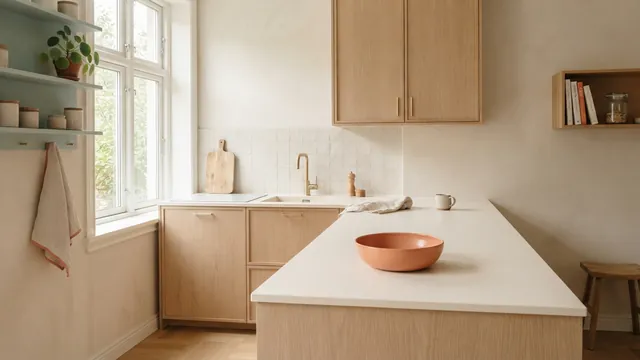
Kitchen Renovation Costs — Price Ranges and Budget Factors
See typical kitchen remodel prices, key cost drivers, and ways to keep your budget on track.
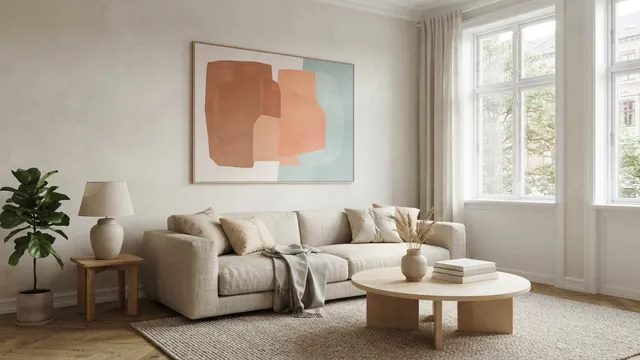
Large Living Room Walls — Scale, Style, and Warmth
Use scale, art, texture, shelves, and light to make a large wall feel balanced.
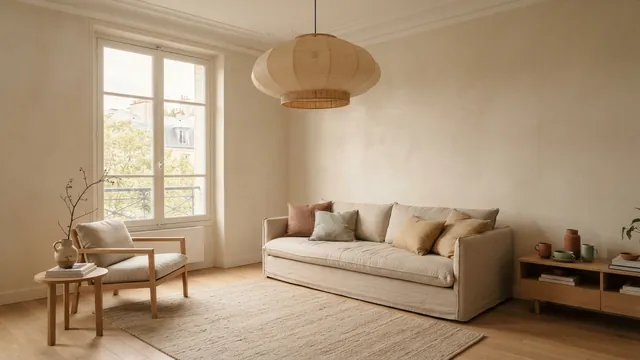
High Ceilings — Warmth, Scale and Style
Use color, scale and soft textures to make tall rooms feel inviting.