Creative Ways to Decorate an Empty Living Room Wall
Fresh ideas for turning a blank living room wall into a useful focal point.
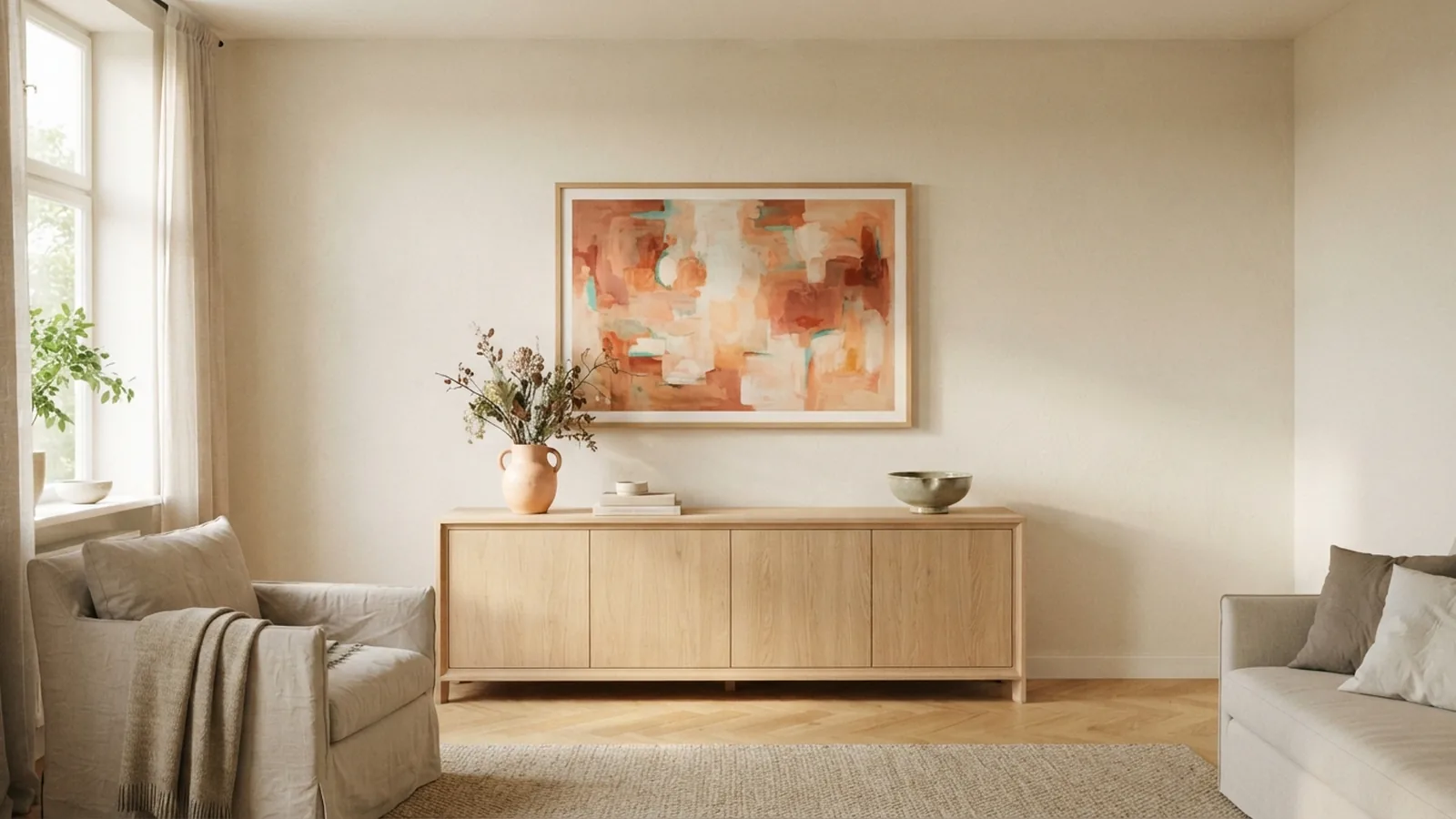
Start by Reading the Wall Space
The best way to fill an empty wall in a living room starts with its size and shape. Measure the wall before buying art, shelves, or paint. Note nearby doors, windows, vents, sofas, and power points.
Large walls need visual weight. One small frame can look lost on a wide wall. Choose one large piece, a broad shelf, or a well-spaced group of art instead.
Keep the main artwork near eye level. In most rooms, the centre should sit about 57 to 60 inches from the floor. Hang art 6 to 8 inches above a sofa back, so the grouping feels linked.
- Measure the wall width and height.
- Mark furniture edges with painter's tape.
- Leave clear space around doors and corners.
- Test paper shapes before drilling holes.
Scale also depends on the room. A narrow wall may need one vertical piece. A long wall can hold a pair of prints or a low shelf with art above it.
Ideas for Decorating a Large Empty Wall
When asking what to do with an empty wall in a living room, start with one clear focal point. A large canvas, woven wall hanging, or framed photograph can anchor the whole seating area. Aim for a piece about two-thirds the width of the sofa below it.
Two matching pieces can suit a calm, balanced room. Use a gap of 3 to 6 inches between them. For a more relaxed look, mix sizes while keeping one feature consistent, such as colour, frame tone, or subject.
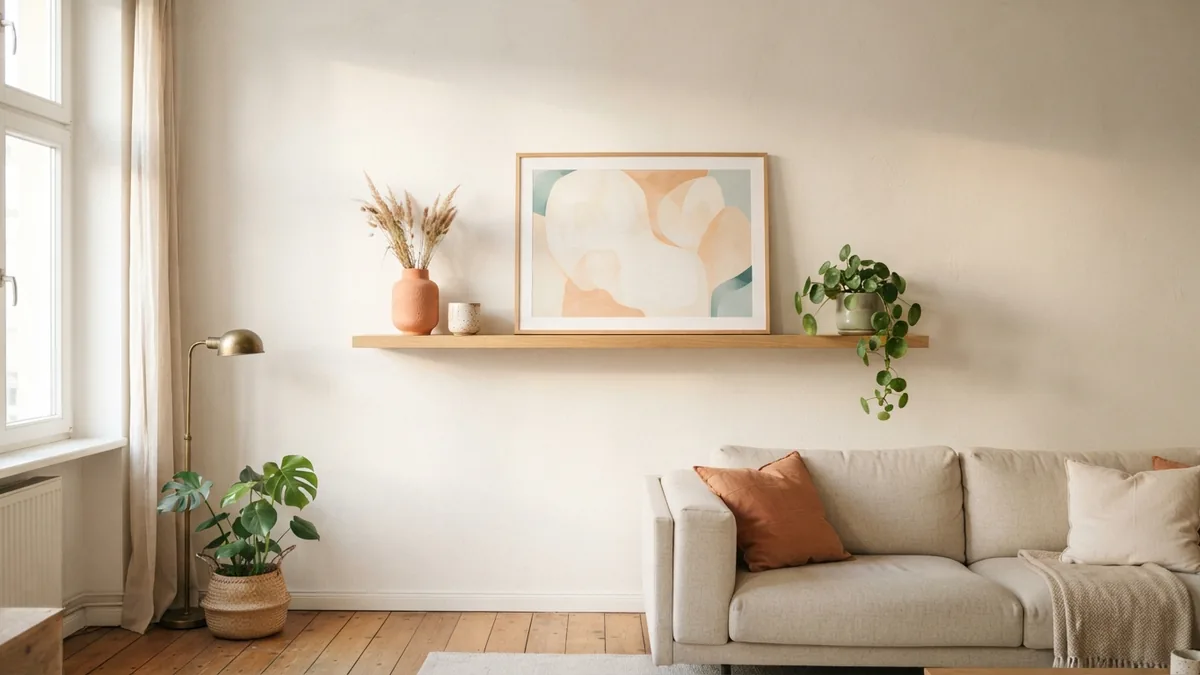
Large walls also suit layered storage. A long oak shelf can hold ceramics, books, and small plants. Keep some space empty, since open gaps stop the display from looking crowded.
For very tall walls, stack two zones. Place a console or sofa below, then hang a wide artwork above it. Avoid placing tiny objects high on the wall, where they lose impact.
Add Texture with Wall Treatments
Wall treatments give a blank surface depth without relying on many objects. Wainscoting works well in traditional rooms. Board and batten adds neat vertical rhythm. Shiplap creates a softer country or coastal feel.
Choose one treatment for the main wall. Too many patterns can make a living room feel busy. Paint the treatment in a warm white for gentle detail, or use a muted colour for stronger contrast.
Decorative molding can frame a large wall without adding bulky furniture. Use equal panels for a formal look. Unequal panels can suit a more relaxed home, but repeat the same line across the wall.
Texture can also come from plaster, limewash, wood slats, or fabric panels. Keep the finish matte. Glossy surfaces reflect light in uneven ways and may distract from the room.
If you have exposed brick, let its colour guide the rest of the room. Use pale oak, cream textiles, and soft sage accents to calm red or brown brick. For a clean result, dust the surface and repair loose mortar first.
Build a Gallery Wall That Feels Calm
A gallery wall is a strong answer to what to put on an empty wall in a living room. It lets you show prints, photographs, drawings, and small objects together. The key is careful planning, not filling every gap.
Lay the frames on the floor before hanging them. Keep the outer shape fairly clear, even when the inner pieces vary. A 2 to 4 inch gap between frames gives the display room to breathe.
Use a shared colour link to make mixed art feel planned. Black and oak frames can work together when the artwork repeats warm neutrals. You can also use one frame style throughout for a cleaner look.
- Choose five to nine pieces with a shared colour or theme.
- Arrange them on paper or on the floor.
- Mark the centre line before fixing the first frame.
- Hang the largest piece first.
- Fill the remaining gaps with smaller work.
Do not centre every frame on its own. Centre the whole group over the sofa or console. This makes the display read as one strong feature.
Make the Wall Useful with Functional Decor
Empty walls do not need to hold art alone. Wall-mounted shelves add display space without using floor area. Use one long shelf for a simple look, or three short shelves for a lighter arrangement.
Bookcases can fill a large wall while adding storage and warmth. Leave some shelves open and some partly filled. Books, baskets, ceramics, and plants create useful layers without visual noise.
A digital screen can also act as art when it sits inside the room with care. Choose a calm display and hide cables inside a wall channel where safe. The screen should not dominate the seating area.
Keep useful items within reach. Place baskets near the lower shelf for throws or remotes. Put delicate objects higher up if children or pets share the room.
- Use shelves for books and small ceramics.
- Choose a bookcase for storage across a wide wall.
- Add baskets below for blankets and games.
- Hide cables before mounting screens or lights.
Use Paint to Define the Room
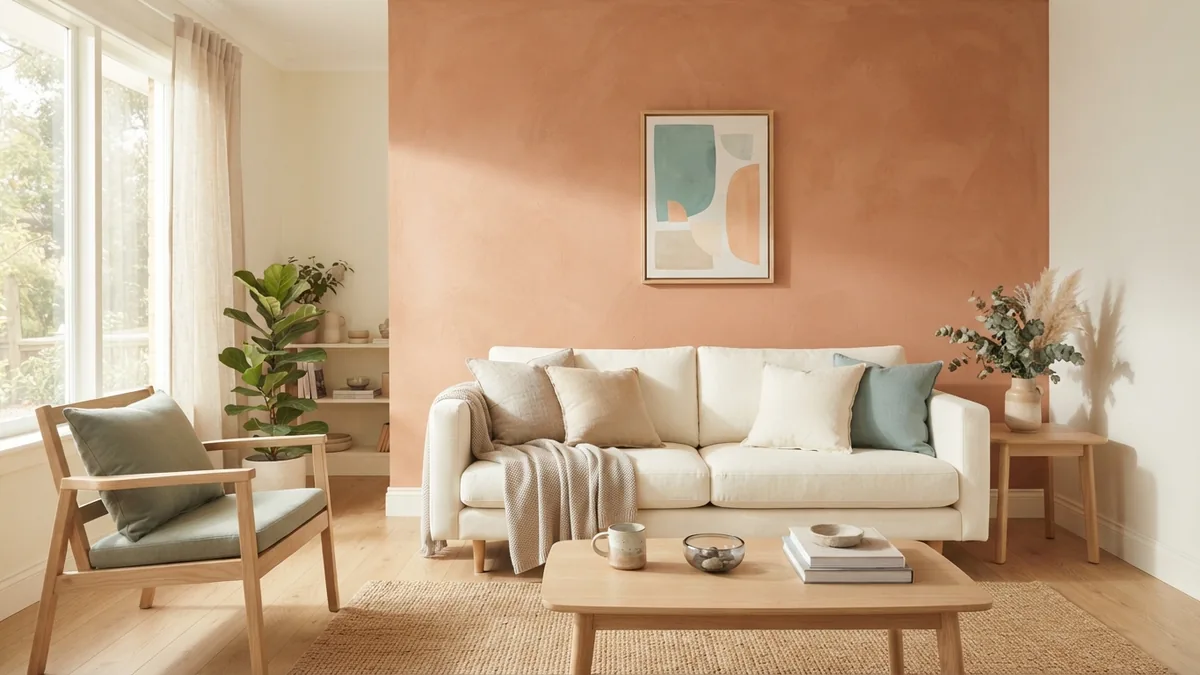
Paint can solve a blank wall with little furniture or cost. A bold accent wall gives the seating zone a clear edge. Warm terracotta, muted coral, soft olive, and deep oat can add depth without feeling harsh.
To learn how to paint an accent wall in a living room, first test two or three samples. Paint each sample on a large card and view it in morning and evening light. Colour can shift a lot beside wood, brick, or cream fabric.
Paint the wall behind the sofa when you want to anchor the seating area. Paint a short end wall when you want to make a long room feel more balanced. Keep the ceiling and nearby trim light if the room feels small.
For a small wall, use one strong move rather than many small objects. A rich paint colour, narrow mirror, or single textile can look more finished than a crowded mix.
Try Textiles, Angled Walls, and Unique Art
Textiles bring softness to hard walls. A tapestry, quilt, or woven panel can add warmth above a sofa. Choose a piece that spans at least half the furniture width, unless the wall is very narrow.
Fabric art also helps rooms with poor sound control. Its soft surface can reduce some echo near bare plaster walls. Hang it with a slim rod or a hidden wood bar for a neat finish.
An angled wall needs a different plan. Do not force a wide frame into a sloping corner. Use one vertical artwork, a narrow shelf, or a small cluster that follows the wall's shape.
Layered art can make an unusual wall feel more personal. Lean a framed print on a deep shelf, then add one small object beside it. Keep the line simple, so the angle remains part of the room's design.
Other unique options include a carved wood panel, a large woven basket, or a sculptural wall piece. Pick one main material and repeat it once elsewhere. This creates a link without making the room look themed.
Finish the Look with the Right Lighting
Lighting changes how wall decor looks at every hour. A picture that seems flat in daylight may look rich under a warm wall light. Use lighting to reveal texture and guide the eye toward your chosen feature.
Picture lights suit framed art and gallery walls. Small adjustable spotlights work well for shelves or brick. Wall washers can bring out board and batten, plaster, or stone across a broad surface.
Choose warm bulbs near 2700K to 3000K for a relaxed living room. Place lights high enough to avoid glare on glass. Test the beam before fixing the final position.
Leave room for shadows. Flat, bright light can erase texture, while a gentle side beam can make brick or wood look more layered. The best result feels calm rather than staged.
The right answer to how to decorate a brick wall in the living room may be less decor, not more. Let the brick act as the artwork. Add one textile, a slim shelf, or a warm lamp, then stop before the wall feels crowded.
Frequently asked questions
- How do I fill an empty wall in a living room?
- Start with the wall's size, shape, and nearby furniture. Choose one focal point, such as large art, shelving, a textile, or a painted accent wall.
- Where should I hang pictures on a living room wall?
- Place the centre of the main artwork about 57 to 60 inches from the floor. Hang it 6 to 8 inches above a sofa back.
- What can I put on an empty living room wall besides art?
- Use shelves, a bookcase, wall lights, a tapestry, board and batten, or a bold paint colour. These options add storage, texture, or warmth.
- How do I decorate a brick wall in the living room?
- Let the brick remain the main feature. Add soft textiles, pale wood, warm lighting, or one slim shelf without covering the whole surface.
- How do I decorate a small wall in a living room?
- Use one strong feature rather than many small items. A narrow mirror, single textile, or rich paint colour can give the wall clear purpose.
Related reading
Large Living Room Walls — Scale, Style, and Warmth
Use scale, art, texture, shelves, and light to make a large wall feel balanced.
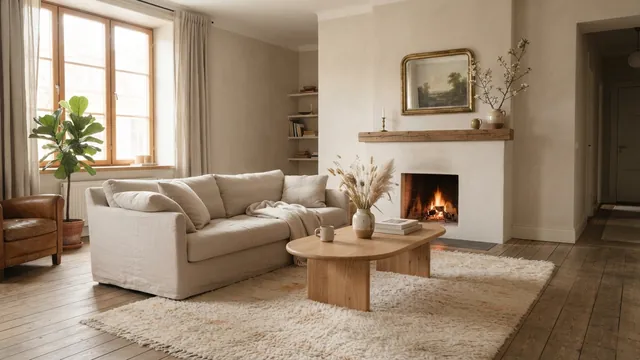
Couch Placement—Flow, Focus and Comfort
Place your couch to frame a focal point, keep paths clear, and make the room feel balanced.
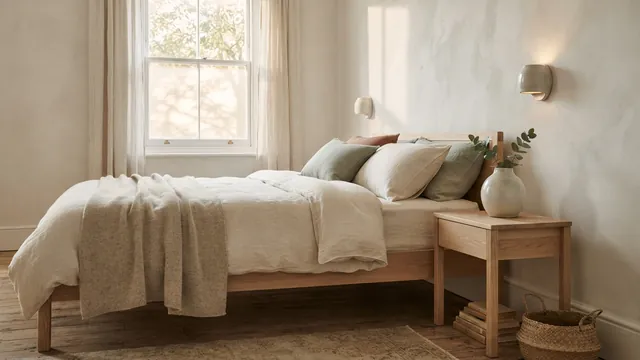
Master Bedroom — Color, Comfort and Personal Style
Build a calm, personal bedroom with smart choices and a budget that works.