Small Living Room Layout — Space, Light and Ease
Make a small living room feel open, calm, and easy to use.
Plan the room around daily life
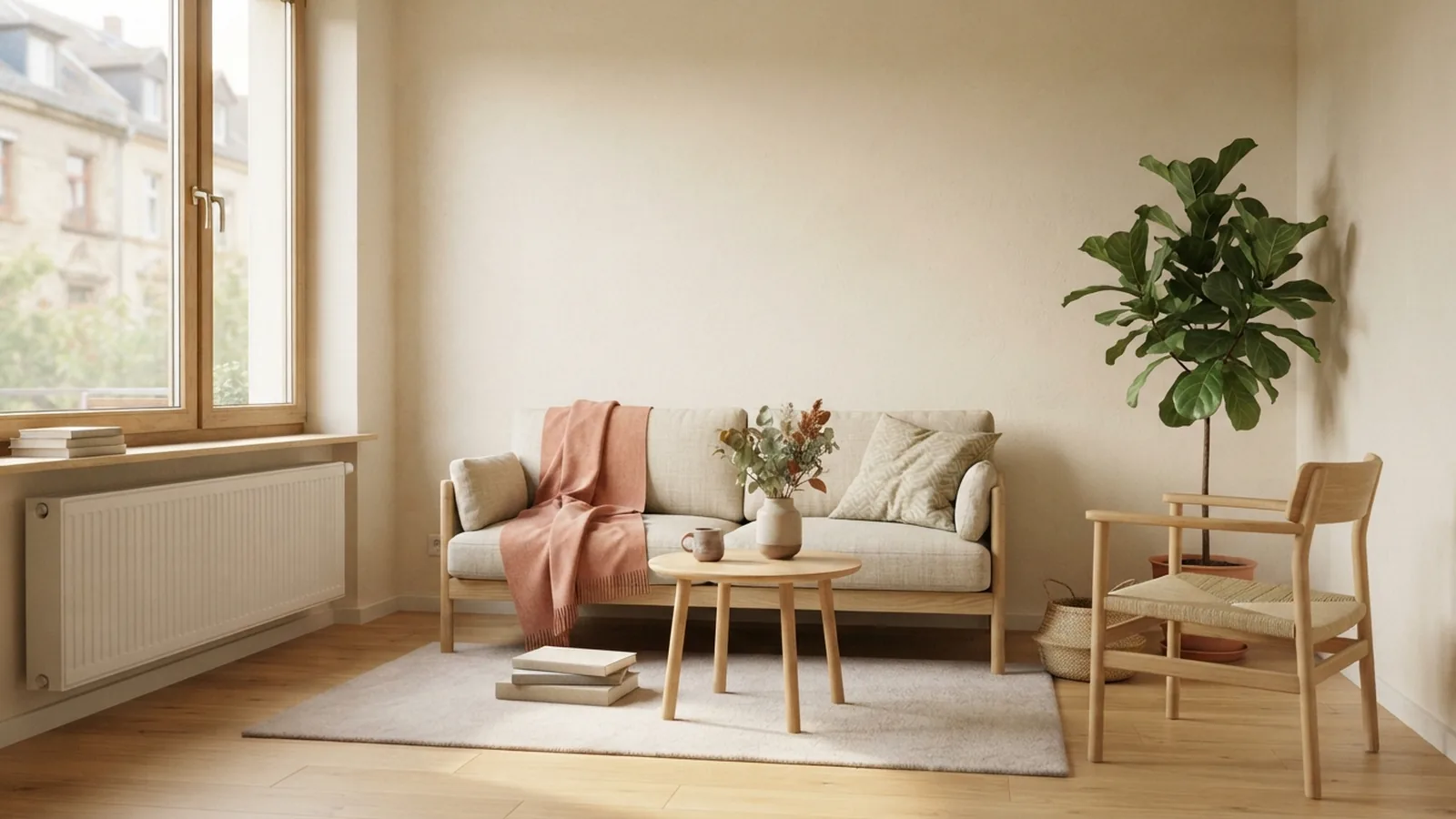
A small living room works best when its layout fits your daily habits. Think about where you read, rest, host friends, or watch films. Choose one main use and one or two extra uses. That gives each furniture choice a clear purpose.
Measure the room, doors, windows, and large furniture before moving anything. Mark the main walking routes on a quick floor plan. Aim for a path about 75 centimetres wide when space allows. Keep the route between the door and seating clear.
Test your plan before lifting heavy furniture. Draw furniture shapes on paper or mark their edges with tape. Walk through the room as you normally would. You may spot blocked doors or awkward turns.
- List the room’s main daily uses
- Measure furniture before buying or moving it
- Keep the main walking path clear
- Leave open floor near the room’s main focus
Let the room stay flexible until it feels easy to cross. A reading spot near the window may matter more than extra guest seating. Clear choices help a small room feel settled, not crowded.
Choose furniture that leaves room to move
Furniture scale matters more than furniture count. A deep sofa can take over a narrow room. A compact sofa leaves more floor in view. Measure its full depth, including cushions, before choosing a spot.
Choose pieces that do more than one job. A storage ottoman can hold blankets and serve as a spare seat. A small side table can hold a lamp and a drink. Skip pieces added only to fill an empty corner.
Keep bulky furniture away from the main path. A low bookcase can divide a long room without blocking the view. Light chairs are easy to move when guests arrive. Check that drawers and doors can open fully.
- Choose a sofa that leaves visible floor around it
- Try nesting tables or one small side table
- Use slim legs to keep the floor in view
- Check door and drawer space before placing storage
There is no single best sofa size for every home. A narrow flat may suit a two-seat sofa. A square room may fit a small corner sofa. The right fit lets you sit, stand, and pass with ease.
Arrange seats around a shared focus, such as a window or reading lamp. Do not push every piece against a wall by habit. Even a small gap behind a chair can make the room feel less cramped.
Use color and light to open up the space
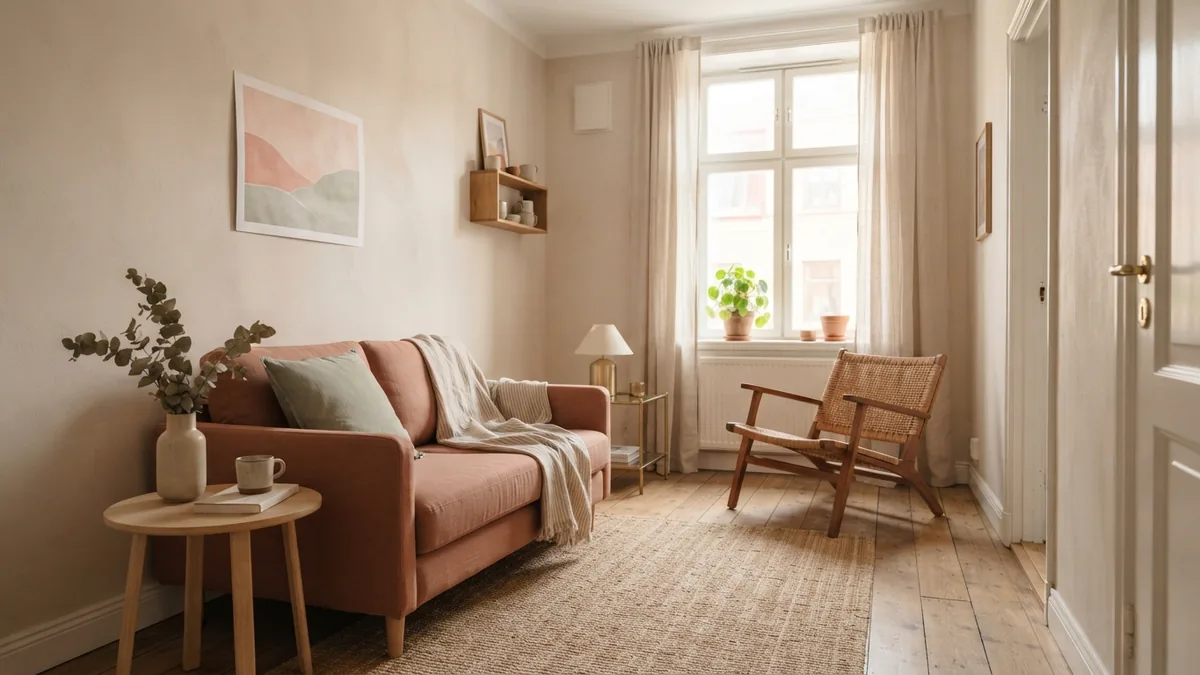
Light colors can make a small room feel calm, but white is not the only choice. Warm cream, pale beige, soft sage, and muted peach work well with natural wood. Keep large surfaces close in tone for a calm look.
Paint can look different from one wall to another. Test a sample in more than one spot. Check it in morning and afternoon light. A warm shade may look grey in a shaded corner.
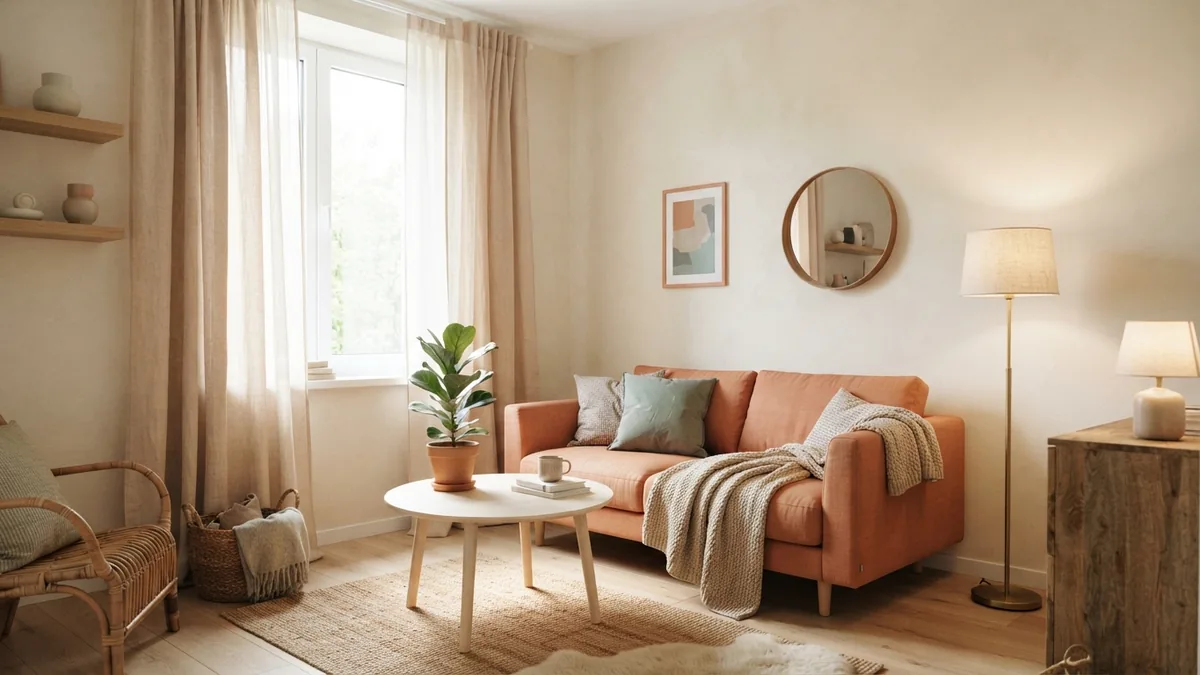
Use several lamps instead of relying on one bright ceiling light. A floor lamp beside the sofa and a table lamp on a shelf serve different needs. Aim each lamp at a useful spot, such as a book or dark corner. Soft pools of light make evenings feel restful.
Keep window coverings simple and hang curtains high when the room allows. Let the fabric frame the window without covering much glass. A mirror can bounce daylight into a dim area. Place it where it reflects a window or bright wall.
- Test paint in changing daylight
- Layer lamps for reading and soft background light
- Keep curtains clear of most window glass
- Use mirrors to brighten dim areas
First make the most of daylight. Then add lamps where daily tasks need them. Small changes can make the room brighter without adding more objects.
Add storage without adding visual clutter
Good storage keeps daily items close and hides things that make a room feel busy. Start by sorting what belongs in the living room. Keep books, games, chargers, and blankets only if you use them there. Move rarely used items elsewhere.
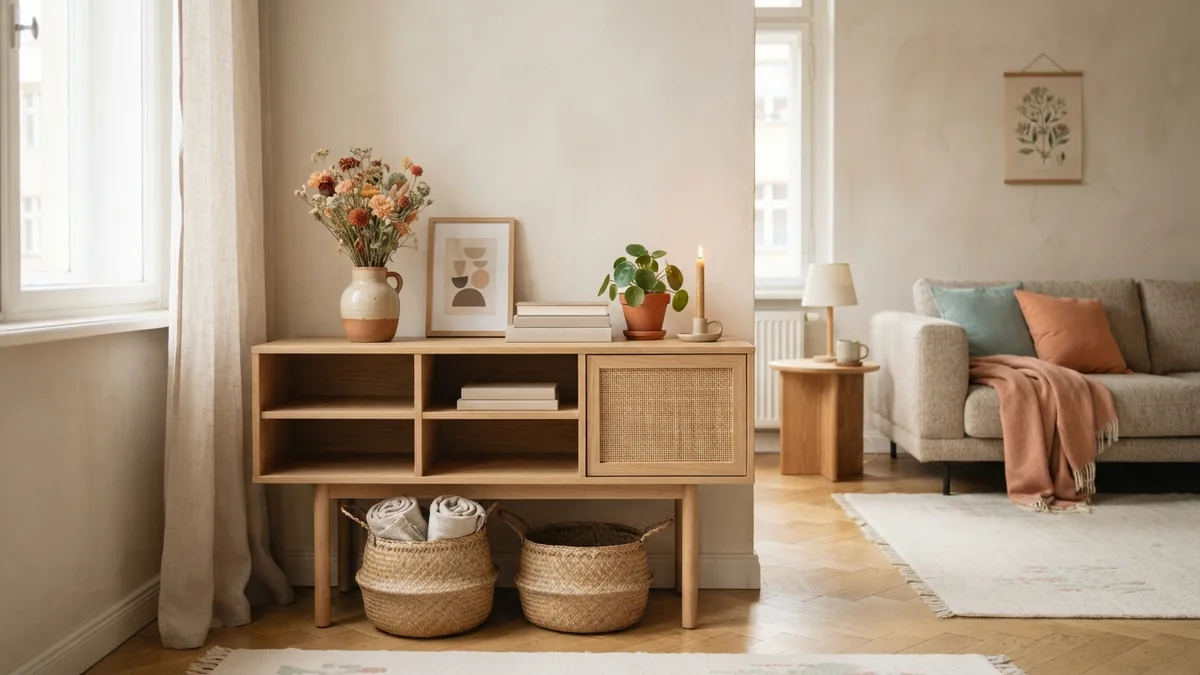
Closed cabinets hide small items, while open shelves suit a few chosen objects. Leave some shelf space empty. A packed shelf can make a small room feel even busier.
Choose storage that suits the wall and the room’s scale. A low cabinet can hold media gear without blocking the view. In a tight room, one tall, narrow cabinet may use less floor space than several small units. Check its depth before you buy.
- Keep daily-use items within easy reach
- Use baskets for throws, toys, or small gear
- Store rarely used items elsewhere
- Leave some shelf space clear
Give loose items a home, then put them back after use. Use one basket for blankets or toys near the sofa. Keep charging gear in a drawer or box. This small habit helps surfaces stay clear.
Set up seating and decor with care
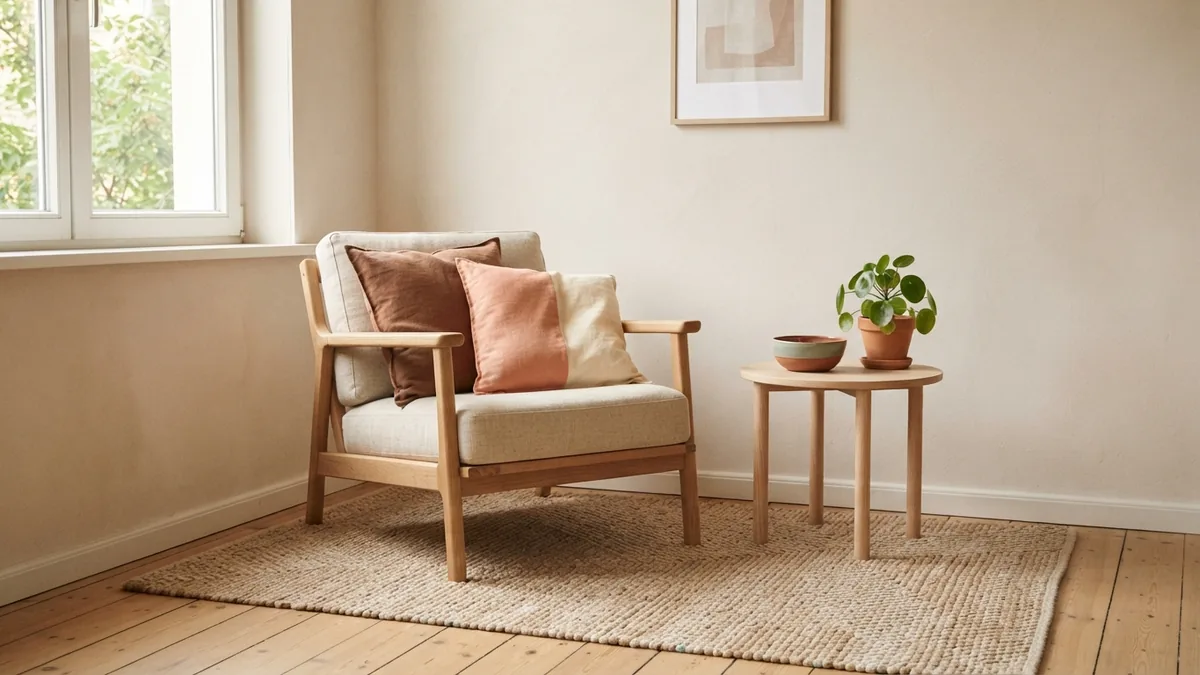
A room can feel welcoming without filling every wall or surface. Pick a few items that add color, texture, or meaning. A linen cushion, ceramic bowl, or small plant can soften a plain space. Leave room around each item so it can stand out.
Hang art at a height that works with the furniture below it. A single large piece can feel calmer than many small frames. If you prefer a group, keep the gaps even and the shapes simple. Avoid placing art where doors or lamps will compete with it.
Use a rug to bring seating together, but check its size first. A rug that is too small can make the furniture feel scattered. Let the front legs of the sofa and chairs rest on the rug when possible. This can make the seating area feel connected.
- Choose a few decor pieces with a clear purpose
- Leave space around objects on shelves and tables
- Check rug size against the full seating area
- Keep paths open when adding a side chair
Look at the room from the doorway after each change. Remove anything that blocks a path or draws the eye for no good reason. The best finishing touch may be an empty patch of floor.
Make small changes, then test the room
It is easier to improve the room one step at a time. Start with the main path and the largest furniture. Then adjust the lamps, storage, and smaller details. This makes it clear which changes help.
Spend a day using the new layout before buying anything else. Notice where you set down a book, where the light feels weak, and whether chairs are easy to reach. These everyday moments show what still needs work.
When a room feels tight, remove one piece before adding another. A spare table or extra chair may take up space without serving a real need. Keep the items that support how you live. Leave the rest out.
- Test the main path at different times of day
- Move one large item at a time
- Notice where clutter gathers
- Remove pieces that do not earn their space
A small living room does not need to hold every idea at once. Give each zone enough space to work. A clear path, useful light, and a few well-chosen pieces go a long way.
Frequently asked questions
- How do I arrange furniture in a small living room?
- Start with the room’s main use and keep a clear path from the door. Place the largest pieces first, then add smaller items only where they help.
- What sofa size works best in a small living room?
- Choose a sofa that fits the room and leaves space to walk around it. Measure its full depth, including cushions, before you buy.
- What colors make a small living room feel bigger?
- Warm cream, pale beige, soft sage, and muted peach can help a room feel calm and bright. Test paint samples in changing daylight before choosing.
- How can I add storage without making a small living room look cluttered?
- Use closed storage for small items and keep open shelves lightly filled. Give daily-use items a set place, then move rarely used things elsewhere.
- How wide should a walkway be in a small living room?
- A path about 75 centimetres wide suits many homes when space allows. In a narrow room, keep the route as open and easy to use as possible.
Related reading
Small Living Rooms — Layout, Light and Comfort
Make a small living room work better with smart layout, light, and storage.
Sectional Sofas—Smart Layouts for Better Living Rooms
Place your sectional for better flow, comfort, and style.
Dining Table Clearance — Space for Chairs and Walkways
Plan table and chair clearances for a dining area that feels comfortable.