Should Kitchen Cabinets Match Interior Doors? Style Guide
Should kitchen cabinets match interior doors? See color, style, and finish tips for a cohesive home look.
Design Cohesion: Why Matching Cabinets and Doors Matters
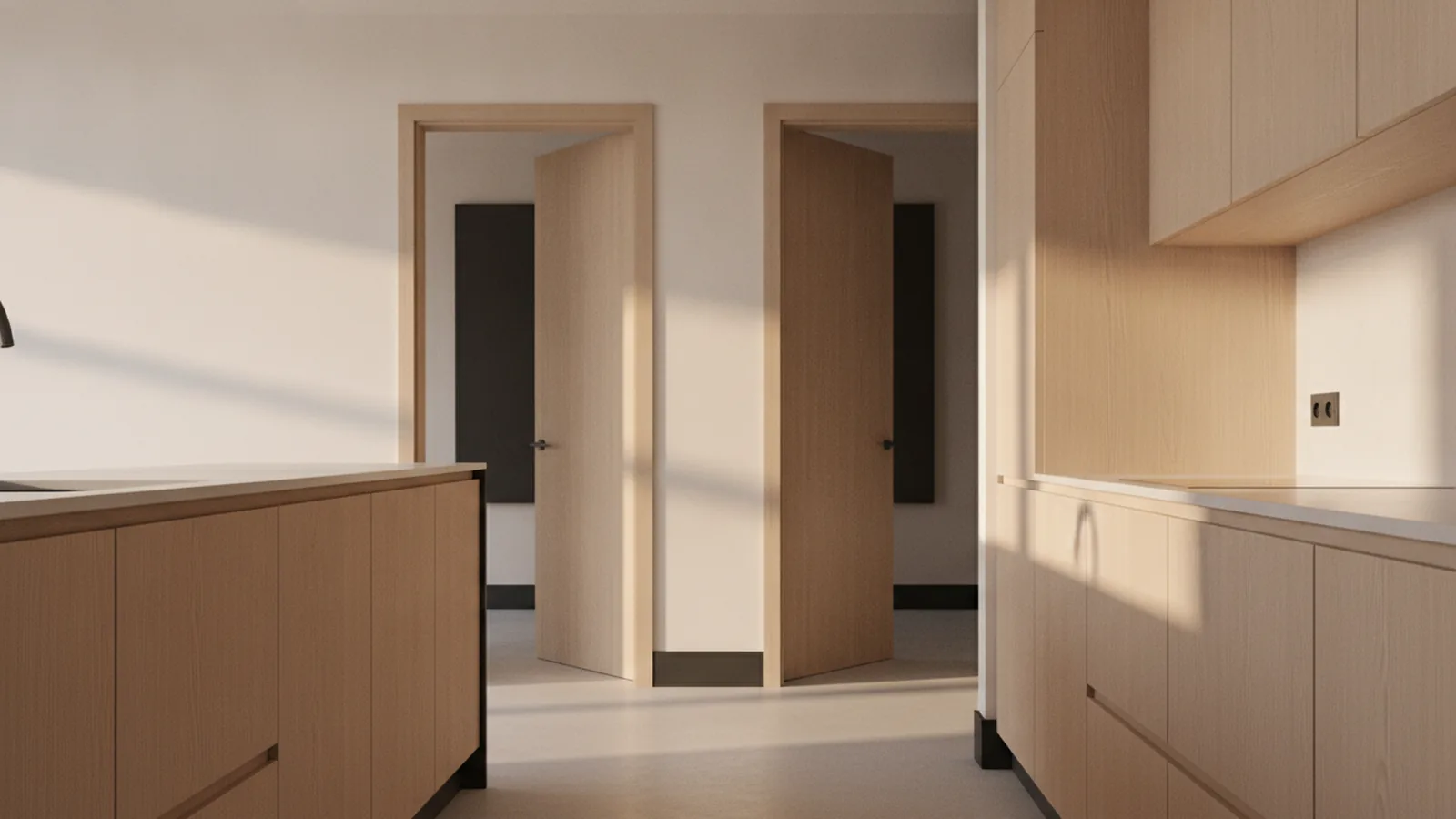
Yes, should kitchen cabinets match interior doors is a common question. In most homes, the most pleasing answer is “match the visual language,” not necessarily the exact same slab. When cabinetry and interior doors feel related, the eye moves through rooms with less friction.
Matching kitchen cabinets and doors creates visual harmony between the kitchen and the hallway or adjacent living spaces. That harmony is especially important in open plans, where doors and cabinets share the same sightlines. Even in closed layouts, you still feel it when the door color feels random next to the kitchen.
Think of cohesion as a simple rule: your home needs one clear color palette, one consistent material story, and finishes that make sense together. Designers often aim for balance between “connected” and “interesting,” so the kitchen feels like a focal space but not like a separate world.
- Shared tones make transitions feel calm
- Similar finishes reduce visual noise
- Related styles support the same design narrative
Choosing Colors for Cabinets and Doors
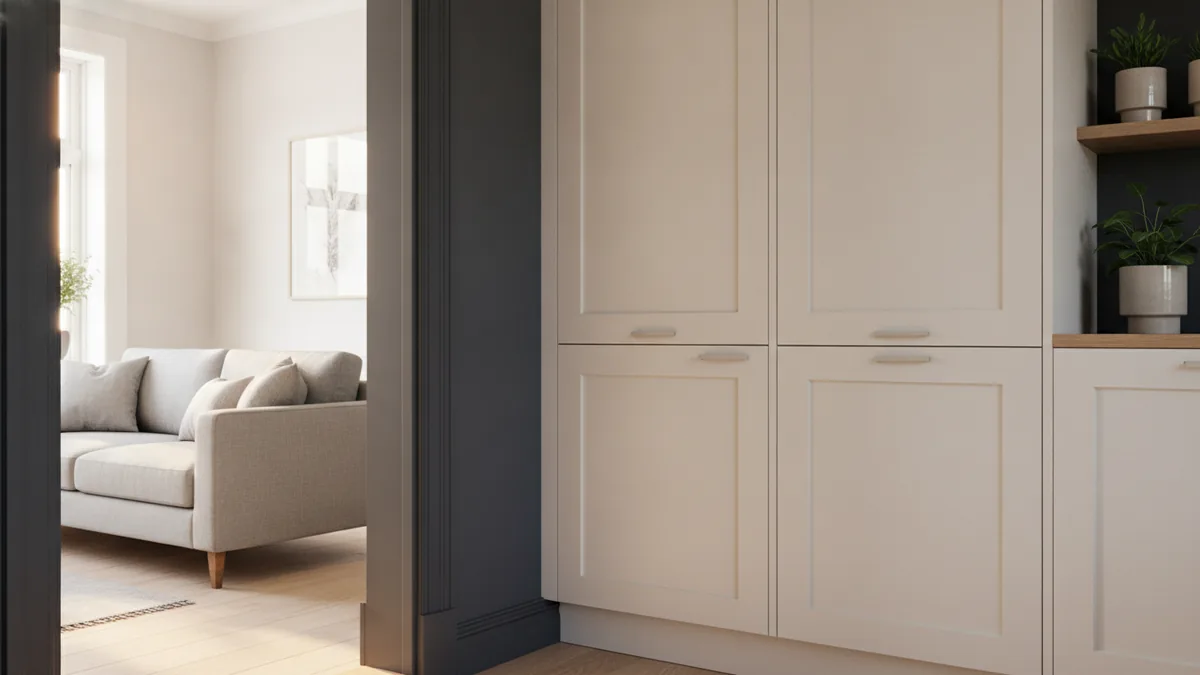
Start with the goal of kitchen cabinet and door color coordination. If you want the safest path, use the same hue family across both elements. Then vary the depth by using one as the “anchor” and the other as the “support.” A common approach is deeper cabinets and lighter doors, or the reverse, depending on natural light.
Color theory helps you avoid choices that look fine in a showroom but clash in your rooms. Warm woods and warm paints usually work best together. If your kitchen cabinetry has yellow undertones, a cool gray door can feel oddly detached.
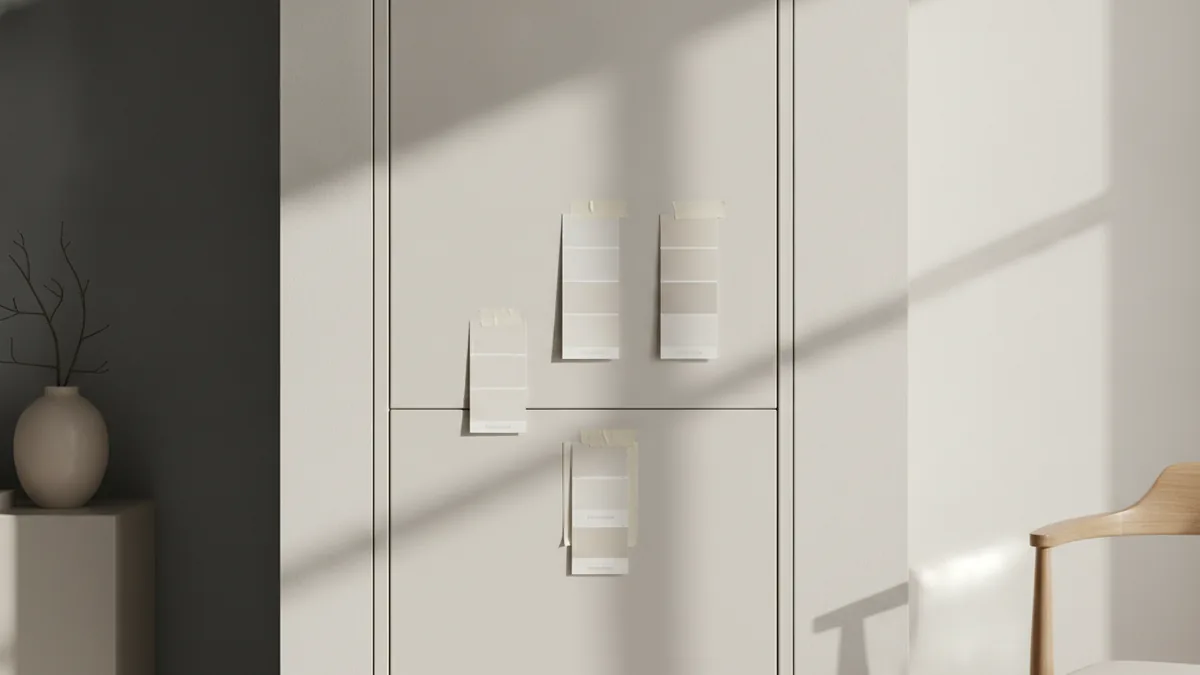
Use a quick test before committing. Tape your likely door color sample to the wall near the cabinet toe-kick or lower panels where light is similar. Check it at morning light, afternoon light, and then at night with interior lighting. That timing matters because LEDs can shift perceived undertones.
| Look you want | How to coordinate | What to watch |
|---|---|---|
| Seamless and calm | Use the same undertone family for both | Over-contrasting undertones look “off” |
| Clean contrast | Keep hue family, change value (light vs dark) | Too much value contrast can feel harsh |
| Layered style | Match finishes, but allow paint shade shifts | Different sheens can show patchiness |
Styles of Cabinets vs. Interior Doors
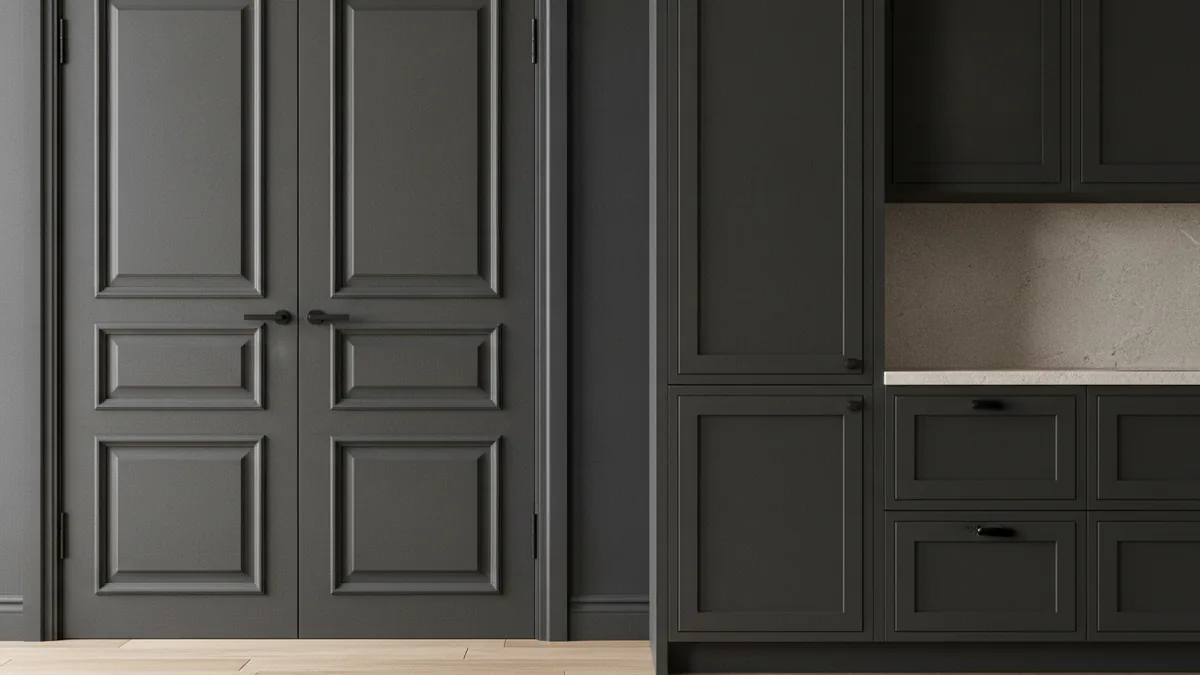
Cabinet and door style pairing is where many projects either click quickly or unravel. Modern doors with flat panels tend to pair best with sleek, minimal cabinet designs. If your interior doors are classic with raised panels, you usually need cabinet details that echo that rhythm, like gentle molding or traditional profiles.
Consider how design styles influence each other across the same sightline. A farmhouse door with thicker rails and a soft, distressed finish can make certain cabinet styles look overly formal. Likewise, a high-gloss modern door can highlight cabinet hardware and edge details in a way that feels too shiny.
Here are style pairings that often work:
- Modern: flat slab or minimal shaker cabinets with simple door slabs
- Traditional: raised-panel doors with cabinets that include classic trim details
- Farmhouse: white or warm wood cabinets with doors that have rustic paneling
Remember that the goal is coherence, not identity. You can keep the door style distinct and still connect them by repeating elements like panel depth, rail thickness, or the presence of an inset look.
Expert Tips for Matching
Professional designers often recommend one balancing act: keep enough similarity to unify the space, but leave room for the kitchen to feel special. The easiest way to do that is to match three things and let one vary. For example, match undertone, hardware finish, and trim profile. Then choose a door shade that’s one or two steps lighter or darker.
Using similar materials can enhance the seamless look of the kitchen and the adjacent areas. If your doors are wood, carrying that wood warmth into the cabinet material or finish helps the home feel intentional. If doors are painted, you can still use “material consistency” by matching the cabinet sheen and the type of topcoat.
Texture and finish coordination is another high-impact lever. Matte paint on doors next to satin or semi-gloss cabinets can create a visible sheen gap. That gap doesn’t just look different; it can make edges feel sharper and highlight imperfections.
Try this practical workflow when planning a kitchen renovation:
- Pick your door undertone first (warm, neutral, or cool).
- Choose cabinet colors that share that undertone family.
- Match hardware finishes across both spaces, like brushed nickel or oil-rubbed bronze.
- Confirm sheen level in real light, not just on paint cards.
- Look at trim and ceiling colors, since they affect how whites read.
If you want to be extra precise, photograph your room during the day with a neutral white balance. Then compare side-by-side images of your planned cabinet and door options. Your brain reads these combinations more accurately from a photo than from memory.
Common Mistakes to Avoid
The most common mistake is treating color as a single decision made in one lighting condition. Paint undertones shift with daylight and with how your floors reflect light. A door color that looks “close enough” in a store can look greenish next to warm cabinets.
Another frequent issue is mismatching finish sheen. Many kitchens look good in daylight but feel “off” at night because cabinets are painted or coated differently than doors. Even if both are neutral, one may be satin and the other may be eggshell, which changes how highlights fall on panels.
People also underestimate how much hardware ties things together. If cabinet pulls are in a different metal finish than door knobs, the mismatch can pull focus. It may not ruin the design, but it can make the connection feel accidental instead of planned.
- Choosing cabinets and doors from different undertone families
- Using similar colors but different sheen levels
- Ignoring sightlines from the hallway into the kitchen
- Changing hardware metal finishes between rooms
- Forcing a match that fights the door’s design style
Finally, avoid the “everything matches everywhere” trap. If you copy the same color and finish from cabinets into every interior door, the kitchen can lose its intended emphasis. Balance is the key.
Real-Life Examples and Inspiration
Example one is a warm traditional home. The kitchen uses medium oak shaker cabinets with a soft matte finish. Interior doors are painted in a warm off-white that shares the same undertone. The hardware is brushed nickel across both areas, so the connection feels cohesive without making the kitchen feel flat.
Example two is a modern renovation. Cabinetry is a flat-front design in a light greige. Doors are also flat, but in a slightly deeper greige to add contrast. Textures are kept consistent by choosing a satin or low-sheen paint on doors and a similar sheen on cabinets.
Example three is farmhouse style with open sightlines. Cabinets are white with subtle raised-panel detailing. Interior doors have classic farmhouse paneling with a durable satin finish. The designer repeats the same warm wood tone in accents, like a floating shelf or a nearby wall detail, so materials feel connected.
If you need inspiration, start by listing the visual “anchors” in your home: floors, countertops, and main trim. Then coordinate cabinets and doors to those anchors rather than chasing a trend. That approach tends to produce a result that still looks right two years after the kitchen renovation.
For many homeowners, the best answer to should kitchen cabinets match interior doors is yes, with a smarter definition. Match the tone, match the finish language, and match the overall design style. Let the specific shade shift just enough to make the kitchen feel like its own centerpiece.
Frequently asked questions
- Should kitchen cabinets match interior doors exactly?
- Not always. In most homes, matching the undertone, sheen, and style language matters more than using the exact same shade.
- What’s the easiest way to coordinate cabinet and door color?
- Pick a hue family first, then shift value for contrast. Also test samples in morning and evening light.
- Do modern cabinets need modern interior doors?
- They should feel related. Flat slab doors pair naturally with flat-front cabinets, while raised-panel doors pair better with traditional cabinet details.
- How do finishes and texture affect matching?
- Sheen differences can make colors look uneven. Aim for similar matte, satin, or gloss levels and coordinate textures across both elements.
- Can I use wood cabinets with painted interior doors?
- Yes, if the door paint has a undertone that complements the wood warmth. Matching hardware finishes also helps bridge the material difference.
Related reading
Room Painting Costs — What Shapes Your Quote
Room painting often costs $200–$1,000. See what drives the price and how to compare quotes.
Kitchen Cabinet Tops — Style, Texture and Seasonal Charm
Style cabinet tops with balanced layers, useful texture, and decor that suits your kitchen.
Couch Placement—Flow, Focus and Comfort
Place your couch to frame a focal point, keep paths clear, and make the room feel balanced.