Kitchen Cabinet Spray Painting — Tools, Steps, and Costs
Spray kitchen cabinets with less mess, better prep, and a smooth finish.
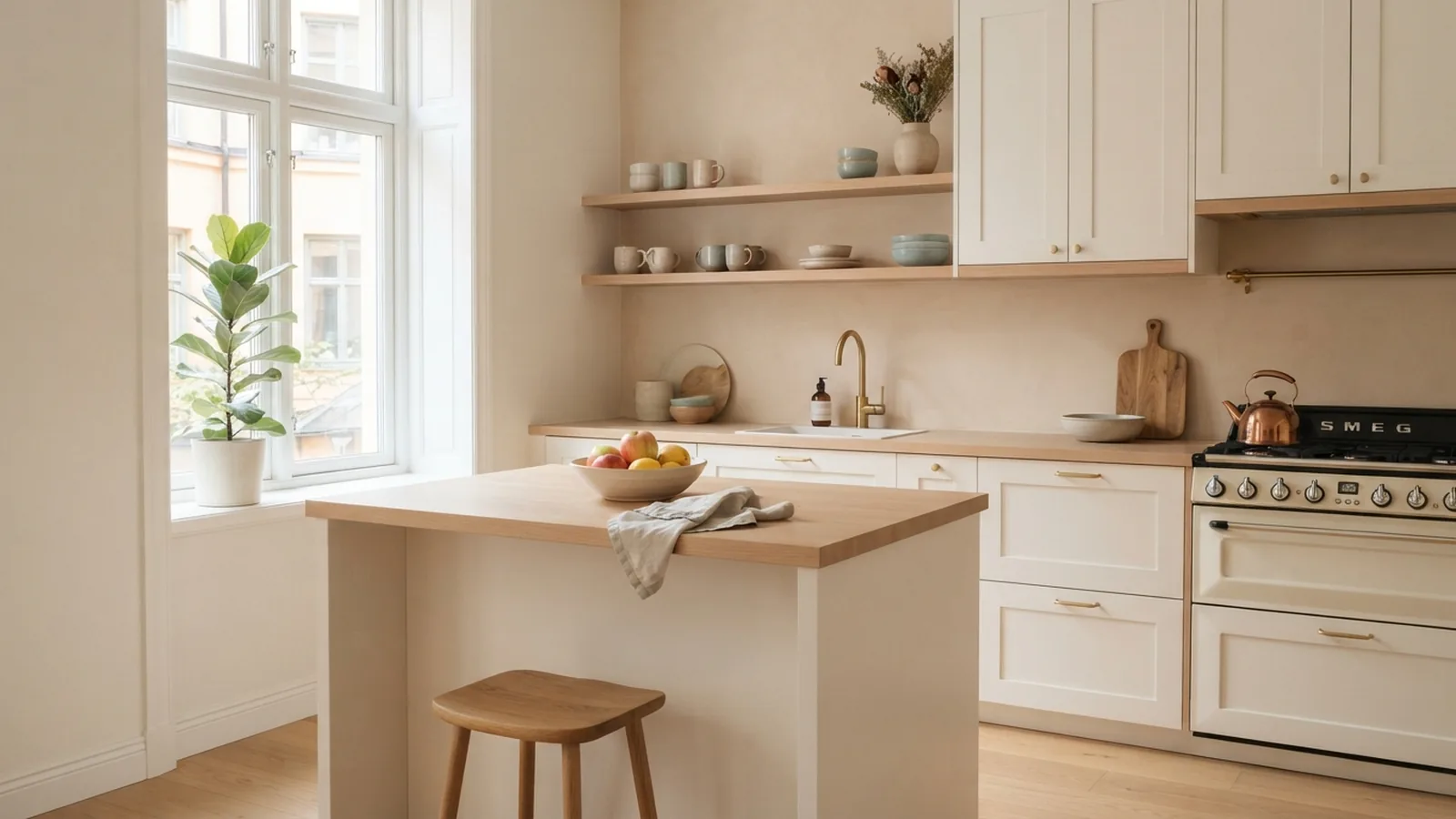
Can You Spray Paint Kitchen Cabinets?
Yes, you can spray paint kitchen cabinets. Spraying creates a smooth finish without brush strokes. It works on wood, MDF, and many laminate doors.
Can I spray paint my kitchen cabinets if they look worn? Yes, if the boxes feel firm and dry. Paint will not fix water damage, loose joints, or a poor layout.
Can you use spray paint on kitchen cabinets? You can, but the paint must suit the surface. Cabinet enamel gives a tougher finish than general craft paint.
Can I use spray paint on kitchen cabinets with a glossy finish? Yes, after deep cleaning, light sanding, and bonding primer. These steps help the new coat grip.
The right method matters more than spray speed. Clean each part well. Then sand, prime, and spray thin coats.
Why Spray Painting Cabinets Works Well
Spray paint lays down a fine, even coat. It reaches grooves and narrow edges with less buildup. The result can look close to a factory finish.
You can remove doors and coat them in batches. This keeps the color and sheen steady across the room. It also reduces brush marks on wide panels.
Many homeowners ask, can you spray paint a kitchen table too? Yes, if the table is sound and clean. Use a paint made for furniture, and let the top cure before use.
A white finish can brighten a small room. If you want to know how to spray paint kitchen cabinets white, use a stain-blocking primer first. Dark wood can show through pale paint without that base coat.
Companies who spray paint kitchen cabinets can handle large jobs. They often use a spray booth or a sealed work area. A home job can work well when you have time and space.
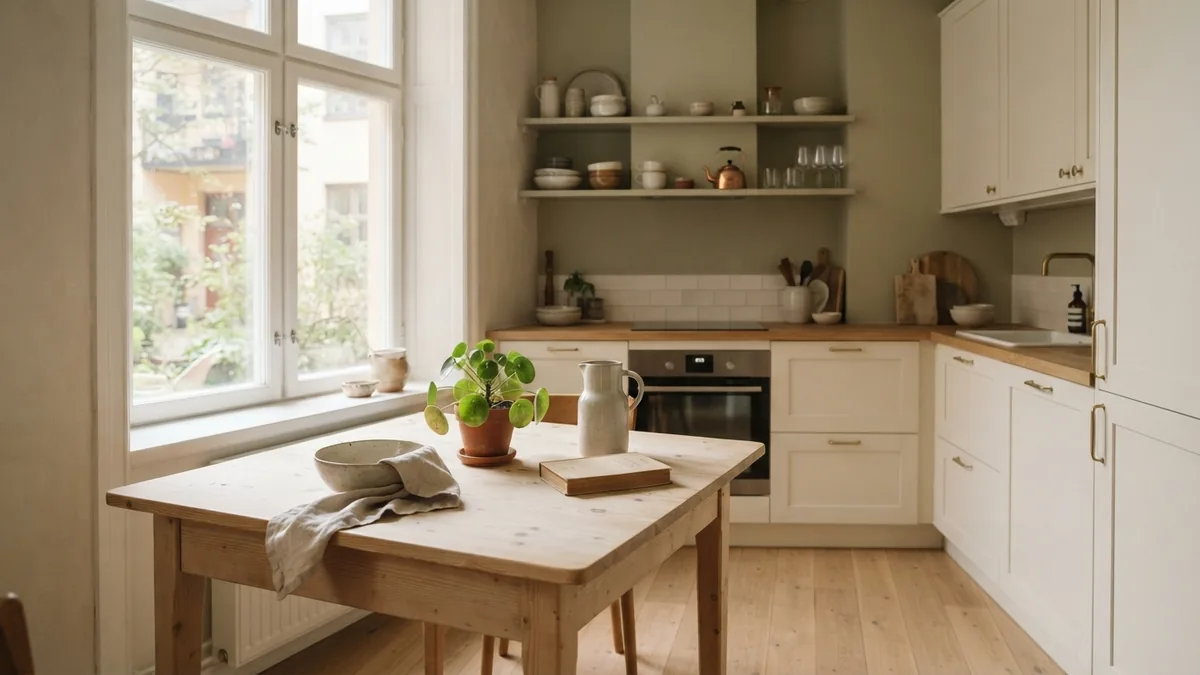
Essential Tools, Paint, and Safety Gear
Choose a sprayer that makes a fine, steady mist. An HVLP sprayer gives good control for cabinet doors. An airless sprayer works fast but may apply too much paint.
Use a fine tip made for thin trim paint. Check the paint label for tip size and pressure. Test the spray on cardboard before coating a door.
- Degreasing cleaner and clean water
- 180- to 220-grit sanding pads
- Bonding primer for wood, MDF, or laminate
- Cabinet enamel in satin or semi-gloss
- Painter's tape, drop cloths, and plastic sheeting
- Small bags and labels for hardware
- Gloves, eye protection, and a suitable respirator
Oil-based enamel flows well and dries to a hard coat. Water-based enamel dries faster and creates less odor. Both can work when the label allows cabinet use.
Good airflow matters during spraying. Keep the spray area away from flames and food. For older homes, read the EPA's lead-safe renovation advice before sanding old coatings.
Wear safety gear from the first spray to the final clean-up. A paper dust mask does not protect against paint vapor. Follow the respirator maker's fit and filter rules.
Step-by-Step Cabinet Preparation
Preparation decides how long the finish will last. Grease can block primer from bonding. Dust can leave rough bumps under fresh paint.
- Remove doors, drawers, knobs, and hinges.
- Mark each part inside an edge.
- Wash every surface with a strong degreaser.
- Rinse with clean water and let everything dry.
- Sand glossy areas with 180-grit paper.
- Fill dents with wood filler and sand them smooth.
- Wipe away dust with a clean, damp cloth.
- Apply one thin coat of bonding primer.
Wash twice when a surface still feels slick. Pay close attention to handles and corners. These areas often hold the most grease.
Sand until the old sheen looks dull. Do not remove sound old paint without a reason. Laminate needs a light scuff, not deep sanding.
Let primer dry for the full time on its label. Then sand it lightly with 220-grit paper. Remove the dust before spraying enamel.
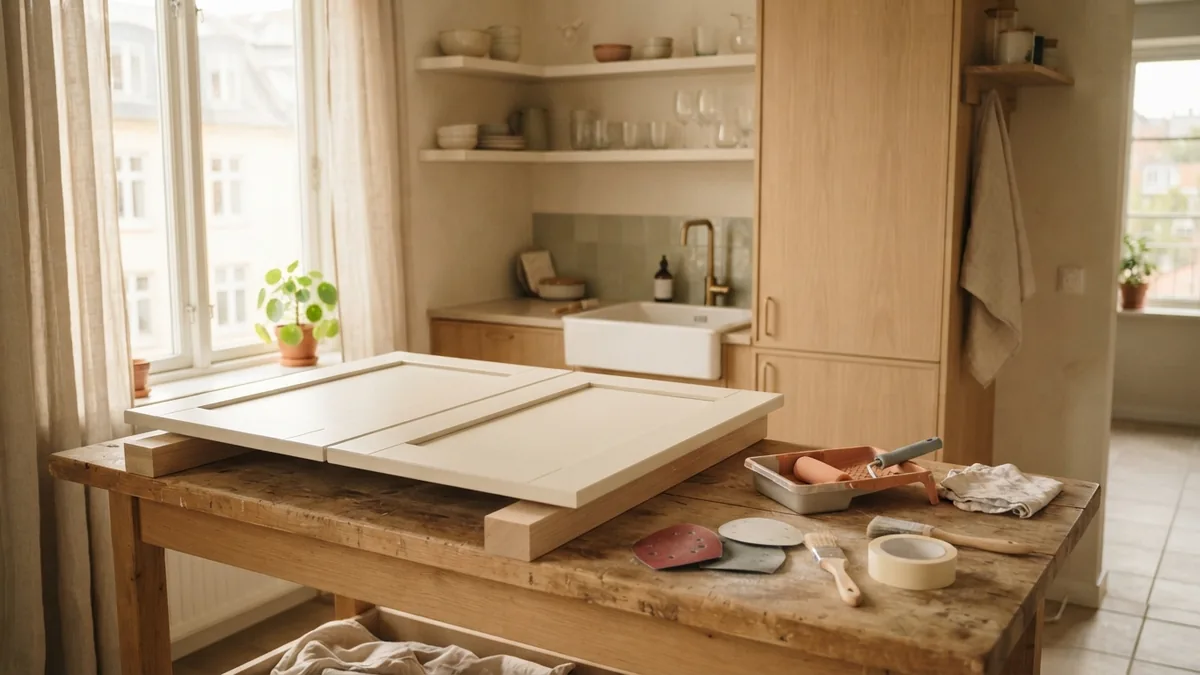
How to Spray Kitchen Cabinets Smoothly
Set up a clean spray area with good light. Keep wet doors away from dust, pets, and open windows. Use fresh airflow without blowing dust onto wet paint.
Thin the paint only when the label allows it. Too much thinner can cause runs and weak coverage. Strain paint before it enters the sprayer.
- Hold the gun about 8 to 12 inches from the surface.
- Start moving before you pull the trigger.
- Keep the gun straight during each pass.
- Overlap each pass by about half its width.
- Apply two or three thin coats.
- Turn doors only after the first side feels dry.
Spray the edges first. Then cover the broad face. Keep the gun level with each panel.
A slow pass creates runs. A fast pass leaves dry patches. Use a steady pace instead.
Check each coat from a low angle. This view shows dry spray, sags, and missed edges. Lightly sand rough spots after the coat cures.
Many people search for a how to spray paint kitchen cabinets video before starting. A video can show gun movement well. Still, follow your paint label for drying time and safe use.
The same applies to a how to paint kitchen cabinets video. Watch how the sprayer moves, then practise on scrap material. Do not test your first pass on a finished door.
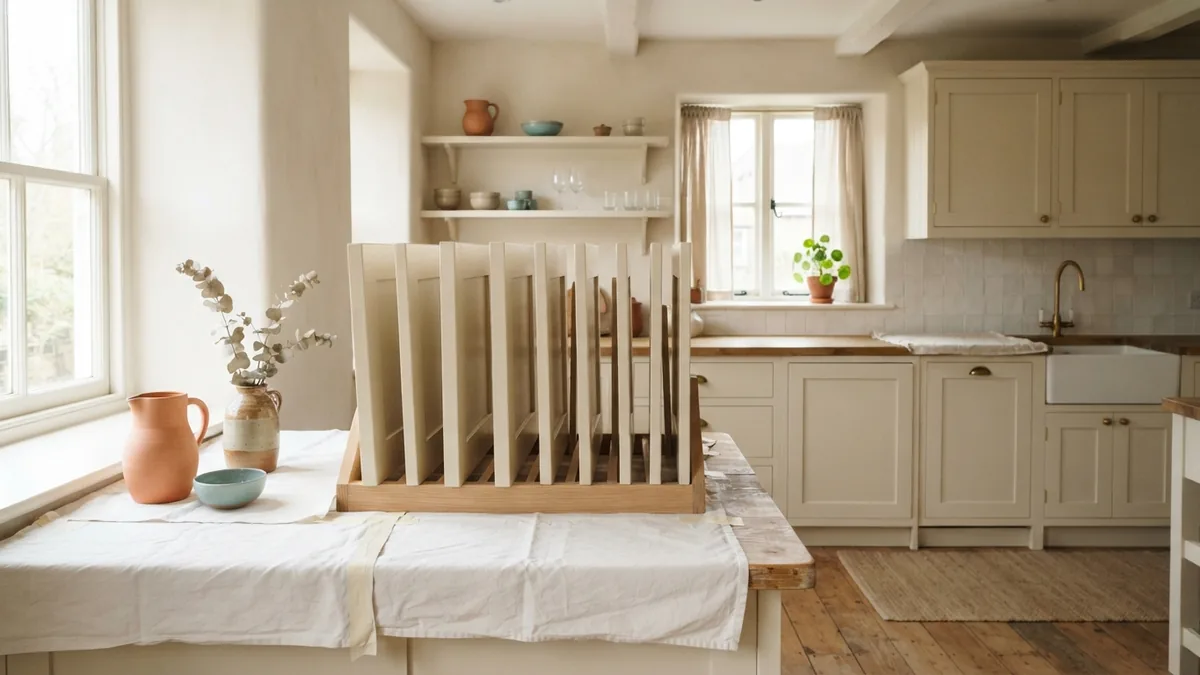
Common Mistakes to Avoid
Skipping degreasing is the most common mistake. Paint may look fine at first. It can peel later around handles and edges.
One thick coat causes sags and soft spots. Thin coats take more time but dry harder. Let each coat dry before adding another.
- Do not spray over wax, grease, or dust.
- Do not skip primer on laminate or glossy paint.
- Do not hold the gun too close.
- Do not paint in cold, damp air.
- Do not stack doors before the finish cures.
- Do not return hardware before the paint hardens.
Rushing the cure time can mark the finish. Dry does not always mean hard. Wait as long as the paint maker advises before heavy use.
Do not clean a fresh finish with strong chemicals. Start with a soft cloth and mild soap. Test any cleaner in a hidden spot first.
Cost, Care, and Long-Term Results
How much does it cost to spray paint kitchen cabinets? A home project may cost about $150 to $500. That range covers paint, primer, masking film, tips, and basic safety gear.
How much to spray paint kitchen cabinets through a contractor? A small kitchen may cost $2,000 to $6,000. Cabinet size, door count, repairs, and local labor rates change the final quote.
Ask companies who spray paint kitchen cabinets what their price includes. Check whether cleaning, sanding, primer, removal, and re-hanging are part of the quote. Also ask about the paint brand and cure time.
Painting often costs less than new cabinets. It makes sense when the layout works and the boxes are sound. Replace damaged parts before painting when repair costs rise too far.
Clean painted cabinets with a soft cloth and mild soap. Wipe spills soon after they happen. Avoid scouring pads, bleach, and harsh degreasers.
Check hinges and knobs every few months. Loose hardware can rub against the finish. Tighten it early to prevent chips around the holes.
Keep spare paint in a sealed, labelled jar. Store it where heat and frost cannot reach it. Small touch-ups are easier when the color is still available.
Step-by-step
- 01 Remove and label cabinet parts
Remove doors, drawers, knobs, and hinges. Mark each part so reassembly stays simple.
- 02 Clean every surface
Wash the cabinet parts with degreaser. Rinse them and let them dry fully.
- 03 Sand and repair the surfaces
Scuff glossy areas with fine sandpaper. Fill dents, then remove all dust.
- 04 Prime the cabinets
Apply a thin coat of bonding primer. Let it dry, then sand it lightly.
- 05 Spray thin paint coats
Hold the gun 8 to 12 inches away. Use steady passes with about half-width overlap.
- 06 Cure and reassemble
Let the finish harden for the time on its label. Refit the doors and hardware with care.
Frequently asked questions
- Can you spray paint kitchen cabinets?
- Yes. Spray painting works on wood, MDF, and many laminate doors. Clean, sand, and prime them first.
- Can I spray paint my kitchen cabinets without removing them?
- You can spray cabinet frames in place. Remove doors and drawers for a smoother finish and easier masking.
- Can you use canned spray paint for kitchen cabinets?
- Yes, canned spray paint can suit small cabinets and touch-ups. A paint sprayer gives better control for a full kitchen.
- How much does it cost to spray paint kitchen cabinets?
- A home project may cost about $150 to $500. A contractor may charge $2,000 to $6,000, based on size and repair work.
- How do you spray paint kitchen cabinets white?
- Clean and sand the doors first. Use stain-blocking primer, then apply thin white enamel coats.
- How long do spray-painted kitchen cabinets last?
- A well-prepared finish can last for years. Good cleaning, gentle use, and full cure time help protect the paint.
Related reading
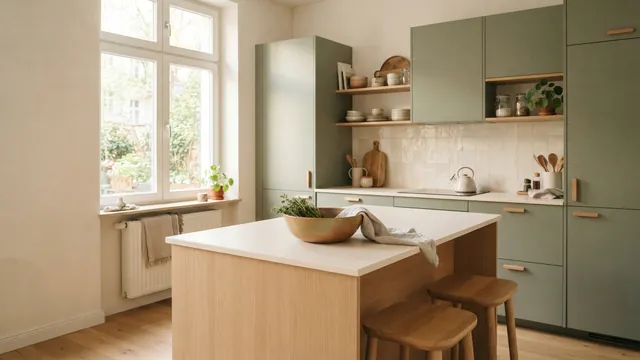
How to Get a Smooth Finish When Painting Kitchen Cabinets
Get smooth, durable cabinet paint with better prep, tools, and drying times.
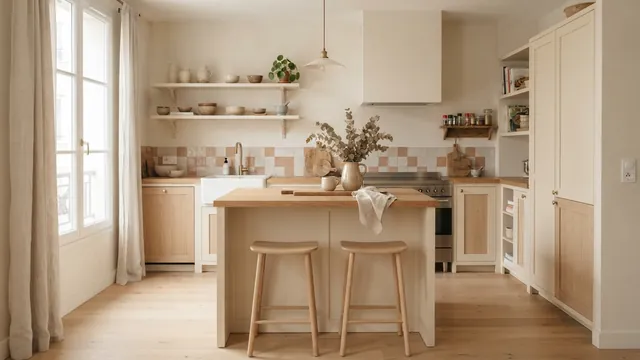
Unfinished Kitchen Cabinets—A Custom Paint Finish
Paint unfinished cabinets well with smart prep, the right tools, and patient drying time.
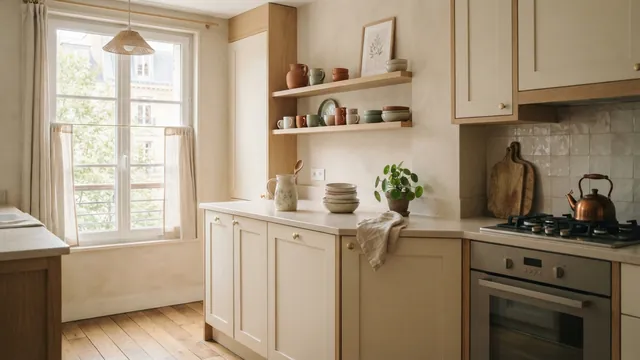
Choosing Paint for Kitchen Cabinets, Cupboards, and More
Choose the right paint, prep well, and get a smooth cabinet finish.