Choosing Paint for Kitchen Cabinets, Cupboards, and More
Choose the right paint, prep well, and get a smooth cabinet finish.
Types of Paint for Kitchen Cabinets
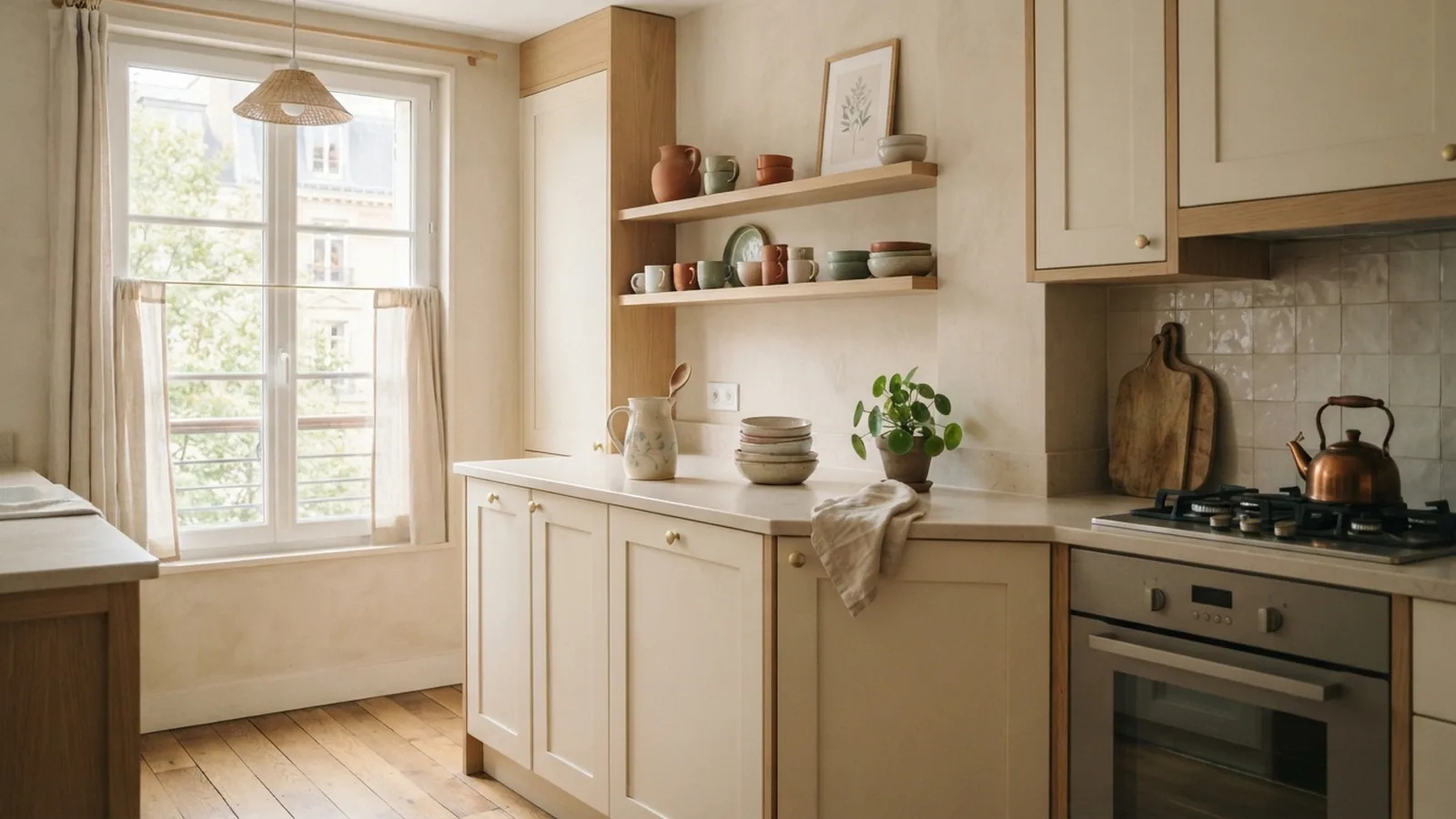
If you ask, “what paint do you use for kitchen cabinets?”, choose a durable acrylic latex cabinet paint. It dries fast and cleans up with water. Choose satin or semi-gloss for most homes. Both finishes handle steam, splashes, and regular wiping.
The same answer suits “what paint do you use on kitchen cupboards?” Look for paint made for cabinets, doors, trim, or busy rooms. These products form a tougher film than basic wall paint. They also flow better across flat panels and narrow edges.
If you wonder “what paint should i use for kitchen cabinets?”, waterborne alkyd is another strong choice. It gives a hard finish with less smell than classic oil paint. It also levels well as it dries. Follow the tin’s drying time before adding another coat.
Oil paint still suits some projects. It forms a smooth, firm film on well-prepared wood. Yet it dries slowly and needs solvent cleanup. It can also turn yellow in low light. Use it only when its longer drying time fits your project.
- Acrylic latex: Low smell, quick drying, and easy water cleanup.
- Waterborne alkyd: Hard wearing, smooth, and less harsh than oil paint.
- Oil-based paint: Tough and smooth, but slow to dry.
- Chalk paint: Soft and flat, but it needs a strong protective coat.
For “what paint to use in kitchen” projects, match the product to the surface. Use bonding primer on slick laminate. Use stain-blocking primer on bare wood or dark stains. Test the full paint system on one hidden door first.
Key Features of Cabinet Paints
When choosing what paint to use on kitchen cabinets, start with daily wear. Doors open many times each day. Hands leave oil near pulls and edges. Steam, food, and drinks can also reach the coating.
The best paint for kitchen cabinets should form a hard film. It should resist moisture and stains. Easy cleaning matters just as much. A good coating lets you remove marks with mild soap and a soft cloth.
Paint flow matters on broad doors. A paint that levels well hides light brush marks. It can also reduce the rough look left by a roller. Thin coats give better results than one thick coat.
| Feature | Why it matters |
|---|---|
| Hard film | Helps limit chips near handles and edges. |
| Moisture resistance | Helps the finish cope with steam and splashes. |
| Stain resistance | Makes oil, coffee, and food marks easier to remove. |
| Good flow | Helps create a smoother surface with fewer marks. |
Do not judge paint by sheen alone. A high-gloss product may clean well. Yet it can show dents and sanding marks. Strong prep lets you choose a finish for both looks and care.
Preparation Steps for Painting Cabinets
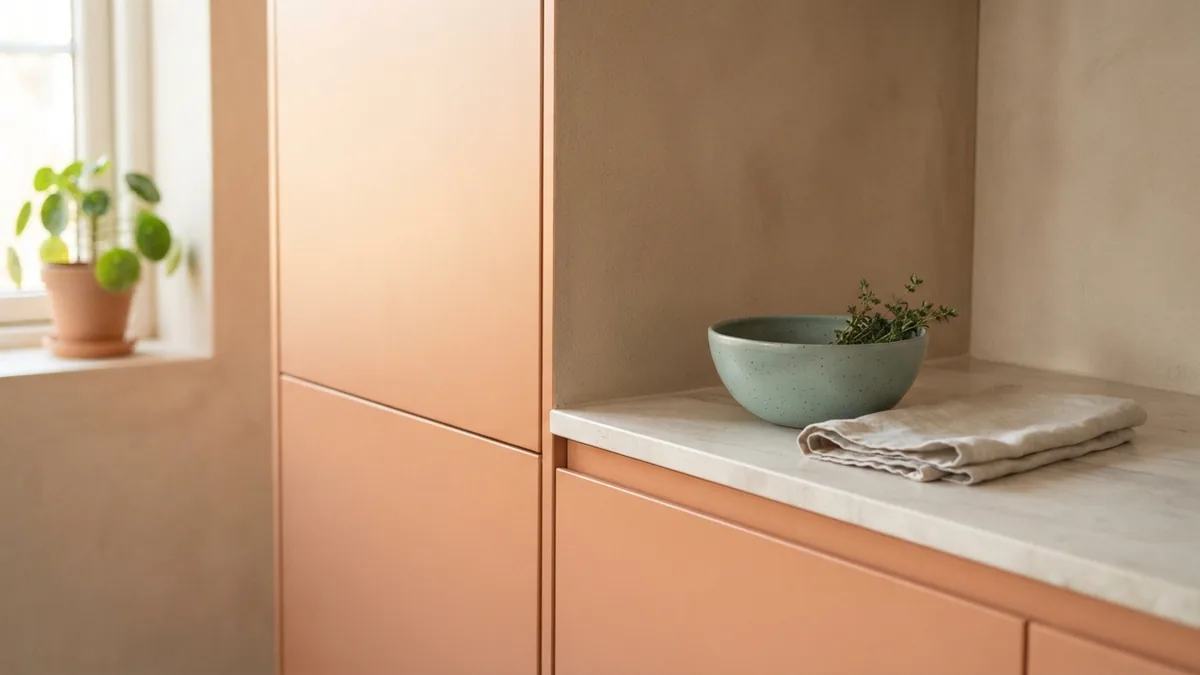
Good cabinet preparation starts with removal. Take off doors, drawers, hinges, and pulls. Mark each door and its matching opening. Place screws in small bags to make refitting easier.
Clean every part with a grease-cutting cleaner. Focus on areas near the cooker and handles. Rinse away cleaner residue with clean water. Let each surface dry fully before sanding.
Sand glossy surfaces with 120 to 150 grit paper. Finish with a light pass using 180 to 220 grit paper. You do not need to strip sound paint. Create a clean, dull surface instead.
Fill dents and old screw holes with wood filler. Let the filler dry. Sand it level with the surrounding surface. Vacuum dust, then wipe the surface with a clean, damp cloth.
Use a bonding primer on glossy wood, laminate, or stained areas. Primer helps the topcoat grip. It also blocks stains from showing through. Pick a primer that suits the cabinet material.
- Remove doors, drawers, pulls, and hinges.
- Clean away grease, wax, dust, and cleaner residue.
- Sand until glossy areas look dull.
- Fill dents and sand repairs smooth.
- Prime wood, laminate, or stained surfaces.
- Let each coat dry before the next step.
Use a small foam roller on broad, flat panels. Keep a fine angled brush for corners and edges. A sprayer can give a smooth finish. It needs masking, practice, and a clean work area.
Application Techniques for a Smooth Result
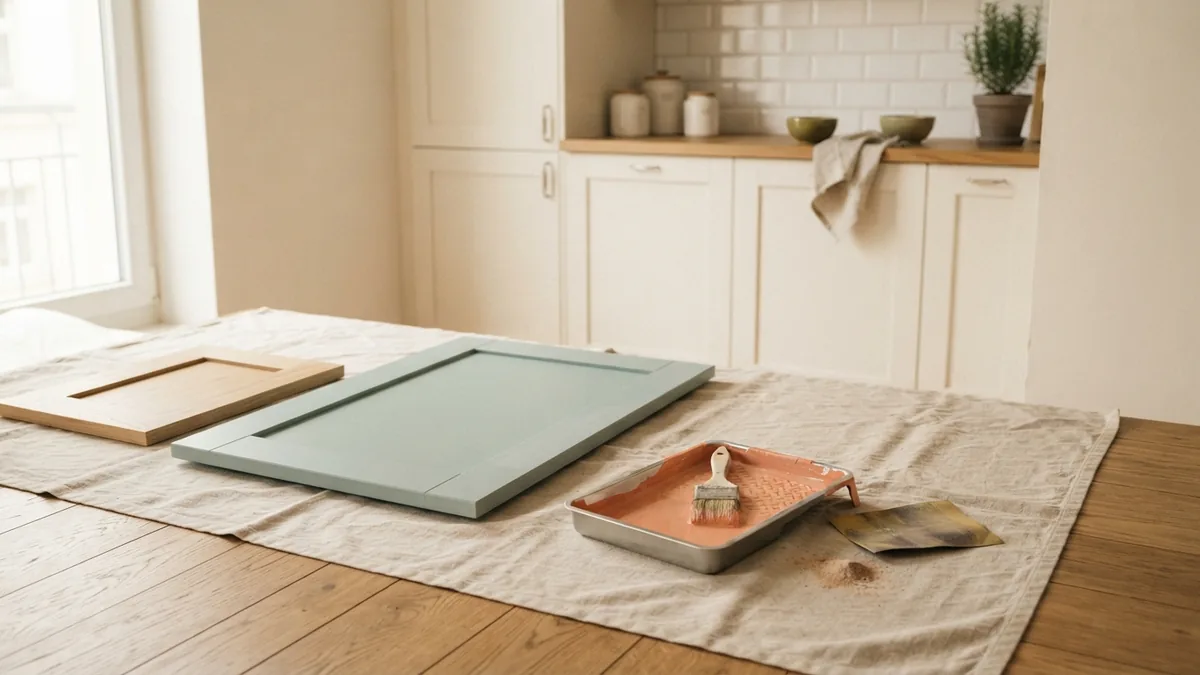
Start with the cabinet frames. Then paint the doors and drawer fronts. Work from inside edges toward the outer faces. Keep every coat thin.
A brush suits bevels, rails, and narrow edges. Use long strokes in one direction. Stop brushing when the paint starts to set. Further brushing can leave ridges and dull spots.
A foam roller suits flat doors. Roll with light pressure and even passes. Check the edges for paint buildup. Smooth those spots with a small brush before they dry.
A sprayer gives an even finish across many doors. It needs a clean spray area and careful masking. Strain the paint before filling the cup. Apply several light passes instead of one heavy pass.
Let each coat dry for the time shown on the tin. Cool air can slow drying. High moisture can slow it even more. Do not close doors until the coating feels firm.
- Prime the frames, doors, and drawer fronts.
- Sand the dry primer with fine paper.
- Remove dust with a clean cloth.
- Apply the first thin topcoat.
- Let it dry, then sand any rough spots.
- Apply the second coat.
- Allow the finish to harden before refitting parts.
Patience matters here. Paint may feel dry before it reaches full strength. Treat new cabinet paint gently for the first few weeks.
Finish Options for Kitchen Cabinets
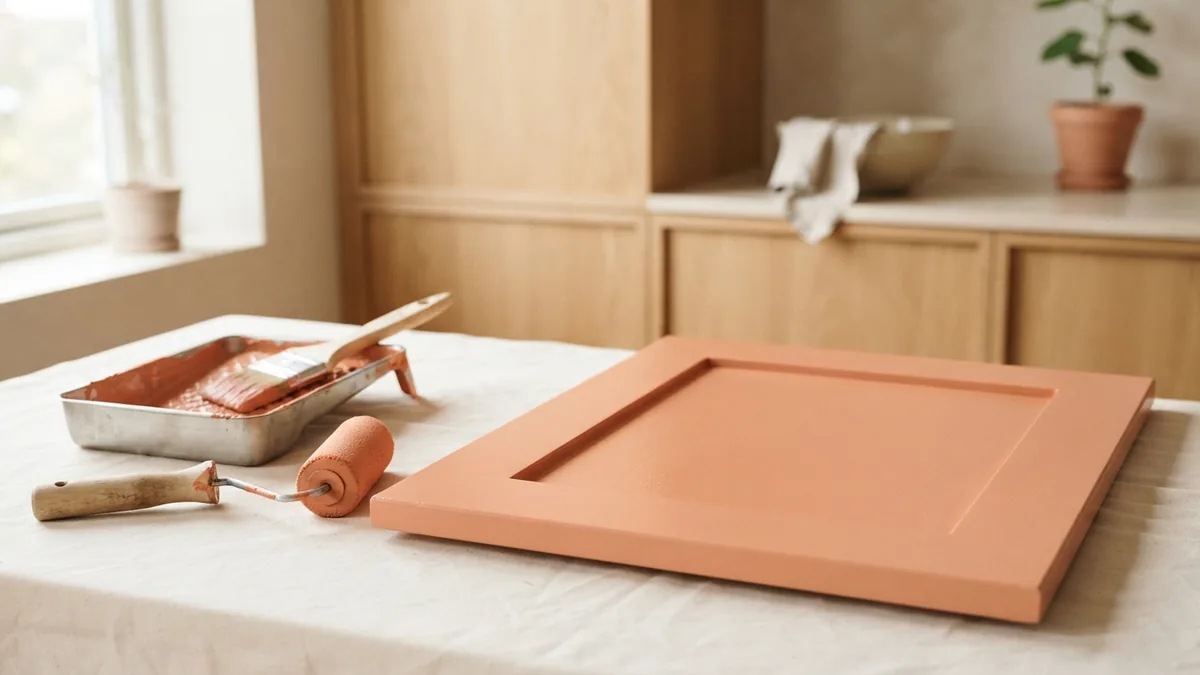
Paint finishes for kitchen cabinets affect both style and care. Matte paint hides small flaws well. It gives a calm, soft look. Yet it may mark more easily near pulls.
Satin offers a useful middle ground. It reflects little light and cleans with ease. Semi-gloss reflects more light. It gives doors a brighter look and handles wiping well.
Gloss paint creates the strongest shine. It can suit a sleek kitchen. However, it shows dents, dust, and poor sanding. It also feels less soft than the matte look.
| Finish | Best use | Main trade-off |
|---|---|---|
| Matte | Low-key rooms with few marks | Harder to clean |
| Satin | Most family kitchens | Shows some surface flaws |
| Semi-gloss | Busy doors and trim | More light reflection |
| Gloss | Sharp, sleek designs | Shows dents and sanding marks |
For most homes, satin or semi-gloss gives the best balance. Choose the same sheen for doors and frames. Stir the paint well before use. Test the colour and sheen in daylight before painting the full set.
Kitchen, Bathroom, and Special Surface Paint Choices
Many readers also ask, “do you have to use bathroom paint?” Not always. A good kitchen or trim paint may work on dry bathroom walls. Bathroom paint can still offer better moisture and mold resistance.
For “what paint do you use in a bathroom?” choose a washable paint made for damp rooms. The answer to “what paint should i use in a bathroom?” is often a quality acrylic paint. Use a satin finish on walls. Use a soft sheen on the ceiling if the room has strong steam.
If you ask “what paint to use in bathroom walls,” pick a washable coating with mildew resistance. For “what paint to use on bathroom ceiling,” choose a product rated for high moisture. Good airflow matters too. The U.S. Environmental Protection Agency’s mold guidance links moisture control with mold prevention.
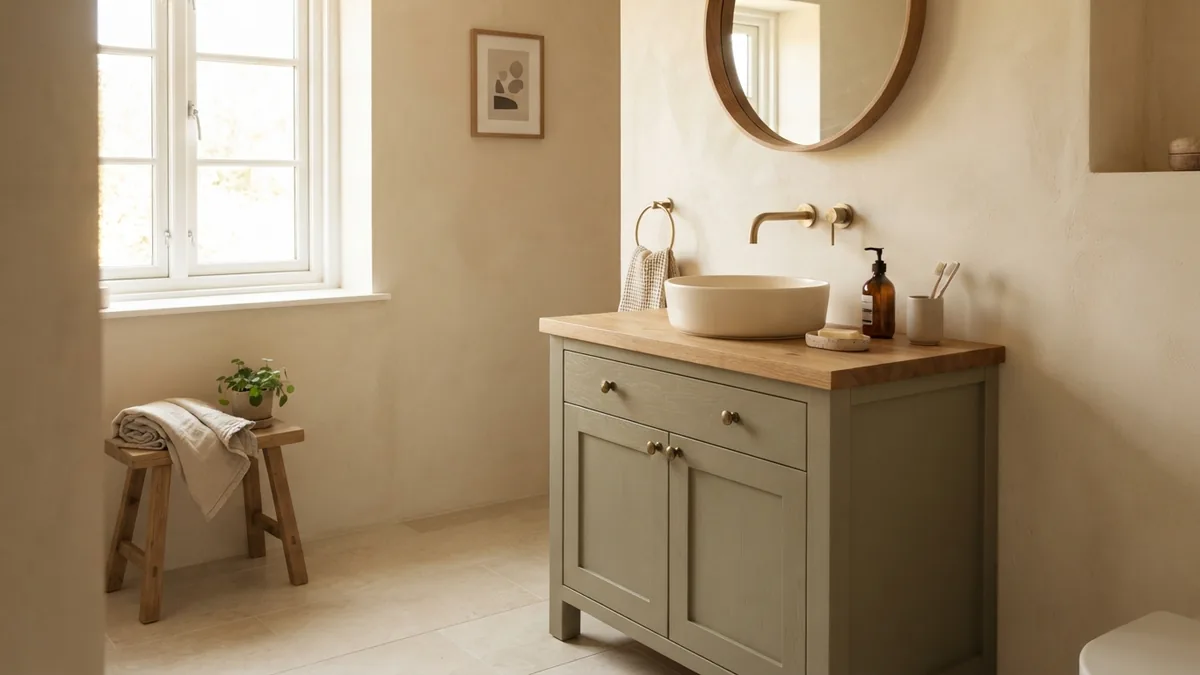
Cabinet paint can work on a bathroom vanity. It can also suit the questions “what paint to use for bathroom cabinets” and “what paint to use on bathroom cabinets?” Clean the surface well first. Then use a bonding primer and two thin coats.
For “what paint to use on bathroom vanity,” use cabinet-grade acrylic or waterborne alkyd. For tiles, the answer to “what paint to use on bathroom tiles” is a tile coating made for wet areas. The same rule applies to “what paint to use on tile in bathroom.” Clean, dull, and prime the tile before painting.
Kitchen materials need the same care. Use bonding primer for laminate. Use a flexible cabinet product for wooden cupboards. These choices answer “what paint to use on laminate kitchen cupboards,” “what paint to use on wood kitchen cabinets,” and “what paint to use on wooden kitchen cupboards.”
Maintenance Tips for Painted Cabinets
Let fresh paint harden before heavy use. The label may list a cure time of several days. Some products need longer. Follow that guidance instead of judging by touch.
Clean painted cabinets with warm water and mild soap. Use a soft cloth or sponge. Avoid scouring pads and strong solvents. They can dull the finish or soften the film.
Wipe spills soon after they happen. Pay close attention to oil, coffee, and sauce. Dry the surface after cleaning. This step limits stains and swelling around joints.
- Use soft cloths for routine cleaning.
- Wipe grease before it dries.
- Keep wet towels away from cabinet edges.
- Check sink cabinets for leaks.
- Touch up chips with matching paint.
- Replace worn hinges before doors rub the finish.
Good ventilation helps in both kitchens and bathrooms. Run the extractor during cooking or showers. Open a window when weather allows. Lower moisture means less strain on painted surfaces.
Inspect high-touch areas twice each year. Look at corners, handles, and sink-side doors. Fix small chips before water reaches the substrate. Small repairs can delay a full repaint.
Step-by-step
- 01 Remove cabinet hardware
Take off doors, drawers, hinges, and pulls. Mark each part so refitting stays simple.
- 02 Clean the surfaces
Remove grease, wax, dust, and cleaner residue. Let every part dry fully.
- 03 Sand and repair
Sand glossy areas until dull. Fill dents, then sand the repairs level.
- 04 Apply primer
Use bonding primer on laminate, glossy wood, or stained surfaces. Let it dry as directed.
- 05 Paint thin coats
Use a brush, roller, or sprayer that suits the panel shape. Apply two thin topcoats.
- 06 Allow the finish to cure
Wait for the label’s cure time before refitting doors. Treat the finish gently at first.
Frequently asked questions
- What paint do you use for kitchen cabinets?
- Use acrylic latex cabinet paint or waterborne alkyd. Both give a hard, washable finish when applied over sound primer.
- What paint should I use for kitchen cabinets?
- Choose a cabinet-grade product with good flow and stain resistance. Satin or semi-gloss usually works well in busy kitchens.
- Do you have to use bathroom paint?
- No. A quality washable paint may work in a dry bathroom. Bathroom paint can offer better moisture and mold resistance.
- What paint should I use in a bathroom?
- Use washable acrylic paint made for damp rooms. Satin wall paint and moisture-rated ceiling paint are common choices.
- What paint should I use on bathroom cabinets?
- Use cabinet-grade acrylic or waterborne alkyd over a bonding primer. Clean and sand the surface before painting.
- What paint should I use on bathroom tiles?
- Use a tile coating made for wet areas. Clean, dull, and prime the tile so the new coating can grip.
Related reading
How to Get a Smooth Finish When Painting Kitchen Cabinets
Get smooth, durable cabinet paint with better prep, tools, and drying times.
Kitchen Cabinet Spray Painting — Tools, Steps, and Costs
Spray kitchen cabinets with less mess, better prep, and a smooth finish.
Choosing Paint and Color for Kitchen Cabinets
Find durable cabinet paint and calm colors for every room.