Is Blue a Good Bedroom Color? How to Choose the Right Shade
Learn how blue shades and undertones shape a calm, restful bedroom.
Why Blue Works So Well in Bedrooms
Is blue a good bedroom color? For many homes, yes. Blue often feels calm, cool, and easy on the eyes. These traits can help create a room that feels ready for rest.
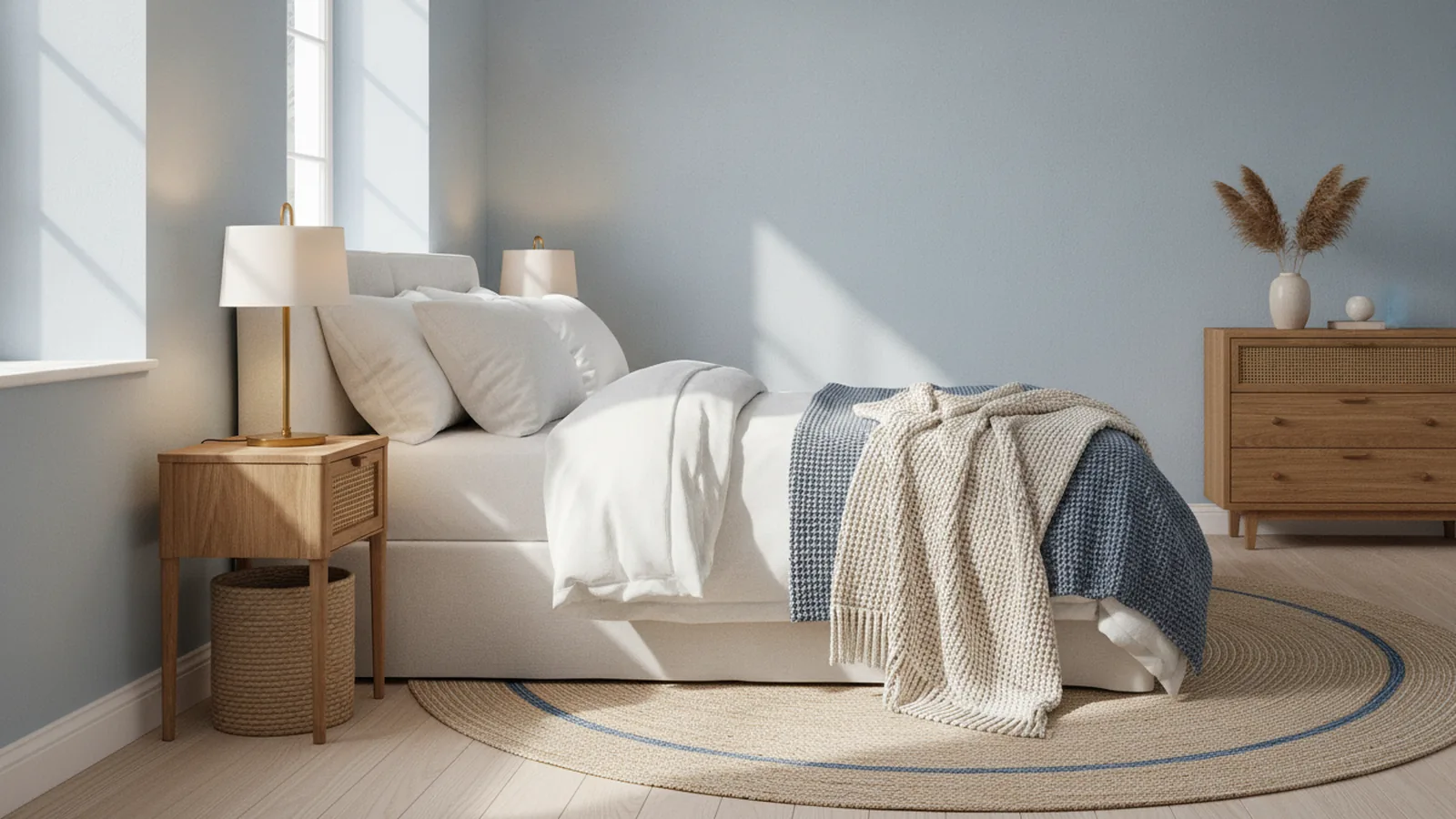
Light blue can make a small room feel wider and brighter. Dark blue can make a large room feel warm and close. Mid-tone blue offers a useful balance between calm and character.
Is blue a good color for a bedroom with warm wood furniture? It can be. White linens add crisp contrast, while wood brings needed warmth. Soft rugs and woven baskets stop the room from feeling cold.
- Use pale blue for an open, airy mood
- Choose deep blue for a cozy and rich setting
- Add tan, brass, or warm wood accents
- Layer blue through paint, bedding, curtains, or art
Blue also gives you room to change the style later. You can keep blue walls and swap bedding, lamps, or rugs. This makes blue a useful base for bedroom decor.
Popular Shades of Blue and Their Mood
Each blue shade creates a different room feel. The best choice depends on daylight, room size, and your furniture. Sample the paint before covering every wall.
Blue also has undertones. A green undertone can feel fresh and coastal. A violet undertone can feel soft and refined. Gray undertones create a quiet, modern look.
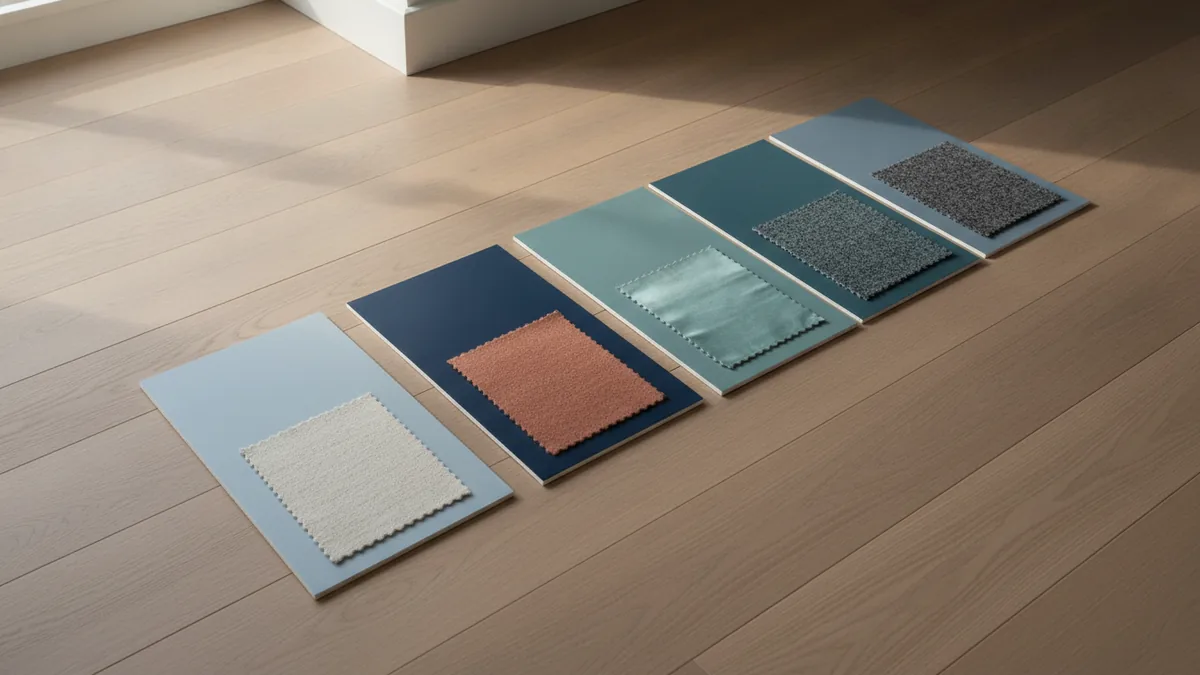
Study samples during the morning and evening. Natural light can bring out green or gray notes. Warm bulbs can make a cool blue look softer.
| Blue shade | Best mood | Useful pairing |
|---|---|---|
| Powder blue | Light and peaceful | White linen and pale oak |
| Dusty blue | Soft and settled | Cream, clay, and aged brass |
| Navy blue | Deep and intimate | Warm wood and ivory |
| Blue-gray | Quiet and modern | Black metal and light oak |
| Teal blue | Bold and lively | Terracotta and cream |
Light shades suit rooms with little sun. Dark shades suit rooms with strong daylight. Still, your sample matters more than a general rule.
How to Match Blue with Other Colors
White is the simplest partner for blue. It keeps the room fresh and gives blue walls a clean edge. Cream creates a softer result than bright white.
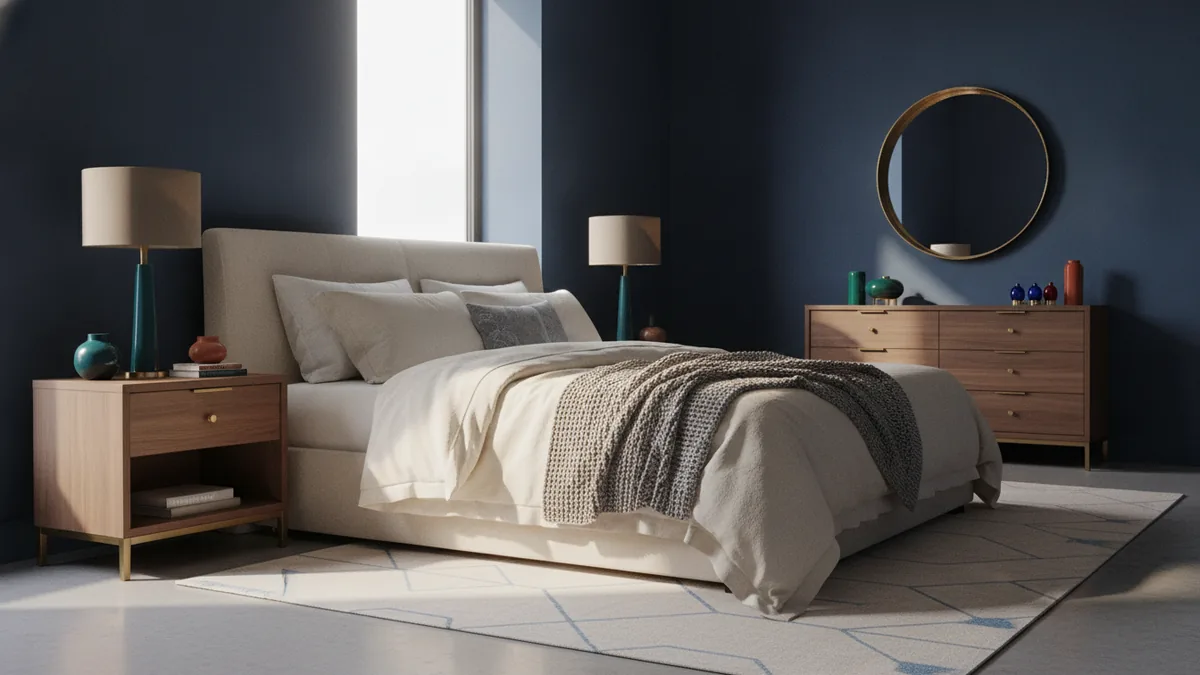
Wood tones add warmth to a blue bedroom. Light oak suits pale blue and coastal rooms. Walnut looks strong beside navy or teal.
Rich jewel tones can make blue feel more layered. Try emerald cushions, plum throws, or ochre lamps. Use these shades in small amounts.
Metal finishes also change the look. Brass adds warmth and a classic touch. Chrome and black metal create a sharper, modern scheme.
- Pair pale blue with white, cream, or light wood
- Pair navy with ivory, walnut, or warm brass
- Pair teal with clay, ochre, or muted pink
- Repeat one accent shade at least twice
Use fabric samples beside your paint sample. A blue wall can look different beside a gray rug. This small test can prevent costly mismatches.
Blue for Different Bedroom Styles
Blue can suit many design styles. The shade and finish matter more than the color name. Keep the rest of the room in step with that choice.
For a coastal room, choose soft blue with white bedding and pale wood. Add woven textures for a relaxed feel. Avoid using only bright blue and stark white.
For a classic room, try navy, dusty blue, or blue-gray. Add patterned bedding, wood furniture, and aged brass. These details give blue a settled feel.
For a modern room, use blue-gray or deep matte blue. Keep shapes simple and limit accent colors. Crisp bedding and black metal can sharpen the scheme.
For a dramatic room, paint the ceiling or trim in a related blue. This creates a wrapped, intimate effect. It works best when the room has enough daylight.
Blue bedroom ideas work best when they reflect how you use the room. A quiet reading room may suit dusty blue. A guest room may suit a brighter, lighter shade.
What Blue Can Do to Your Bedroom Mood
Color psychology links blue with calm and stillness. In a bedroom, that link can support a slower evening routine. Color cannot replace good sleep habits.
Very bright blue may feel active rather than restful. Deep blue may feel heavy in a room with little daylight. Muted shades often offer the safest middle ground.
Your own response matters most. A cool blue may feel peaceful to one person. Another person may find it distant or chilly.
Test a large sample on two walls. View it beside your floor, bed, and curtains. Live with it for one full day before deciding.
- Check the room’s daylight from morning to dusk
- Note whether the floor has warm or cool tones
- Test blue beside your main bedding
- Choose the shade that feels calm at night
Paint sheen matters too. A flat finish hides small wall flaws. An eggshell finish gives walls a soft glow and cleans more easily.
Other Bedroom Colors Worth Considering
Blue is not the only strong choice for a restful room. Gray and lavender can create soft, quiet spaces. Cream and warm white offer a simple base.
Is gray a good color for a bedroom? Yes, when you choose the right undertone. Warm gray feels gentle beside wood. Cool gray feels crisp beside white and black.
Is grey a good color for a bedroom? Yes. Grey is the common spelling in some regions. The same design rules apply to both names.
Is lavender a good color for a bedroom? It can be. Gray-based lavender feels calm and grown-up. Is purple a good bedroom color? A muted purple can add depth without feeling loud.
Is purple a good color for a bedroom? It depends on the shade and light. Soft plum feels rich, while bright violet can feel energetic. Is purple colour good for bedroom design? It can work well with cream, oak, and soft gray.
Is pink a good color for a bedroom? Dusty pink and blush can feel warm and gentle. Is peach a good color for a bedroom? Soft peach brings warmth, especially in rooms with cool daylight.
Is orange a good color for a bedroom? Pale apricot can work as an accent. Strong orange may feel too active across every wall. Is red a good color for a bedroom? Deep brick red can feel cozy, but bright red may disrupt a restful mood.
Is black a good color for a bedroom? Black works best on one wall, trim, or furniture. It needs strong contrast and enough light.
Using Color Choices in Living Rooms and Kitchens
Bedroom colors do not always suit shared rooms. A living room often handles stronger contrast and brighter accents. Test the same color in its real setting.
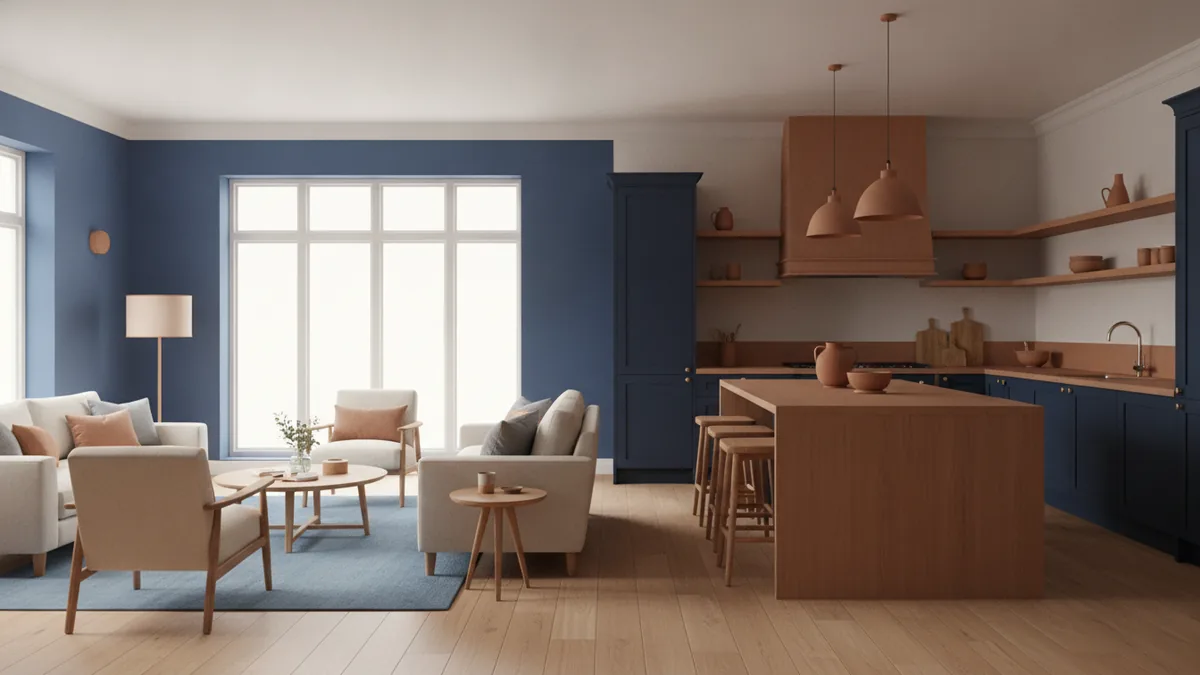
Is blue a good color for a living room? Yes, especially in dusty, teal, or navy shades. Blue can create a calm base for wood, cream, and patterned fabric.
Is gray a good color for a living room? Yes, when you balance it with texture and warm accents. Add oak, tan leather, brass, or earthy art.
Kitchens need a different test. Cabinets, counters, floors, and light all affect the result. A small sample may look much stronger across a full cabinet run.
Is black a good color for kitchen cabinets? It can be striking in a bright kitchen. Pair black cabinets with light counters and warm wood.
Is orange a good color for a kitchen? Soft terracotta or muted orange can add warmth. Use it on a wall or island when full coverage feels too bold.
Is red a good color for a kitchen? Brick red can suit a vintage or rustic room. Bright red works better in small doses, such as stools or appliances.
These wider examples still follow one rule. Sample the color beside fixed surfaces first. The surrounding materials shape the final mood.
How to Choose the Right Blue
Start with the room’s fixed features. Look at flooring, furniture, window trim, and light bulbs. These parts guide the best blue family.
Next, choose the mood you want. Pale blue feels open and gentle. Navy feels close and rich. Blue-gray feels calm and neat.
Buy sample pots instead of trusting a small card. Paint two large boards or wall sections. Move them around the room during the day.
- Check the blue beside white and cream fabrics
- Compare the sample with your flooring
- View it in daylight and warm evening light
- Watch for green, violet, or gray undertones
- Choose the shade that feels restful at night
The best blue is the one that supports your room and routine. It should look good at noon and feel right at bedtime.
Frequently asked questions
- Is blue a good bedroom color?
- Yes. Blue often feels calm and restful. Light shades open a room, while dark shades add warmth and depth.
- Is gray a good color for a bedroom?
- Yes, when its undertone suits the room. Warm gray feels soft, while cool gray feels crisp and modern.
- What are good alternative colors for a bedroom?
- Yes. Lavender, peach, pink, and muted purple can all work. Choose soft shades for a calmer room.
- Is black a good color for a bedroom?
- Yes, but use it with care. Black works best on one wall, trim, or furniture in a bright room.
- Is blue a good color for a living room?
- Yes. Blue works well in living rooms with cream, wood, brass, or patterned fabric.
- Can bold colors work in a kitchen?
- Yes, if you balance them with light surfaces. Black, orange, and red work best as planned kitchen accents.
Related reading

How to Design a Bedroom That Feels Like Your Own
Plan a bedroom that feels calm, useful, and fully your own.
Kitchen Wall Décor — Style and Function
Make a bare kitchen wall feel warm, useful, and thoughtfully styled.
Bathroom Paint — Moisture, Finishes and Cost
Choose bathroom paint based on dampness, airflow, surface prep and finish.