What Color Rug Works Best With a Blue Room?
Match a rug to blue walls with calm, warm, or bold color pairings.
Understanding Color Theory in a Blue Room
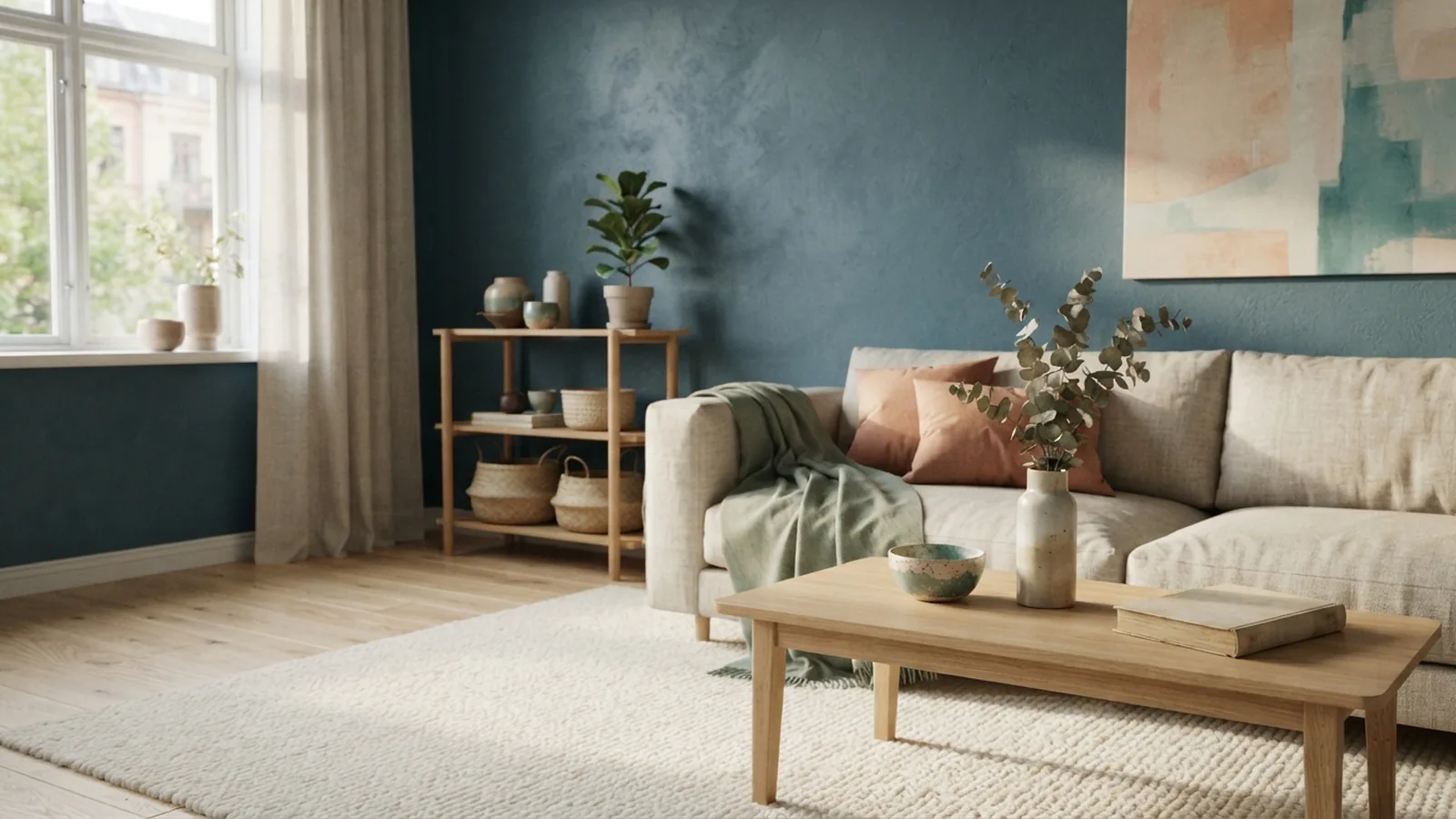
The best rug color for a blue room depends on the blue's shade, depth, and undertone. Dark navy walls need contrast, while pale blue walls can handle warmer or deeper tones. Start by viewing the wall color in both daylight and lamplight.
Blue is versatile because it can feel calm, crisp, coastal, or rich. A rug helps set that mood. Light gray, cream, and white create a fresh contrast with dark blue. Beige, taupe, and muted green make lighter blue feel warmer.
Use the color wheel as a simple guide. Orange sits opposite blue, so warm orange-based shades create energy. Green and blue sit close together, so they create a calm, natural flow. Neutrals soften both choices.
- Choose contrast when the room feels dark or flat.
- Choose nearby colors when you want a calm, layered look.
- Choose warm accents when the room needs more energy.
Best Rug Colors for Dark Blue Rooms
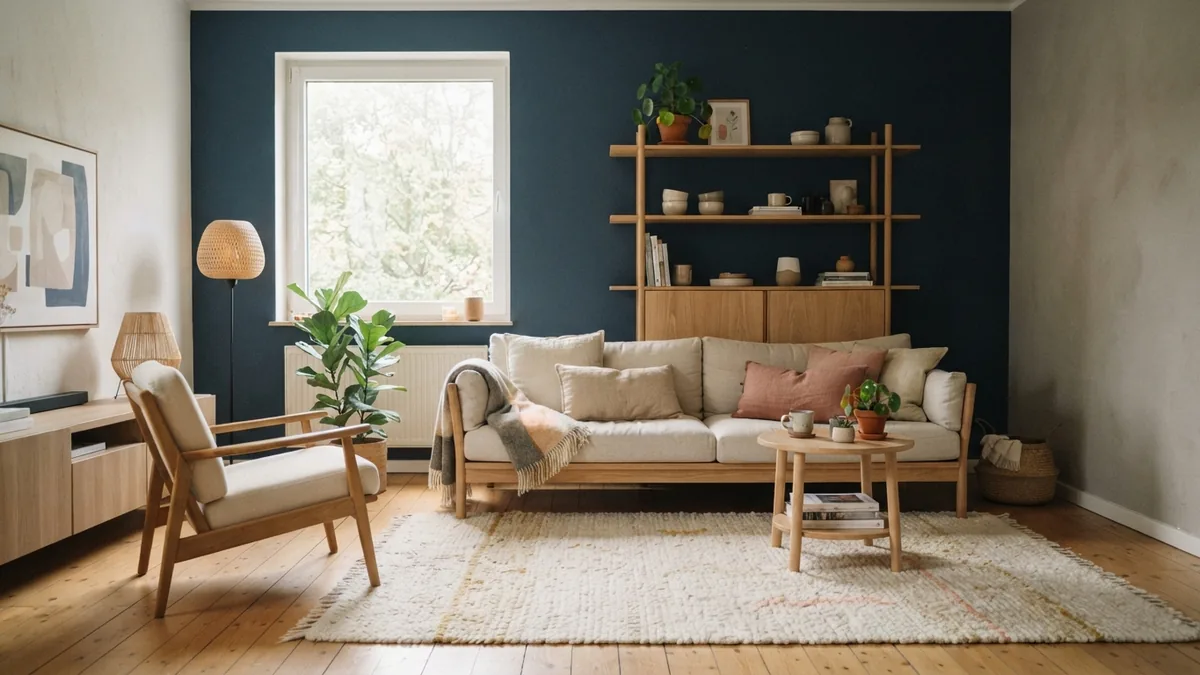
Dark blue walls look striking with light gray, cream, or white rugs. These shades lift the room and outline the furniture. A cream rug works well with oak, walnut, brass, and soft linen.
Light gray gives navy walls a clean, modern partner. Pick a warm gray instead of a blue-gray if the room already feels cool. White offers the sharpest contrast, but an ivory rug hides marks better than bright white.
Warm colors can also energize a dark blue room. Gold, ochre, rust, and soft coral add life without making the room feel loud. Try a navy rug with small coral details if you want color without a bold block of contrast.
If you ask, “what color rug for a blue room?” start with the room's light level. A small dark room needs a pale rug. A bright room can support richer gold, rust, or green.
Best Rug Colors for Light Blue Rooms
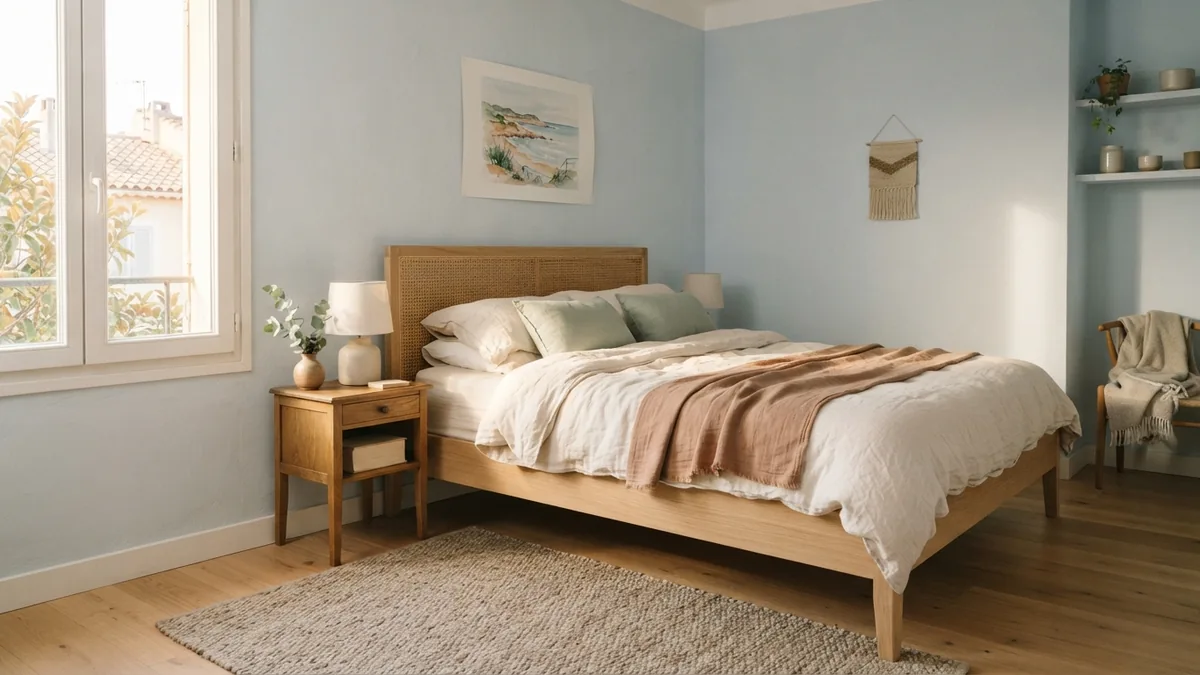
Light blue walls pair well with beige, taupe, and warm cream rugs. These colors add depth and stop the room from feeling washed out. They also suit pale oak, rattan, wool, and natural linen.
For a soft coastal look, try ivory with sand or oat tones. For a more grounded room, choose taupe with a subtle brown or gray base. Beige works best when its undertone matches the room's other warm finishes.
Green rugs bring a natural feel to light blue rooms. Sage, olive, and faded moss work well with plants and wood. Use a muted green if the walls are pale and cool. Deep green can anchor a larger room with light furniture.
Darker blue rugs create a layered look without breaking the color story. Try slate, denim, or deep teal. This choice works well when you want a calm bedroom or a neat living room.
How Patterns and Textures Change the Mood
Color matters, but texture can change how the rug feels underfoot and in the room. A flatweave rug looks crisp and casual. A high-pile rug feels softer and makes a bedroom feel more restful.
Wool adds warmth, shape, and long wear. Cotton feels light and suits smaller rooms. Jute brings a dry, natural texture that works well with blue and pale wood. Synthetic fibers can help in busy spaces because they often clean with less fuss.
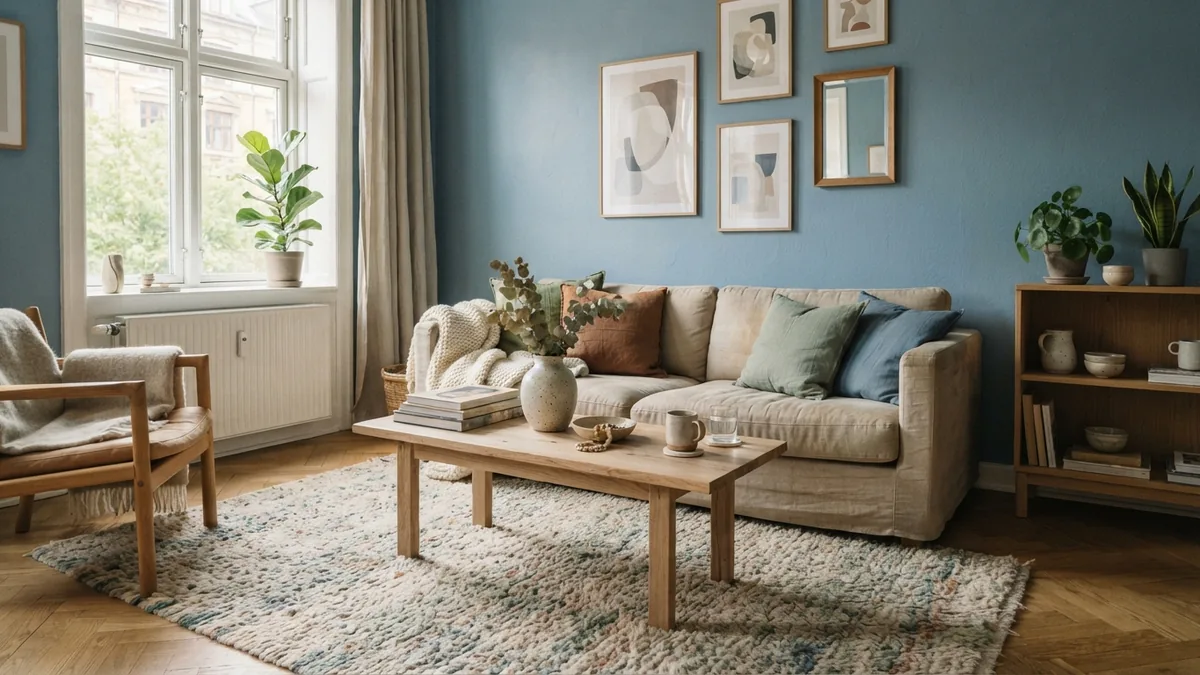
Patterns can blend several colors at once. A faded rug with blue, cream, beige, and rust links the walls, furniture, and small accents. Keep the pattern scale in line with the room. Large motifs suit open floors, while small patterns work better in compact rooms.
Use texture to balance color contrast. A bold navy wall can handle a soft, nubby rug. A pale blue room may need a stronger weave or pattern for visual weight.
| Room mood | Useful rug texture | Good color direction |
|---|---|---|
| Calm bedroom | Soft wool or plush pile | Ivory, taupe, sage, or deep blue |
| Relaxed living room | Flatweave or low pile | Beige, cream, gray, or faded green |
| Warm reading nook | Dense wool or woven cotton | Gold, rust, coral, or denim |
Practical Tips for Choosing the Right Rug
Measure the room before you shop. In a living room, the front legs of each sofa should sit on the rug when possible. In a bedroom, place the rug under the lower two-thirds of the bed. This layout gives your feet a soft landing.
Leave a clear border of floor around the rug. A gap of 8 to 18 inches often looks balanced in a medium room. Smaller rooms may need a narrower gap. Use painter's tape to mark the size before buying.
Think about use, cleaning, and traffic. A pale shag rug may look lovely, but it needs more care near an entryway. A low-pile wool or flatweave rug suits homes with frequent foot traffic.
Ask where the rug will sit before choosing its shade. The answer to “what color rug for bedroom” may differ from the answer for a living room. A bedroom can take softer colors, while a living room may need a tougher weave and a forgiving pattern.
- Take photos of the walls, floor, sofa, and curtains in daylight.
- Note the room's warm or cool undertone.
- Mark the rug size with tape on the floor.
- Compare three color samples beside the largest furniture piece.
- Check the rug in daylight and evening light.
Creating a Cohesive Look With Blue Walls
Repeat the rug's main color in two or three small details. Cushions, curtains, artwork, or a ceramic vase can carry the same shade. This creates a link without making every item match.
Layer colors in clear steps. Use blue as the base, a rug color as the support, and one accent shade for energy. For example, navy walls, a cream rug, and coral cushions create a warm balance.
Keep the floor, walls, and large furniture in mind together. A dark floor may need a lighter rug, even with pale blue walls. A pale floor can support a deeper blue or green rug.
If you wonder, “what color rug should I get for my bedroom?” choose the mood first. Pick ivory or taupe for rest, sage for a natural feel, or deep blue for a snug retreat. For a living room, choose a pattern that joins the sofa, walls, and wood tones.
The strongest choice often repeats one blue undertone and adds one warm note. That balance keeps the room inviting. It also gives you room to change cushions and artwork later.
Frequently asked questions
- What color rug works best with a blue room?
- Cream, light gray, beige, and soft green work with many blue shades. Dark blue walls often need a lighter rug, while light blue walls can take warmer or deeper colors.
- What color rug should I get for my bedroom with blue walls?
- Choose ivory, taupe, sage, or a darker blue for a calm bedroom. Pick a soft wool or plush rug if comfort matters most.
- What color rug works best for a blue living room?
- A cream, beige, light gray, or patterned rug can suit a blue living room. Add rust, gold, or coral when the space needs more warmth.
- Can I use a blue rug with blue walls?
- Yes. Choose a rug that is lighter or darker than the walls. A different texture or a small pattern will keep the room from looking flat.
- Do green rugs go with blue walls?
- Yes. Sage, olive, and muted moss create a natural color pairing with blue. These shades work especially well with pale wood and indoor plants.
Related reading
Room Painting Labor Costs — Rates and Budget Factors
See typical room-painting labor rates and learn what drives the final price.
Kitchen Renovation Costs — Price Ranges and Budget Factors
See typical kitchen remodel prices, key cost drivers, and ways to keep your budget on track.
Large Living Room Walls — Scale, Style, and Warmth
Use scale, art, texture, shelves, and light to make a large wall feel balanced.