Bedroom Wall Colors — Mood, Light, and Style
Choose a bedroom wall color that fits your light, mood, and furnishings.
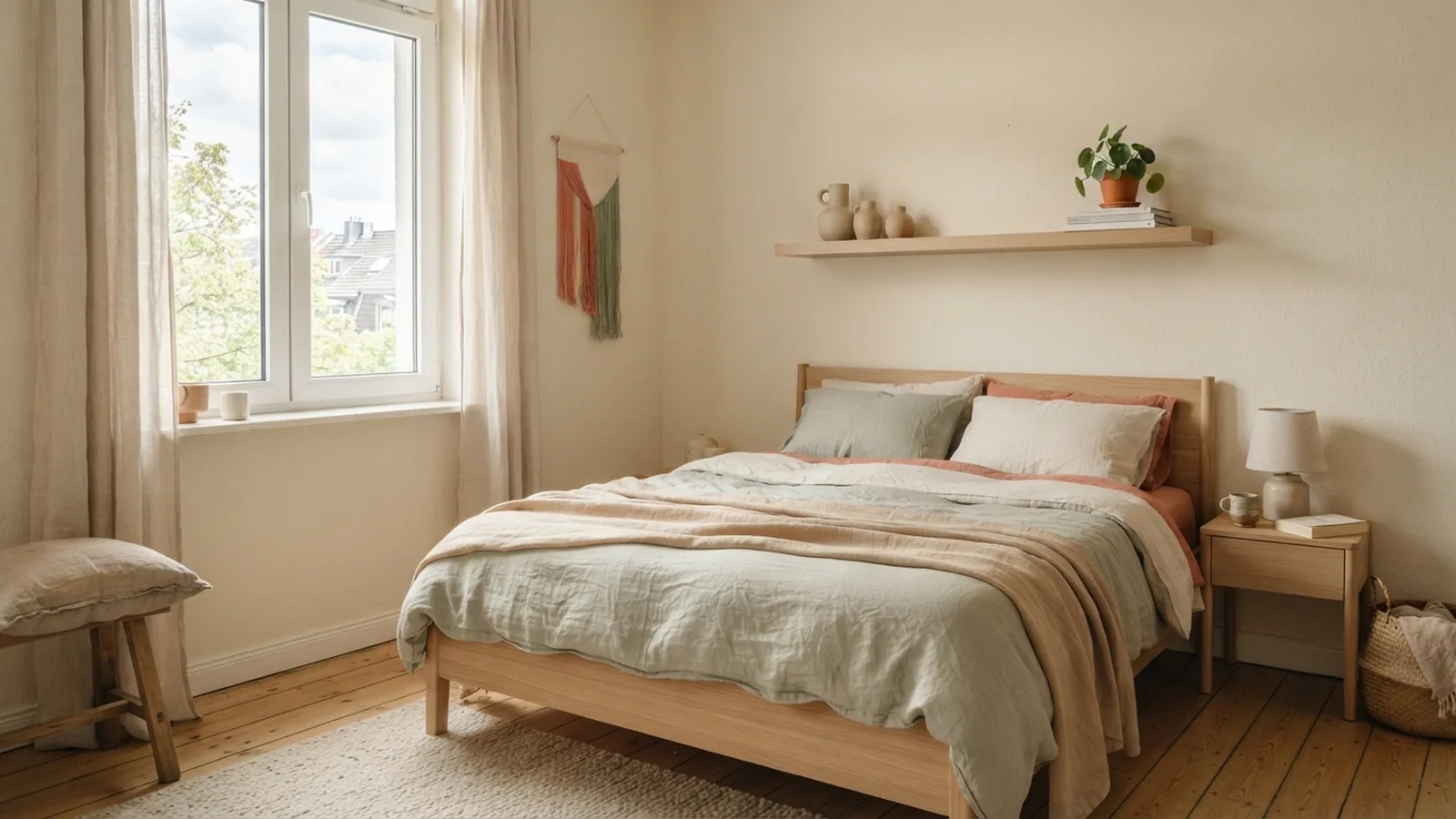
How color shapes a bedroom
Color can change how a bedroom feels, even when the furniture stays the same. Warm shades like soft pink, peach, and muted orange can make a room feel close and inviting. Cool blue and green often feel calm and restful. Neutrals offer a quieter backdrop.
These effects depend on the shade, the light, and your own taste. A pale blue may feel gentle, while a sharp blue can feel brisk. The same green can look fresh in morning sun and dull in a dim corner. Color psychology offers useful clues, not strict rules.
So, what is the best wall color for a bedroom? It is a shade that feels good to you and works with your room’s light and finishes. Soft blue, muted green, warm beige, and gentle off-white are good starting points. View paint samples in the room before you settle on one.
- Choose soft blue or green for a restful mood.
- Try muted pink or peach for a warmer feel.
- Use beige, gray, or white for a calm base.
Let comfort guide the choice. A bedroom should feel right at the start and end of your day.
Bedroom color trends worth trying
Many bedroom color trends draw on nature and soft, warm tones. Muted sage, warm white, mushroom beige, and soft clay work well with wood and linen. These shades add depth without taking over the room. They also pair well with simple bedding and pale wood.
Blue remains a good choice for a quiet room. Gray-blue and pale slate can feel soft rather than cold. Pair them with cream bedding or warm wood to add balance. If you want a deeper blue, try it on one wall first.
Trends can spark ideas, but your room should not feel tied to a passing look. Think about what you will keep, such as a wood floor, a favorite quilt, or a bedside table. Choose paint that works with those pieces. A small sample tells you more than a screen photo.
Use trend shades as a starting point, not a rule. A familiar color you enjoy can last longer than a fashionable one.
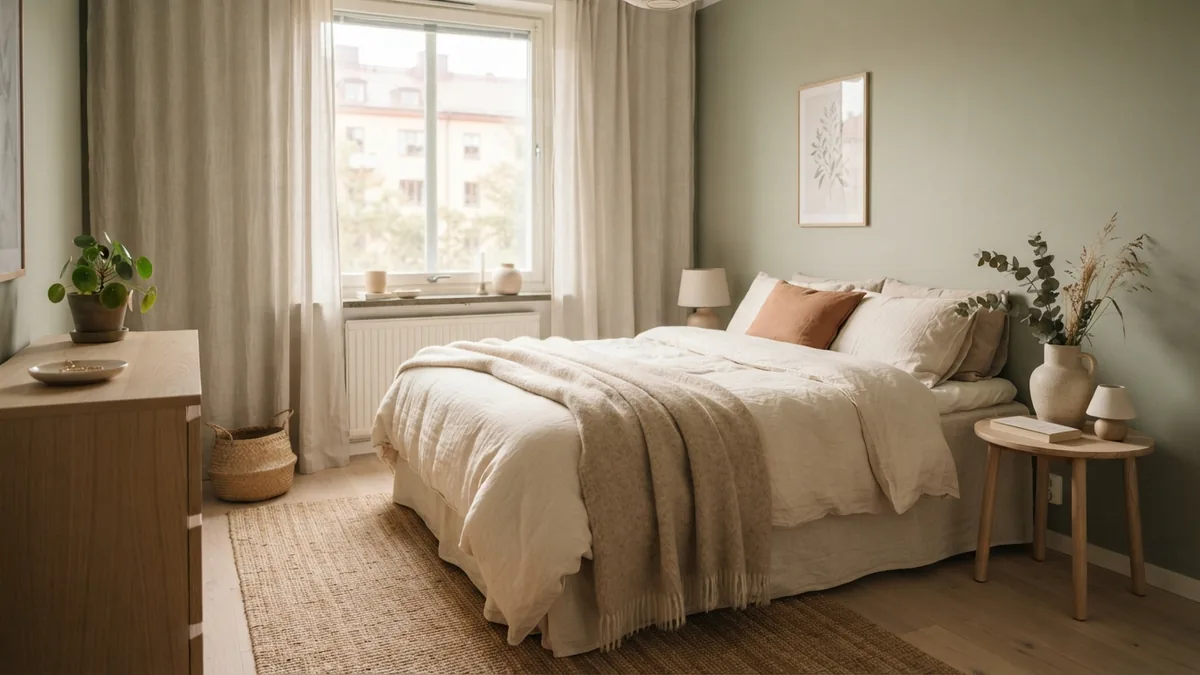
Choose a shade that suits your room
Start by checking the natural light. North-facing rooms often get cooler light, so warm beige, cream, or muted peach may feel more welcoming. South-facing rooms often get stronger, warmer light. They can suit soft blues and greens.
Next, look at the colors that are hard to change. Check the floor, trim, wardrobe, and headboard. Warm wood can sit well beside cream or sage. A gray floor may work better with pale blue or soft white. Hold samples beside these surfaces to spot clashes.
When you choose wall color for a bedroom, compare several shades from the same color family. A paint chip may look lighter or cooler on a large wall. Put samples on at least two walls, then view them in morning light, afternoon light, and lamplight. Leave them up for a few days.
- Note the colors in your floor, bedding, and woodwork.
- Pick two or three paint samples with related tones.
- View each sample at different times of day.
- Choose the shade that feels pleasant in both sun and lamplight.
Do not judge a color by one brief glance. Light shifts, and so does the paint.
Create a bedroom scheme that feels joined up
A calm bedroom usually needs a few colors, not a single shade on every surface. Start with one wall color, one main fabric color, and one or two accents. Sage walls, cream bedding, pale oak, and muted terracotta make one balanced mix.
Repeat a key color in small ways. A peach cushion could echo a detail in a print or a ceramic vase. This link makes the room feel planned without making every item match. Keep larger pieces simple if you want the paint to stand out.
Neutrals can be warm or cool. Warm white often suits cream cloth and wood, while cool gray can suit a crisp, modern room. Cool shades may feel stark beside warm floors. Check the undertone, or subtle color cast, before you buy the paint.
Limit strong colors to a few spots. That keeps the room easy on the eye and lets a favorite feature stand out.
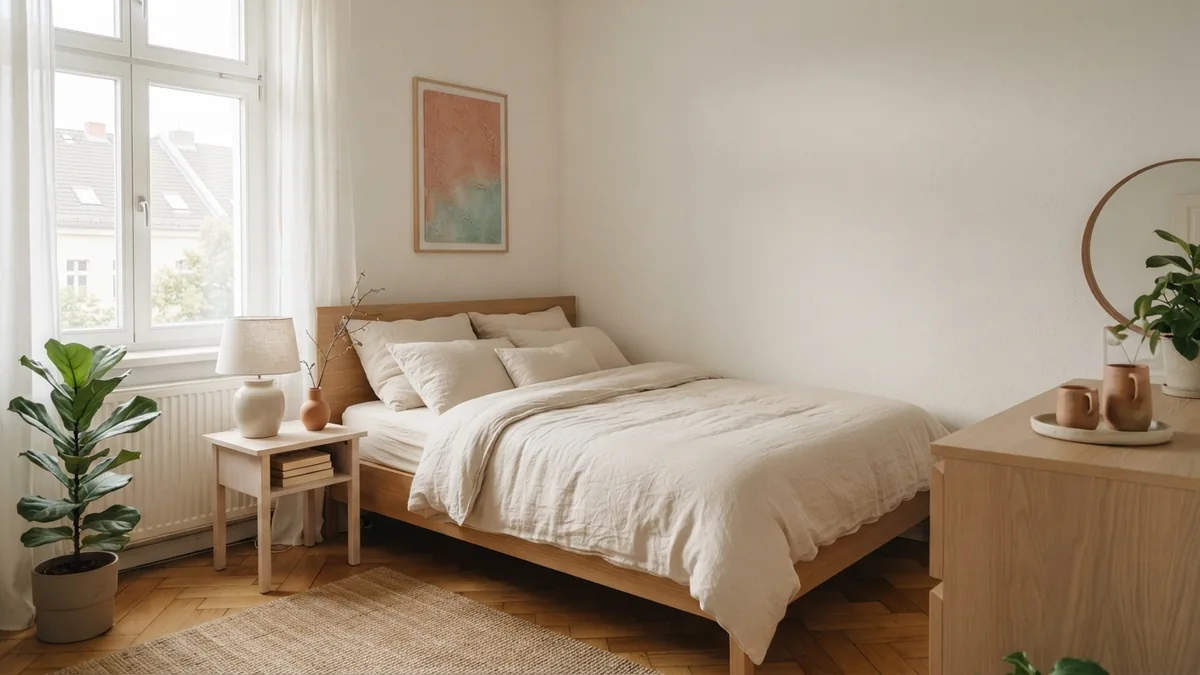
Accent walls and small bedrooms
An accent wall adds depth without covering every wall in a strong shade. The wall behind the bed often works well because it gives the room a clear focal point. Muted green, clay, or a soft plum can add interest while nearby walls stay light.
In a small bedroom, a dark wall can feel snug rather than cramped. Deep olive, brown, or muted plum can make a cozy nook, especially behind the bed. Keep the ceiling and nearby walls light if you want more contrast and a sense of height.
To choose an accent wall in a small bedroom, look at the room from the doorway. Pick a wall that already draws the eye. A wall broken up by doors or large windows may be less effective. One strong wall is often enough in a compact space.
Painting small bedrooms does not mean you must use white. A soft, mid-tone shade can feel warm and settled. Good lighting, simple bedding, and clear surfaces also shape the room’s mood.
Think about the whole view before you paint. The accent should support the bed or another main feature, not compete with it.
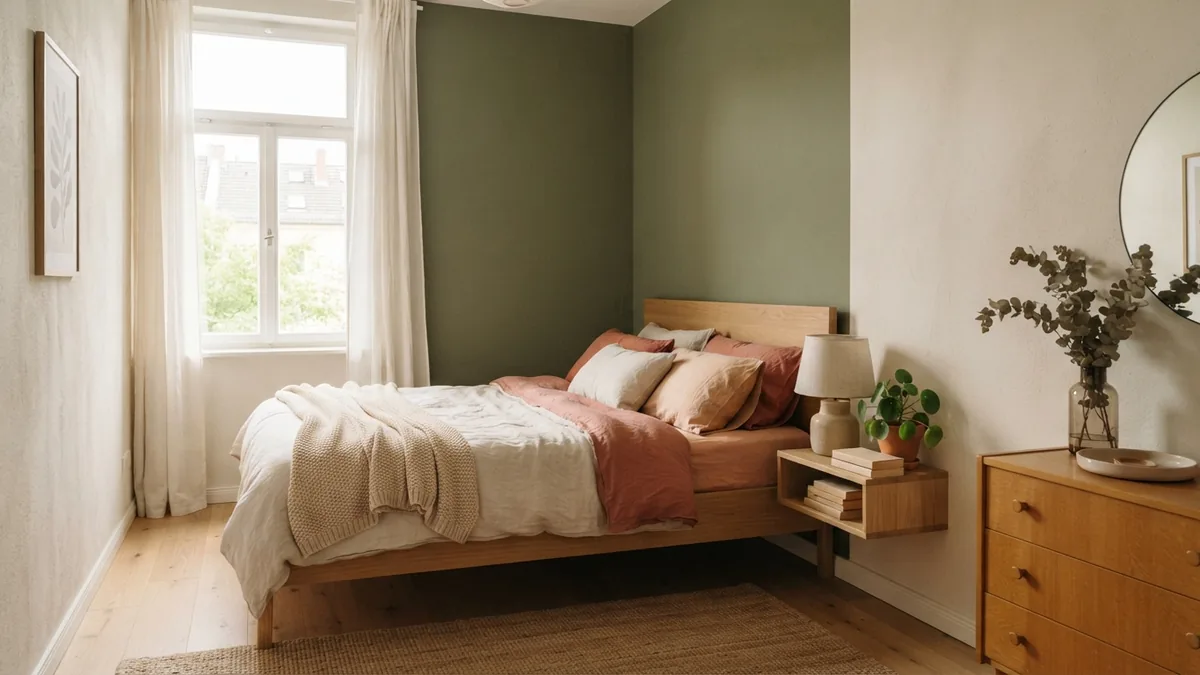
Tips for picking the right paint
Paint finish affects both the look and care of a wall. Matte paint has little shine and can soften small flaws. Satin has a mild sheen and is easier to wipe. Glossy paint reflects more light, so it may show bumps and brush marks.
Matte or low-sheen paint often gives bedroom walls a soft look. Satin may suit trim or spots that need more cleaning. Finish names and wash ratings vary by brand, so check the paint maker’s notes before buying.
Buy enough paint from one batch for each wall. Stir it well, and use the same roller or brush for each sample. Follow the label for drying time. Wet paint can look different from paint that has dried.
- Test samples on the wall, not only on paper.
- Check the color in daylight and with your usual lamps.
- Look at the shade beside bedding, flooring, and trim.
- Use the finish that fits the wall’s wear and cleaning needs.
Small checks can prevent a costly repaint. Take time to compare before you commit.
Bedroom color schemes to inspire you
For a quiet, cool scheme, pair pale blue walls with cream bedding and light wood. Add a soft green plant or muted gray cushion for a small shift in tone. This mix suits rooms with warm daylight and simple furnishings.
For a warm, natural scheme, try beige or soft clay walls with white linen and oak. A muted terracotta accent can add depth without making the room feel busy. This palette can help a dim room feel more welcoming.
For a calm, neutral scheme, use warm white walls, gray-green fabric, and pale wood. Add one dark item, such as a bedside table, to keep the room from feeling flat. Repeat the darker tone once more in a small object or frame.
Use these examples as a base, then adjust them to your room. The best bedroom paint colors are the ones that suit your light, fixed finishes, and daily comfort.
Frequently asked questions
- What is the best wall color for a bedroom?
- The best shade is one you enjoy and that suits your light and furnishings. Soft blue, muted green, beige, and warm white are good starting points.
- How do I choose a wall color for my bedroom?
- Check the room’s natural light and fixed colors, such as flooring and trim. Test a few related shades on the wall at different times of day.
- Are dark colors a good choice for a small bedroom?
- Yes. A dark accent wall can make a small room feel cozy, especially behind the bed. Keep nearby walls and the ceiling light for contrast.
- Which bedroom colors feel calming?
- Soft blues and greens often feel restful. Warm beige, muted gray, and soft white can also make a calm backdrop.
- Should bedroom walls be matte or satin?
- Matte paint gives walls a soft look and can hide small flaws. Satin is easier to wipe, so it may suit trim or walls that need more cleaning.
Related reading
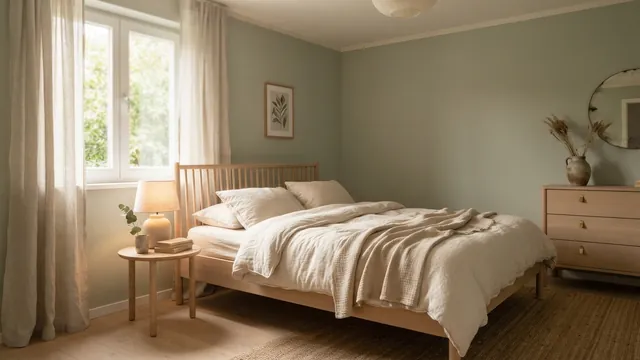
Bedroom Color Ideas for a Calm, Personal Space
Find a bedroom paint color that suits your light, style, and mood.
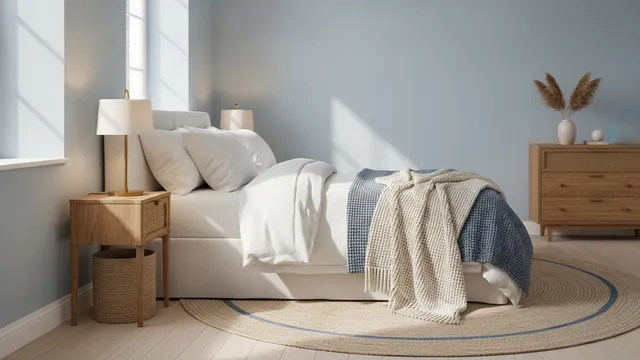
Is Blue a Good Bedroom Color? How to Choose the Right Shade
Learn how blue shades and undertones shape a calm, restful bedroom.

How to Design a Bedroom That Feels Like Your Own
Plan a bedroom that feels calm, useful, and fully your own.