Living Room Curtains — Color, Fabric and Fit
Choose curtains that suit your light, style, colors and windows.
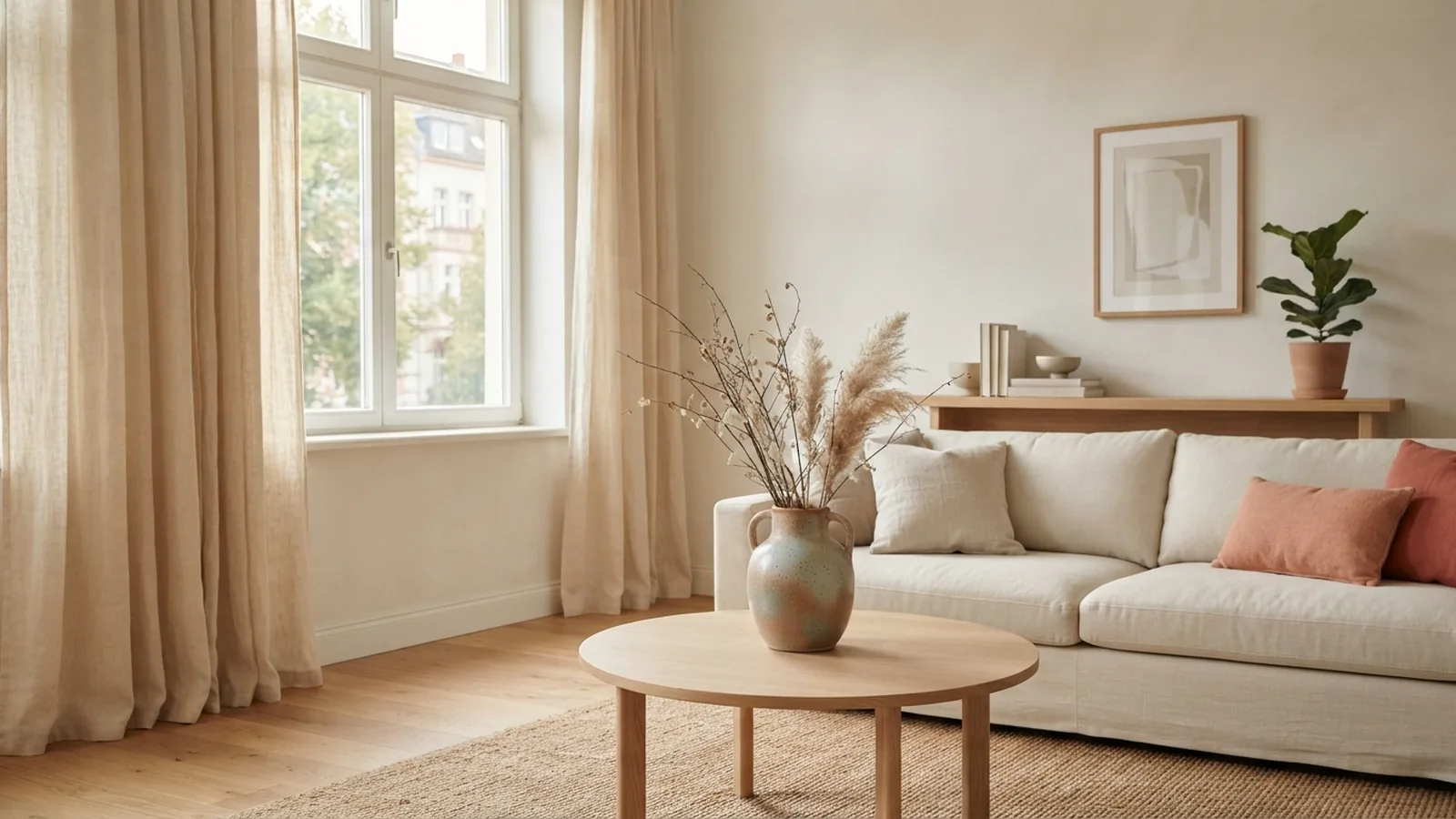
Factors to Consider When Choosing Curtains
To learn how to choose curtains for living room spaces, start with daily needs. Think about light, privacy, and how often you open the panels. Then consider the room's style and the window's size. This order helps you choose curtains that look right and work well.
Watch the window at different times of day. Sheer curtains soften strong sun while keeping a room bright. Blackout curtains block most light and suit rooms used for films or daytime rest. For changing needs, layer sheer panels with thicker curtains.
Privacy depends on the fabric and the time. Thin panels may screen views during daylight, but offer little privacy after dark. If nearby homes overlook your window, use lined curtains or a second layer. A pair of panels can also make a wide window easier to cover.
Consider daily wear before you pick a fabric. Strong sun may fade some colors, while dusty rooms call for easy-care cloth. If you open the curtains often, choose a style that slides smoothly. Small choices like these make the window easier to use.
- Choose sheer panels for soft light and an airy feel.
- Choose lined or blackout panels for more shade and privacy.
- Use two layers when light and privacy needs change.
Understanding Curtain Fabrics
Fabric shapes how curtains hang, how much light passes through, and how formal a room feels. Velvet feels rich and adds visual weight. Its thick weave can help darken a room, especially with a lining. It suits a more polished living room.
Linen has a loose weave and a relaxed look. It lets in a gentle glow, so it works well in casual rooms. It can crease, and thin linen may not screen views at night. Cotton offers a flexible middle ground. It comes in many weights and patterns, and many cotton panels are easy to care for.
When comparing types of curtain fabrics, check a sample beside the window. Daylight can change how a shade looks, and fabric thickness affects light control. Check the care label, too. Some cloth needs dry cleaning, while other panels can go in a home wash.
Think about weight as well as feel. Heavy panels need a firm rod and strong brackets. Light panels suit a slim rod, but may not fall in deep folds. The right match gives the curtains a neat shape and helps them last.
| Fabric | Look and feel | Useful for |
|---|---|---|
| Velvet | Soft, rich and heavy | Shade, privacy and a dressy room |
| Linen | Relaxed and airy | Casual rooms with soft daylight |
| Cotton | Versatile and available in many weights | Everyday use and varied decor |
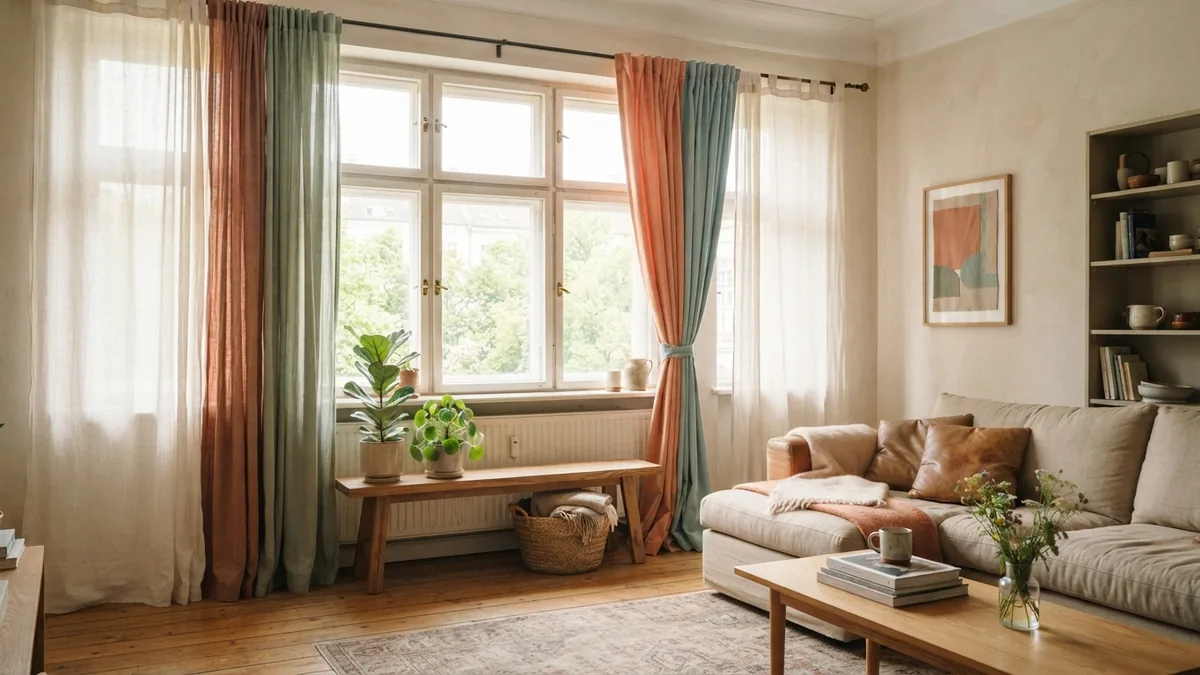
Choosing the Right Color Palette
Start with the largest colors in the room. Look at the sofa, rug, wall paint, and wood tones. Curtains can blend with these shades for a calm look. They can also add a muted accent that gives the room more depth.
For a quiet palette, consider warm white, oat, soft beige, or pale sage. These shades work well with cream walls and pale wood. If you want more color, pick a shade already found in a cushion or rug. Soft terracotta or warm peach can add interest without taking over.
When looking for curtain color ideas for living room decor, use samples before you buy. Hold a fabric sample beside the wall and furniture. Check it in morning and evening light. A color that looks soft at noon may seem much warmer at dusk.
Patterns need balance. If the rug has a bold print, choose plain curtains or a small, quiet pattern. A larger print can work in a mostly plain room. Keep strong patterns to a few key pieces, so the space feels settled rather than busy.
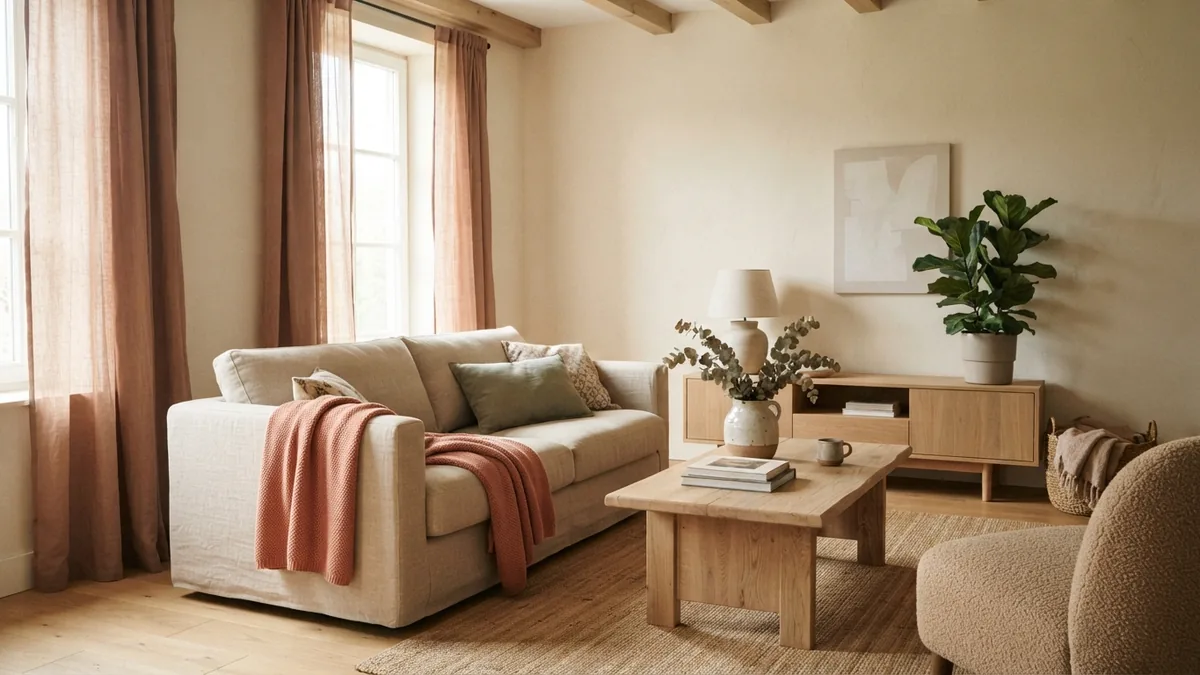
Curtain Styles and Their Impact
Styles of curtains for living rooms range from simple flat panels to pleated designs. Flat panels create a clean line and suit many modern rooms. Pleated curtains look more tailored and hold their shape. Tab-top curtains feel relaxed, but may slide less easily across the rod.
Match the style to the room, not only the window. Linen panels can suit a casual or coastal space. A tailored pleat can feel at home in a more formal room. Choose a rod and rings that can bear the fabric's weight.
Layering curtains adds both depth and control. Hang a sheer panel closest to the glass, then place a thicker curtain in front. A double rod or track lets each layer move on its own. Keep the colors and textures related for a tidy finish.
For ideas on how to choose curtains for living room style, look at the room as a whole. The curtain should support the sofa, rug, and wood tones. It does not need to match every item. A small contrast can make the room feel more personal.

Tips for Measuring and Installing Curtains
Good measurements help curtains look full and sit at the right height. First, decide where the rod will go. Mount it above the window frame to make the window feel taller. Extend it beyond each side so open panels cover less glass.
Measure the rod width, not just the glass. For a full look, the combined panel width often falls between 1.5 and 2 times the rod width. A 60-inch rod may need 90 to 120 inches of fabric. Check the maker's sizing notes, since listed widths may describe one panel.
Measure from the rod to the point where the curtain should end. Curtains can stop at the sill, fall to the floor, or rest just above it. Floor-length panels suit most living rooms. Keep fabric clear of heaters and vents.
Before ordering, write down the rod width and the needed curtain length. Check whether the panels include hems and whether the heading uses rings or a track. These details affect the final drop. Careful measuring avoids short panels and crowded windows.
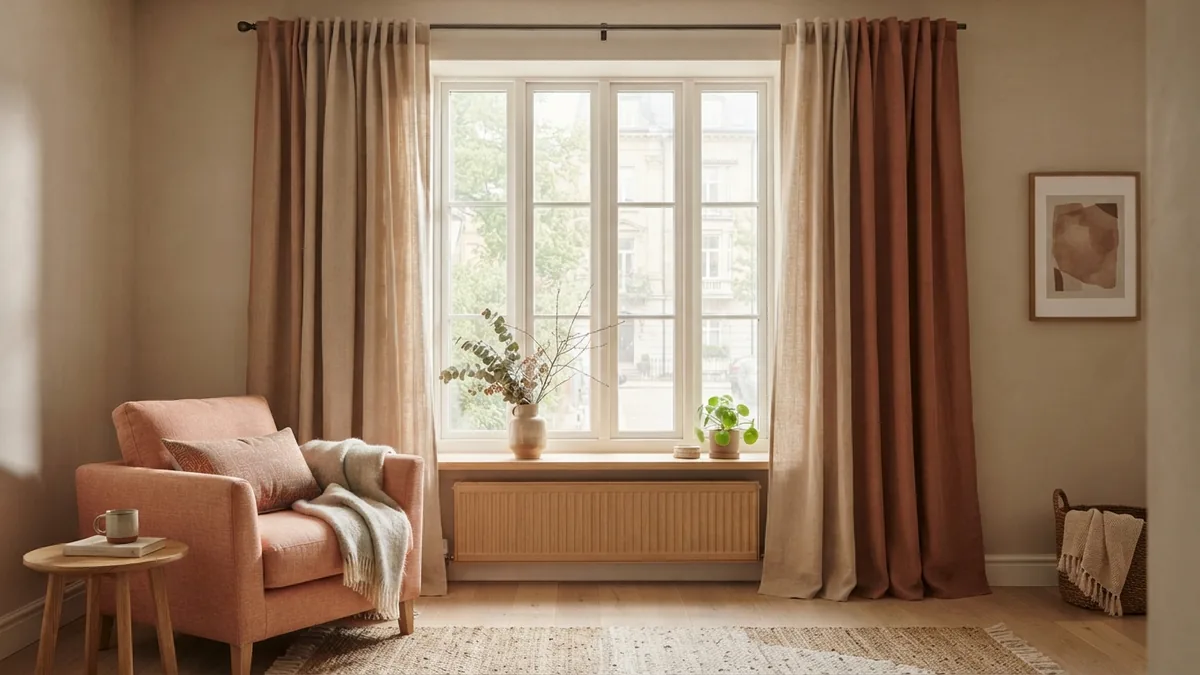
Common Mistakes to Avoid
One common mistake is choosing curtains by color alone. A beautiful shade may not suit the room's light, privacy needs, or fabric care. Check each sample in place before making a choice. The best option should work as well as it looks.
Another mistake is using too many bold patterns at once. A patterned rug, bright cushions, and printed curtains can compete for attention. Keep one pattern as the main feature, then use quieter textures around it. This gives the eye room to rest.
Panels that are too narrow can look skimpy when closed. Rods set too low can make a window seem smaller. Measure the full rod span and plan the height before you buy. A little extra width and height often gives curtains a more balanced look.
Finally, do not ignore how the curtains open. Heavy panels on a weak rod may sag, while stiff fabric can be hard to draw. Check the hardware against the fabric weight. A well-fitted window treatment should feel easy to use every day.
Step-by-step
- 01 Set your light and privacy needs
Watch the window at different times of day. Decide whether you need sheer panels, lined curtains, blackout fabric or two layers.
- 02 Choose a fabric and color
Compare fabric weight and care needs, then test a color sample beside your decor. Check it in both morning and evening light.
- 03 Select a curtain style
Choose panels that fit the room's feel and open with ease. Match the rod and rings to the fabric weight.
- 04 Measure the window and rod
Measure the rod width and the drop from rod to hem. Allow enough combined panel width for a full look.
Frequently asked questions
- How do I choose curtains for a living room?
- Start with the light and privacy you need. Then choose a fabric, color and style that suit your room, and measure before you buy.
- What curtain fabric is best for a living room?
- Velvet adds weight and a dressy feel, linen looks relaxed, and cotton offers many styles for everyday use. Pick fabric based on light, care and the way you use the room.
- What color curtains work with a living room?
- Choose a shade that relates to your sofa, rug, walls or wood tones. Test a fabric sample in morning and evening light before ordering.
- How wide should living room curtains be?
- For a full look, the combined panel width often measures 1.5 to 2 times the rod width. Check the maker's sizing notes to confirm whether listed width applies to one panel.
- Should living room curtains touch the floor?
- Floor-length curtains suit many living rooms and create a balanced look. Keep the hem clear of heaters, vents and busy walkways.
Related reading

How to Pick Curtains That Suit Your Living Room
Choose living room curtains by size, fabric, color, length, and hanging style.
Piano Room Decor — Style, Sound and Everyday Use
Make your piano room feel calm, useful, and beautifully connected to the rest of your home.
Room Squaring — Set the Floor Lines Right
Set accurate floor lines before you start laying planks or boards.