How to Separate Dining and Living Room Without Closing It Off
Separate dining and living with furniture, light, rugs, and smart layouts.
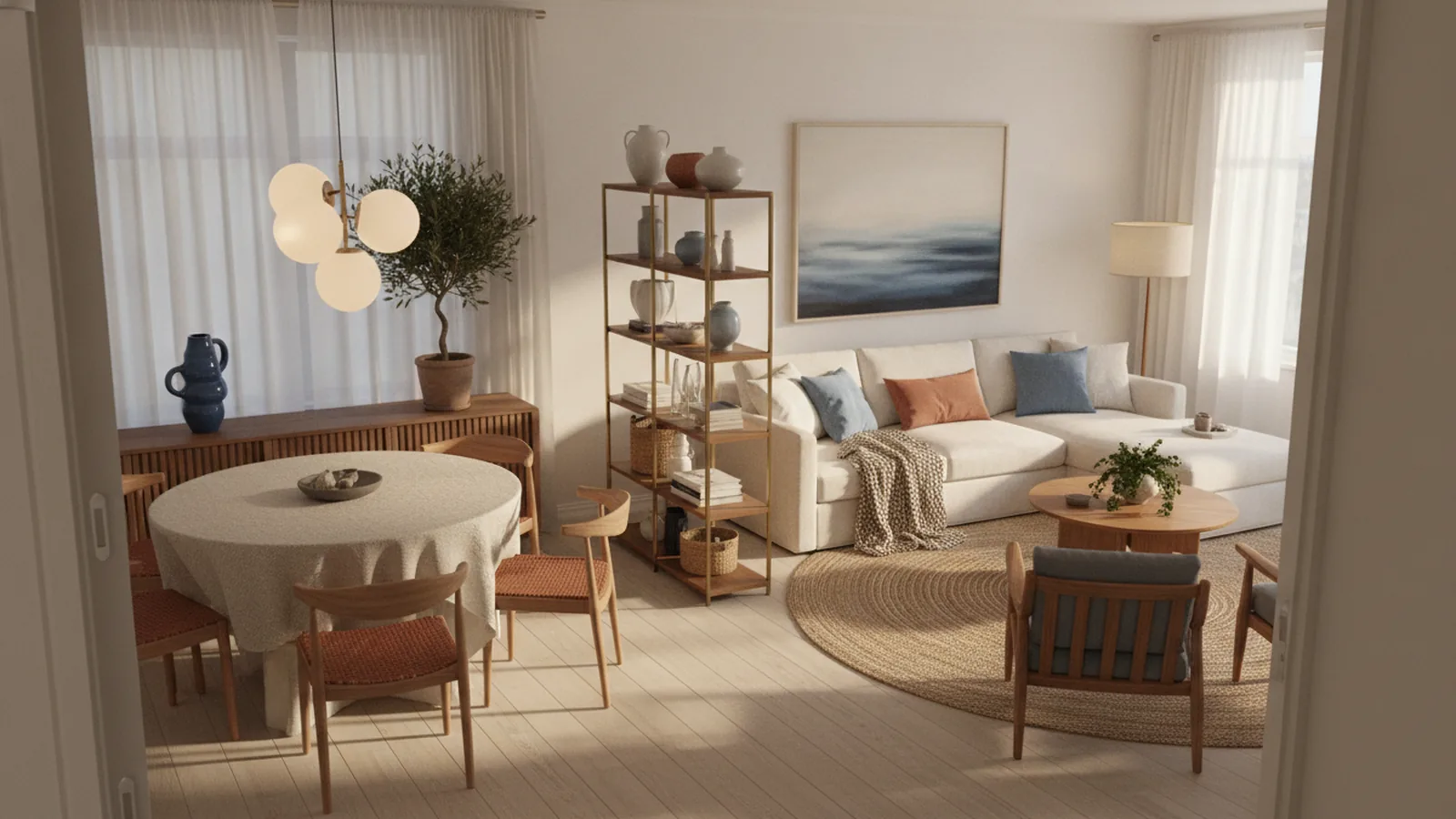
Understanding the Need for Separation
If you’re asking how to separate dining and living room, you usually want two things at once. You want dining to feel intentional and private. You also want the living area to work for rest, TV, and everyday movement. In open layouts, the same sightlines and traffic paths can make both zones feel “busy.” Separation fixes that without building walls.
Function matters first. A dining setup needs comfortable seating, clear plate drop space, and lighting that helps people read menus. A living zone needs a viewing angle, places to set drinks, and acoustic comfort so conversations don’t feel echo-y. When both areas share the same lighting and floor cues, it’s harder to switch “modes” throughout the day.
Aesthetics matter too. Even in open concept design, you can create boundaries using visual rhythm. Think of the dining area as its own mini “stage,” even if it lives inside one big room. That approach also helps with visual continuity, so your home doesn’t look like random furniture placed in the same box.
Creative Ways to Separate Spaces
Start by picking the separation method that matches your lifestyle. If you entertain often, you’ll want sightlines that still feel connected. If you work from home or need quiet evenings, you may want stronger acoustic comfort. Many homes solve this with layered cues rather than one heavy change.
Common approaches include room dividers, rearranging furniture arrangement, and using “soft boundaries” like rugs and lighting. You can also use movable or reversible partitioning solutions when your needs change weekly. For example, a screen can define the dining boundary for dinner, then disappear during daily living.
Here are practical goals to guide your choices.
- Reduce glare at meals: keep dining lighting focused and avoid bouncing light into TV viewing.
- Create clear circulation: leave a walk path that won’t squeeze shoulders behind chairs.
- Make dining feel complete: define a place where plates, chargers, and centerpieces belong.
- Keep flow for small routines: allow quick movement between kitchen, dining, and living.
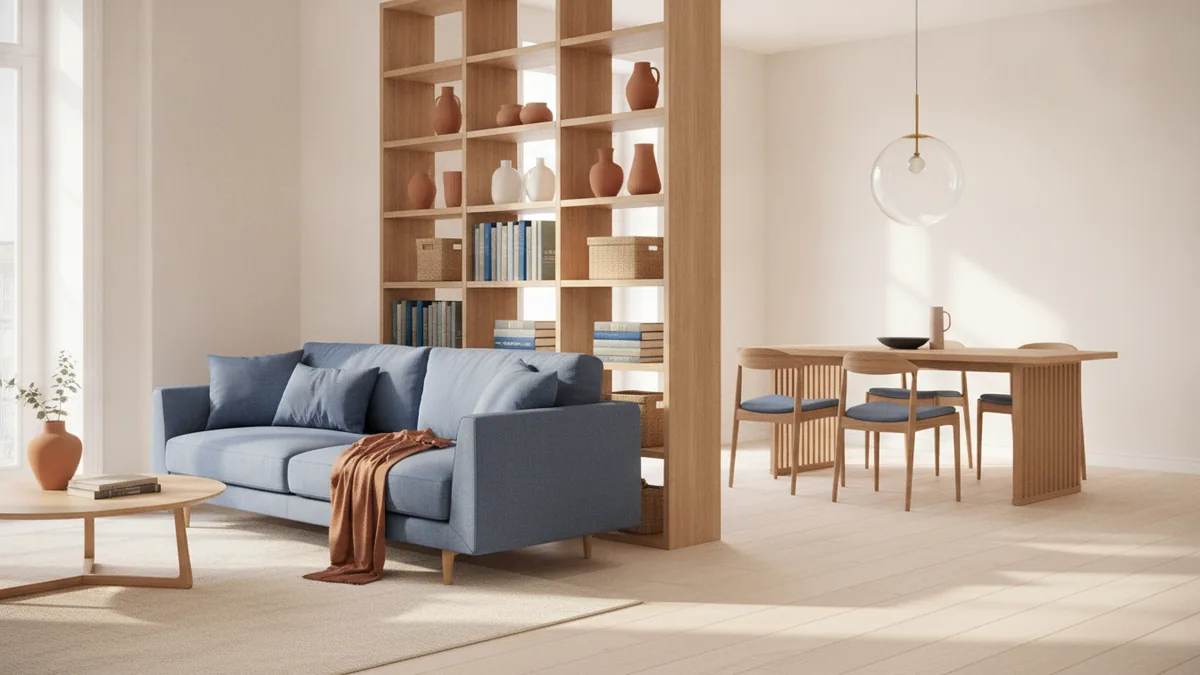
Using Furniture as Dividers
Furniture is often the easiest way to how to separate dining room from living room because it’s reversible and doesn’t require construction. You’re essentially borrowing the furniture’s shape as a boundary. This also supports multifunctional spaces, since you can change the layout later.
One of the best options is a sofa used as a “soft wall.” Place it with its back toward the dining area, and angle the arm slightly toward the living side. This gives dining a visual edge while keeping living comfortable. If you don’t want the sofa back blocking sightlines, use an L-shaped sectional so the dining sees a cleaner outline.
Bookshelves and open cabinets work well too. Use a high-backed bookshelf or a media console placed lengthwise between zones. Keep shelves styled but not cluttered, so the divider looks intentional rather than obstructive. If you want more separation, choose a deeper unit; it creates a more solid visual barrier.
Tables can also define a dining boundary. A console table placed perpendicular to the line of sight can separate living seating from dining chairs. For very small rooms, try a round dining table paired with a narrow console, since rounds reduce corners and keep movement smooth.
- Measure the traffic path: aim for about 90 cm for comfortable walking around chairs.
- Align edges: line up the divider furniture with the dining table edge, not the wall.
- Use depth wisely: deeper pieces create stronger separation, but they also steal space.
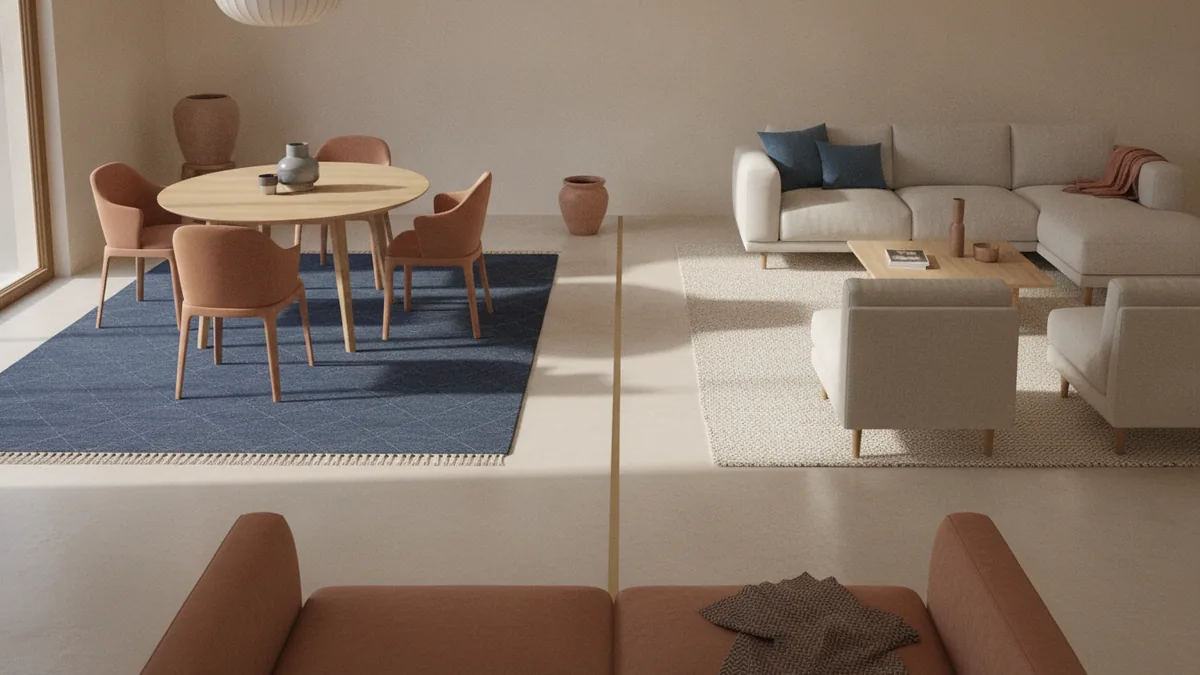
Utilizing Color and Flooring
Color and flooring are high-impact tools for how to separate dining and living room because your eyes read them instantly. You can create separation without adding objects. The key is using different tones that still connect through a shared base, like matching wood undertones or repeating a color in both zones.
For color, choose a plan that fits your lighting conditions. A darker wall behind the dining chairs can make the meal area feel grounded. Then keep living walls a lighter neutral to preserve an airy feel. If you prefer no painting, use color through art, curtains, and textiles instead.
Flooring can also do the heavy lifting. If you can’t change materials, try zoning with large area rugs. In a rental, a rug with a textured pattern can define dining while leaving living with a calmer, solid rug. If you can change materials, even a subtle difference helps, like wood in living and a durable tile or vinyl plank in dining.
Try these pairing ideas.
| Living zone cue | Dining zone cue | Why it works |
|---|---|---|
| Light rug or bare wood | Patterned rug under dining | Rug edge acts like a boundary line for meals |
| Warm neutral walls | Deeper accent wall color | Creates a “room within a room” effect |
| Same flooring throughout | Different sheen or mat finish | Subtle contrast shows where dining sits |
Adding Visual Elements for Separation
Lighting can be the most overlooked way of how to separate dining room and living room. You want dining to feel bright and focused during meals. You also want living to feel calmer for TV and wind-down time. When lighting matches too closely, both spaces blur.
Use lighting variations by zoning fixtures. A pendant above the dining table gives a clear “ceiling cue.” For living, use floor lamps or wall sconces that wash light upward and reduce glare. Dimmers help here, too. With dimming, the dining area can shift from bright for meals to softer for conversation without changing layout.
Also consider reflections. If your dining chairs have shiny finishes, light will bounce into the living line of sight. That can feel distracting, especially if you watch TV in the evening. Choose warm bulbs for both zones, then vary placement, not just brightness. This makes the home feel cohesive while still separated.
Rugs are another visual element that defines areas without permanent change. The dining rug should extend under chair legs. That means when chairs pull out, the rug still anchors them. This detail makes the separation look intentional rather than accidental.
- Define the dining boundary: place the rug so chairs stay on it.
- Keep living open: use a smaller rug only where seating sits.
- Repeat materials: match a wood tone or metal finish across zones.
Tips for Small Apartments
For how to separate dining and living room in small apartment layouts, your best strategy is vertical space and flexible planning. Small rooms can’t spare bulky dividers. Instead, use tall shelving, wall-mounted lighting, and a layout that keeps circulation clear.
Start with placement. If the dining table sits near a wall, you can create separation by facing it toward a divider shelf or sofa line. If it sits in the middle of the room, consider a divider that runs back-to-front so it blocks sightlines. Also, keep chairs slightly tucked to preserve walk space.
Use movable or reversible partitioning solutions when you need flexibility. For example, a folding screen or a rolling curtain track can split the space during dinner. Then you can roll it aside for everyday living. This approach is especially useful when your dining zone also acts as a work or homework spot at other times.
Finally, use vertical cues to strengthen the boundary. Hang dining pendant lighting slightly higher than a standard drop, so it doesn’t crowd the room visually. Add a tall plant or narrow shelving unit near the dining side. These choices create separation while keeping the floor area open.
Common small-apartment pitfalls to avoid:
- Using a divider that’s too wide, which blocks the doorway and makes the room feel cramped.
- Relying on color alone when the lighting is harsh or uneven.
- Choosing a dining rug that’s too small, so chairs fall off the boundary.
Conclusion and Final Thoughts
To separate dining and living room effectively, think in layers: furniture, flooring cues, lighting, and textiles. Start with the method that fits your space and habits. Furniture dividers are the easiest to adjust. Color and flooring cues create instant separation without moving a thing. Lighting makes the zones feel like different “settings” at night.
In tight apartments, prioritize reversible solutions and vertical space. Use rugs to define dining without permanent changes, and keep traffic paths wide enough for everyday comfort. If you’re still deciding, choose one strong cue first, like a dining pendant plus a correctly sized rug. Then add a secondary cue, like a bookshelf or sofa orientation, to lock in the boundary.
One last practical check: does dining feel like a complete moment, and living feel calm? If not, adjust one layer at a time. That’s the quickest way to learn what works for your apartment’s exact sightlines and lighting.
Outbound citation note: For detailed guidance on lighting and visibility, see National Research Council’s lighting principles.
Frequently asked questions
- What is the best way to separate dining and living room in an open layout?
- Use a combination of a furniture divider, a dining pendant, and a rug under the dining table. The goal is one strong cue plus one supporting cue.
- How can I separate dining room and living room in a small apartment without construction?
- Zoning rugs, lighting, and a movable screen work well in rentals. Keep the divider narrow and leave a clear walk path around chairs.
- Should foyer and dining room lighting match?
- They can match in warmth and bulb color, but placement should differ. Dining needs a focused light; the foyer and living areas need softer, broader light.
- How do I separate dining room from living room using furniture arrangement?
- Place a sofa or console with its long side facing the dining zone. For stronger separation, use a bookshelf that runs between the two seating lines.
- Can lighting alone separate dining and living room?
- Yes, if you create distinct fixtures and use dimmers. Pair dining pendant light with calmer living lamps to avoid glare and blur.
Related reading
Couch Placement—Flow, Focus and Comfort
Place your couch to frame a focal point, keep paths clear, and make the room feel balanced.
Master Bedroom — Color, Comfort and Personal Style
Build a calm, personal bedroom with smart choices and a budget that works.
Room Painting Labor Costs — Rates and Budget Factors
See typical room-painting labor rates and learn what drives the final price.