How to Arrange Plants in a Living Room
Learn how to arrange plants in a living room with smart groupings, shelves, Feng Shui ideas, small-space tips, and simple care routines.

Why Indoor Plants Belong in the Living Room
The best way to arrange plants in a living room is to mix heights, shapes, and leaf colors. Place one tall plant near a sofa or empty corner. Add smaller plants to a coffee table, shelf, or sideboard. Keep a clear path through the room.
Plants soften hard surfaces and bring life to neutral rooms. They also add color without taking over the space. A broad-leaf plant can balance a long cabinet. A slim plant can fill a narrow corner with little visual weight.
Indoor plants may also add a small amount of moisture to dry air. Still, good airflow and clean filters matter more for indoor air quality. Treat plants as part of a healthy room, not as a replacement for fresh air.
- Use plants to fill bare corners and soften sharp lines
- Repeat one pot color for a calm, linked look
- Keep plants away from walkways and heat sources
- Group odd numbers for a more relaxed display
Choose Plants That Suit Your Room
Start with the light, then choose plants that fit your care time. Watch the room for one full day before buying anything. Note where bright, filtered, and low light appear. A plant can look perfect in a shop and fail beside a dark wall.
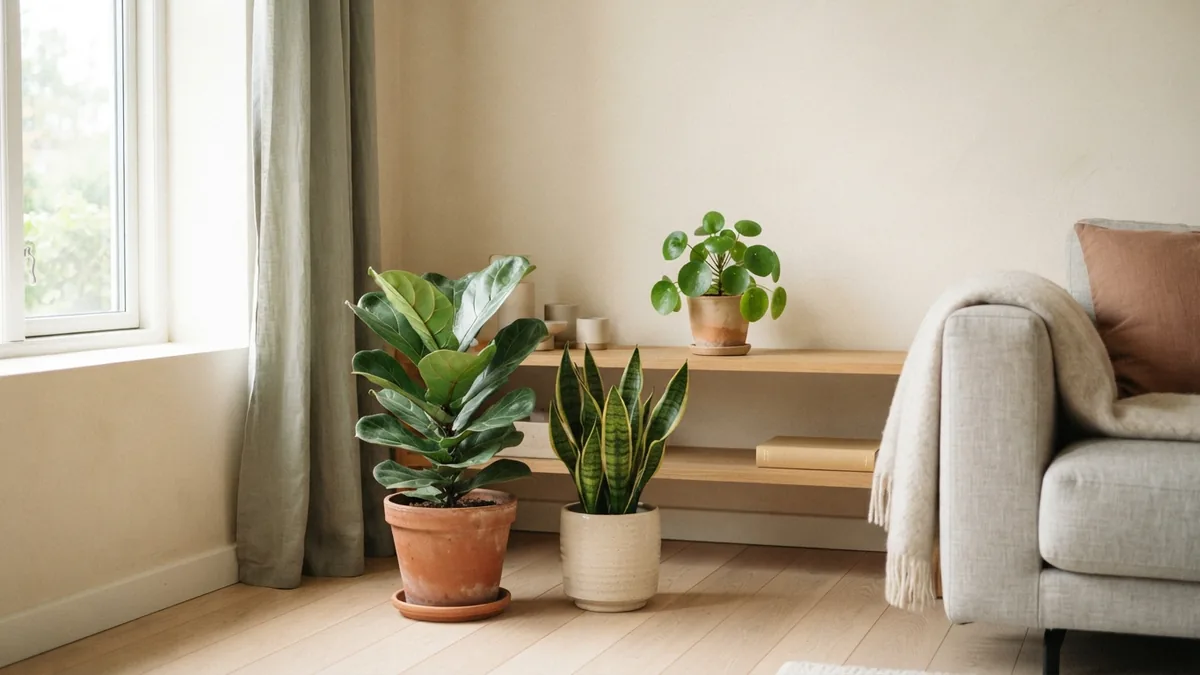
Consider each plant's size, shape, and color before you place it. Tall palms add height and movement. Round rubber plant leaves create a bold focal point. Fine fronds make a small group feel light and airy.
Match each plant with a pot that supports the room style. Pale oak, cream ceramic, and woven baskets suit warm homes. Terracotta adds a soft earthy note. Keep strong colors in small doses so the leaves stay central.
| Room condition | Plant traits to seek | Good placement |
|---|---|---|
| Bright, filtered light | Bold leaves or trailing growth | Near a sheer-curtained window |
| Low light | Slow-growing, shade-tolerant leaves | Across from a bright window |
| Dry air | Hardy plants with firm leaves | Away from radiators and vents |
Arrange Plants by Height and Shape
Build your display from the largest plant down. Put the tallest plant behind a chair, beside a bookcase, or in an open corner. Its leaves should rise above nearby furniture. Leave a little space around it so the plant can breathe.
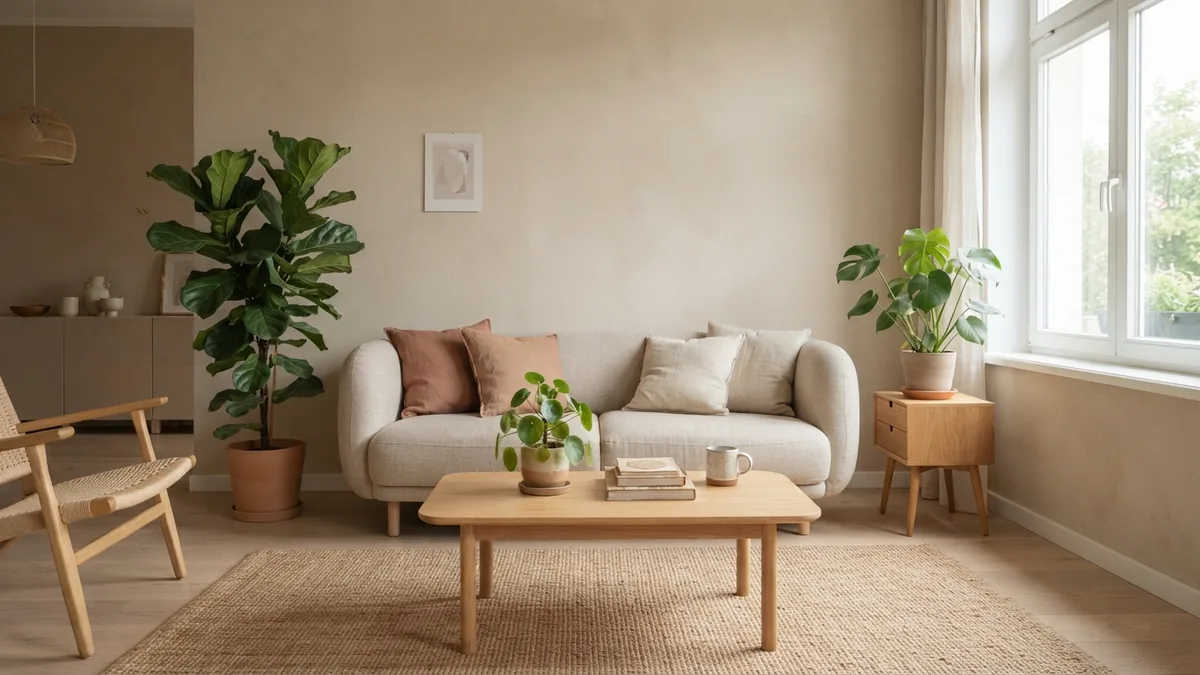
Next, add a medium plant at knee or waist height. A small plant can then sit on a table or low stool. This three-level pattern creates depth. It also stops every leaf from sitting on one flat line.
Group plants in threes or fives when space allows. Use one upright plant, one rounded plant, and one trailing plant. Repeat a leaf tone across the group for balance. Turn each pot slightly toward the room's main seat.
Do not push every plant into one corner. Spread large forms across the room to balance visual weight. For example, place a tall plant beside the sofa. Add a lower plant near the media unit. Keep the center floor open.
Use Shelves, Stands, and Vertical Space
Plant stands help you use height without adding bulky furniture. A stand also lifts leaves closer to a window. Choose a stable base with a wide foot. Check that it does not wobble when you water the pot.
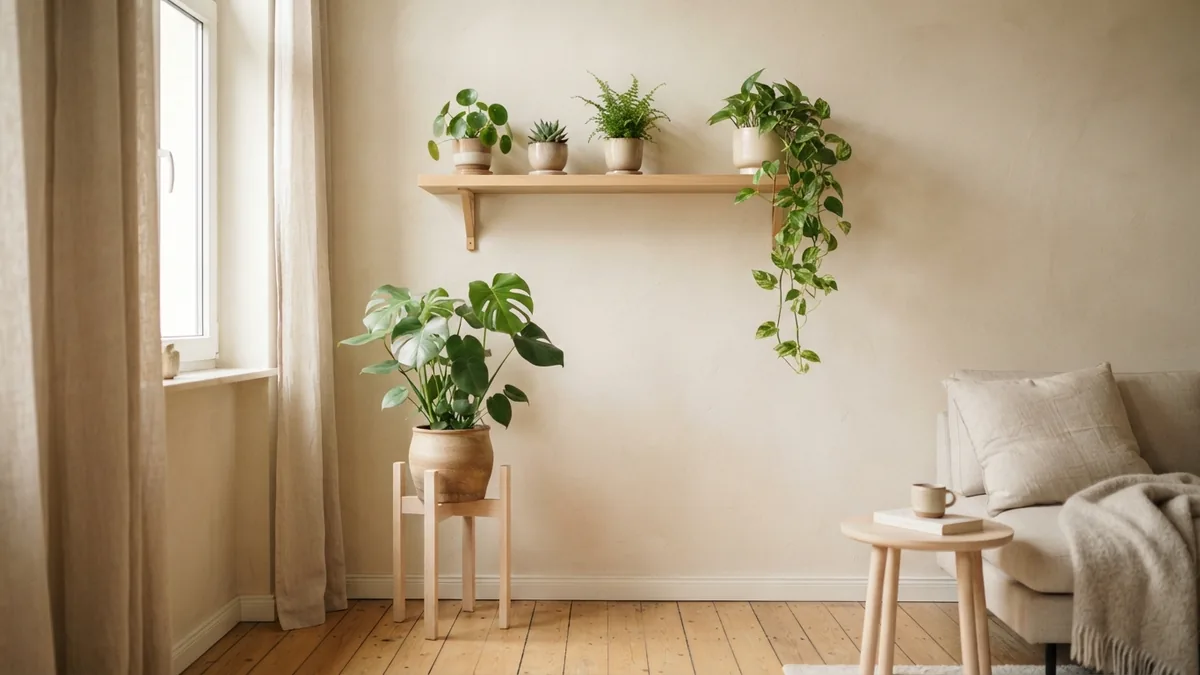
Shelves work well for small pots and trailing plants. Keep the heaviest pot on the lowest shelf. Leave gaps between plants so the display does not look crowded. Let one vine fall over an edge, rather than using several trailing plants together.
Try a simple vertical layout beside a sofa. Place a tall plant on the floor. Put a medium plant on a stand beside it. Add two small pots on the nearby shelf. This layout draws the eye upward and makes a plain wall feel finished.
- Leave at least 10 centimeters between pots and the shelf edge
- Use trays under pots to protect wood and plaster
- Keep shelves clear of direct heater airflow
- Secure tall stands where children or pets may bump them
Apply Feng Shui Ideas With Care
Feng Shui uses placement to create flow, balance, and a calm feel. For a simple approach, keep the room entrance clear. Place healthy plants near corners that feel empty or harsh. Avoid blocking windows, doors, or the main walking route.
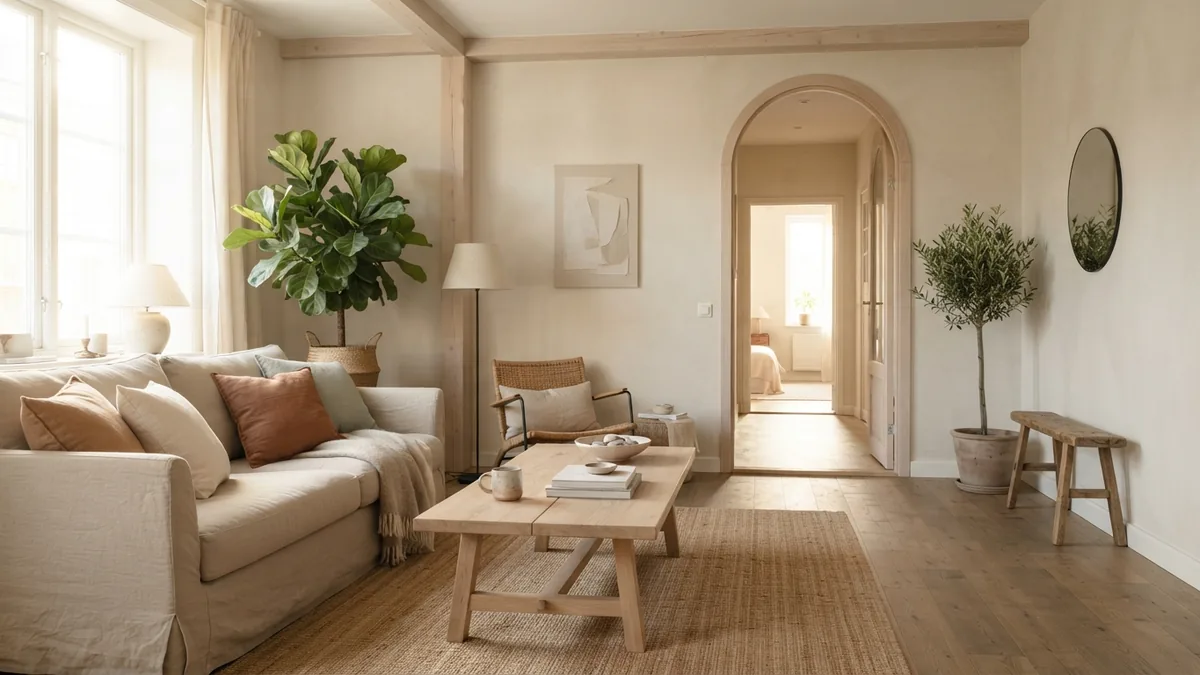
Rounded leaves often suit a soft, restful living room. Their curves can offset sharp tables and square cabinets. Place them near seating areas to make the room feel welcoming. Remove yellow leaves quickly, since tired plants weaken the look.
Wood elements are linked with growth in Feng Shui. Living plants bring this element through their stems and leaves. Use a few thriving plants instead of many weak ones. Good care supports the calm effect better than strict rules.
There is no single correct Feng Shui layout. Your room still needs safe access, good light, and easy cleaning. Let those needs guide the final position. A clear, healthy display will feel better than a crowded one.
Make Small Living Rooms Feel Larger
When learning how to arrange plants in a small living room, protect floor space first. Choose one tall, narrow plant for a corner. Add compact plants to shelves, window ledges, or wall-mounted units. Keep the floor near the sofa open.
Use pots that match the wall or furniture behind them. Similar tones reduce visual breaks and make the room feel calmer. Small plants can also repeat one accent shade. Sage leaves and pale terracotta work well with warm cream rooms.
Try a window ledge group with three small plants. Use one upright shape, one round shape, and one trailing shape. Leave enough room to open curtains and clean the glass. Turn the pots each week for even growth.
- Pick plants under 30 centimeters for shelves
- Use wall height instead of adding another floor pot
- Choose one main plant as the room's focal point
- Keep plant groups away from door swings and vents
Keep Living Room Plants Healthy
A good arrangement only works when the plants stay healthy. Check the soil before you water. Push one finger about two centimeters into the top layer. Water when that layer feels dry, unless the plant needs steady moisture.
Rotate pots every week or two. This helps leaves grow toward the light in a more even way. Dust broad leaves with a soft, damp cloth. Remove dead leaves and trim damaged stems with clean snips.
Check for pests when you water. Look under leaves and around new growth. Move a troubled plant away from the group until you treat it. Clean the empty spot before returning the pot.
Each plant needs its own care plan. The Royal Horticultural Society's houseplant care guide covers light, watering, feeding, and common problems. Use those basics, then adjust for your room's heat and light.
- Check light before choosing a plant
- Place the largest plant first
- Add medium and small plants at different heights
- Test the walking path from each seat
- Water, rotate, and check each plant on a set day
A Simple Plan for a Balanced Plant Display
Begin with one focal plant. Give it enough space to stand out. Then add two smaller plants with different forms. Link the group with similar pots, leaf tones, or natural materials.
Step back and view the room from the main seat. Look for heavy corners, blocked paths, and empty wall space. Move one item at a time until the room feels open. The strongest ideas for how to arrange plants in a living room leave space for the eye to rest.
Good plant design should support daily life. You should reach each pot without moving furniture. You should also see signs of stress before they spread. Keep the display useful, light, and easy to care for.
Step-by-step
- 01 Check the room's light
Watch the room during the day and note bright, filtered, and low-light areas. Match each plant to its best spot.
- 02 Place the largest plant
Set one tall plant in an open corner or beside a sofa. Keep it clear of doors, heaters, and walkways.
- 03 Add plants at two more heights
Use a stand, shelf, or table for medium and small plants. Mix upright, rounded, and trailing shapes.
- 04 Balance the full room
Spread visual weight across the room instead of filling one corner. Step back from the main seat and adjust the display.
- 05 Set a care routine
Check soil, leaves, and pests each week. Rotate pots and clean leaves as needed.
Frequently asked questions
- How should I arrange plants in my living room?
- Start with one tall plant near an empty corner. Add medium and small plants at different heights near furniture or shelves.
- How many plants should I group together?
- Groups of three or five often look balanced. Mix upright, rounded, and trailing forms for contrast.
- What are good ideas for arranging plants in a small living room?
- Use one narrow floor plant and place compact plants on shelves or stands. Keep the center floor and walking paths open.
- How does Feng Shui affect plant placement in a living room?
- Keep entrances and paths clear, then place healthy plants in empty or harsh corners. Rounded leaves can create a softer feel near seating.
- Where should I place plants for natural lighting?
- Place light-loving plants near bright windows with filtered light. Put shade-tolerant plants farther away, then watch their growth.
- How often should I care for living room plants?
- Check soil and leaves once a week. Water based on soil dryness, rotate pots every week or two, and remove damaged leaves.
Related reading

How to Organize a Small Kitchen Without Losing Counter Space
Make every shelf, drawer, and counter work harder in a small kitchen.

How to Remodel a Living Room Without Losing Control of the Budget
Plan your living room remodel with smart steps, style ideas, and clear cost ranges.

How Long Does It Take to Paint a Room?
Plan your painting day with clear time estimates for every room.