A Calm, Practical Guide to Styling Open Shelves
Style open shelves with useful pieces, warm color, and calm visual balance.
Introduction to Open Shelving
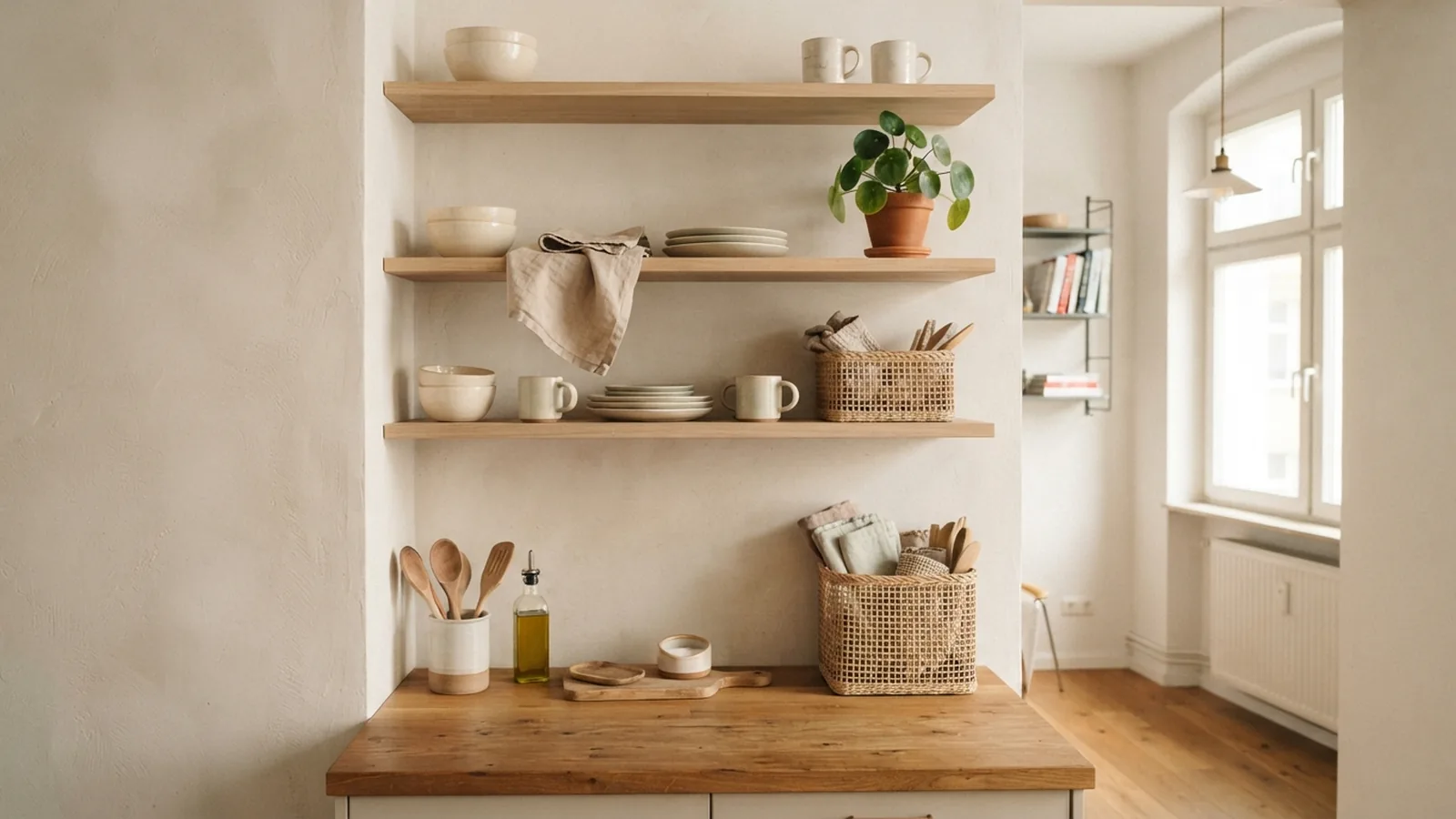
Open shelves can make a kitchen feel light, warm, and easy to use. They place daily dishes within reach. They also turn useful objects into part of the room's design.
The best displays mix function with a few thoughtful accents. Plates, bowls, mugs, and glasses should lead the plan. Baskets, wood, linen, and plants can add softer texture.
Before styling, check the shelf depth and wall strength. Leave enough room above the counter for safe use. A shelf that feels good every day will also look better.
- Keep daily items close to the work areas.
- Use higher shelves for lighter, less-used pieces.
- Leave open space around each group.
- Match the shelf finish to nearby wood and metal.
Benefits of Open Kitchen Shelves
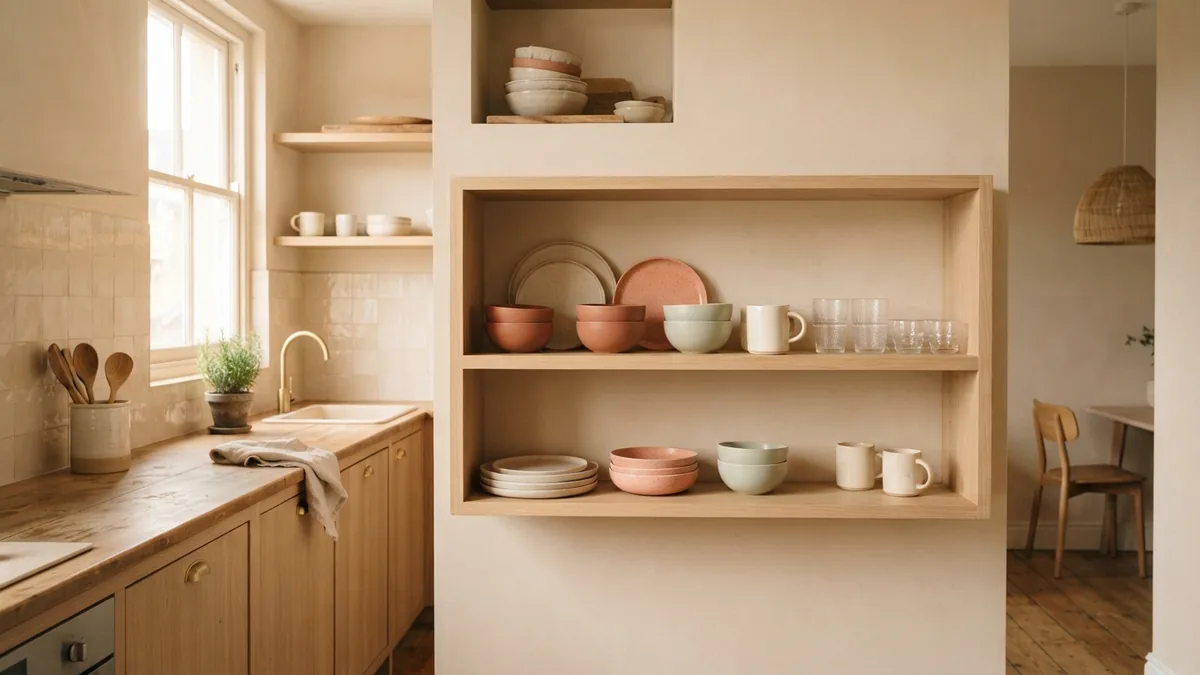
Open shelves promote access and make kitchen items easy to see. You can grab a bowl without opening a door. You can also spot low stock before it becomes a problem.
They can make a small kitchen feel more open. Wall cabinets form a solid block above the counter. Open shelves break that shape and let the wall color show.
There is one clear trade-off. Dust can settle on items that sit unused for weeks. A simple storage plan keeps the display useful and neat.
Choose shelves that match your routine
Use sturdy shelves for plates, jars, and cookware. Add a small front lip near busy work areas. Keep breakable pieces away from crowded corners.
Place mugs near the kettle or coffee tools. Keep plates near the dishwasher or prep area. This choice saves steps and makes the shelf feel natural.
How to Style Open Kitchen Shelves
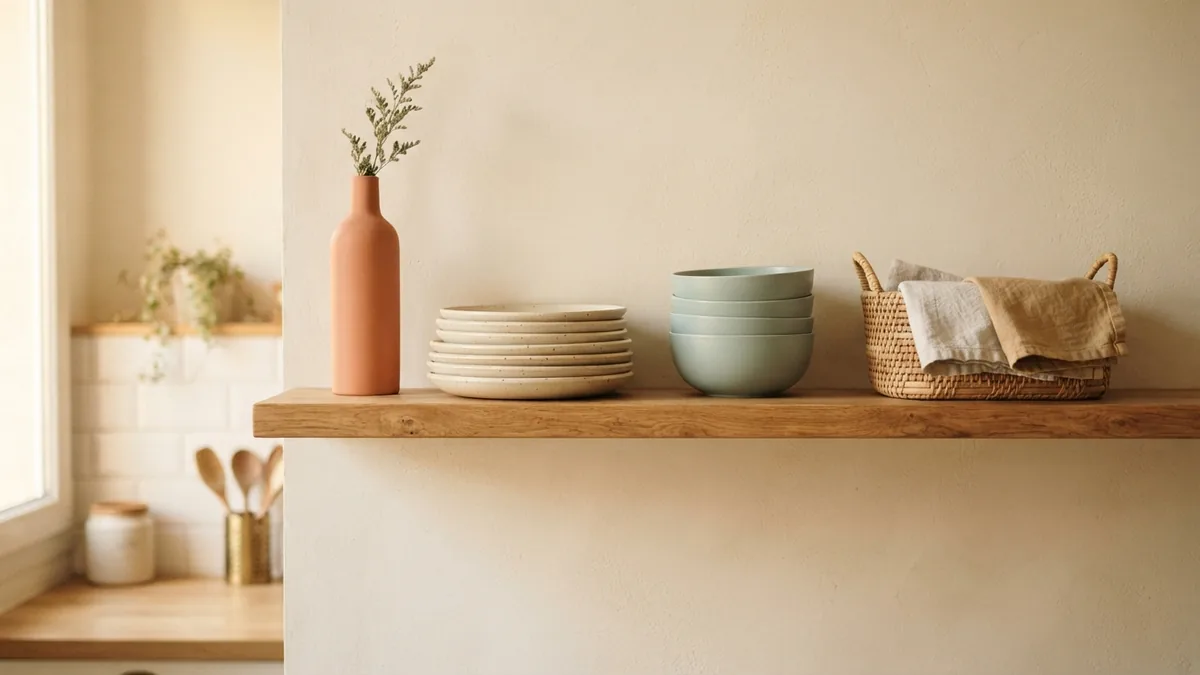
When learning how to style open kitchen shelves, begin with the largest items. Large objects set the main shape of the display. Place them first, then fill only the key gaps.
Next, mix decorative and functional kitchenware. Stack plates beside a small vase or ceramic piece. Lean a wooden board behind a bowl. The useful items keep the display grounded.
Vary height, shape, and texture across the wall. A tall bottle can balance short bowls. A round basket can soften a row of straight plates. Matte ceramic and pale wood add warmth.
- Place one large anchor item on each shelf.
- Add a stack, pair, or small group beside it.
- Fill only the largest gaps with accents.
- Step back and remove one item if needed.
Use groups instead of scattered objects
Small groups often look more ordered than loose objects. Try three mugs, two bowls, or four plates. Give each group one shared color or material.
Do not make every shelf look the same. Repeat one material across the wall instead. For example, use pale wood on one shelf and a board on another.
Tips for Displaying Kitchenware
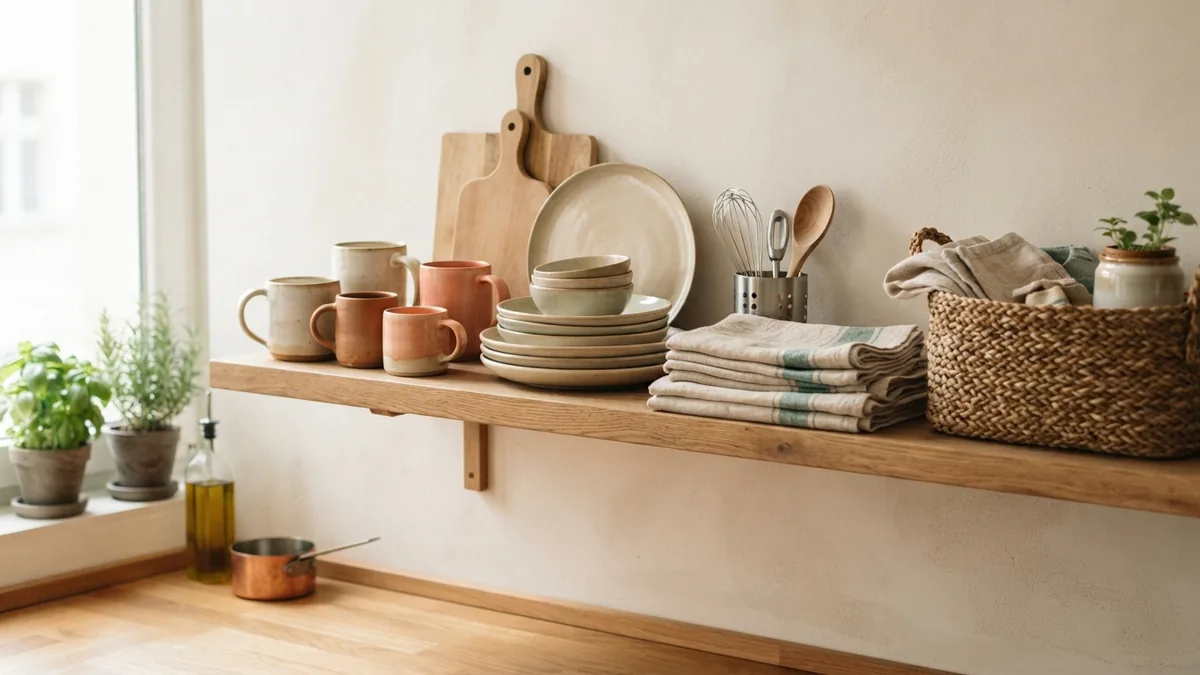
The best open shelving kitchen ideas begin with real storage needs. Keep everyday dishes on the easiest shelf to reach. Store heavy pieces on strong, lower shelves.
Use baskets or containers for small items that tend to spread. Linen napkins, tea towels, and spare tools can sit inside one basket. Choose firm shapes with quiet finishes.
Large boards can lean at the back of a shelf. Bowls can sit in front of them. This layered setup adds depth without taking much space.
| Item type | Good shelf position | Useful styling move |
|---|---|---|
| Everyday plates | Middle or lower shelf | Stack by size and color |
| Mugs and glasses | Near the drink area | Group in pairs or threes |
| Large boards | At one shelf end | Lean them behind bowls |
| Small linens | Inside a low basket | Fold them into one group |
Keep scale in balance
Consider the size and scale of every object. Tiny items can vanish on a deep shelf. Large objects can make a narrow shelf feel packed.
Pair one tall item with lower pieces. Leave space between wide objects. This simple contrast helps the whole display breathe.
Color Coordination for Open Shelves
Color can link open shelving to the wider kitchen. Start with two or three main tones. Warm cream, pale oak, and soft sage create a calm base.
Repeat one accent color in small doses. A muted terracotta bowl can echo a nearby rug or chair. Do not match every object. A small shift in tone adds depth.
Use texture when the colors are close. Linen, matte ceramic, wood grain, and woven baskets create contrast. This keeps a pale display from looking flat.
- Choose one base color for most dishes.
- Add one warm accent for visual focus.
- Repeat wood or ceramic in two areas.
- Remove colors that do not support the room.
How the Same Shelf Method Works in Other Rooms
The same shelf styling rules can help beyond the kitchen. If you wonder how to style open shelves living room spaces, start with books, baskets, and a few objects. Keep the largest pieces low and leave room for the wall to show.
For anyone asking how to style shelves in living room areas, group items by use and height. A basket can hold throws. Books can support a small plant or bowl. These choices keep the display useful.
To learn how to cover open shelves in living room spaces, use baskets, fabric boxes, or fitted wood panels. Pick a cover that suits the room and leaves key items easy to reach. This works well when you need less visual noise.
The same approach answers how to decorate open shelves in living room settings. Use fewer pieces than you would in a kitchen. For bedroom storage, the question of how to style shelves in bedroom spaces has a simple answer. Use folded linens, books, small baskets, and calm colors.
Maintaining Open Shelves
Open shelves need a small amount of regular care. Wipe dusty pieces before they build up. Clean the shelf surface when you clean the counter.
Refresh the display every few months. Move one bowl, board, or vase to a new spot. Seasonal decorating ideas can work well when they use small changes.
Keep the display tied to daily life. If an item never gets used, move it behind a closed door. Open shelving decor should look good and earn its space.
Common Mistakes to Avoid
The most common mistake is overcrowding. Too many objects hide the shelf and make cleaning harder. Remove pieces until each group has room to stand out.
Another mistake is placing heavy items too high. Keep weight low and within safe reach. Check the shelf fixings if the load changes.
A display can also feel flat when every object has the same height. Add one tall piece, one low stack, and one rounded shape. Small changes can restore balance.
- Do not fill every inch of shelf space.
- Do not store heavy pieces on weak shelves.
- Do not mix too many colors or finishes.
- Do not keep decor that blocks daily access.
Good shelf styling is a balance between order and ease. Start with useful kitchenware. Add texture, color, and a few personal pieces. Then edit the display until it feels calm.
Step-by-step
- 01 Check the shelf and wall
Measure the shelf depth and inspect the wall strength. Keep enough space above the counter for safe use.
- 02 Choose useful items
Gather daily plates, bowls, mugs, glasses, and boards. Keep heavy pieces on strong, lower shelves.
- 03 Place large anchor pieces
Start with one large item on each shelf. Use it to set the shape of the display.
- 04 Add grouped objects
Place stacks, pairs, and small groups beside each anchor. Keep shared colors or materials within each group.
- 05 Add texture and color
Bring in baskets, linen, wood, or one small plant. Use a narrow color range with one warm accent.
- 06 Edit the display
Step back and remove anything that feels crowded or unused. Leave open space around the remaining pieces.
Frequently asked questions
- How do you style open kitchen shelves?
- Start with useful dishes, then add one or two decorative pieces. Vary height and texture while leaving clear space around each group.
- How do you decorate open shelves in a kitchen?
- Use plates, bowls, mugs, boards, baskets, and small accents. Keep the color range narrow and place daily items within easy reach.
- How do you stop open kitchen shelves from looking cluttered?
- Avoid filling every inch. Group small objects, remove unused pieces, and repeat only a few colors or materials.
- What should go on open kitchen shelves?
- Choose items you use often, such as plates, mugs, bowls, and glasses. Add baskets, linen, wood, or plants for texture.
- How often should you refresh open shelf decor?
- Refresh the display every few months or when your routine changes. Small moves can make the kitchen feel new without buying more items.
Related reading
Bathroom Paint — Moisture, Finishes and Cost
Choose bathroom paint based on dampness, airflow, surface prep and finish.
Large Living Rooms — Comfort, Zones and Flow
Make a spacious living room feel warm, useful, and easy to move through.
Small Living Rooms — Layout, Light and Comfort
Make a small living room work better with smart layout, light, and storage.