Kitchen Wall Décor — Style and Function
Make a bare kitchen wall feel warm, useful, and thoughtfully styled.
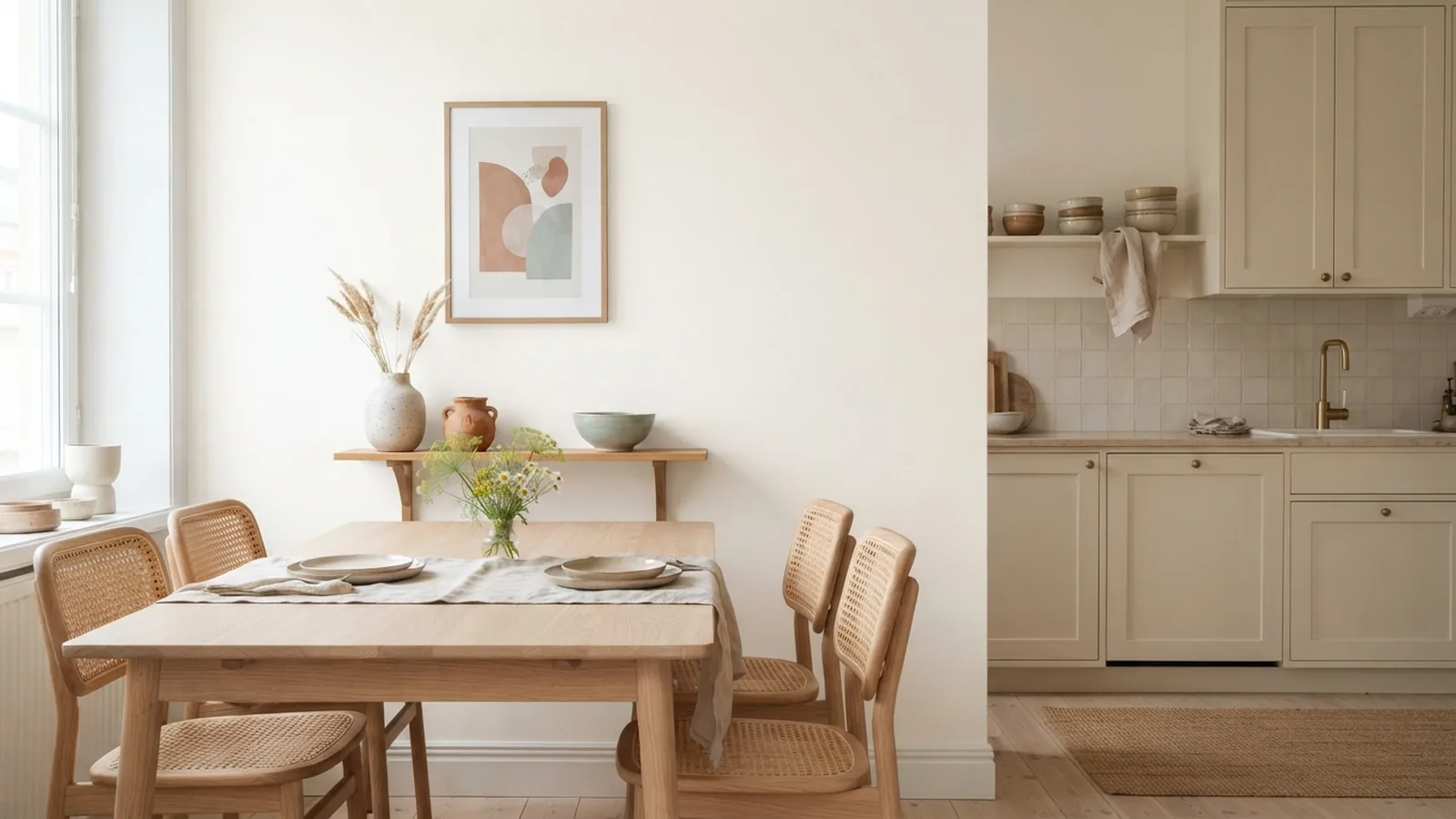
Creative Ideas for Kitchen Wall Décor
To decorate a bare kitchen wall, start with its size, light, and daily use. Then choose one main feature, such as framed art, a shelf, or a painted accent. Keep the plan simple so the wall feels finished without crowding work areas. Good decorating ideas for kitchen walls blend warmth with function.
Look at the wall from across the room before buying anything. A narrow space beside a table may suit one tall print. A long wall can hold a row of shelves. Check for heat, steam, and splashes near the stove and sink. Keep delicate pieces away from those spots.
- Use one large artwork to make a quiet wall feel planned.
- Add shelves where you can reach them with ease.
- Bring in color or texture if the room feels plain.
Measure the wall and mark your layout with painter’s tape. This quick test helps you judge scale before drilling or painting. Leave open space around each feature. The wall will feel calmer.
Choose a Style That Fits Your Kitchen
A modern kitchen often suits clean lines, slim frames, and a small color range. Choose abstract prints, simple shapes, or black-and-white photos for a calm look. Pale wood can add warmth without making the wall feel busy. Keep the display spare.
For a rustic room, try reclaimed wood, woven pieces, or framed plant prints. These materials bring a softer, lived-in feel. A minimalist kitchen calls for fewer objects, but each one should earn its place. One large piece can have more impact than a crowded gallery wall.
Match wall details to nearby finishes, not just the cabinets. A pale oak shelf, for example, can link a cream wall with a wood table. Repeat one or two room colors in your art or ceramics. This helps mixed styles feel connected.
Use Art and Displays with Care
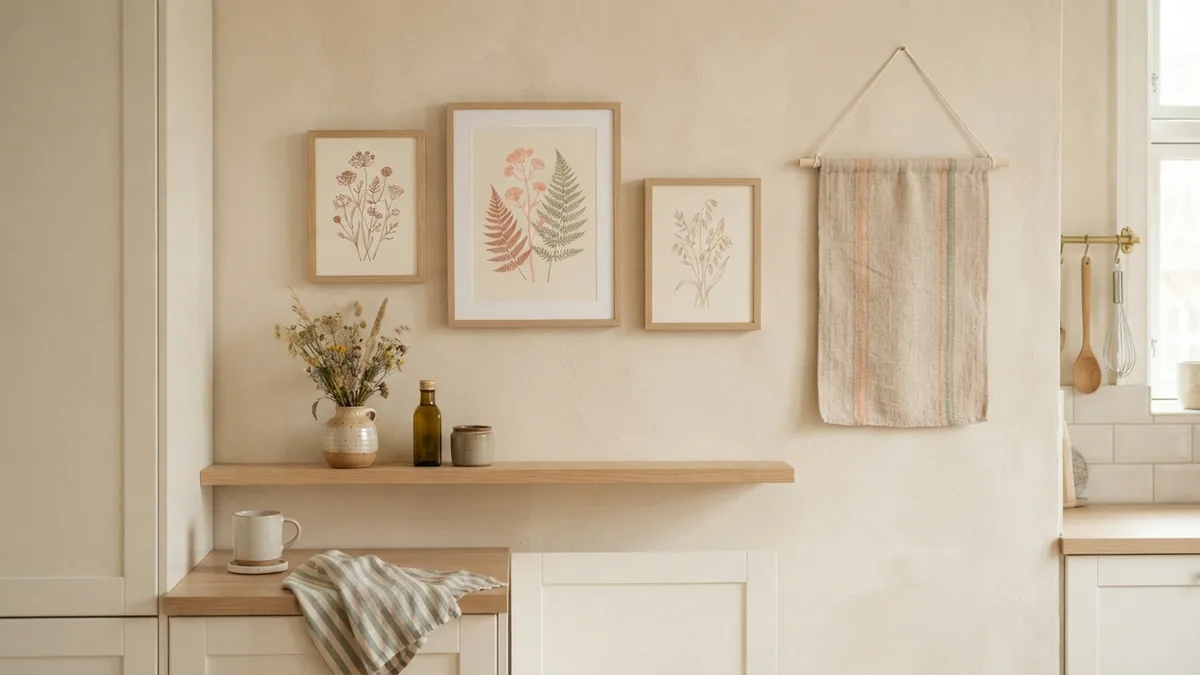
Prints, photographs, and textiles all work well on kitchen walls. Choose food art, landscapes, or family photos that suit the room’s mood. A fabric hanging adds softness, but keep it far from steam and cooking grease. Near busy areas, use a frame with a wipe-clean surface.
Build a small gallery with two or three pieces in related colors. Keep the gaps even, and line up either the top edges or center points. Before hanging, lay the pieces on the floor to test the order. A paper template can help you mark nail spots.
Think about cleaning when you pick materials. Glass and sealed frames are easier to wipe than bare fabric or paper. Keep art clear of doors, cupboards, and appliances that might hit it. A display should look good and stay safe.
Add Shelves for Display and Storage
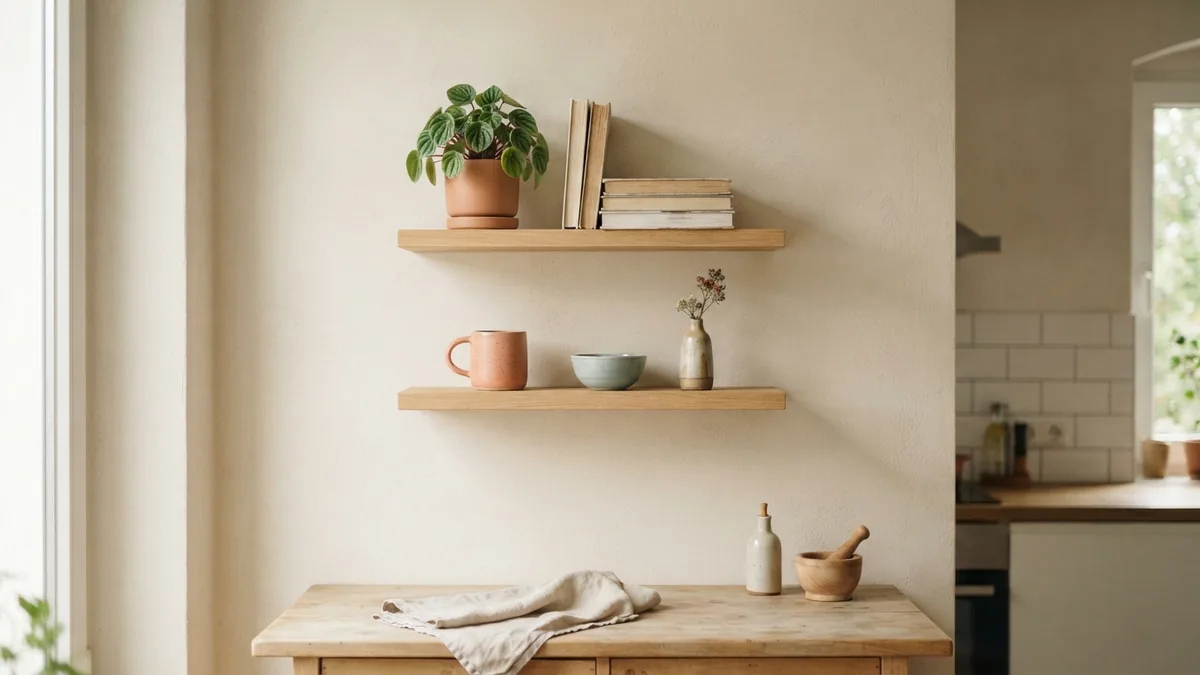
Open shelves make a blank kitchen wall useful while keeping favorite objects in view. A short shelf can hold a few cookbooks, a small plant, and a ceramic bowl. Place daily items near the prep area, but outside splash zones. Keep the things you use most within easy reach.
Choose shelf depth based on what you plan to store. A depth of 20 to 25 centimeters suits many books and small kitchen items. Use brackets or wall anchors that suit your wall type. Check the shelf’s weight limit before loading it.
Arrange objects with breathing room instead of filling every inch. Mix upright books with one low bowl or a small framed print. Keep heavy items low and away from the edge. A tidy shelf is easier to dust and safer to use.
Bring in Color and Texture
Paint is one of the simplest ways to change a kitchen wall. Muted sage, warm peach, or soft terracotta can add depth without taking over. Test a sample at different times of day before painting the full wall. Natural light can shift how a color looks.
Wallpaper can add pattern to a dining nook or a wall away from the stove. Choose a wipeable finish if the area may get marked. Small prints tend to sit quietly in compact kitchens. Large patterns make a bold focal point. Keep nearby objects plain if the paper has a strong design.
Texture adds interest even when the color range stays soft. Consider a slim wood panel, woven wall piece, or brushed metal rail. Use one main texture, then echo it with smaller touches around the room. Too many strong finishes can crowd a small kitchen.
Try a Simple DIY Wall Project
Chalkboard paint can turn a small wall section into a spot for meal plans or notes. Pick a place away from grease and water, then clean and prime the surface. Apply the number of coats listed on the tin. Let the paint cure before use.
You can also build a custom shelf from a board and sturdy brackets. Sand the edges, seal the wood, and check the wall for pipes or wires before drilling. Use fixings made for your wall type. Keep the shelf short if you are unsure about its load.
For a personal display, frame a recipe card, a small print, or a piece of patterned fabric. Use a frame that is easy to clean. Try the layout on the floor first, then mark the wall. Small projects work best when they suit your room and your daily routine.
Keep the Kitchen Cozy and Easy to Use
A decorated wall should support the way you cook and gather. Keep useful objects close, but leave clear space near worktops and appliances. Avoid displays that block light or make a narrow walkway feel tight. Function matters as much as looks.
Dust shelves and frames often, especially near the stove. Wipe washable surfaces with a soft cloth, and follow the care notes for paint or wallpaper. Replace items that become hard to clean or feel out of place. A few well-chosen details can make the whole kitchen feel more welcoming.
If you are still deciding how to decorate a blank kitchen wall, begin with one small change. Test a print, shelf, or paint sample before adding more. Live with the choice for a few days. Then build the rest of the display around what works.
Frequently asked questions
- How do I decorate a bare kitchen wall?
- Choose one main feature, such as framed art, open shelves, or a painted accent. Keep it clear of heat, steam, and splashes.
- What can I put on a blank kitchen wall?
- Try prints, framed photos, a small shelf, or a washable wall finish. Pick pieces that suit the wall’s size and are easy to clean.
- How do I make kitchen wall shelves safe?
- Use brackets or anchors made for your wall type, and check the shelf’s weight limit. Keep heavy objects low and away from the edge.
- Is wallpaper suitable for a kitchen wall?
- Yes, wallpaper can work well on a wall away from the stove and sink. A wipeable finish is a good choice for areas that may get marked.
- Which colors work well on kitchen walls?
- Muted sage, warm peach, and soft terracotta can add color without taking over. Test a sample in changing daylight before painting.
Related reading
Bathroom Paint — Moisture, Finishes and Cost
Choose bathroom paint based on dampness, airflow, surface prep and finish.
Large Living Rooms — Comfort, Zones and Flow
Make a spacious living room feel warm, useful, and easy to move through.
Small Living Rooms — Layout, Light and Comfort
Make a small living room work better with smart layout, light, and storage.