Reupholster Dining Room Chairs: A Practical Step-by-Step Guide
Refresh worn dining chairs with a clear DIY reupholstery guide.
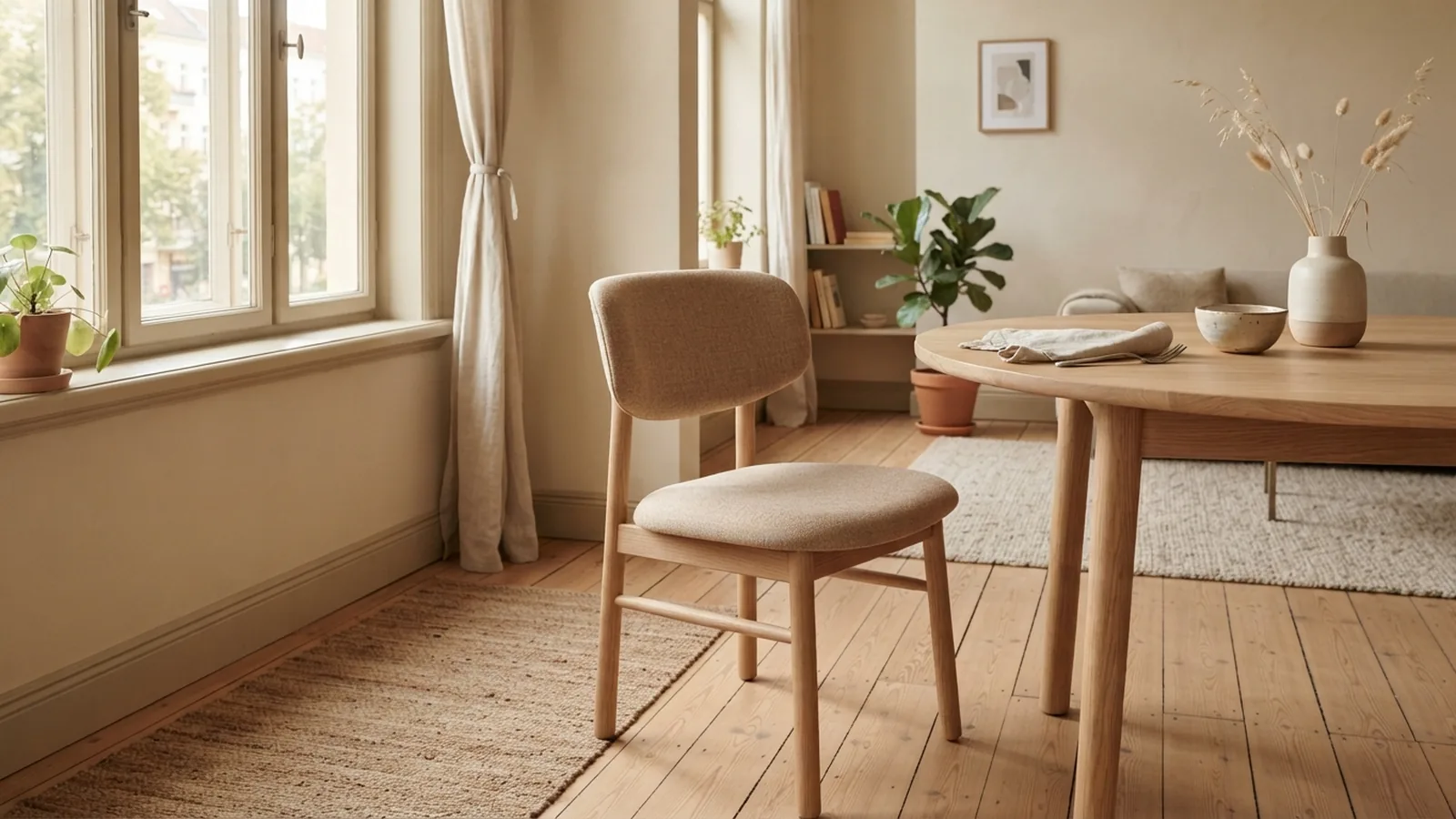
Know When Your Dining Chairs Need New Upholstery
How do I reupholster a dining room chair? Start by checking the frame, seat, foam, and fabric. Most dining chairs have a removable seat panel. This makes them a good first project for DIY home decor.
Look for torn cloth, deep stains, sagging foam, or loose staples. A chair may also need new upholstery when its fabric feels thin. Bad smells can point to trapped spills or damp foam. A wobbly frame needs repair before you cover it.
Press the seat with your hand. It should rise back soon after you let go. If it stays flat, replace the foam. Check each corner for broken wood or loose screws. Fix these faults before adding fresh fabric.
Many chairs use a separate seat and back. Others have one cover that wraps around both parts. Check the chair from all sides before you remove anything. Take clear photos as you work. These photos will guide the new cover later.
Gather the Tools and Materials
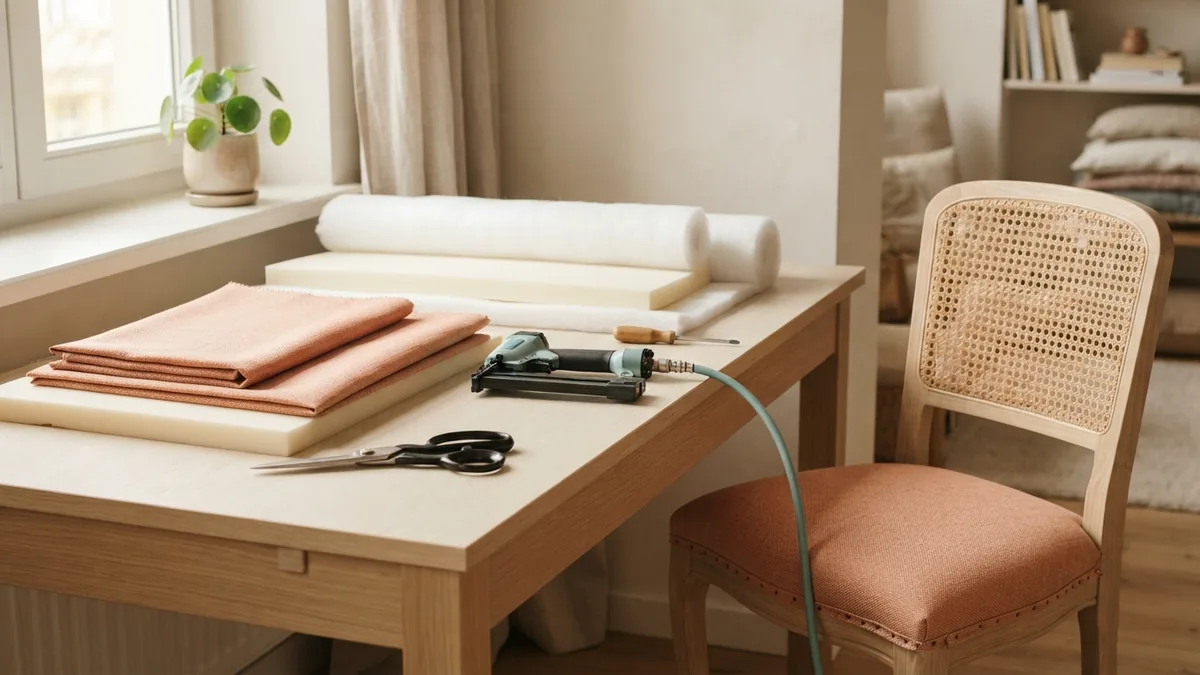
Good tools make the job faster and help prevent damage. You can reupholster a chair with a small set of common tools. Buy extra fabric if you plan to add piping or match a pattern.
- Upholstery fabric, measured with a small safety margin
- High-density foam for worn seats
- Quilt batting for a smooth, soft finish
- Staple gun and 6 to 10 mm staples
- Flat screwdriver or staple remover
- Sharp fabric scissors
- Measuring tape, chalk, and a marker
- Dust mask and work gloves
- Spray adhesive for holding foam in place
- Optional trim, cord, or upholstery tacks
Choose foam that suits the chair size and use. A seat foam thickness of 25 to 50 mm works for many dining chairs. Dense foam gives better support than soft craft foam. Add batting over the foam to hide rough edges.
Buy about 15 cm of extra fabric on each side. This helps you grip the cloth while you staple. It also allows room for small cutting errors. Keep the old cover until the new pieces fit.
How to Reupholster a Dining Room Chair Seat and Back
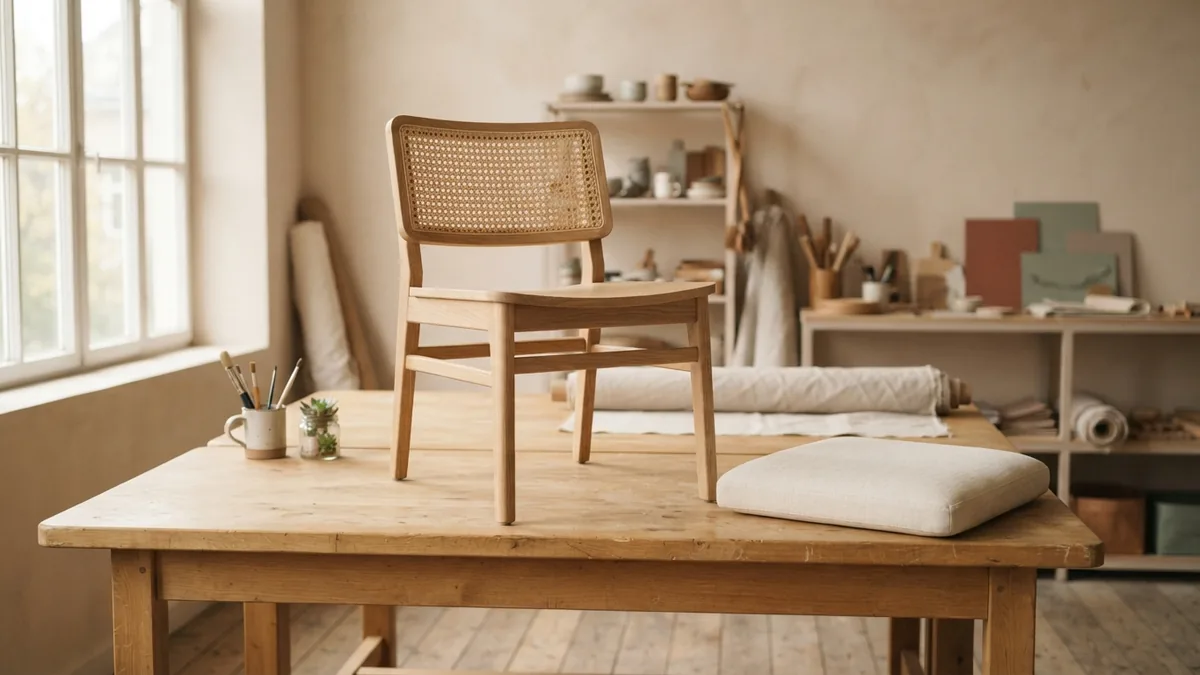
Work on one chair at a time. This keeps each screw and cover linked to the right frame. A clean table gives you space to lay out each piece.
Remove the old cover
Turn the chair upside down. Remove the screws that hold the seat to the frame. Place the screws in a small tray. Use a flat screwdriver to lift the old staples.
Pull out every staple you can find. Do not tear the old cover yet. Use it as a pattern for the new fabric. Mark the front edge on the old cover with chalk.
Check the base and replace the foam
Inspect the seat board for cracks or water damage. Replace a weak board before you add foam. Cut new foam to the same size as the seat board.
Spray a light coat of adhesive on the board. Press the foam into place. Lay batting over it with equal overlap on each side. Trim only after the main cover sits correctly.
Cut and attach the new seat fabric
Lay the old cover on the new fabric. Add 75 to 100 mm beyond each edge. Cut the fabric with sharp scissors. Keep the grain straight across the front edge.
Place the fabric face down. Set the padded seat on top. Pull the fabric to the middle of the front edge. Add one staple. Do the same at the back, then at both sides.
Keep working from the middle toward each corner. Pull the fabric firm, but do not stretch it hard. Smooth wrinkles after every few staples. Fold each corner into a neat pleat.
Trim excess cloth to about 25 mm. Keep enough fabric to cover the staple line. Add staples at 25 to 40 mm gaps. Refit the seat and tighten the original screws.
Reupholster the chair back
To reupholster a dining room chair back, first find its construction. Some backs have a removable panel. Others use fabric fixed to the frame. Remove the rear cover with care.
For a separate panel, use the same method as the seat. Add foam only if the old back feels thin. For a framed back, place fabric on the front first. Pull it over the edges and staple behind the frame.
Cover the rear staples with a second fabric panel. Tuck the edges under for a clean finish. You can also use upholstery tacks or trim. Piping adds a crisp edge around a seat or back.
Choose Fabric That Can Handle Daily Meals
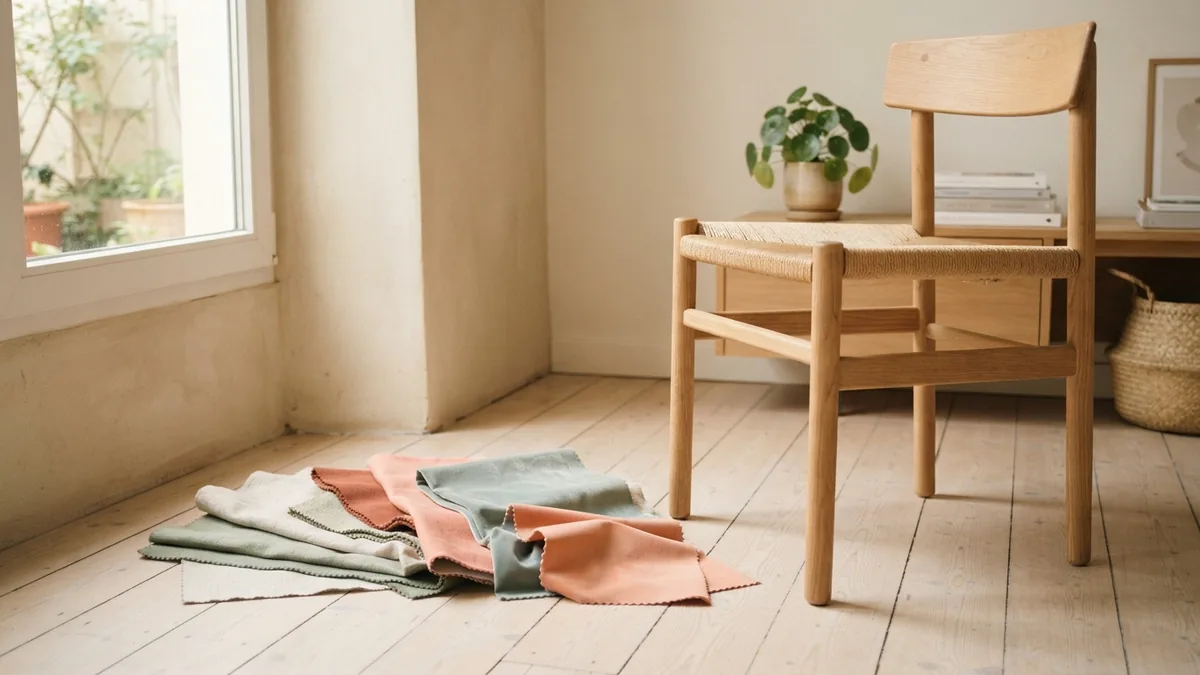
Dining chairs face crumbs, spills, heat, and daily friction. Pick fabric for clean-up as well as style. Medium-weight cloth often gives the best balance for most homes.
| Fabric type | Best use | What to know |
|---|---|---|
| Performance polyester | Busy homes and family dining | Strong, easy to clean, and widely available |
| Cotton blend | Soft, relaxed interiors | Comfortable, but may need stain care |
| Linen blend | Scandinavian and coastal rooms | Airy and textured, but can crease |
| Velvet | Rich, formal dining rooms | Soft and bold, but shows pressure marks |
| Vinyl | Easy-wipe breakfast areas | Practical, though less breathable |
Test a fabric sample before you buy several metres. Rub it with a clean cloth and check for color loss. Place a drop of water on the surface. See if the liquid beads or sinks in at once.
Patterned fabric needs extra care during cutting. Center the design on each seat. Buy more cloth when matching stripes or large shapes. Plain fabric wastes less material and hides small cutting errors.
Estimate the Cost of Reupholstering Dining Chairs
How much does it cost to reupholster dining room chairs? A simple DIY seat may cost $25 to $75 per chair. This range covers basic fabric, foam, batting, and staples. Your cost drops when you already own the tools.
Professional work often costs $150 to $500 per chair. Complex backs, piping, tufting, and repairs raise the price. Designer fabric can cost more than the labor. Ask for a written quote before work starts.
| Project type | Typical cost per chair | Main cost drivers |
|---|---|---|
| DIY seat only | $25–$75 | Fabric, foam, and new tools |
| DIY seat and back | $50–$140 | More fabric, batting, and trim |
| Professional seat only | $75–$200 | Labor and fabric choice |
| Professional full chair | $150–$500 | Frame work, foam, piping, and detail |
For a set of six chairs, DIY work may cost $150 to $450. A full professional job may cost $900 to $3,000. Local labor rates can change these figures. A shop may also charge for pickup and delivery.
Compare the quote with the chair's value and frame quality. Solid wood chairs often justify new upholstery. Cheap frames may cost less to replace. Reupholstery makes the most sense when the shape still suits your room.
Finish the Job and Care for the New Covers
Give each chair a final check before putting it back at the table. Look for loose staples, puckered fabric, and uneven corners. Sit on the chair and listen for creaks. Tighten the frame if needed.
Clean spills at once with a dry cloth. Blot instead of rubbing the fabric. Follow the care label before using water or cleaner. Test any cleaner on a hidden spot first.
- Vacuum crumbs from seams each week
- Keep chairs away from direct heat
- Rotate matching chairs to spread wear
- Retighten loose screws every few months
- Repair small tears before they grow
Keep spare fabric from the original project. It can help with future repairs. Store it in a dry, dark place. With steady care, fresh upholstery can last for many years.
If the back has deep tufting or a curved frame, hire a skilled upholsterer. The same applies to antique chairs. A professional can protect fragile wood and preserve older joinery. Simple removable seats remain the best place to learn.
Step-by-step
- 01 Inspect the chair
Check the frame, seat board, foam, and old fabric. Repair loose joints or cracked wood before covering the chair.
- 02 Remove the old upholstery
Unscrew the seat and lift each staple with a screwdriver or staple remover. Keep the old cover for use as a pattern.
- 03 Cut new foam and fabric
Cut foam to the seat size and add batting over it. Cut fabric with 75 to 100 mm of extra cloth on every side.
- 04 Attach the seat cover
Staple the fabric at the center of each side first. Work toward the corners while keeping the cloth smooth and firm.
- 05 Cover the chair back
Use the old back cover as a guide. Staple the new cloth behind the frame, then add a rear panel when needed.
- 06 Reassemble and check
Trim excess cloth and replace the original screws. Check the chair for loose staples, wrinkles, and frame movement.
Frequently asked questions
- How do I reupholster a dining room chair?
- Remove the seat, lift the old staples, and use the old cover as a pattern. Add fresh foam if needed, then staple the new fabric from the center outward.
- How do you reupholster dining room chairs with piping?
- Attach piping around the seat edge before fixing the main cover. Keep the cord even and hide the join at the rear of the chair.
- How much to reupholster a dining room chair?
- DIY work often costs $25 to $140 per chair. Professional work can cost $150 to $500, based on fabric, repairs, and design detail.
- Can I reupholster a dining chair back and seat separately?
- Yes. Treat a removable back panel like the seat. For a fixed back, staple the front fabric behind the frame, then cover the rear staples.
- What is the best fabric for dining room chairs?
- Performance polyester and cotton blends suit busy homes. Linen blends look relaxed, while velvet gives a richer style but needs more care.
- Do I need new foam when reupholstering a chair?
- Replace foam when it stays flat, feels lumpy, or smells musty. Firm foam around 25 to 50 mm thick suits many dining seats.
Related reading
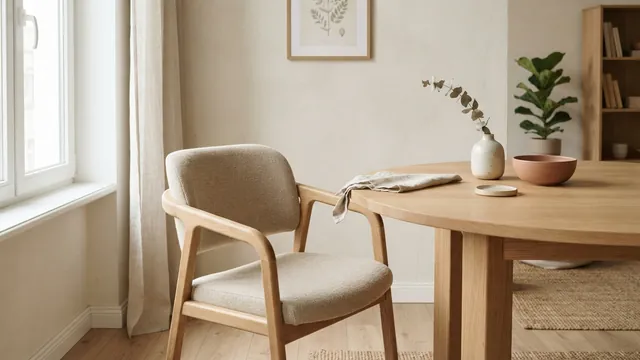
How to Recover Dining Room Chairs for a Fresh, Neat Finish
Refresh worn dining chairs with new fabric, foam, and a clean finish.

Kitchen Renovation Costs — Price Ranges and Budget Factors
See typical kitchen remodel prices, key cost drivers, and ways to keep your budget on track.

Large Living Room Walls — Scale, Style, and Warmth
Use scale, art, texture, shelves, and light to make a large wall feel balanced.