How to Reinforce Dining Room Chair Legs for Better Stability
Fix wobbly dining chairs fast with glue, dowels, and tight hardware checks.
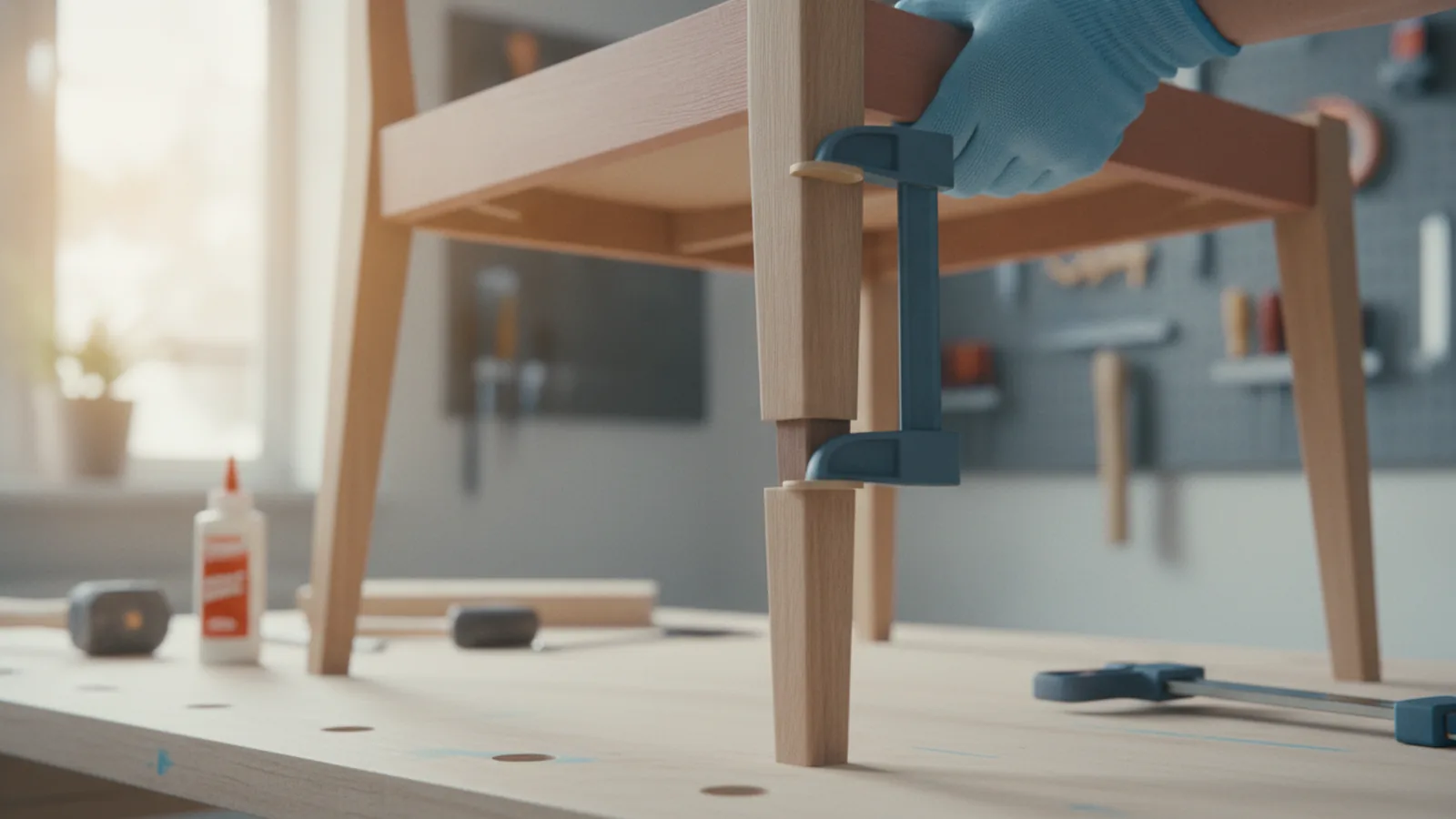
Understanding why chair legs wobble
If your dining room chair rocks or wobbles, the fix usually comes down to one problem. A loose joint lets the leg shift under load. Over time, wear in the leg-to-frame connection grows small gaps that you feel every time someone sits down.
Dining room chair legs can become loose because the joinery was weak, or because it has taken repeated stress. Cheap mortise-and-tennis joints, soft wood, and under-dried lumber can all loosen faster. Also, repeated tightening of screws without staying power can gradually pull threads out.
Before you start, watch the wobble pattern. If the chair rocks side to side at the front, the leg joints at the seat rails may be moving. If the wobble happens in one corner only, start with the nearest leg and its top connection to the seat frame.
- Check for play at the leg joint by pushing and pulling by hand.
- Look for cracked wood, stripped screw holes, or shiny gaps.
- Test each leg one at a time to spot the worst connection.
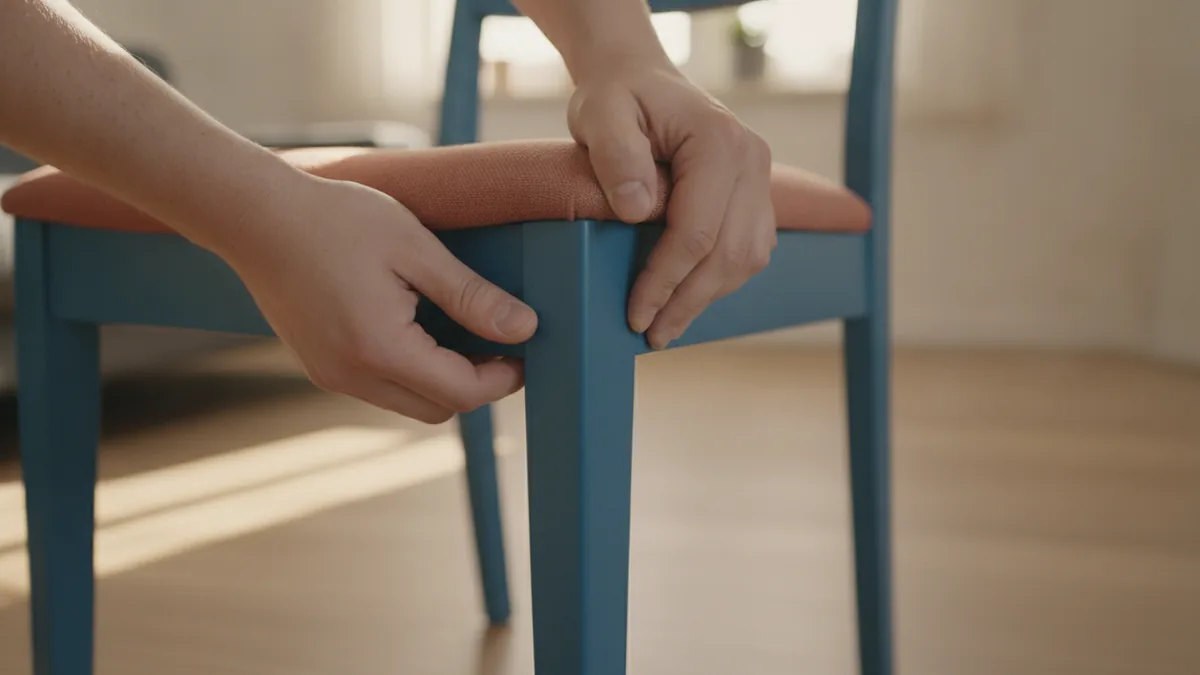
Tools and materials for dining chair leg reinforcement
You can reinforce chair legs with basic woodworking tools, as long as you match the method to the joint type. For joinery that is already loose, you often need clamps and a fast, strong glue. For holes that have wallowed out, you may need dowels or hardwood fillers.
Plan your materials around the parts that are failing. If the leg wobbles because screws have loosened, you may only need longer screws and lock nuts. If the leg joint has separated, glue plus dowels usually holds better than screws alone.
Common supplies include wood glue, wood dowels, screws, and corner brackets. For parts that use through-bolts, add lock nuts to keep tension consistent. For home improvement work, use quality fasteners sized for the thickness of the chair’s rails.
- Wood glue (PVA glue works for most interior chair repairs)
- Hardwood dowels (match diameter to your drilled pilot holes)
- Screws for wood (use the right length so they bite well)
- Metal corner brackets or metal straps for extra support
- Lock nuts if your chair uses bolts through the frame
- Drill, bits, tape measure, clamps, and a small screwdriver
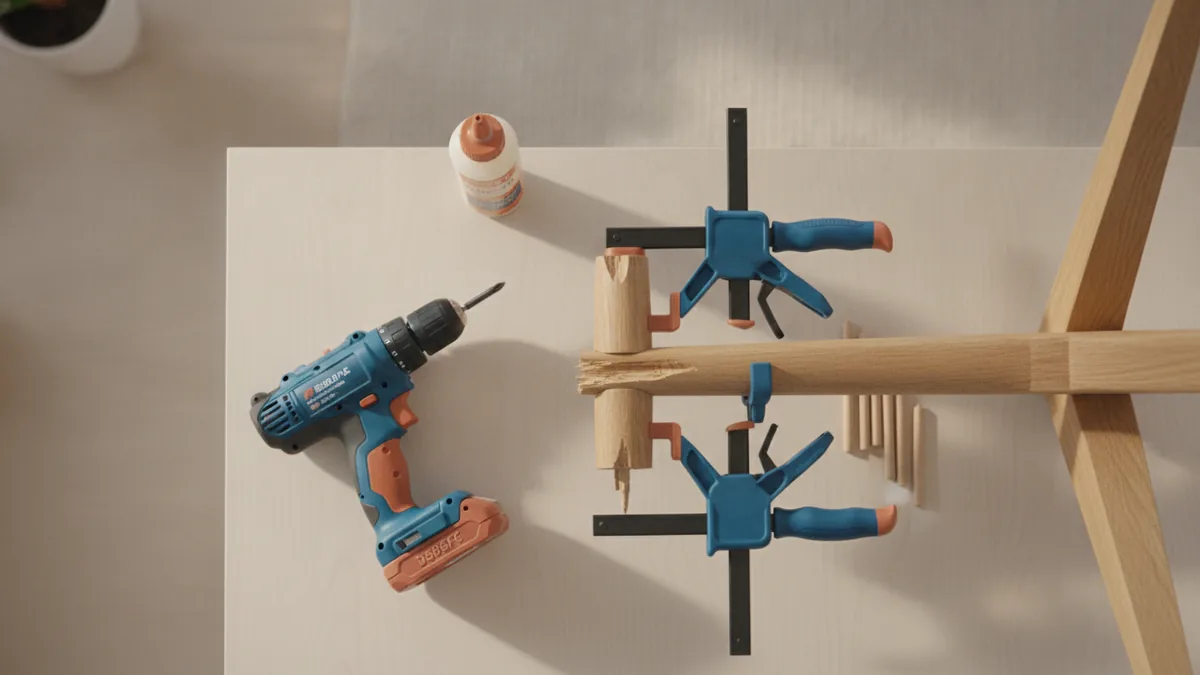
Techniques to reinforce chair legs and improve stability
There is no single best method for every chair. Still, most chair stability solutions fall into three buckets: re-glue, re-pin, or add hardware support. Pick the approach that matches what you see when you inspect the joint.
Re-glue a separated leg joint
When the joint has opened, glue can restore the original bond line. Remove the leg if possible. Scrape old glue off both surfaces and test the fit without forcing it.
Apply wood glue evenly, then clamp the leg in position. Avoid over-tightening clamps, which can squeeze glue out and starve the joint. Let it cure fully before testing the chair. Quick cure claims are often optimistic for thicker gaps, so follow the bottle guidance.
Add dowels to restore joinery strength
Dowels help when the old holes are worn or when you need extra alignment. After marking the joint locations, drill straight pilot holes with a steady hand. Use a drill guide if you have one. Keep drill depth controlled so you do not break through the chair rail.
Dry-fit the dowels first. Then glue the dowels and insert them, aligning the leg carefully. Clamp for tight contact. Dowels also reduce racking, which is the twisting that feels like wobble.
Use screws with fresh bite, not the same weak holes
If screws are loose but the wood is not badly damaged, you may only need better engagement. Remove the screws and check the hole wall condition. If you see crumbling or stripped threads, fill the hole with a wood dowel and glue, then re-drill.
For screw reinforcements, consider longer screws only if they still clear inside the frame. A common DIY furniture repair move is to use a pilot hole sized for the screw’s core. That prevents splitting while keeping strong pull-in.
After reassembly, tighten firmly but do not strip the wood. Test the joint after tightening, then tighten again once the chair sits under light load for a day.
Support loose frames with metal corner brackets or straps
Metal corner brackets or straps add shear support where wood joints flex. This method is especially helpful for chairs that see heavy daily use. Brackets work well at the inside corners where legs meet the seat rails.
Pre-drill screw holes in the bracket. Then screw the bracket to the leg and rail. Use the smallest hardware that still gives a solid bite. Overbuilding can split the chair’s rail, so match screw size to wood thickness.
For a cleaner look, place straps on the underside where people do not see them. Function matters more than cosmetics, especially for dining chair stability solutions.
Use lock nuts and proper bolt tension
Some dining chairs use through-bolts or threaded hardware at the leg-to-frame connection. In those cases, tightening matters more than glue. Always ensure bolts are properly tightened, then check for vibration loosening.
Lock nuts help prevent movement from repeated seating shocks. When you reassemble, hold the bolt head steady while you tighten the nut. After the first test ride, re-check tightness. If the joint still slips, you may need thicker washers or slightly different bolt length.
- Glue is best for separated wood surfaces.
- Dowels are best for alignment and worn holes.
- Screws need fresh bite to resist pull-out.
- Brackets and straps help against flex and racking.
- Lock nuts reduce loosen-backs on bolts.
Preventative measures for long-lasting chair stability
Once you reinforce dining chair legs, the next goal is to keep them stable. Wobble often returns after vibration loosens screws, or after seasonal humidity changes wood dimensions. You can catch these issues early with small maintenance tasks.
Make periodic checks part of your routine. Every few months, push-test each leg joint and re-tighten visible screws. If your chair uses bolts, re-check them too. Start with the fasteners you adjusted during the repair, since those tend to be the weak points.
Also watch for early signs that the joint needs attention. Soft squeaks, new wobble, and subtle gaps between wood parts usually appear before full joint failure. Treat those signs quickly so you do not need a larger repair.
Choose the right joinery approach for future repairs
If you are reworking the chair’s leg connection, build for serviceability. Using dowels and clamps creates strong alignment, but it also makes future inspection harder. Using screws with good access makes maintenance easier.
In mixed repairs, many people combine methods. For example, glue plus dowels can restore strength, while small brackets prevent future flex. This combo reduces the chance that “tighten-only” repairs will fade.
Care tips that reduce repeated stress
Protect chairs from water exposure and avoid placing them on uneven floors. If a chair rocks on one leg even after repair, check floor level. Small floor irregularities can create constant stress, which loosens hardware again.
Use felt pads under the chair feet. They reduce friction-driven shifts when chairs slide. Less movement means less joint vibration.
| Maintenance habit | Why it helps | How often |
|---|---|---|
| Push-test all leg joints | Find early play before gaps grow | Every 2–3 months |
| Re-tighten screws and bolts | Stops vibration loosening | After heavy use, then quarterly |
| Inspect for cracks and stripped holes | Prevents sudden failure | Once per season |
FAQs about reinforcing dining chair legs
What is the best way to reinforce dining room chair legs?
The best method depends on the joint failure. If the wood joint has separated, re-glue and clamp it. If holes are worn or alignment is off, add dowels or fresh screw bite.
Can I reinforce dining room chair legs without removing them?
Sometimes you can add brackets or straps without full disassembly. Glue and dowel work usually needs the joint opened so surfaces can be cleaned and aligned. If the leg won’t lift safely, start with hardware support.
How do I reinforce dining room chair seats if the wobble comes from above?
First, confirm the wobble source. If the seat frame rocks, re-tighten and reinforce the leg-to-rail connections at the underside. Then check the seat-to-frame screws so the seat supports the reinforced legs.
Should I use wood glue or screws for chair leg reinforcement?
Glue and screws can both help, but they solve different problems. Glue restores wood-to-wood contact. Screws resist motion, but only if the screw has a solid bite in the wood.
Will corner brackets or straps damage the chair?
They usually help, not hurt, when installed correctly. Pre-drill holes to avoid splitting and use screws sized for the rail thickness. Place hardware where it supports flex, like inside corners and underside seams.
How tight should I make bolts, and will they loosen again?
Tighten bolts securely without stripping threads. Add lock nuts where possible and re-check tightness after the first day of use. Vibration can loosen hardware, so periodic checks are important.
Frequently asked questions
- What is the best way to reinforce dining room chair legs?
- Match the repair to the joint issue. Re-glue and clamp separated joints. Add dowels or stronger hardware when holes are worn or alignment is off.
- How do I reinforce dining room chair legs if the screws keep loosening?
- Remove the screws and check for stripped holes. Use dowels to restore the hole shape, then re-drill and install screws with a solid bite. For bolts, use lock nuts.
- Can I reinforce dining room chair legs without taking the chair apart?
- You can sometimes add corner brackets or straps without full removal. Glue and dowels usually require opening the joint so surfaces bond properly.
- How do I reinforce dining room chair seats when wobble comes from above?
- Start by confirming the wobble source. If the seat frame moves, re-tighten and reinforce the leg-to-rail connections underneath. Then check seat mounting screws.
- Do metal corner brackets or straps help with chair stability solutions?
- Yes, when installed with pre-drilled holes and correct screw size. They reduce racking and flex at the leg-to-rail connection.
- How often should I maintain reinforced chair legs?
- Check tightness every 2 to 3 months. Re-tighten screws and bolts, and look for cracks or new gaps after heavy use.
Related reading

Room Painting Costs — What Shapes Your Quote
Room painting often costs $200–$1,000. See what drives the price and how to compare quotes.

Kitchen Cabinet Tops — Style, Texture and Seasonal Charm
Style cabinet tops with balanced layers, useful texture, and decor that suits your kitchen.

Couch Placement—Flow, Focus and Comfort
Place your couch to frame a focal point, keep paths clear, and make the room feel balanced.