Paint Colors That Make Any Room Look Bigger
Use smart paint colors and finishes to make small rooms feel open and bright.
How Color Changes the Feel of a Room
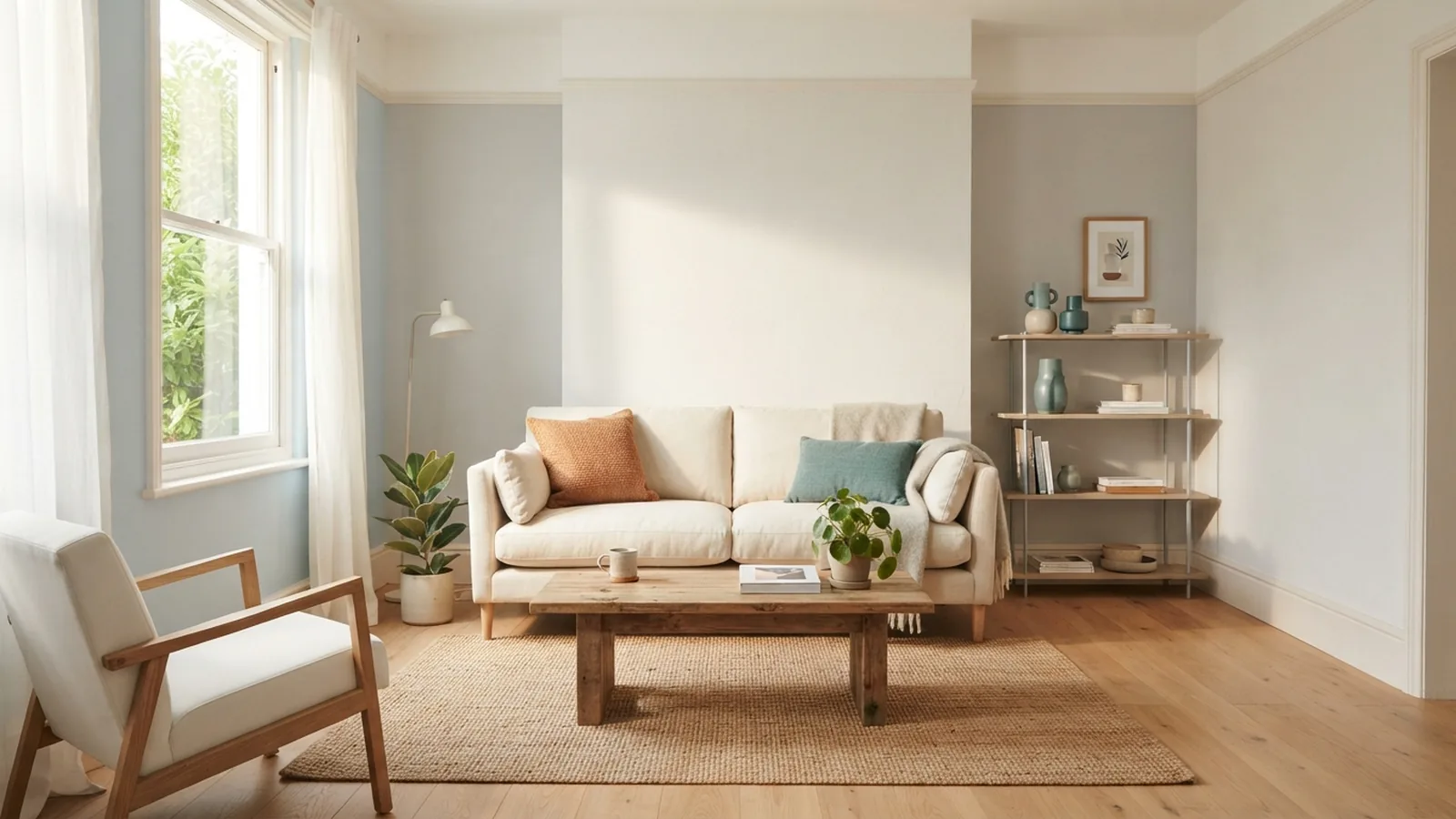
The best colors for a larger room are soft whites, pale grays, warm beiges, and light blues. These shades reflect more light than deep tones. They also create softer visual edges around the room.
Paint cannot change your room’s size. It can change how your eyes read the space. This effect is a spatial illusion. Bright walls seem to push outward, while strong dark walls can feel closer.
For the best result, look at the room’s natural light first. A north-facing room may need a warm white. A sunny room may suit a cool gray or pale blue.
- Choose light wall colors for a broad, airy feel
- Keep trim close to the wall color
- Use one connected color story across nearby spaces
- Test paint in morning, noon, and evening light
Light and Dark Paint Colors: What Changes?
Light paint makes walls less visually heavy. It also helps daylight travel across the room. Soft white, cream, pale gray, and light beige can all make a space look bigger and brighter.
Dark paint absorbs more light. Does dark color make a room smaller? Often, yes. A deep navy or charcoal wall may seem closer. Yet the result depends on light, room shape, and how you use the shade.
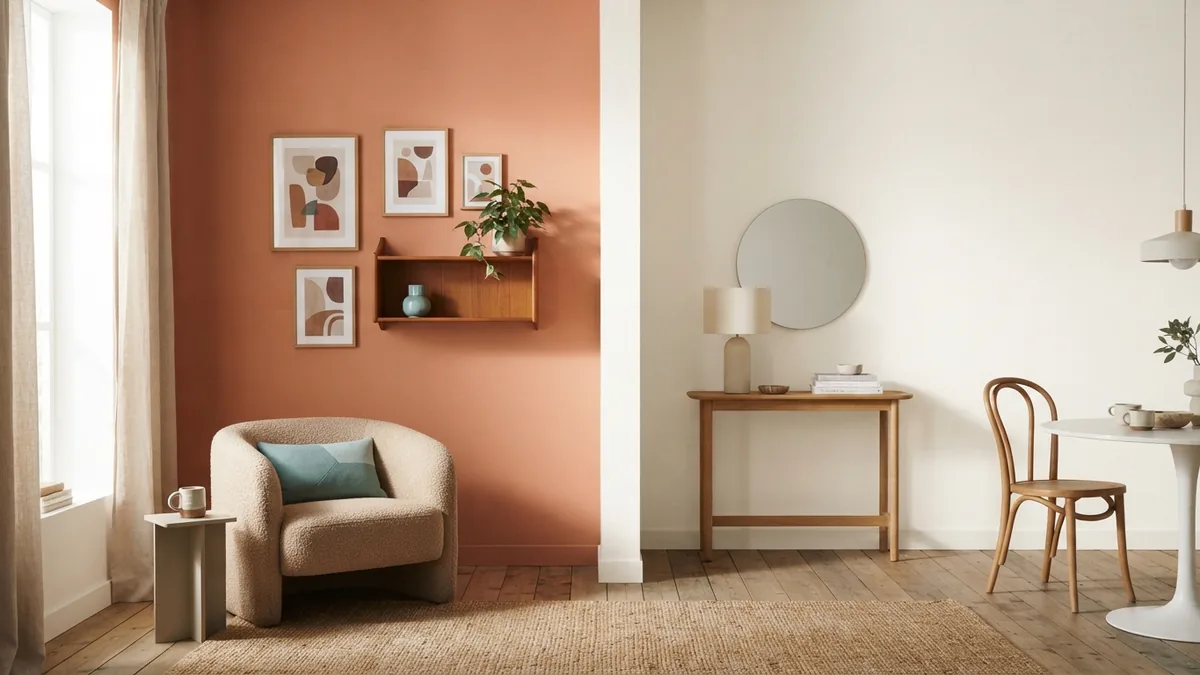
A dark room can still feel stylish and calm. Use a deep color on one wall instead of every wall. Pair it with light floors, pale furniture, and bright trim. This adds depth without making the whole space feel tight.
Check the light reflective value, or LRV, before you buy paint. LRV shows how much light a color reflects on a scale from 0 to 100. Colors above 65 often work well when you want a room to appear larger.
| Paint choice | Visual effect | Best use |
|---|---|---|
| Soft white | Bright and seamless | Dark rooms and small halls |
| Pale gray | Clean and calm | Modern living rooms |
| Warm beige | Soft and welcoming | Rooms with warm wood |
| Deep accent shade | Rich and layered | One feature wall |
The Best Colors for a Larger, Brighter Feel
Soft whites are a safe choice for small rooms. Choose an off-white with a warm or cool base that suits your light. Pure white can look sharp in bright rooms. It may look gray in weak light.
Pale gray gives walls a quiet shape without adding much visual weight. Pick a gray with a high LRV for a brighter result. Test it beside your flooring, since wood and tile can change its look.
Beige works well when your room has tan floors, brass, leather, or warm wood. A pale beige can make a room seem bigger while keeping it cozy. Avoid muddy beige in rooms with little daylight.
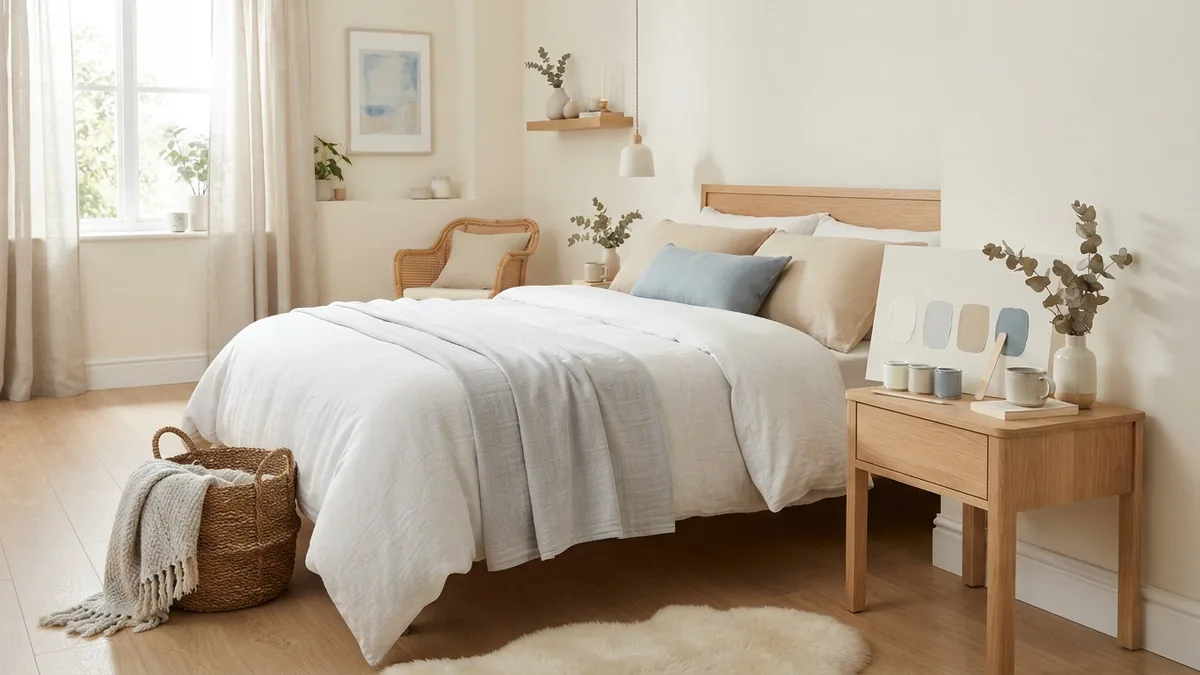
Light blue is another strong choice. Blue tends to recede visually, so it can suggest more open space. Misty blue, soft aqua, and blue-gray work well in bedrooms, bathrooms, and small living rooms.
If you ask what colors make a bedroom look bigger, start with pale blue, warm white, or light gray. For a living room, try soft greige or a creamy white. These shades can keep the room open while still feeling warm.
- Use pale blue to create a distant, open effect
- Choose warm white for low-light rooms
- Try pale gray in rooms with modern details
- Pick light beige beside warm wood or tan fabric
Paint Techniques That Make Color Work Harder
Color works best when the room has a clear visual flow. Use related shades on walls, trim, doors, and nearby rooms. Sharp color breaks can divide the space into small blocks.
A consistent color story does not mean every surface must match. Keep the undertones alike. For example, pair warm white walls with cream trim and pale sand fabric.
Paint the ceiling one shade lighter than the walls. This draws the eye upward and can create a sense of height. A soft white ceiling often works well with pale gray or beige walls.
Use the same wall color in an open hall and living room when possible. This removes a hard visual stop. The rooms then feel like parts of one larger area.
- Sample two or three shades on large card panels.
- Place the samples on walls facing different directions.
- Watch each sample through one full day.
- Choose the color that keeps its tone in low light.
- Paint trim close to the wall color for a smooth edge.
Accent Walls and Small Color Changes
An accent wall can add depth without overwhelming a small room. Choose a shade two or three steps deeper than the main wall color. This creates contrast while keeping the palette calm.
Place the accent wall at the room’s far end. The darker tone can make that wall feel farther away. This works well in a narrow room or long hallway.
Avoid placing a bold accent beside many competing colors. Too many breaks can make the room feel chopped up. Repeat the accent shade in a rug, cushion, artwork, or small cabinet.
Ceiling beams, shelves, and built-ins can also use a gentle accent. Keep their lines simple. The goal is to guide the eye, not add visual clutter.
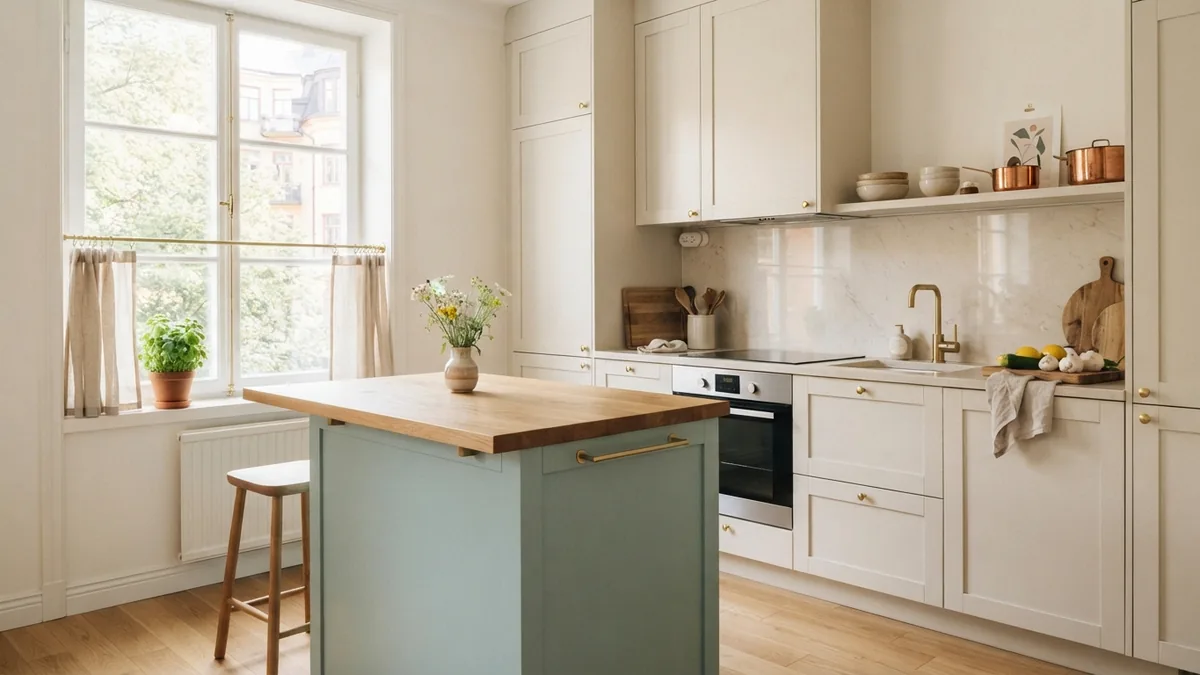
Making a small kitchen feel wider
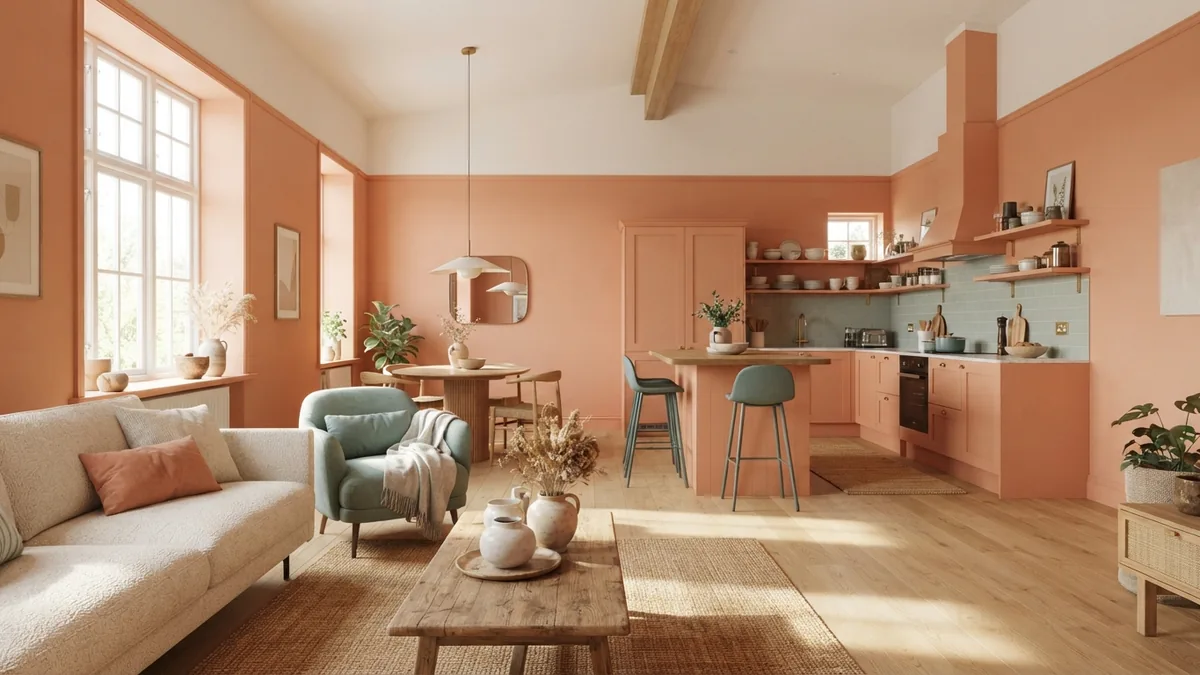
What colors make a kitchen look bigger? Light white, pale gray, soft blue, and light greige are strong choices. They reflect light and help cabinets blend into the room.
For cabinet color, choose a shade with an LRV above 65 when the kitchen feels dark. White or pale gray cabinets can look larger when paired with a light wall. Use a slightly darker island if you want a focal point.
Glossy tile, light counters, and pale floors can support the same effect. Keep the undertones aligned. A warm white cabinet can clash with a blue-white wall.
Choosing the Right Paint Finish
Paint sheen changes how much light a surface reflects. Higher sheen finishes bounce back more light. They can support a spacious feel in dark or busy rooms.
Eggshell or satin often gives walls a gentle glow without strong glare. Satin can suit kitchens, halls, and bathrooms. Flat paint hides wall flaws but reflects less light.
Use semi-gloss on trim, doors, and cabinets when the surface can handle shine. Avoid using high sheen on rough walls. Shine can highlight dents, bumps, and patch marks.
Finish is only one part of the plan. A bright color with poor light may still look dull. Clean windows, reduce heavy curtains, and place mirrors where they can catch daylight.
Before painting, test the full plan together. View the wall color beside the ceiling, trim, floor, and main furniture. The right mix should feel calm, bright, and connected.
Frequently asked questions
- What colors make a room look bigger?
- Soft whites, pale grays, light beiges, and pale blues can make a room look bigger. Choose a shade with an LRV above 65 for strong light reflection.
- Do darker colors make a room look smaller?
- Dark colors can make walls seem closer because they absorb more light. A single dark accent wall can add depth without shrinking the whole room.
- What colors make a room look bigger and brighter?
- Warm white, pale gray, light beige, and soft blue can make a room feel bigger and brighter. The best choice depends on the room’s natural light and undertones.
- What colors make a kitchen look bigger?
- Light white, pale gray, soft blue, and light greige can make a kitchen look bigger. Pair light cabinets with bright walls and a simple, low-contrast palette.
- Does painting the ceiling lighter make a room look taller?
- Yes. A ceiling that is one shade lighter than the walls can draw the eye upward. This creates a gentle sense of added height.
- Does paint sheen affect how large a room feels?
- Yes. Eggshell, satin, and other higher sheen finishes reflect more light. Use them on smooth surfaces because shine can highlight wall flaws.
Related reading
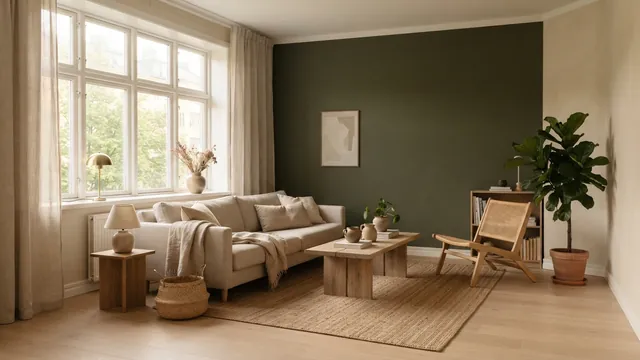
Do Dark Colors Really Make a Room Look Smaller?
Dark colors can add depth, mood, and space when used with care.
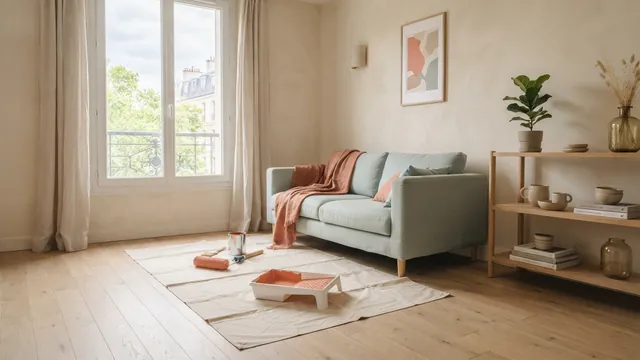
Room Painting Costs — What Shapes Your Quote
Room painting often costs $200–$1,000. See what drives the price and how to compare quotes.
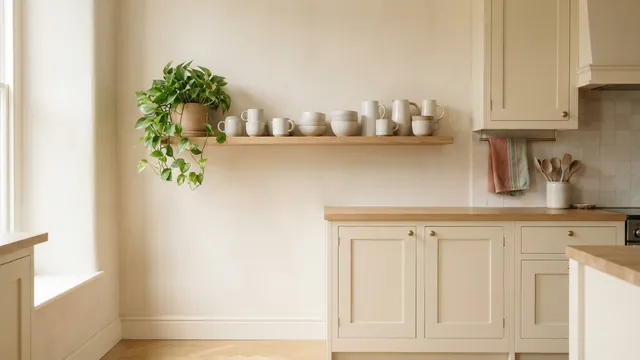
Kitchen Cabinet Tops — Style, Texture and Seasonal Charm
Style cabinet tops with balanced layers, useful texture, and decor that suits your kitchen.