How to Style a Master Bedroom That Feels Calm and Personal
Create a calm bedroom with smart layout, soft layers, and personal style.
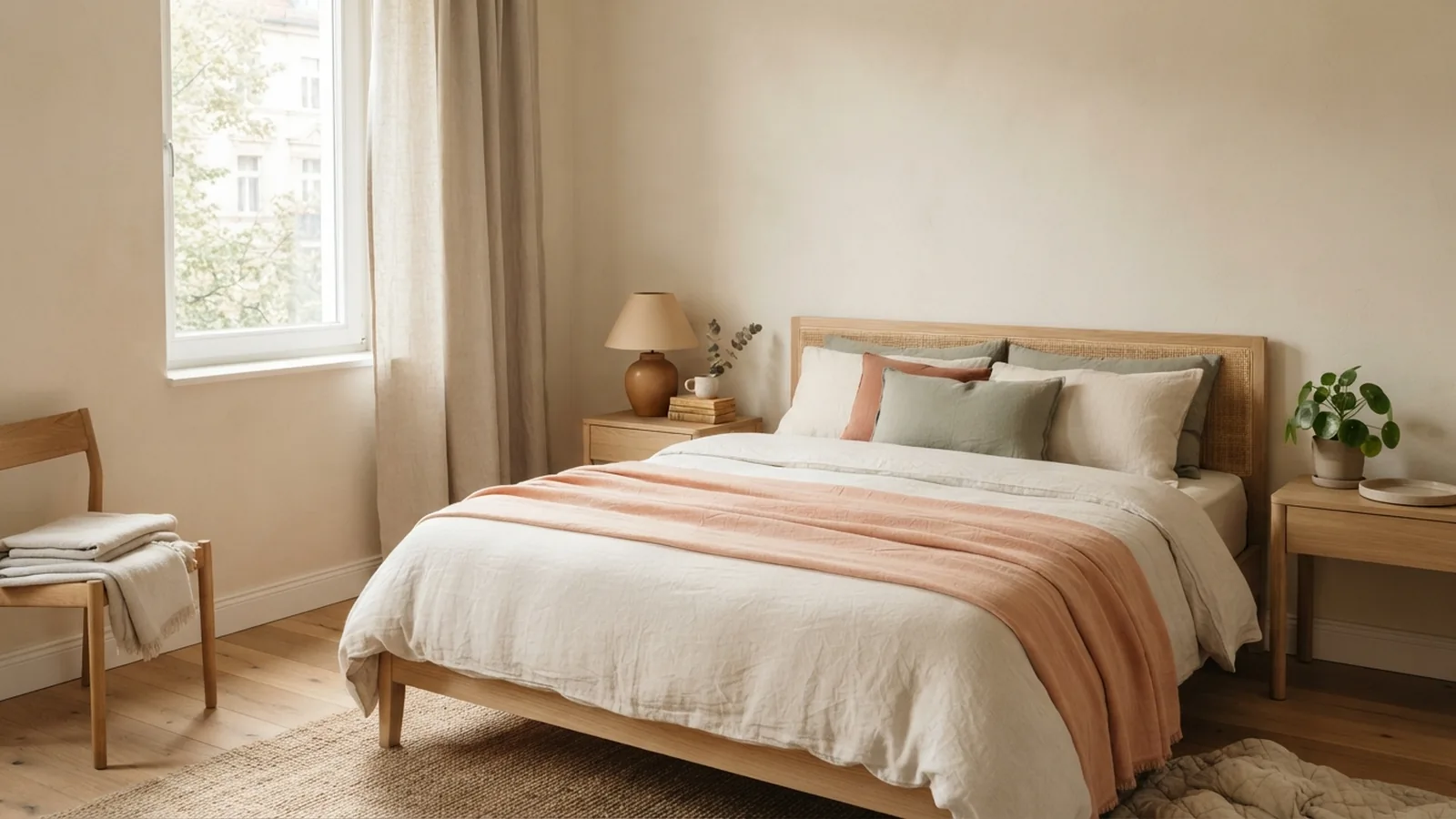
Choose a Calm Color Palette
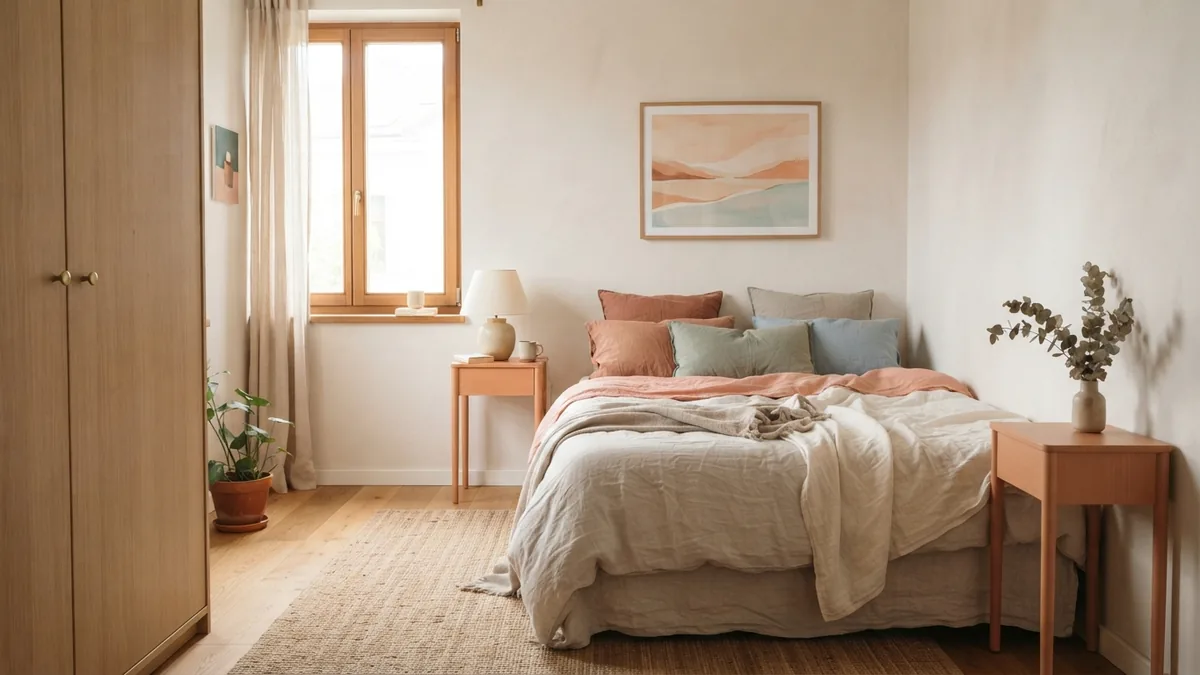
To style a master bedroom well, start with calm colors, a clear layout, and useful storage. Choose one soft base shade for walls and large furniture. Then add two or three gentle accent colors through bedding, art, and small decor.
Warm cream, soft beige, pale sage, and muted peach create a restful feel. Pale colors also reflect light and help a small room look bigger. Keep strong colors below eye level or use them in small doses.
Test paint samples beside the bed and near the window. Daylight can change how each shade looks. Aim for a simple palette with enough contrast to give the room shape.
- Base: warm cream, oat, or soft beige
- Secondary shade: pale sage, clay, or light wood
- Accent shade: muted terracotta or soft coral
Arrange Furniture Around the Bed
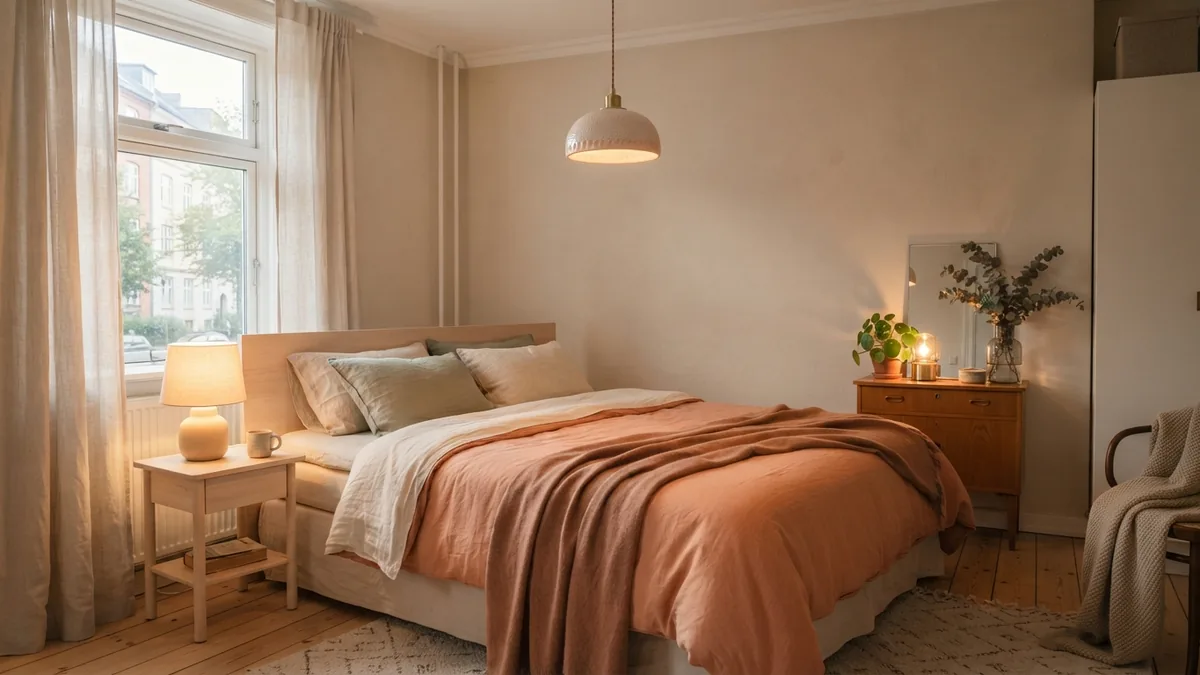
The bed should act as the room’s visual anchor. Place its headboard against the largest clear wall when possible. This choice gives the room a strong focus and makes movement feel natural.
Leave about 60 centimetres beside the bed for easy walking. Keep at least 75 centimetres between the bed and a wardrobe or dresser. These gaps support better bedroom ergonomics and make daily tasks easier.
In a small room, avoid placing large furniture in front of the window. Choose slim bedside tables with drawers instead. Use a narrow bench only when it does not block the main path.
Wondering how to arrange a small master bedroom? Mark the bed footprint with masking tape first. Test each walking route before moving heavy furniture.
- Place the bed on the room’s longest solid wall.
- Set bedside tables within easy reach.
- Keep a clear path from the door to the bed.
- Add storage pieces only after testing the main route.
Layer Fabrics and Natural Materials
Texture adds depth without forcing you to use bold color. Combine linen, cotton, wool, wood, and matte ceramic. Each material should feel different when seen or touched.
Start with crisp cotton sheets and a relaxed linen duvet. Add a woven throw across the lower third of the bed. A low-pile rug can soften footsteps and make the room feel warmer.
Use texture with restraint. Three or four strong materials usually create enough interest. Too many patterns can make a small bedroom feel busy.
| Layer | Useful choice | Result |
|---|---|---|
| Bed | Linen duvet and cotton sheets | Soft, breathable comfort |
| Floor | Wool or woven rug | Warmth underfoot |
| Furniture | Pale oak or matte wood | Natural visual warmth |
Build a Flexible Lighting Plan
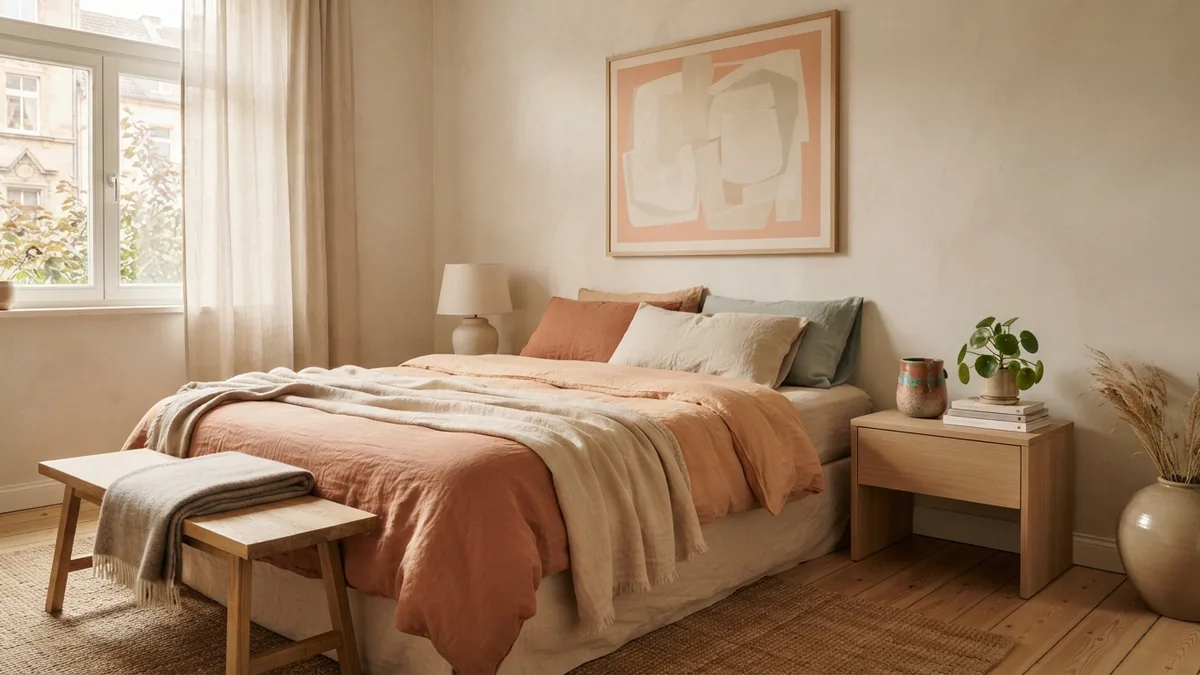
Good lighting uses three layers: ambient, task, and accent light. Ambient light fills the whole room. Task light helps with reading or dressing.
Use a ceiling fixture with a warm bulb for general light. Add bedside lamps or wall lights for reading. Choose separate switches when possible, so each light serves a clear purpose.
Accent lighting can highlight art, a textured wall, or a plant. A small lamp on a dresser adds a soft evening glow. Warm bulbs around 2700 kelvin often suit restful bedrooms.
Keep bedside controls within reach. This small change makes the room more comfortable at night. It also keeps cords away from the main walking path.
Add Decor Without Creating Clutter
Choose accessories that support the room’s mood and your daily life. A ceramic vase, framed art, or small plant can add character. Each item should have a clear place.
Group small objects in threes when they vary in height. Leave some surface space empty around each group. Empty space helps the room feel calm and well planned.
When learning how to decorate a small master bedroom, use fewer larger accents. One wide artwork can replace several small frames. A shallow tray can gather glasses, books, or hand cream.
- Choose one focal artwork above the bed or dresser.
- Keep bedside items limited to daily essentials.
- Use one plant or branch arrangement for a natural note.
- Remove items that do not support comfort or style.
Create Storage That Looks Intentional
Storage should solve a problem without making the room feel crowded. A bed with built-in drawers can hold spare bedding. Decorative bins can hide cables, shoes, or small accessories.
Use vertical space with a tall, narrow wardrobe. Choose doors with a matte finish or pale wood tone. Matching finishes help separate storage pieces feel like one set.
For a small bedroom, measure every storage item before buying it. Allow space for doors, drawers, and walking routes. This step prevents furniture from reducing usable floor space.
How to furnish a small master bedroom depends on what you need to store. Pick a bed with drawers if bedding fills your closet. Choose wall shelves if floor space matters more.
Finish With Personal Details
Personal touches make the bedroom feel like yours rather than a showroom. Display art, ceramics, or objects tied to meaningful places. Keep the collection small enough to preserve visual calm.
Repeat one color or material across the room for style cohesion. For example, echo pale oak in the bed frame, frame, and lamp base. This link makes varied pieces feel planned.
Step back after each change and check the whole room. Remove one item if a surface feels crowded. The best final touch often creates balance rather than adding more.
To make a small master bedroom look bigger, keep sight lines open. Use a mirror across from a window when glare stays mild. Choose furniture with raised legs and keep the floor visible.
Frequently asked questions
- How do you style a master bedroom?
- Start with a calm color palette and place the bed as the focal point. Add layered textures, flexible lighting, useful storage, and a few personal objects.
- How do you arrange a small master bedroom?
- Place the bed on the longest clear wall and protect the main walking route. Use slim bedside tables and measure storage before buying it.
- How do you decorate a small master bedroom?
- Use one strong artwork, soft textiles, and a small group of meaningful objects. Keep surfaces partly empty to protect visual calm.
- How do you furnish a small master bedroom?
- Choose furniture that serves more than one need, such as a bed with drawers. Prefer slim pieces with raised legs and light finishes.
- How can you make a small master bedroom look bigger?
- Use pale colors, open sight lines, raised furniture, and a well-placed mirror. Keep bulky items away from windows and door paths.
Related reading
How to Decorate a Teenage Boy’s Room With Style
Create a stylish teen room with smart storage, personal art, and a calm study zone.
How to Design a Bedroom That Feels Like Your Own
Plan a bedroom that feels calm, useful, and fully your own.
Kitchen Cabinet Tops — Style, Texture and Seasonal Charm
Style cabinet tops with balanced layers, useful texture, and decor that suits your kitchen.