How to Separate Your Kitchen and Living Room (Small-Space Ideas)
Separation ideas for open-concept kitchens—dividers, layout, color, and lighting.
Understanding open-concept spaces
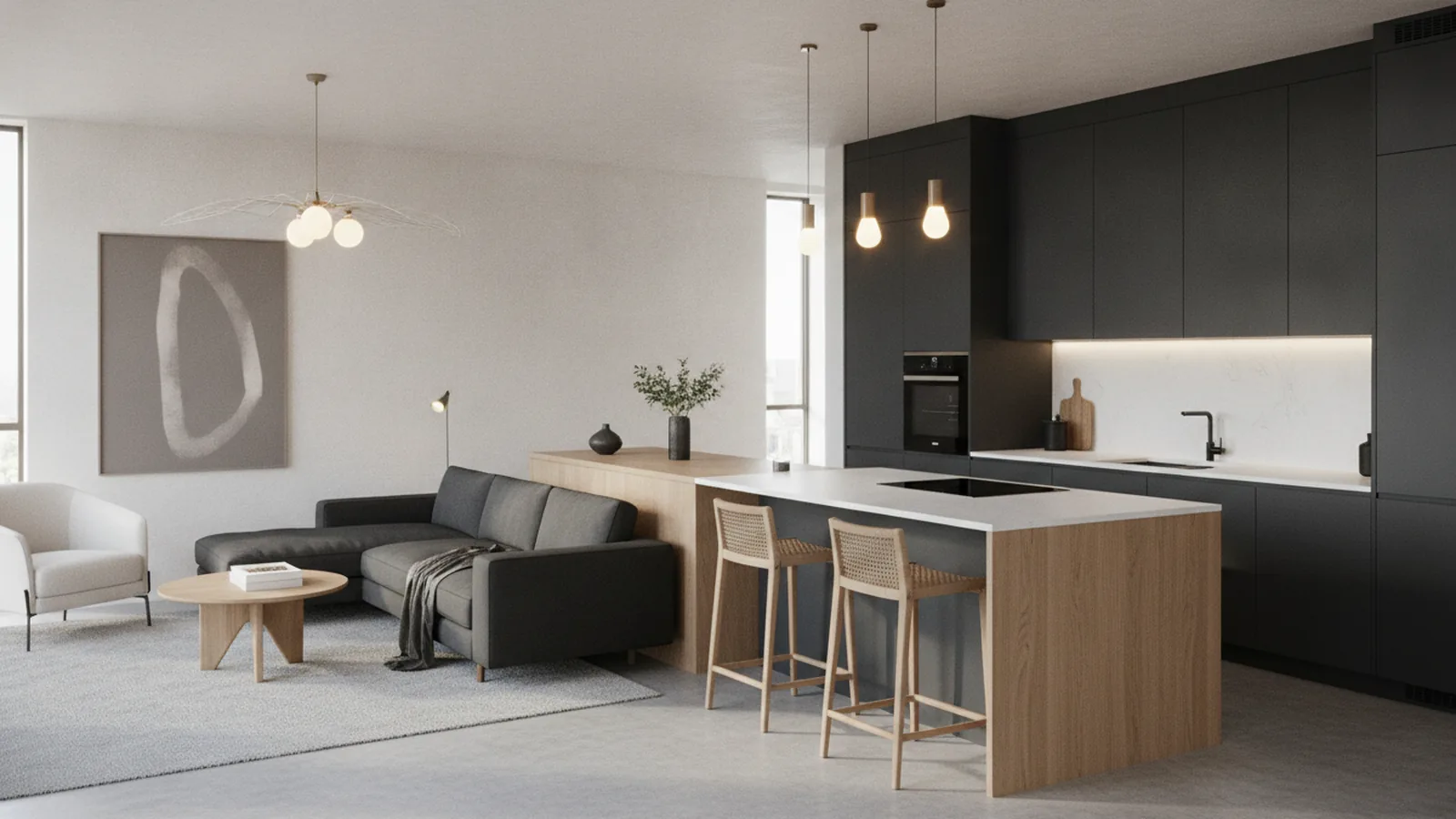
Open-concept design is a layout where the kitchen, dining, and living room share one continuous footprint. Walls are minimized, so sightlines stay long and traffic flows easily. In modern homes, builders often choose this plan because it feels larger and suits today’s social routines.
In practice, an open-concept space still needs structure. Without it, smells and noise travel, clutter shows up sooner, and daily tasks can feel chaotic. The goal of separating areas is not to build a full wall. It is to create clear boundaries that look intentional.
When you start how to separate kitchen and living room, think in layers. You can separate visually first, then separate function with layout and storage. You should also plan for how the boundary holds up during cooking and hosting.
- Visual separation uses dividers, color, and lighting.
- Functional separation uses zones and storage placement.
- Practical separation reduces noise and mess transfer.
Why separate the kitchen and living room?
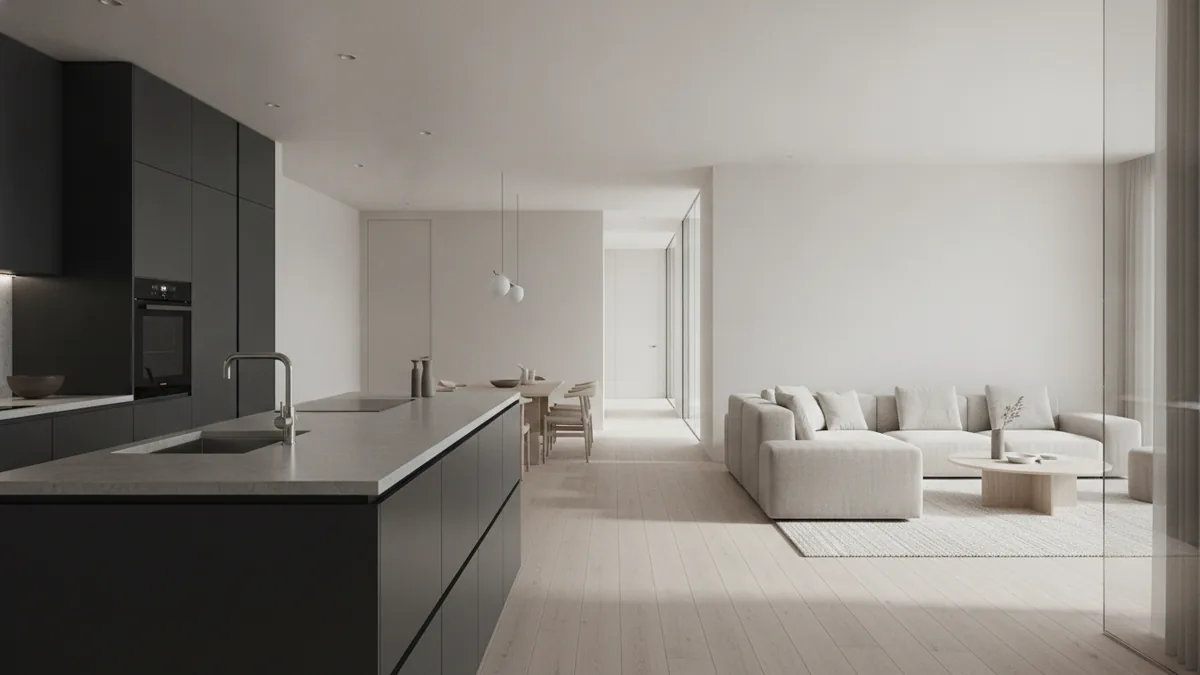
Separating your kitchen from the living room improves daily usability fast. You can cook without making the whole space feel like a work area. It also helps when multiple people use the home at once.
Another win is aesthetic appeal. A clear boundary lets you style each area with its own home decor ideas. The living room can feel calm, while the kitchen can stay crisp and practical.
Separation also helps with routines. When you keep dining and living areas distinct, cleanup feels more contained. In many homes, this is the difference between a tidy-looking day and a constant reset.
If you are asking how to separate kitchen and dining room as part of the same project, start with the same principle. Dining needs a comfortable “gather” feel. Kitchens need good sightlines to prep and storage. A boundary supports both.
| Challenge in open layouts | What separation fixes |
|---|---|
| Noise from cooking | Buffer space and partial barriers |
| Clutter becomes visible | Closed storage near the kitchen edge |
| Mixing vibes | Lighting and color schemes per zone |
| Mess spreads during events | Clear staging area for prep and serve |
Design ideas that create separation without blocking the room
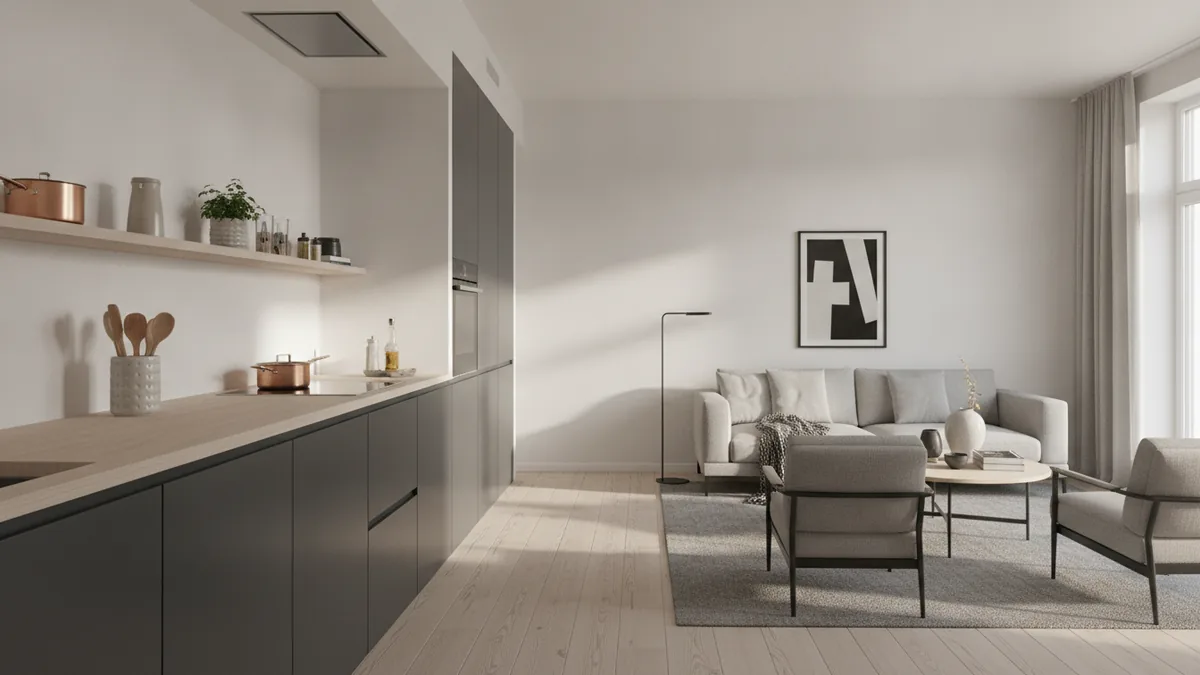
You do not need a full wall to define areas. Creative partitioning keeps the “open” feel while adding structure. Start with a divider style that matches your home’s storage needs and how you want light to move.
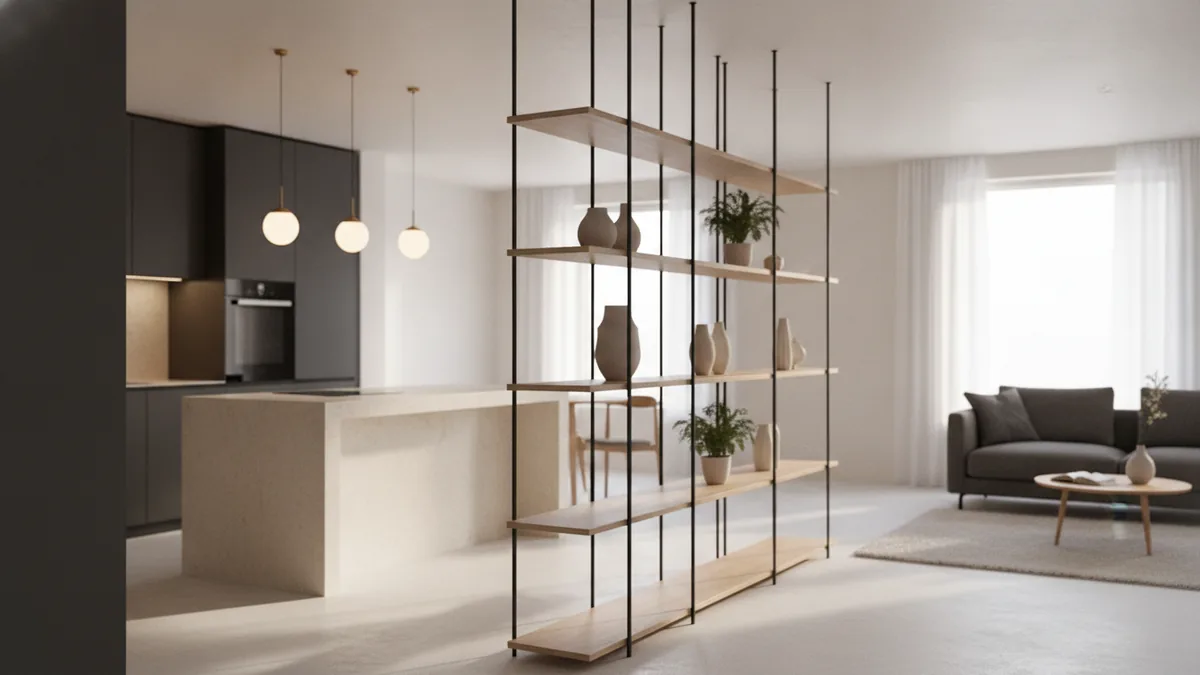
Open shelving is a popular option. It creates a visible boundary and gives you a surface for books, bowls, or cookbooks. Choose shelves with backless sections only if you want maximum airflow. If you prefer a quieter feel, use shelves with a solid backing or add a row of baskets.
Decorative screens add separation while staying lightweight. They work well in both how to separate kitchen from living room and how to separate kitchen from dining room scenarios. Pick a screen with an airy pattern so the space still feels bright.
Half-walls are another option. They can support a bar top, a plant ledge, or a built-in counter. A half-wall reduces mess transfer and still keeps the layout open. Keep the top height consistent so the transition feels deliberate.
- Open shelving divider for light + storage
- Decorative screen for a softer boundary
- Half-wall for stronger containment
- Planter line for a natural edge
Using furniture as dividers with smart room layout
Furniture arrangement can do the job of a room divider. A sofa positioned correctly can mark the start of the living room instantly. A dining table can act as a shared boundary between food prep and hosting.
To separate kitchen and living areas, place your sofa so its back or side faces the kitchen. Keep walking paths clear by leaving a consistent gap. In a small apartment, aim for about 36 inches of walkway space where people pass often. This prevents the boundary from becoming a bottleneck.
If you are focused on how to separate kitchen and dining room, use the table location as your anchor. Put the dining table perpendicular to the kitchen counter line. This makes dining feel like its own “room” while still connecting visually to the kitchen.
Also consider a console table. A long console behind seating can hide small messes and create a visual edge. Use baskets on the console for napkins, placemats, or daily items you need close by.
- Pick one anchor item: sofa, dining table, or console.
- Rotate it to face the kitchen edge, not the wall.
- Use matching rugs to reinforce the boundary.
- Add storage near the kitchen side of the divider.
Color schemes and lighting design for clear boundaries
Color schemes and lighting design often create the most believable separation. You can keep the same flooring and still define areas through tone and brightness. This works especially well in compact layouts where bulky dividers feel crowded.
Use contrasting colors in a controlled way. For example, keep the kitchen walls brighter or more neutral. Then shift the living room into a warmer shade. If you prefer a safer approach, keep wall colors similar and change color through textiles. A living area rug in a deeper tone can make the boundary feel intentional.
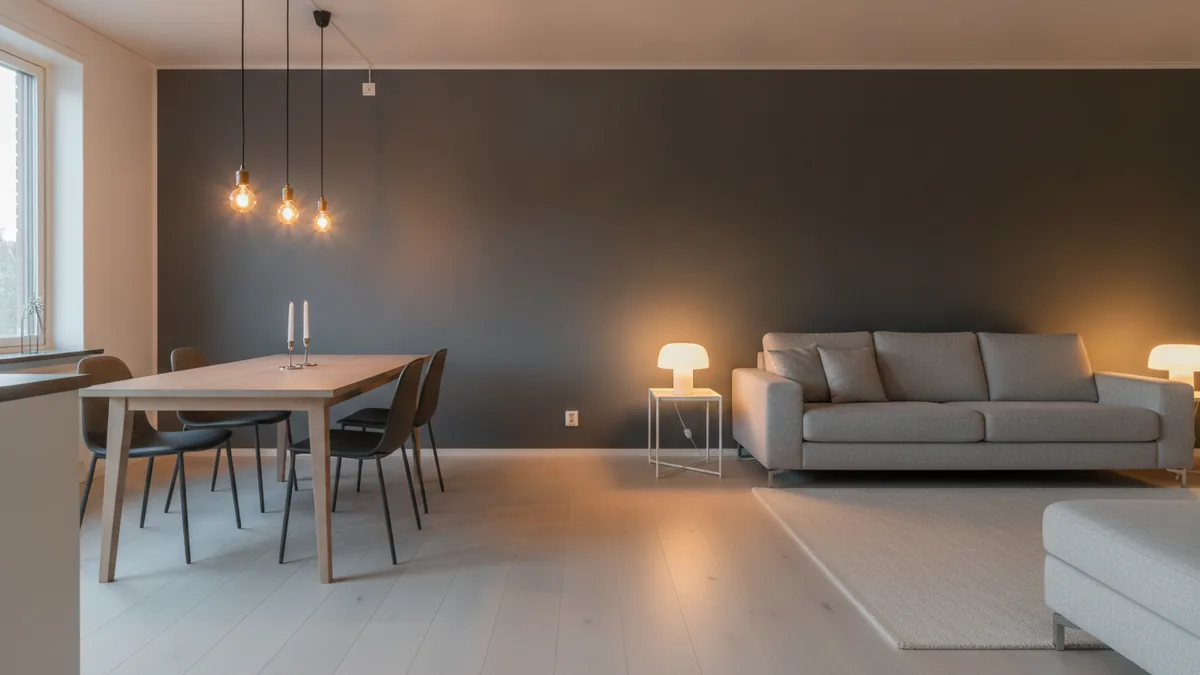
Lighting is where separation becomes functional. Pendant lights above the dining zone make it clear where meals happen. Track lights or recessed lighting can handle the kitchen task zone. In the living room, use lamps or dimmable fixtures to create a softer evening mood.
If your kitchen has an open pass-through or peninsula, add a statement pendant above it. That instantly reads as a dining boundary in one direction. It also prevents the kitchen lighting from feeling harsh in the living room.
- Kitchen: brighter task lighting near counters
- Dining: pendants to mark the table zone
- Living: warm lamps and dimmable lights
- Textiles: rug and curtains to reinforce the edge
Creating functional zones in real daily use
Functional zones make separation easier to maintain. Instead of focusing only on looks, map where actions happen. Cooking has a prep step, a cooking step, and a clean-up step. Dining has prep and serve needs, plus a table “landing” area.
For the kitchen zone, keep a landing surface near the sink and a second surface near the stove. This reduces clutter that drifts into the living zone. If you have a peninsula, assign it to one job, like prep or quick meals. Then keep the living side for serving trays and drinks.
For the living zone, focus on seating and storage. Place a media console or bookshelf so it faces the room you want to use. That console can also hide items that would otherwise clutter your boundary.
In many homes, the best home decor ideas are the simplest. Use matching trays for everyday items. Use a basket for remote controls and chargers. Keep a small “reset” kit near the boundary so guests do not see the mess.
| Zone | What to keep close by | What to move away |
|---|---|---|
| Kitchen | Prep tools, dish soap, towels | Table decor and guest clutter |
| Dining | Plates, glasses, serving pieces | Cleaning sprays and drying racks |
| Living | Coasters, throws, media controls | Cookware and paper bags |
Tips for small apartments without losing the open feel
In a how to separate kitchen and living room in small apartment project, space optimization matters more than any single divider. You want boundaries that fold, slide, or stay lightweight. That way, separation does not steal every inch.
Sliding doors are a strong option if you want a true switch. Use a track system that does not eat floor space. Even a partial door can block cooking smells and reduce noise. If full doors feel too heavy, consider a frosted or translucent panel option.
Transparent dividers can also work in tight spaces. They add a visual line without fully cutting light. Pair them with a rug change or lighting shift so the boundary stays clear. This is useful when your room only has one main sightline.
Another small-space tactic is to use a “mobile boundary.” A tall bar cart or rolling shelf can separate tasks during the day. At night, you can move it back behind a sofa or dining table. Just keep the cart stable and leave clear paths.
- Choose slim dividers to protect walking space
- Use sliding or folding panels for flexible separation
- Lean on rugs and lighting when space is tight
- Keep storage on the kitchen edge of the boundary
Finally, test your separation during the moments that matter. Cook a meal and see where steam and clutter land. Host a friend and watch which items feel “out of place.” Then adjust one element at a time: the divider, the rug shape, or the pendant height.
Quick checklist for keeping each area functional and beautiful
Separation should make life easier, not harder. Before you finalize a divider or furniture plan, check the boundary from every angle you use daily. The kitchen should still feel efficient. The living room should still feel inviting.
Focus on three practical tests. First, look at your view while standing at the stove. Second, check sightlines from the sofa. Third, confirm that the dining table still supports clear serving and cleanup.
When those tests pass, your separation can be both useful and stylish. Your open-concept design can feel intentional instead of accidental. That balance is what makes separation work in real homes.
- Test sightlines from cooking, seating, and dining positions.
- Confirm storage hides daily clutter near the boundary.
- Use lighting to set mood by zone, not by ceiling alone.
- Keep walkways clear for small apartment living.
Frequently asked questions
- What is open-concept design and why does it feel harder to manage?
- Open-concept design keeps kitchen, dining, and living in one shared footprint. It feels open, but tasks and clutter spread faster without boundaries.
- How do I separate my kitchen and living room without building walls?
- Try open shelving, a decorative screen, or a half-wall. Pair the divider with lighting and a rug to make the boundary feel clear.
- What are the best furniture arrangement ideas for separating kitchen and living room?
- Place the sofa so it faces the living zone and turns its back toward the kitchen. Use your dining table as a boundary when you also need a dining separation.
- How can I separate the kitchen from the dining room in an open space?
- Position the dining table to create a clear stop point between zones. Add pendant lighting over the table and keep kitchen storage on the kitchen side.
- How do I separate kitchen and living room in a small apartment while keeping space open?
- Choose slim dividers like transparent panels or use sliding doors for flexible privacy. Use rugs and lighting changes to reinforce zones without taking floor space.
- What role do color schemes and lighting design play in separation?
- Color and lighting make boundaries believable. Use brighter task lighting for cooking, pendants for dining, and warm lamps for living.
Related reading
Couch Placement—Flow, Focus and Comfort
Place your couch to frame a focal point, keep paths clear, and make the room feel balanced.
Master Bedroom — Color, Comfort and Personal Style
Build a calm, personal bedroom with smart choices and a budget that works.
Room Painting Labor Costs — Rates and Budget Factors
See typical room-painting labor rates and learn what drives the final price.