How to Decorate a Room With Slanted Ceilings for More Space
Color, lighting, smart furniture, and storage ideas for slanted ceilings.
Understanding Slanted Ceilings
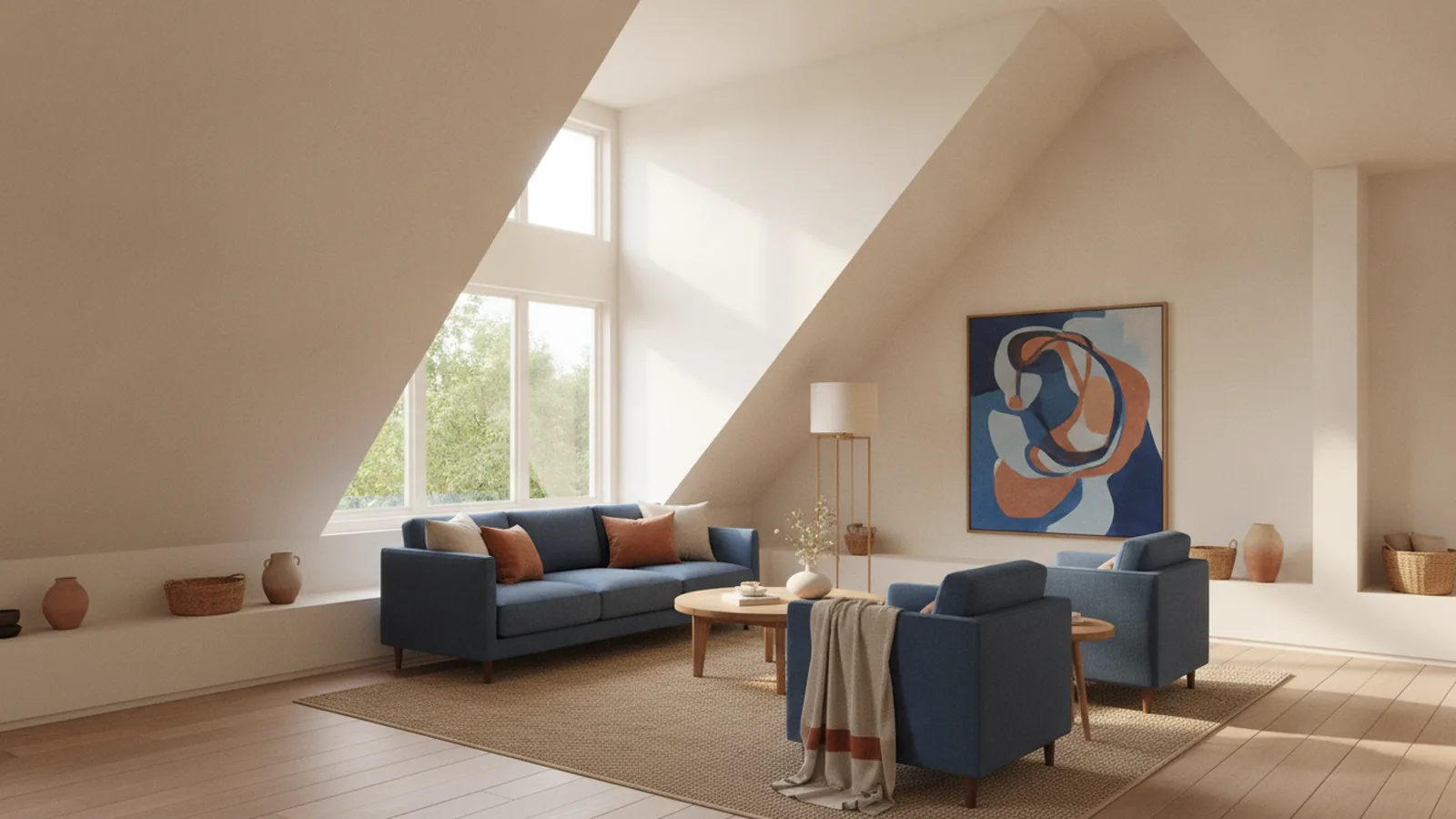
How to decorate a room with slanted ceilings starts with treating the slope as a design feature. The ceiling shape already guides how the eye moves and where the room feels “tight” or “open.” With a few layout and styling choices, you can turn that constraint into room aesthetics you actually love.
Slanted ceilings create two main challenges. First, they reduce headroom in some zones. Second, they can cast stronger shadows because light hits angled surfaces differently. Good planning helps both issues.
In practice, you’ll work in “zones.” Use the tall side for tasks and seating. Use the lower side for storage, built-ins, or softer visual elements like curtains and shelves. This space optimization approach keeps flow natural.
- High side: seating, desk, dining, reading
- Low side: storage, beds, benches, decor walls
- Focal side: paint and lighting emphasis
Using Color to Enhance Space
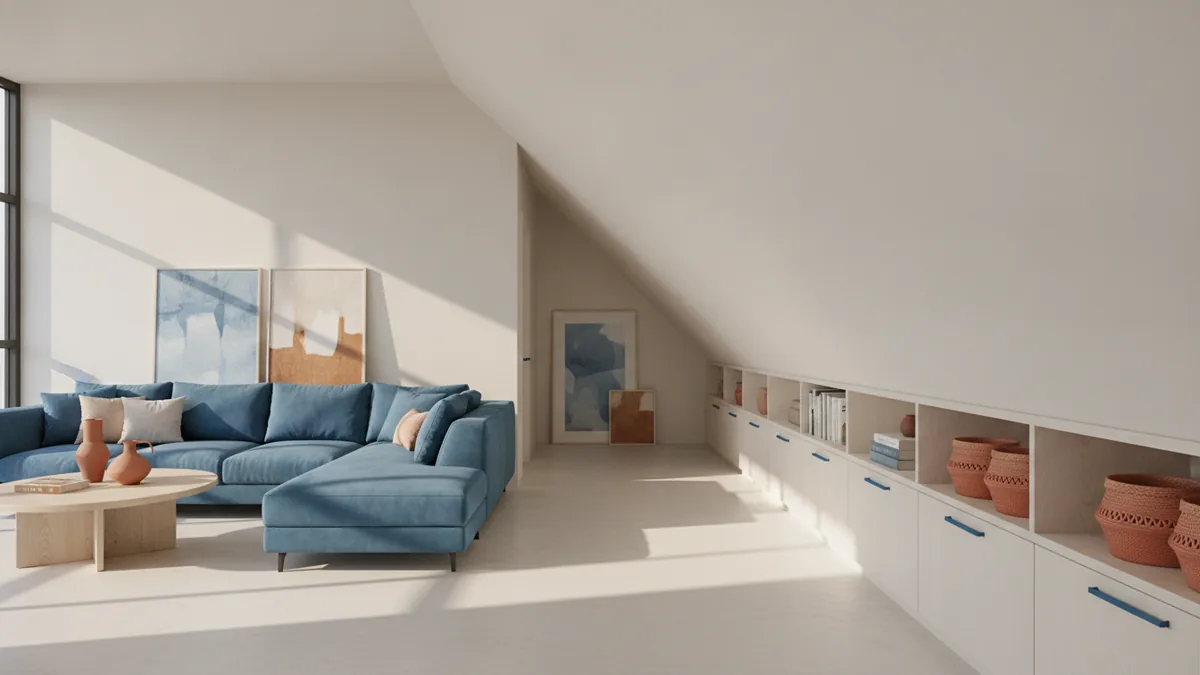
Light colors can make a room with slanted ceilings appear larger and more open. This is mostly a color theory effect. When surfaces reflect more light, the room loses some of its “visual weight,” even if the low area remains physically low.
Start by thinking in three paint zones: ceiling plane(s), upper wall band, and main wall color. Many rooms feel best with a ceiling that is the same color family as the walls, just a step lighter. That keeps the slope from looking like a hard boundary.
If you want more contrast, add it on vertical features, not on the slope itself. For example, paint the slanted ceilings a warm off-white, then add a slightly deeper tone on one accent wall near the room’s tallest point. This creates depth without making the ceiling feel closer.
- Choose a ceiling finish that is more reflective, like an eggshell or satin.
- Test swatches on both the high and low parts of the wall.
- Use warm whites in rooms with limited daylight.
If you’re doing how to paint a room with slanted ceilings, plan for prep and coverage. Caulk edges where the slope meets trim so shadows do not “leak” under paint. Use angled tools or a small roller sleeve for the tight spots, especially where the ceiling line changes direction.
For a bedroom, soft neutrals help the low ceiling feel calmer instead of oppressive. For a how to decorate a bonus room, you can push bolder color on the walls because the ceiling impact matters less when you use built-ins along the low side.
Lighting Techniques for Slanted Ceilings
Strategically placed lighting minimizes shadows and highlights the room’s unique features. Slanted ceilings create more angled shadow lines, especially in corners. You can beat that by layering light instead of relying on a single overhead fixture.
Begin with ambient light that spreads. Then add task light where people look and work. Finish with accent light that follows the ceiling geometry, so the slope reads as intentional design.
Try these lighting design moves. Place wall sconces on the tall side to bounce light off vertical surfaces. Use a track or mini spot system aimed slightly upward to wash the ceiling plane. Add a floor lamp near seating to fill the low-side shadows.
- Layer 1: ceiling or cove lighting for broad coverage.
- Layer 2: task lighting with warm dimmable bulbs.
- Layer 3: accent lighting on shelves, art, or trim.
When you choose color temperature, keep it consistent across fixtures. Use around 2700K for a cozy bedroom feel. Use closer to 3000K for bonus spaces where you want crisp visibility.
If the room has recessed windows, aim lighting so it complements the daylight angle. In many attics and lofts, the slope makes the “wrong” overhead light shine directly into faces. Raise and diffuse fixtures where possible to keep glare down.
Furniture Choices and Layout
Choosing flat, minimalist furniture helps maintain an airy feel in small spaces. Slanted ceilings already take up visual space. Bulky silhouettes make that effect worse, so furniture selection matters as much as wall color.
Start with low-profile pieces and clean lines. Think armless chairs, narrow consoles, and beds with simple frames. Rounded forms can also work, but they should stay visually light with thin legs.
Use the high side as your “social” side. Put the sofa, desk, or dining surface where people naturally stand and walk. Place taller furniture along the slope’s tall edge so the low area stays open for storage and movement.
- Prefer furniture with legs to keep floors visually clear.
- Choose multi-width planning so you do not block door paths.
- Keep backrests and headboards lower on the low ceiling side.
If you’re learning how to style a room with slanted ceilings, choose one main seating or work anchor. Then build outward with smaller pieces. This prevents a scattered look where the slope already creates multiple visual angles.
For how to decorate a bedroom with slanted ceilings, consider aligning the bed so the headboard sits on the taller side. Add bedside tables that match the bed height, and use soft textiles to break up straight lines.
Storage Solutions for Slanted Ceilings
Custom shelving can effectively utilize the vertical space offered by slanted ceilings. The key is using the low side for depth and the high side for reach. Storage that follows the slope makes the room feel planned, not squeezed.
For many bonus spaces, you can hide clutter where headroom drops. Build drawers under benches. Add open cubbies on the tall side for items you grab often. Closed cabinets on the low side keep the room tidy because fewer things sit at eye level.
When you pick storage solutions, measure for “clearance zones.” Mark the height where you comfortably stand. Then design shelves above that line for display and below it for bins and pull-outs.
- Use built-ins along the low wall to reduce wasted space.
- Choose slim storage to avoid blocking traffic paths.
- Add drawer fronts in matching finishes for a clean look.
Multi-functional furniture can maximize space efficiency. Look for storage benches, lift-top coffee tables, or desks that fold or slide. In a how to decorate a bonus room scenario, a daybed with drawers can cover both lounging and guest needs.
For a bedroom, a bed frame with drawers plus a narrow dresser at the tall side often covers most needs. Then add one wall-mounted shelf system so you do not overload the floor.
Decorative Elements and Accessories
Decorative accessories should guide the eye upward and across, not down into the “low” zones. Wall art placement is a simple win. Hang art on the vertical sections near the tall side, and keep framed pieces slightly higher than you would in a flat-ceiling room.
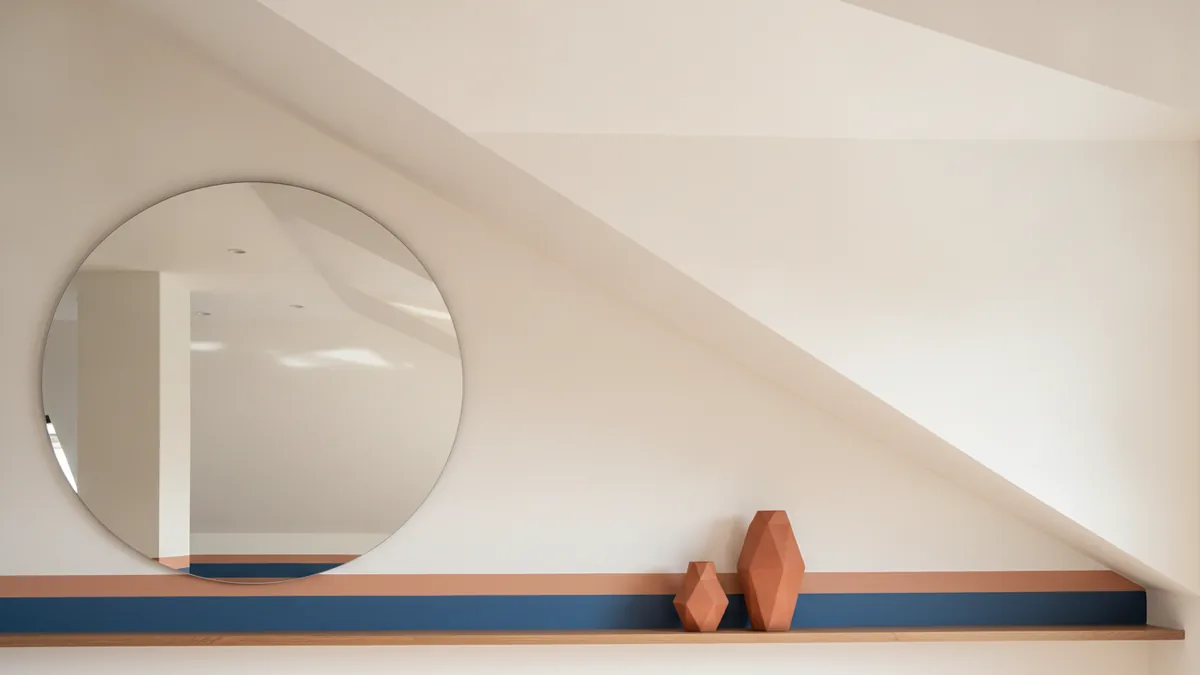
Mirrors can create an illusion of depth and spaciousness. Place a mirror on a wall that faces natural light. It will bounce daylight and make the room feel broader, even with a slanted ceiling creating height changes.
Choose mirror shapes that match your room’s mood. Round mirrors soften angles. Rectangle mirrors add structure and can visually lengthen a narrow bonus room. Just avoid placing mirrors directly under the lowest ceiling point, where they can amplify the cramped feeling.
- Use a large mirror to expand sightlines.
- Pick art frames with slim edges for a lighter look.
- Use textiles that add softness, like layered curtains.
If the room has one strong wall, make it the focal wall. Paint it slightly deeper, then add one oversized piece of art and one coordinated light source. This “holds” the room design so the ceiling slope feels like part of the story.
For how to decorate a bonus room with slanted ceilings, consider functional decor. Book ledges, framed maps, and display rails can all sit on shelving built for the slope. They look intentional because they live inside the storage plan.
Practical Tips for Styling Rooms
Putting it all together is less about rules and more about consistent priorities. Start with a floor plan that respects the low and high zones. Then choose a paint strategy that smooths transitions. Finally, layer lighting so shadows do not carve harsh lines across the slope.
When you need a fast styling check, do this. Stand where you usually enter the room. Look up at the first ceiling section you see. Then adjust one thing that affects that view, like brightness, mirror placement, or how high the furniture sits.
Keep these small tactics in your toolkit. Use curtains that reach near the ceiling line on the tall side. Hang blinds or shades higher than the window frame to elongate the room. Add a runner or rug pattern that guides movement, especially in long bonus layouts.
- Pick one ceiling-friendly color family to avoid harsh boundaries.
- Use mirrors to bounce light from the best window.
- Keep furniture low and airy to protect the room’s openness.
- Build storage into the slope instead of fighting it.
If your goal is how to style a room with slanted ceilings for real daily comfort, focus on paths and reach. Make sure the low side has seating or storage that fits the headroom. Keep your everyday items within easy reach on the tall side.
With these steps, slanted ceilings stop being a problem you work around. They become a shape that supports your room aesthetics and your space optimization goals.
Frequently asked questions
- How do I decorate a room with slanted ceilings without making it feel smaller?
- Start with light wall and ceiling tones. Use low-profile furniture and keep the tall side for seating or work.
- How to style a room with slanted ceilings using color and paint?
- Pick a ceiling-friendly color family and keep the transition from walls to ceiling gentle. Test swatches on both the high and low parts before committing.
- How to paint a room with slanted ceilings like an attic or loft?
- Prep edges and trim carefully to avoid shadow lines. Use rollers suited for angled surfaces and consider a sheen like eggshell or satin for better light bounce.
- What are the best storage solutions for slanted ceilings?
- Build shelves and cabinets into the slope, especially along the low side. Use pull-outs, drawers, and benches to keep items hidden and reachable.
- How to decorate a bedroom with slanted ceilings for comfort?
- Place the bed headboard toward the taller ceiling side. Use soft bedding and warm lighting, then add mirrors or wall art on vertical areas.
- How to decorate a bonus room with slanted ceilings so it feels functional?
- Use the ceiling zones for activities: seating and desk on the tall side, storage on the low side. Add multi-functional pieces like benches with drawers and built-in shelving.
Related reading
How to Make a Small Bedroom Look Bigger (Space, Light, Storage)
Make your small bedroom feel bigger with layout, mirrors, light, and storage ideas.
Couch Placement — Comfort, Flow, and Style
Arrange couches for easy movement, good conversation, and a balanced room.
Small Kitchen Design — Light, Space and Smart Storage
Use light, smart storage, and slim furnishings to make a small kitchen feel more open.