Paint a Small Room So It Reads Bigger Than It Is
Use paint, light, mirrors, and smart layout choices to make small rooms feel open.
Start With Colors That Open Up the Room
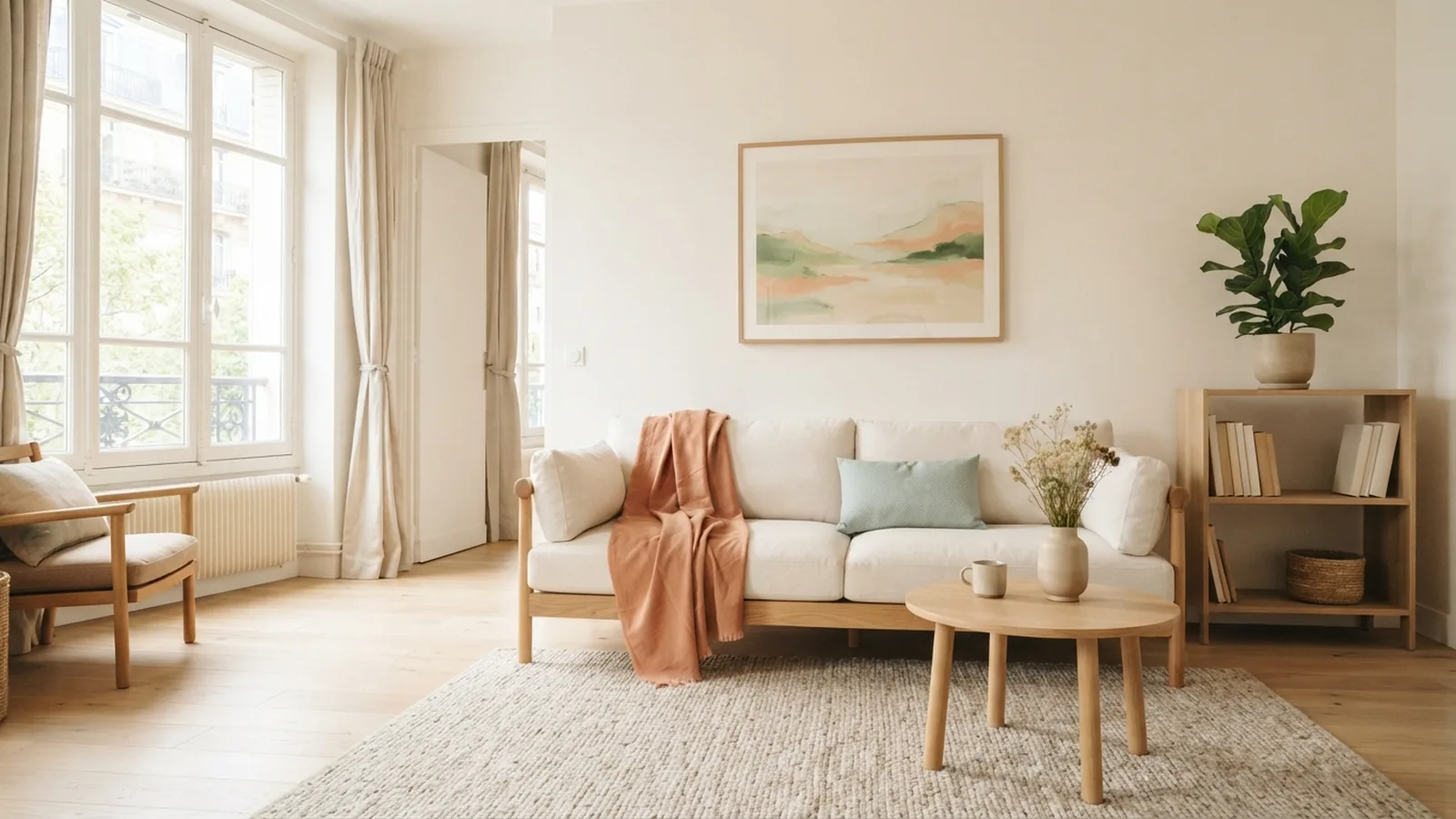
To learn how to paint a room to look bigger, start with light, warm colors. Whites, soft grays, and pale beiges reflect more light than deep shades. They make walls feel less closed in.
Choose a wall color that works with your daylight. A warm white suits rooms with cool northern light. A pale beige can soften a room with strong afternoon sun.
Color also changes how far walls seem to sit. Dark paint absorbs more light and can make walls feel closer. Light paint sends light back into the room.
Many paint brands list light reflective value, or LRV. This scale shows how much light a color reflects. A color with an LRV near 70 feels much brighter than one near 30.
Stay within one color family for the walls, trim, and nearby rooms. This visual continuity helps the eye move without a hard stop. The space then feels longer and more joined up.
- Use warm white for a bright, clean base.
- Try pale beige when you want more warmth.
- Pick a soft gray for a calm, modern room.
- Test large paint samples beside each window.
Use Paint Lines to Change the Room’s Shape
Paint can change the way a room’s length and height feel. The key is to place each line with a clear goal.
Horizontal stripes can make a narrow room seem longer. Use two close shades for a quiet effect. Keep the bands broad, even, and low in contrast.
Vertical stripes draw the eye upward. They can make a low ceiling seem taller. Use thin stripes on one wall instead of every wall.
Do not mix strong stripes with busy furniture. The room needs calm areas around the painted feature. That balance keeps the design from feeling tight.
Painting the ceiling a lighter shade than the walls also adds height. Soft white works well above pale beige or light gray walls. The lighter plane draws the eye up.
- Mark each stripe with a level and low-tack tape.
- Paint the lighter shade first and let it dry.
- Seal the tape edge with the base color.
- Add the darker stripe, then remove tape while wet.
Make Light Work Harder
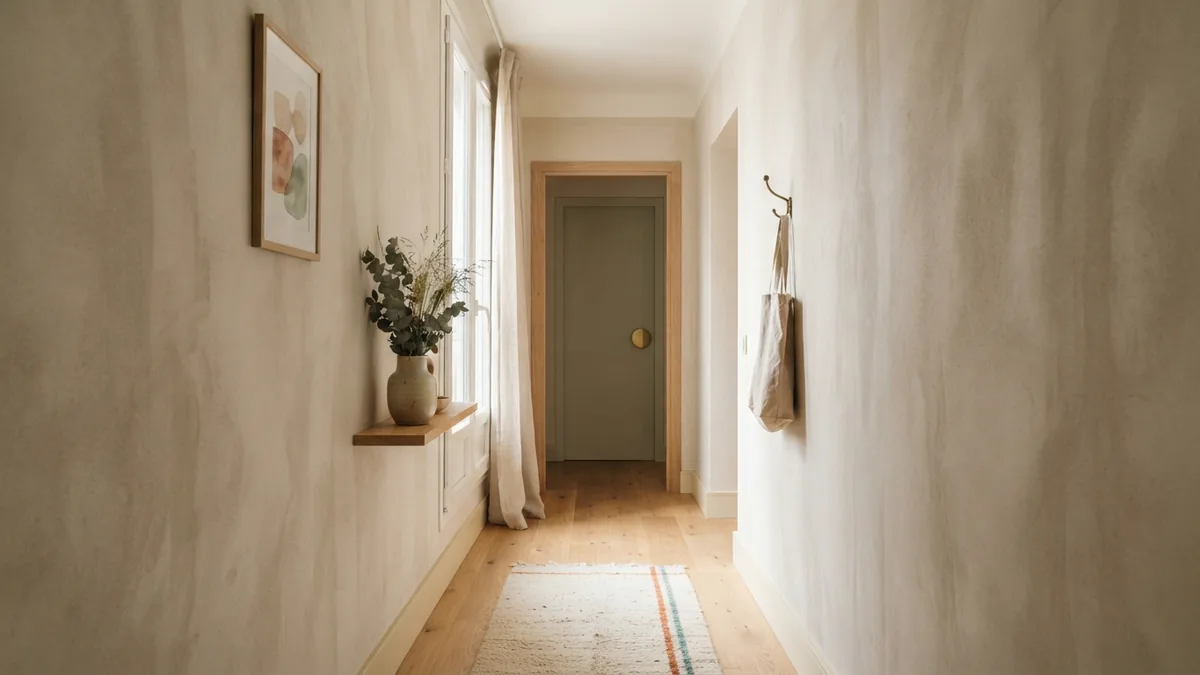
Natural light plays a major role in room size. Sunlight brightens walls and softens dark corners. It also helps pale paint show its full effect.
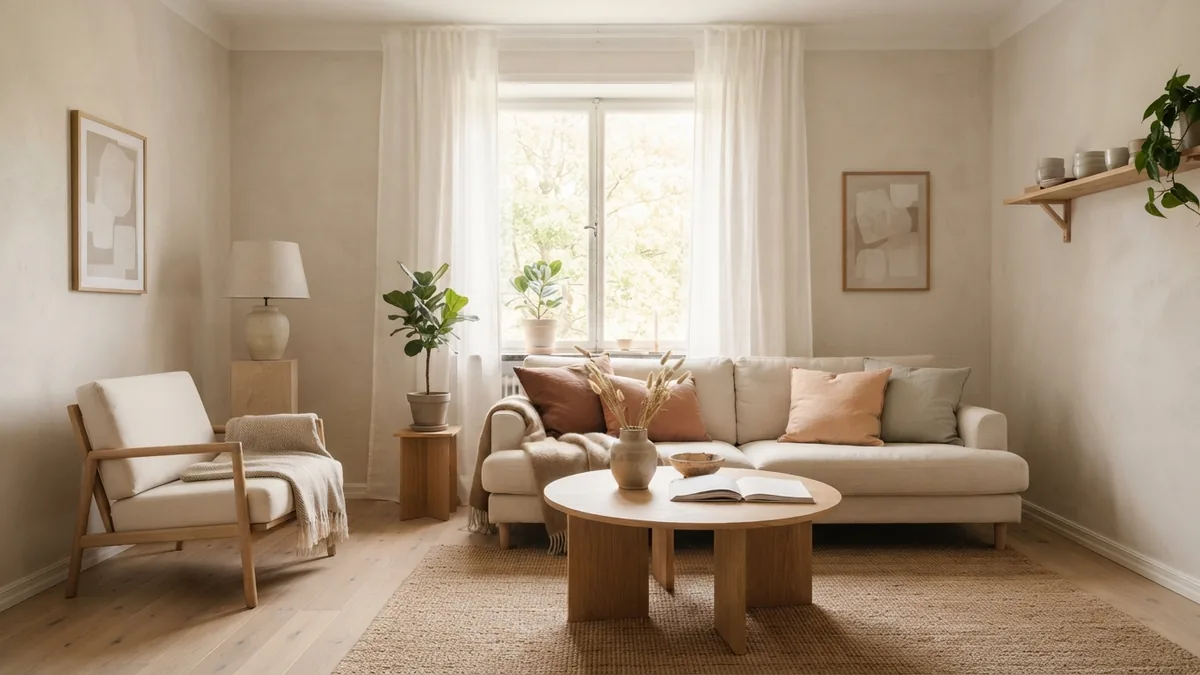
Keep windows as clear as your privacy needs allow. Heavy curtains can block light and add visual weight. Choose linen panels, woven shades, or simple blinds instead.
Hang curtains near the ceiling when possible. Let them fall beyond the window frame. This makes the window feel taller and wider.
Use a high-sheen finish where the surface can handle it. Satin or eggshell paint can bounce light across a wall. Avoid very glossy paint on uneven walls.
Glossy finishes show dents and wall flaws more clearly. A satin finish often gives the best mix of light bounce and easy care. Use matte paint on the ceiling if glare feels harsh.
Watch the room at three times during the day. Morning, noon, and evening light can change the color. This simple test prevents a costly repaint.
The U.S. Department of Energy’s daylighting guide also supports clear window planning. Good daylight can reduce the need for electric light during the day.
Add Mirrors Where They Can Reflect Light
Mirrors can create depth without taking floor space. They reflect light, color, and the room’s strongest view. Their effect works best when you plan the angle.
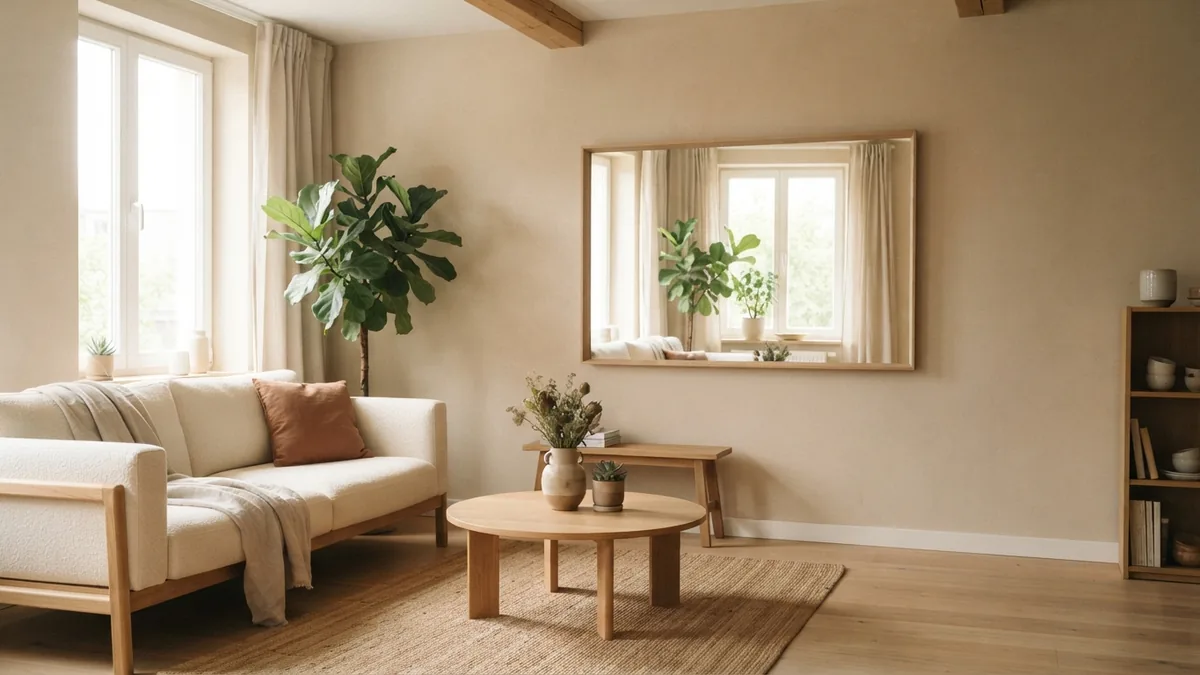
Place a large mirror opposite a window when the view feels pleasant. It will reflect daylight into the room. It can also make one wall seem to continue farther.
A mirror beside a window can spread light across a dark side wall. This works well in small living rooms and narrow hallways. Choose one wide mirror instead of many small pieces.
Keep the frame simple and close to the wall. Pale oak, brushed metal, or a soft painted frame suits an airy scheme. Avoid oversized ornate frames in a small room.
Check what the mirror reflects before you hang it. A view of clutter doubles the sense of clutter. Aim it toward a window, plant, or open wall.
- Use one large mirror on a main wall.
- Place it opposite or beside a window.
- Reflect an open view, not a crowded shelf.
- Keep the frame light and visually simple.
Leave Breathing Room Around Furniture
Furniture placement can support your paint plan or defeat it. Crowded pieces hide the walls and block sight lines. Open gaps help the room feel larger.
Leave a small gap between large furniture and the wall. Even 5 to 10 centimeters can create a lighter edge. This gap lets the wall color remain visible.
Choose low-profile furniture when the ceiling feels low. A lower sofa or cabinet leaves more wall above it. That open space adds to the sense of height.
Keep a clear path through the room. Aim for about 75 centimeters in the main walkway. Remove side tables that force people to turn sideways.
Place the largest item first, then add only what serves the room. Face seating toward a window or open area. Avoid pushing every piece against one wall.
Multifunctional furniture can save space in a small living room. Try an ottoman with storage or a slim nesting table. Each piece should earn its floor area.
| Room issue | Useful choice | Why it helps |
|---|---|---|
| Low ceiling | Low furniture and pale ceiling | Leaves more visual space above |
| Narrow path | Shallow furniture | Protects walking space |
| Dark corner | Open shelf or floor lamp | Reduces heavy, closed shapes |
Keep Decor Calm and Well Spaced
Decor can make a room feel full even when furniture is sparse. Too many small objects break up the wall and floor lines. A few larger choices often look more open.
Group small items on a tray instead of spreading them across every surface. The tray creates one clear display zone. Leave the rest of the table open.
Use one large artwork rather than a crowded gallery wall. Pick a quiet pattern with pale ground colors. Keep its outer edge aligned with nearby furniture.
Plants can add life without adding much visual weight. Choose one tall, narrow plant for an empty corner. Keep its pot close to the room’s main color.
Limit open shelving in a very small room. Every visible object adds another shape for the eye to process. Closed storage keeps the wall and paint scheme clear.
Reduce Clutter for a More Open Feel
Decluttering is the final step in making paint work harder. Clear surfaces reveal more wall, floor, and light. Those open areas make the room feel bigger.
Start with the floor, then move to tables and shelves. Remove items you do not use each week. Store useful items close to where you use them.
Use baskets, drawers, and lidded boxes for loose objects. Choose storage in pale oak, warm cream, or soft beige. Matching tones keep storage from becoming a new focal point.
Keep one empty zone in each room. This might be a clear corner, a bare table, or open floor beside seating. Empty space gives the eye a place to rest.
If you want to know how to paint a small living room to look bigger, pair pale walls with this edit. Then add one mirror and clear window treatments. These changes work together better than paint alone.
A Simple Weekend Plan
- Remove clutter and measure the main walking path.
- Test three light paint colors near the windows.
- Paint the ceiling one shade lighter than the walls.
- Use satin on sound walls and matte above.
- Rehang curtains high and keep windows clear.
- Add one mirror opposite the brightest window.
- Return only furniture and decor that serve the room.
Paint cannot change a room’s measurements. It can change how those measurements feel. Use light colors, clear lines, open gaps, and fewer objects for the strongest result.
Frequently asked questions
- What paint color makes a room look bigger?
- Warm white, pale beige, and soft gray can make a room feel larger. Choose the shade that reflects your room’s natural light best.
- Should the ceiling be lighter than the walls?
- Yes. A lighter ceiling draws the eye upward and can make the room feel taller.
- Do horizontal or vertical stripes make a room look bigger?
- Horizontal stripes can make a narrow room seem longer. Vertical stripes can make a low ceiling seem taller.
- Where should I place a mirror in a small room?
- Place a large mirror opposite or beside a window. Aim it toward an open view instead of clutter.
- What furniture helps a small living room feel bigger?
- Low-profile furniture, shallow tables, and open walking paths help. Leave a small gap between large pieces and the walls.
- Does glossy paint make a room look larger?
- Satin or eggshell paint can bounce light and add space. Use it only on smooth walls because gloss shows flaws.
Related reading
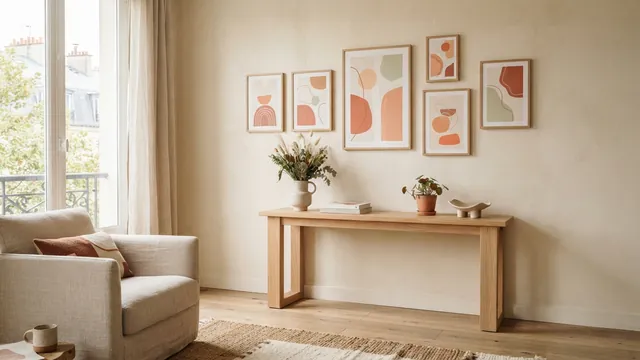
Long Walls — Ideas That Add Balance and Character
Make a long wall feel balanced with color, art, shelves, and warm light.
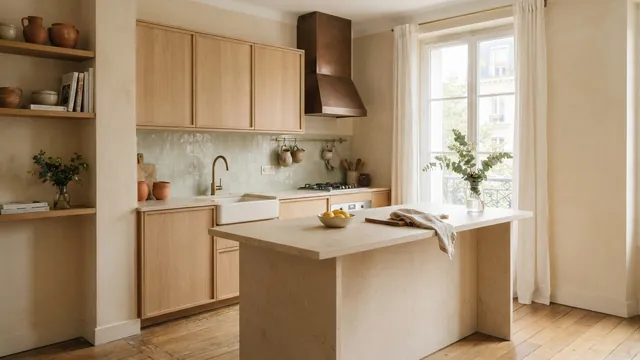
Modern Kitchen Design: Form and Function
Plan a modern kitchen that balances clean style with everyday ease.
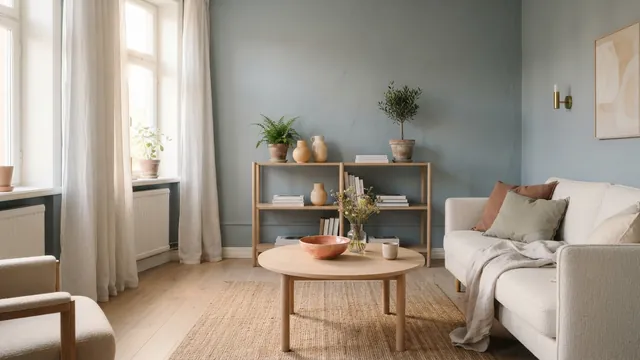
Curtains for a Blue Room — Color, Texture and Scale
Pair blue walls with curtains that suit your light, style, and room size.