How to Clean and Polish Wooden Furniture at Home
Clean, polish, and protect wooden furniture with safe home care steps.
Know Your Wood Before You Start
The best way to clean wooden furniture at home is to dust it first. Then use a damp, soft cloth and a gentle wood cleaner. Finish with a dry cloth. Test every cleaner on a hidden spot before treating the full piece.
Wood furniture types need different care. Sealed wood has a clear coat that blocks most moisture. Unsealed wood absorbs water and may stain. Waxed wood needs light cleaning, while oiled wood needs fresh oil from time to time.
Veneer has a thin wood layer over a firm base. Too much water can loosen its edges. Painted wood also needs care, since harsh cleaners may dull the paint. Antique furniture may have a fragile finish, so skip strong home remedies.
- Sealed wood: Use a damp cloth and mild wood soap.
- Unsealed wood: Use very little liquid and dry it at once.
- Waxed wood: Dust often and wax only when the finish looks dry.
- Oiled wood: Clean gently, then apply a matching wood oil.
- Veneer: Keep water away from seams and lifted edges.
Gather Simple, Safe Cleaning Supplies
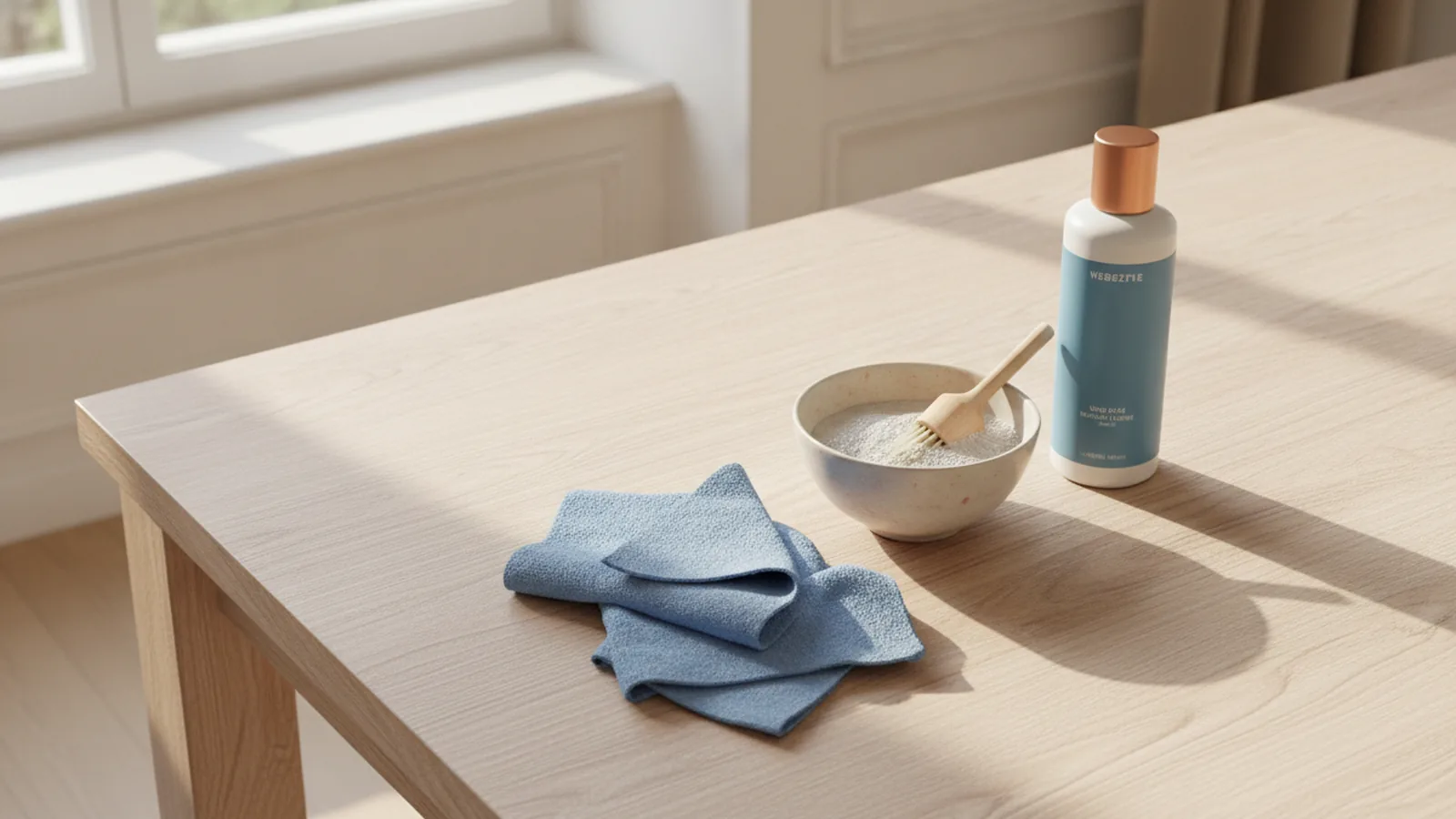
You do not need a large kit to clean wooden furniture. Keep your tools soft, clean, and free from grit. A dirty cloth can drag sand across the finish and leave fine marks.
Choose a cleaner made for wood. Avoid bleach, strong sprays, and rough scrub pads. These products can strip oil, cloud a finish, or leave pale marks.
- Two or three clean microfiber cloths
- A soft brush for carvings and tight gaps
- A vacuum with a brush attachment
- A bowl of warm water
- Mild soap or a wood-safe cleaner
- A dry cotton cloth for the final buff
- Wood polish that matches the finish
For an eco-friendly cleaning solution, mix one cup of water with one teaspoon of mild soap. You can also mix one cup of vinegar with three cups of water for sealed wood. Use this mix rarely, and never leave it sitting on the surface.
Follow a Careful Cleaning Process
Start by removing objects from the furniture. Check the surface for loose grit, crumbs, and sand. Dusting before deep cleaning keeps dirt from turning into wet grit.
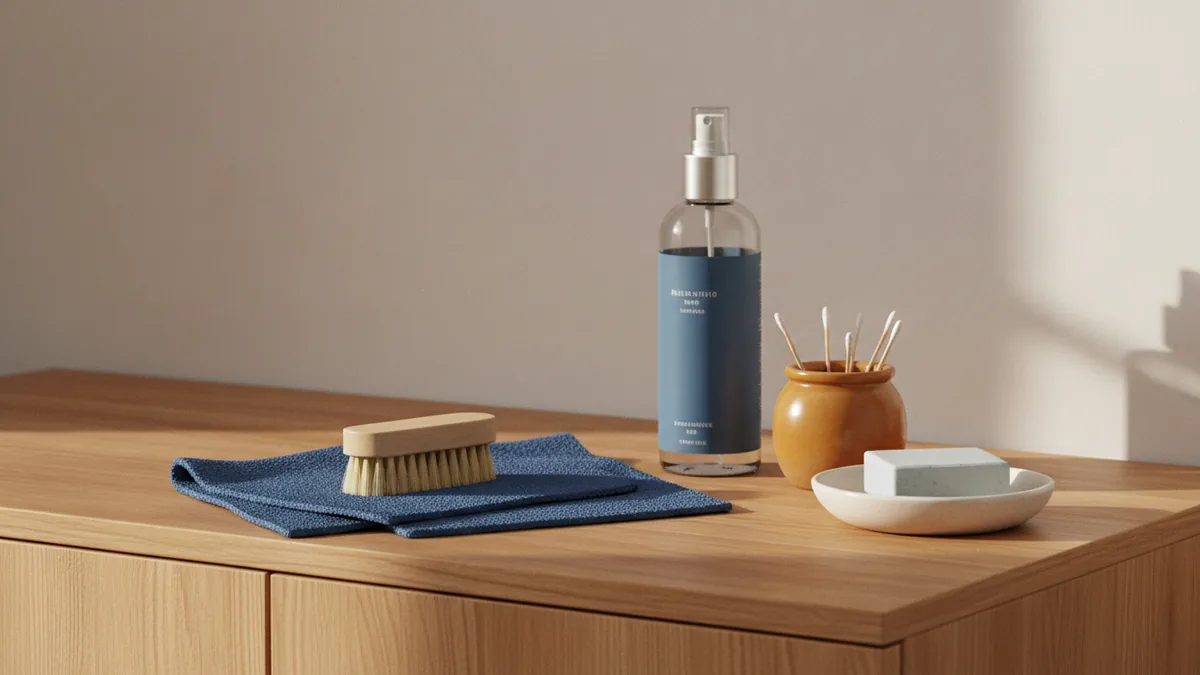
Use a microfiber cloth or a soft brush. Work from the top down, and move with the wood grain. Clean carvings with a brush, then lift dust with a vacuum brush.
- Check the finish. Look for cracks, clouding, loose veneer, or worn patches.
- Dust the whole piece. Use a dry cloth and light pressure.
- Mix the cleaner. Add a small amount of soap to warm water.
- Dampen the cloth. Wring it out until it feels almost dry.
- Clean small areas. Wipe with the grain and avoid long wet passes.
- Remove residue. Use a second cloth that is barely damp.
- Dry the surface. Buff it with a fresh, dry cloth.
Work on one section at a time. A table top may need four to six small sections. This keeps the cleaner from drying in uneven rings.
For sticky spots, hold a warm, damp cloth over the mark for 20 seconds. Lift the spot with light rubbing. Do not scrape it with a knife or metal edge.
How to Polish Wooden Furniture at Home
Polishing should add a thin layer of shine. It should not hide dust or replace cleaning. Wait until the wood is clean and fully dry before you begin.
Liquid polish works well on many sealed surfaces. Apply a small amount to a cloth, not straight onto the furniture. Rub with the grain, then turn the cloth to a dry side.
Paste wax gives a rich look and can help protect some finishes. Spread a very thin coat with a soft cloth. Let it haze for the time shown on the label, then buff it by hand.
- For a quick shine: Use a wood-safe liquid polish and a dry buff.
- For deeper color: Use a small amount of paste wax.
- For oiled wood: Use the oil named by the maker.
- For dull sealed wood: Clean first, then test polish in a hidden area.
Many people ask how to polish furniture at home with kitchen items. A small mix of olive oil and vinegar can lift light grime on some sealed wood. Mix one part oil with one part vinegar, apply a few drops to a cloth, and wipe it off well.
Do not use that mix on unsealed wood, waxed wood, or antique finishes. Olive oil may turn sticky over time. Vinegar may harm some coatings. A made-for-wood product is safer for regular use.
Build a Simple Furniture Maintenance Routine
Good furniture maintenance starts with small, steady habits. Dust once each week in a dry room. Wipe spills as soon as they happen, since standing water can stain wood.
Keep wooden pieces away from heat vents, radiators, and strong sun. Aim for a stable indoor climate. Fast shifts in moisture can make wood swell, shrink, or split.
- Use coasters beneath drinks and hot pads beneath dishes.
- Place felt pads beneath lamps, bowls, and small ornaments.
- Lift objects instead of sliding them across the surface.
- Keep indoor humidity near 40% to 60% when possible.
- Polish only when the surface looks dry or loses its glow.
- Check table edges and joints every few months.
Rotate objects on shelves and tables from time to time. This helps limit uneven color from sunlight. Use curtains or blinds during the brightest part of the day.
For homes in India, dust may settle faster during dry or windy weather. Dust more often during those weeks. Keep windows closed during heavy outdoor dust, and use a dry cloth before any wet cleaning.
Common Mistakes That Damage Wood
Too much water is the most common mistake. Wood can absorb moisture through seams, cracks, and worn finish. Use a damp cloth, never a soaking one.
Spraying cleaner onto the surface can also cause trouble. The liquid may pool around hardware or seep under veneer. Spray the product onto your cloth instead.
- Do not use paper towels with rough fibers.
- Do not scrub stains with steel wool or abrasive pads.
- Do not mix vinegar with bleach or other cleaners.
- Do not layer new wax over old, cloudy wax.
- Do not polish dusty furniture, since grit can cause scratches.
- Do not use olive oil on every wood finish.
Stop cleaning if the finish turns cloudy, tacky, or pale. Wipe away the product with a dry cloth. For valuable antiques or deep damage, ask a furniture restorer for help.
These cleaning wooden furniture techniques work best when used with patience. Gentle pressure, little liquid, and a dry finish protect the surface. The result is a cleaner piece with a natural, even shine.
Step-by-step
- 01 Identify the wood finish
Check for sealed, waxed, oiled, painted, or unsealed wood. Test the cleaner on a hidden spot.
- 02 Dust the furniture
Remove loose grit with a dry microfiber cloth or soft brush. Work from the top down.
- 03 Clean small sections
Dampen a cloth with mild wood cleaner and wring it well. Wipe with the grain.
- 04 Dry the surface
Use a fresh cloth to remove moisture and cleaner residue. Let the piece dry fully.
- 05 Apply polish
Put a small amount of wood polish on a cloth. Rub with the grain, then buff the surface.
Frequently asked questions
- How do you clean wooden furniture at home?
- Dust first with a dry microfiber cloth. Then wipe small areas with a nearly dry cloth and mild wood cleaner. Dry the surface at once.
- How do you polish wooden furniture at home?
- Use a wood-safe polish on a clean, dry surface. Apply it to a cloth, work with the grain, and buff with a dry cloth.
- Can you clean wood furniture with olive oil and vinegar?
- Yes, but use the mix only on some sealed finishes. Mix equal parts olive oil and vinegar, use a few drops, and wipe it off well.
- How often should wooden furniture be cleaned and polished?
- Dust at least once each week. Clean spills right away, and polish only when the finish looks dry or dull.
- What should you avoid when cleaning wooden furniture?
- Use a soft brush or microfiber cloth for loose dust. Avoid soaking the wood, rough pads, bleach, and direct cleaner spray.
Related reading
Kitchen Wall Décor — Style and Function
Make a bare kitchen wall feel warm, useful, and thoughtfully styled.
Bathroom Paint — Moisture, Finishes and Cost
Choose bathroom paint based on dampness, airflow, surface prep and finish.

Large Living Rooms — Comfort, Zones and Flow
Make a spacious living room feel warm, useful, and easy to move through.