Couch Placement—Flow, Focus and Comfort
Place your couch to frame a focal point, keep paths clear, and make the room feel balanced.
Start with the room’s focal point
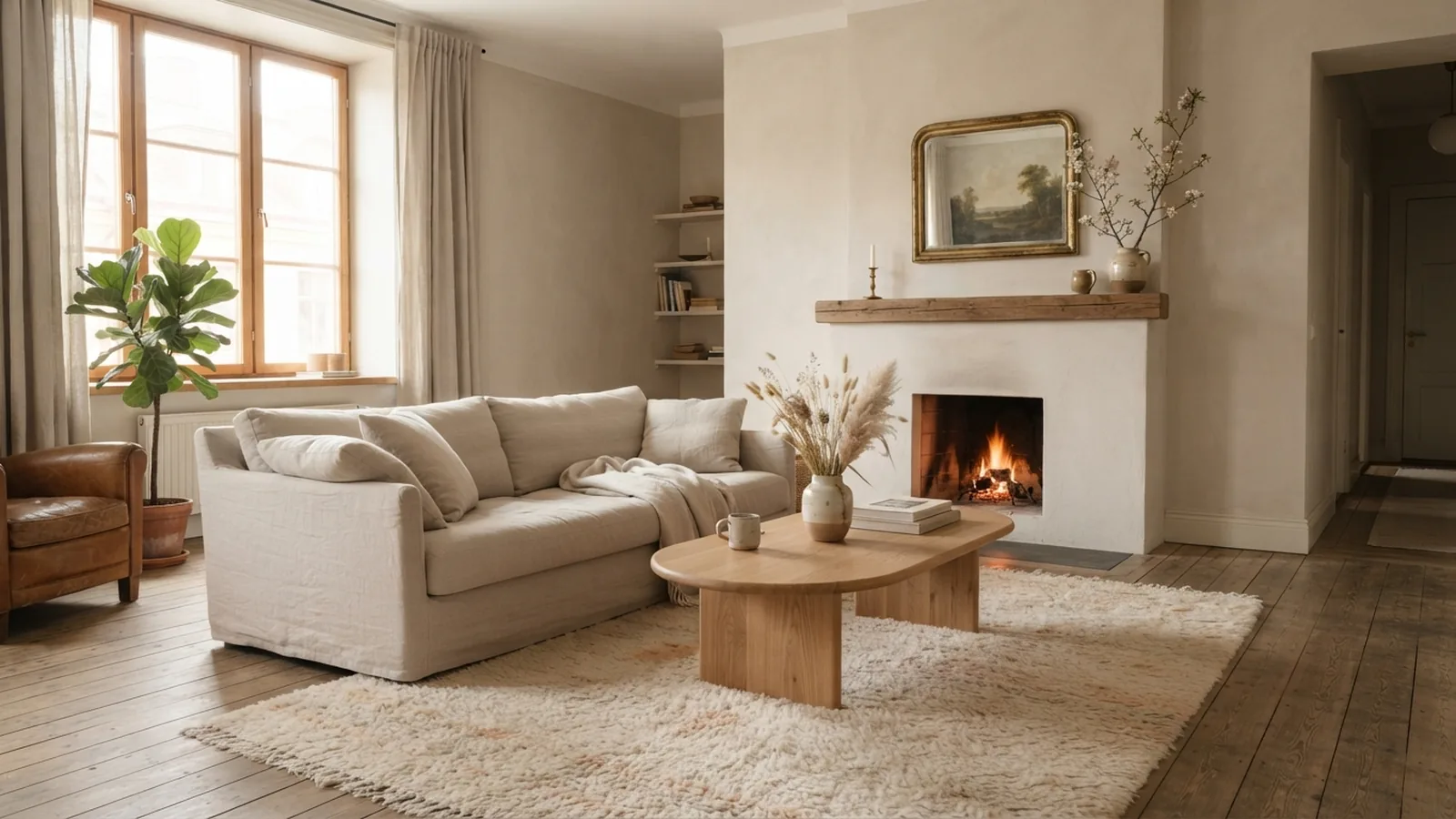
The best place for a couch usually faces the room’s main focal point. This might be a fireplace, a large window, or a media unit. Set the couch so the focal point feels easy to see from the main seats. This gives the room a clear visual anchor.
In an open-plan room, the focal point may be a dining area or a view beyond the living space. Let the couch mark the edge of the seating zone without blocking the view. If the room has no obvious feature, create one with art, a rug, or a low bookcase. Then arrange the seats around it.
- Face the couch toward the feature you want guests to notice first.
- Keep sightlines open when the room connects to another space.
- Use a rug to make the seating area feel like one zone.
Keep walkways open and easy to use
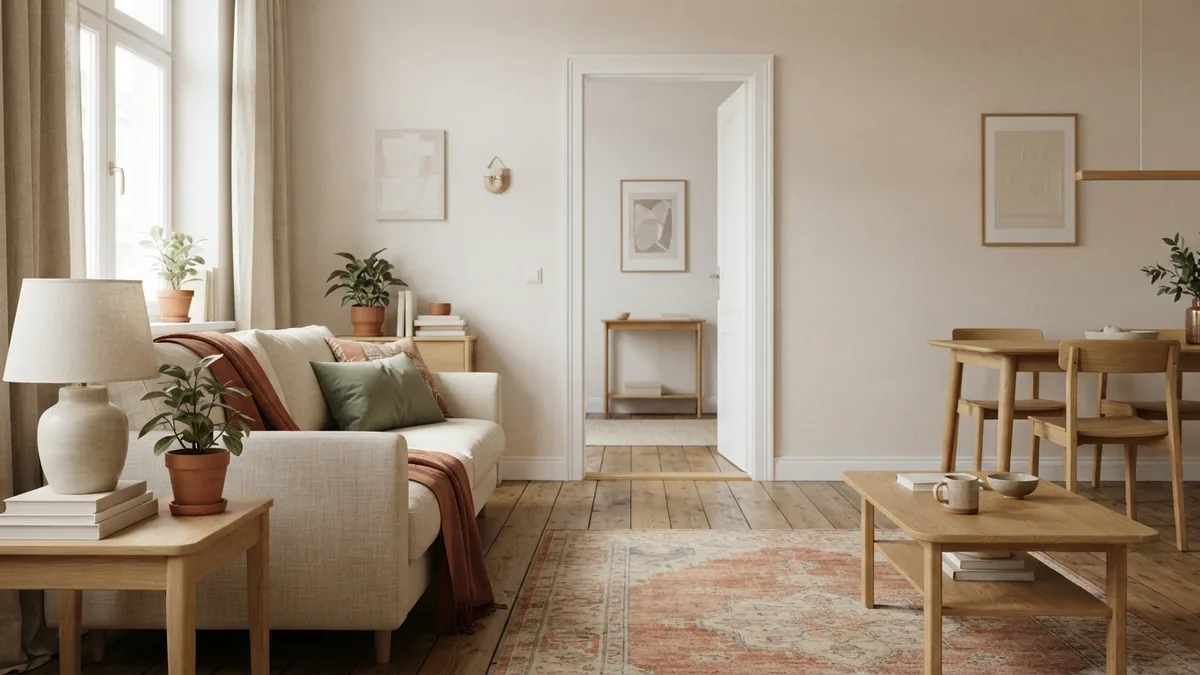
Good couch placement makes it easy to move through the room. Leave about 30 to 36 inches of open walkway around seating areas where people pass often. This gives most adults room to walk without turning sideways. In a tight spot, keep the main path clear before adding side tables.
Look at the route from the door to the sofa, window, and next room. Avoid placing a couch across that path, even if it looks centered. In an open layout, angle the seating area toward its focal point and leave a clear route behind it. The room will feel calmer and work better.
Mark the couch’s planned footprint with tape before moving furniture. Walk the route several times, including with a laundry basket or full shopping bag. Check that doors open fully and drawers remain easy to reach. Small tests can reveal awkward turns before you commit.
Choose a layout that suits your room
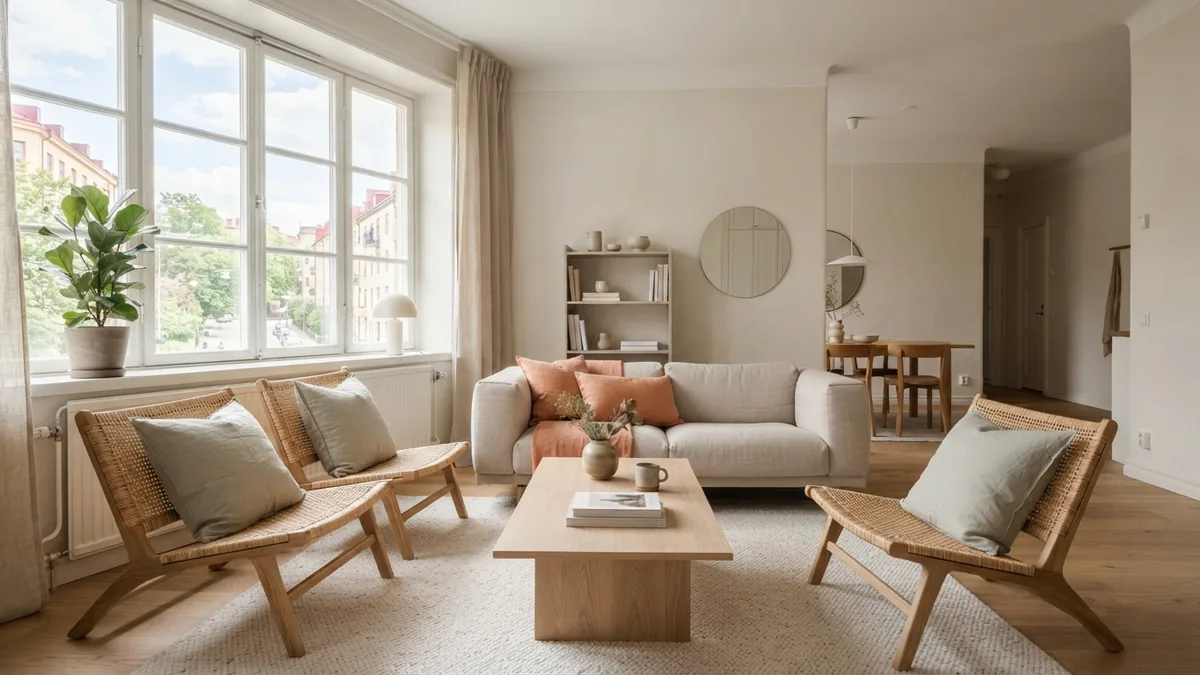
A floating couch sits away from the wall, with space behind it. This can make a large room feel more welcoming and define a seating area in an open plan. Place a narrow console behind the couch if you need a place for a lamp or books. Leave enough room to walk past it.
An L-shape works well when you want a cozy conversation area. Put the shorter side toward the room’s center, not across the main walkway. For face-to-face seating, set two couches or a couch and chairs opposite each other. Keep a coffee table within easy reach, with enough space to pass between seats.
Angled placement can soften a boxy room or point seats toward a corner fireplace. Use it with care, since a sharp angle can waste floor space. Long, narrow rooms often work best with the couch along one long wall. Place a chair or small table near the far end to create a second useful spot.
In a very narrow room, choose a compact couch and keep bulky chairs out of the main path. A slim bench or one small armchair can add a seat without crowding the room. For a wide room, float the couch to divide lounging from dining or work areas. Keep each zone connected by a clear path.
Fix common couch placement problems
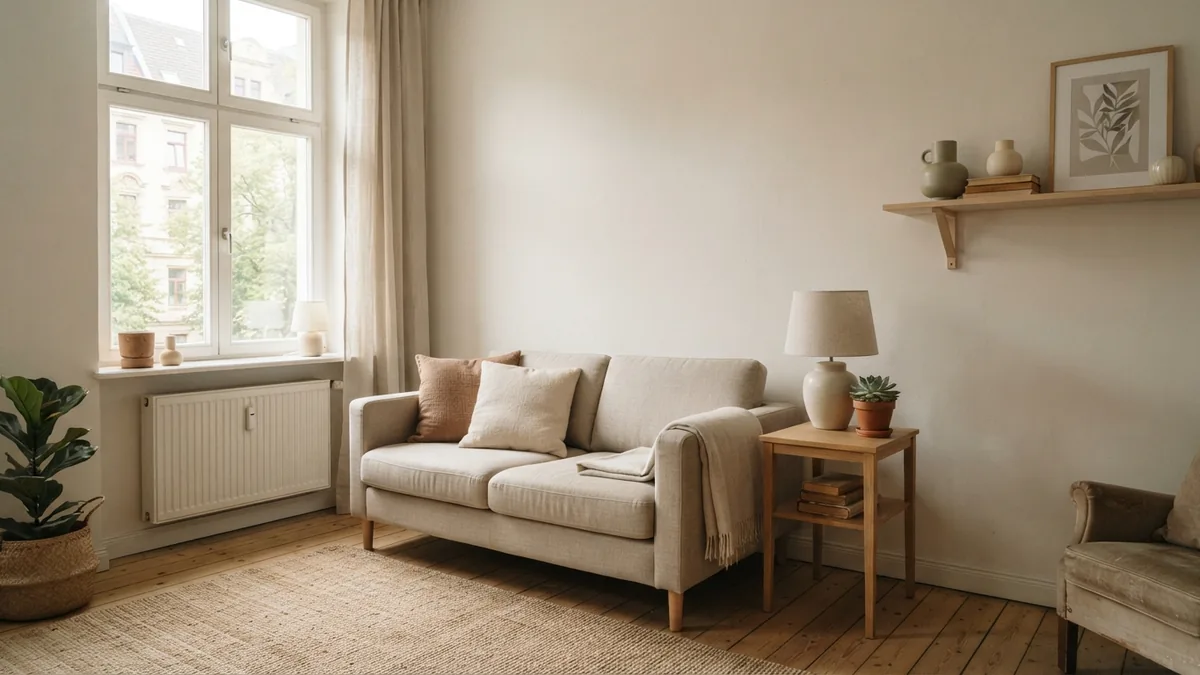
A couch pushed flat against every wall can leave a large, empty space in the middle. Try pulling it forward a few inches, then add a rug and table to link the seats. Even a small gap can make the arrangement feel planned. Floating the couch farther out can help in a larger room.
If the couch blocks a window, move it to a side wall or use a lower-backed design. Avoid covering a radiator or heater, since that can limit heat flow. If the TV feels too far away, adjust the couch before buying a larger screen. Make sure the seating still faces the room’s other key feature.
When seats feel scattered, bring them closer together. A coffee table should be near enough to reach, but not so close that knees hit it. Add a side table beside the couch for drinks and reading lamps. These small changes can make a room easier to use without adding more furniture.
Pick a couch that fits the room
To decide what size couch your living room needs, measure the room and mark the couch’s full footprint. Include the arms and any chaise section, not just the seat length. Check that the couch leaves the walkways clear and does not block doors. A tape outline helps you judge scale before you shop.
In a small living room, a compact two-seat couch or apartment sofa often leaves more room to move. Choose a raised leg style if you want the floor to remain visible beneath it. In a large room, a longer couch can anchor the seating area. Pair it with chairs only if clear routes remain.
Match the couch’s shape and fabric to the room’s style and daily needs. A simple, low-arm design suits many calm, modern rooms. A deep, soft couch may fit a relaxed family space, but it needs more floor area. If you have children or pets, pick a durable fabric that is easy to clean.
Decide what to put above the couch
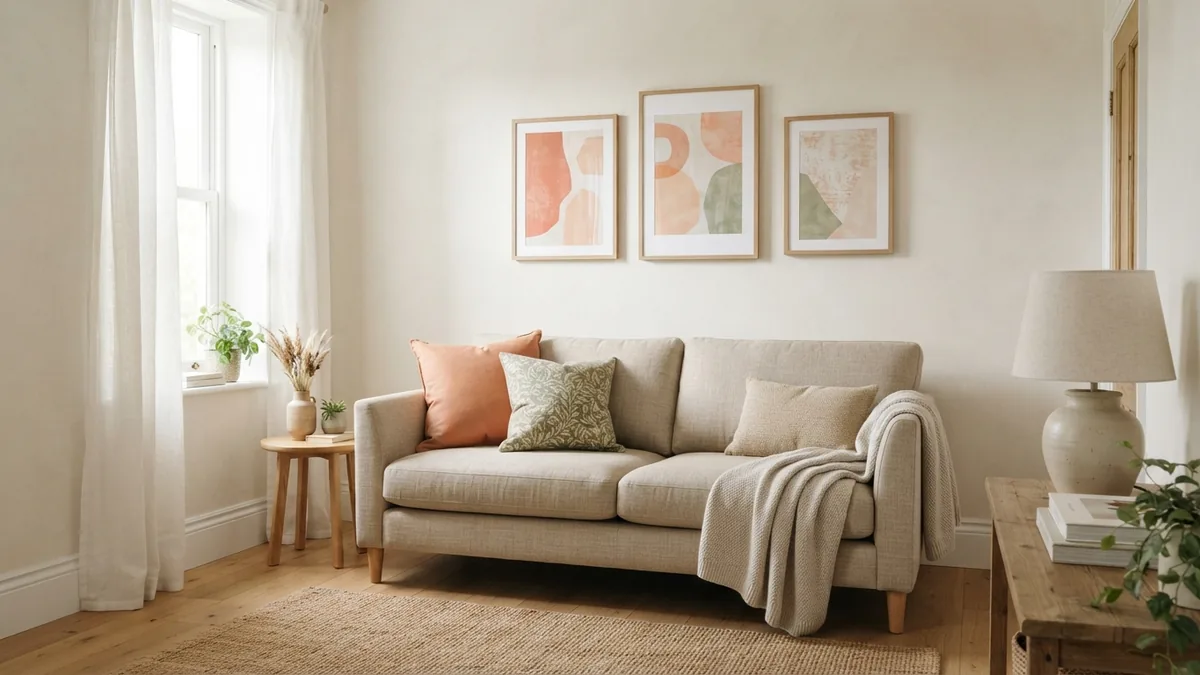
Art is a simple way to finish the wall above a couch. One large piece can make a strong focal point, while a neat group of smaller works adds character. Aim for art around two-thirds the couch’s width. Hang it so the bottom edge sits roughly six to ten inches above the back.
A mirror can reflect daylight and help a small room feel brighter. Choose a shape and frame that suit the furniture, then check what it reflects. A shelf offers room for framed prints, small ceramics, or a trailing plant. Keep objects low and secure so the display does not feel heavy above the seats.
Style couch pillows with balance
Start with two or three pillow sizes to add depth. For a standard couch, try larger pillows in the corners and smaller ones toward the center. Mix one plain fabric with a subtle pattern or woven texture. Keep colors linked to the rug, curtains, or artwork.
Use an odd number of pillows for a relaxed look, or a matched pair for a neat, formal feel. Leave enough open seat space for people to sit comfortably. A useful starting point is three pillows on a smaller couch and five on a longer one. Adjust the count to suit the couch’s size and shape.
Give each pillow a quick fluff, then turn its best side toward the room. If the couch already has a bold pattern, choose quieter pillows. If the couch is plain, pillows can bring in color and texture. The goal is a comfortable seat, not a display that needs constant fixing.
Frequently asked questions
- Where should I place a couch in my living room?
- Place it facing the room’s main focal point, such as a fireplace, window, or media unit. Keep busy walkways clear and leave room to reach doors and tables.
- How much space should I leave around a couch?
- Aim for 30 to 36 inches of clear space along main walkways. You can use less in a low-traffic spot, but keep the route easy to walk through.
- Should a couch be against the wall or floated?
- A couch can sit against a wall in a small room, but floating it can define a seating zone. Leave enough space behind it for a clear path.
- What size couch works best in a small living room?
- Choose a compact couch that leaves room for clear walkways and useful tables. Mark its full footprint on the floor before you buy.
- What should I put above a couch?
- Try one large artwork, a balanced group of smaller pieces, or a mirror. Keep the display in scale with the couch and hang it several inches above the back.
- How many pillows should I put on a couch?
- Start with three pillows on a smaller couch and five on a longer one. Adjust the number so the seats remain comfortable and easy to use.
Related reading
Master Bedroom — Color, Comfort and Personal Style
Build a calm, personal bedroom with smart choices and a budget that works.
Room Painting Labor Costs — Rates and Budget Factors
See typical room-painting labor rates and learn what drives the final price.
Kitchen Renovation Costs — Price Ranges and Budget Factors
See typical kitchen remodel prices, key cost drivers, and ways to keep your budget on track.