Arrange Appliances in a Small Kitchen Around How You Cook
Smart appliance placement and storage ideas for a more useful small kitchen.
Start With Your Kitchen’s Layout
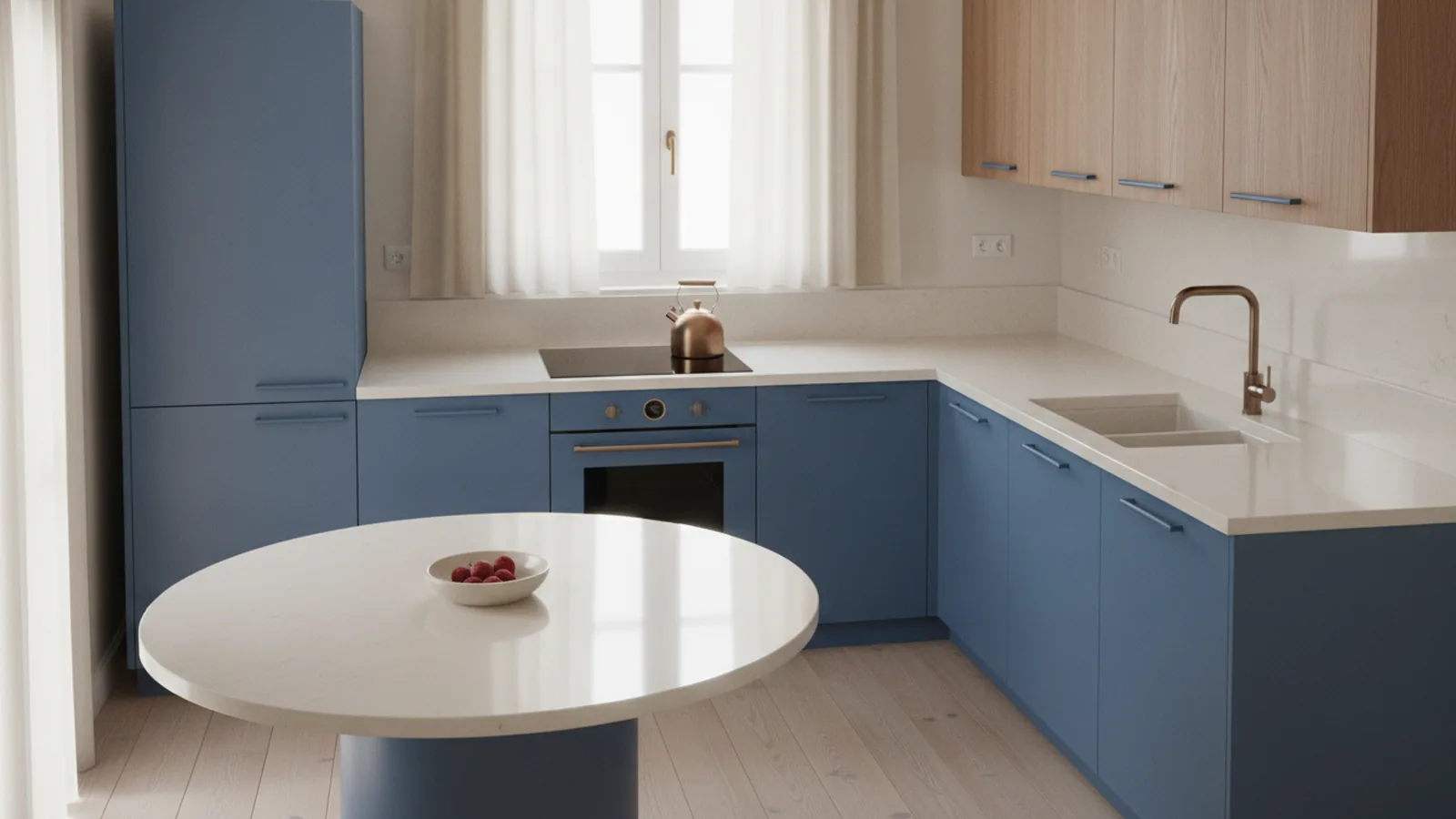
The best way to arrange appliances in a small kitchen is to plan around flow. Keep the fridge, sink, and stove easy to reach in that order. This path supports most meal prep tasks. It also cuts down on wasted steps.
Small kitchens often face three problems: limited space, poor storage, and countertop clutter. Measure each wall, cabinet, drawer, and work surface before moving items. Note door swings, outlets, vents, and the space needed to open appliance doors.
Draw a simple floor plan on paper. Mark where you prep food, cook meals, wash dishes, and store food. These zones show where each appliance should live.
- Cooking zone: Keep the stove, microwave, pans, and cooking tools close together.
- Prep zone: Place the cutting board, mixer, knives, and food processor near open counter space.
- Cleaning zone: Group the sink, dishwasher, drying rack, and cleaning tools.
Arrange Large Appliances Around Daily Use
Large appliances should support your routine instead of blocking it. Put the fridge near the kitchen entrance when possible. This spot lets family members grab food without crossing the cooking area.
Place the stove near your main prep counter. Leave at least 15 inches of clear counter space beside it when the layout allows. This gives you a safe place for hot pans and cooking tools.
Keep the sink between the fridge and stove when you can. This setup creates a simple work path. Avoid placing the stove in a tight corner. Wall space can limit pot handles and make cleaning harder.
| Appliance | Best nearby space | Why it helps |
|---|---|---|
| Fridge | Near the entry or prep zone | Food is easy to reach and unload |
| Stove | Near prep space and cookware | Meals move from prep to heat with few steps |
| Dishwasher | Beside the sink | Loading takes less effort and causes less mess |
Use Zoning to Improve Kitchen Flow
Appliance zoning means grouping tools by task. A cooking zone may hold the stove, toaster oven, pans, and spices. A prep zone may hold the food processor, scale, knives, and mixing bowls.
A cleaning zone should stay near the sink. Store the dishwasher, dish rack, soap, and towels there. This plan keeps wet items away from dry food and open prep space.
Zoning also helps you decide where to store appliances in a small kitchen. Keep heavy tools close to their work area. Store items used for one task together, even when they do not share one cabinet.
- Keep coffee tools beside mugs, beans, and the kettle.
- Keep baking tools near flour, sugar, trays, and the mixer.
- Keep lunch tools near containers, wraps, and the fridge.
Build Smarter Storage for Small Appliances
Store small appliances based on weight, size, and use. Heavy machines belong in low drawers or deep lower cabinets. Lighter tools can sit on strong shelves at chest height.
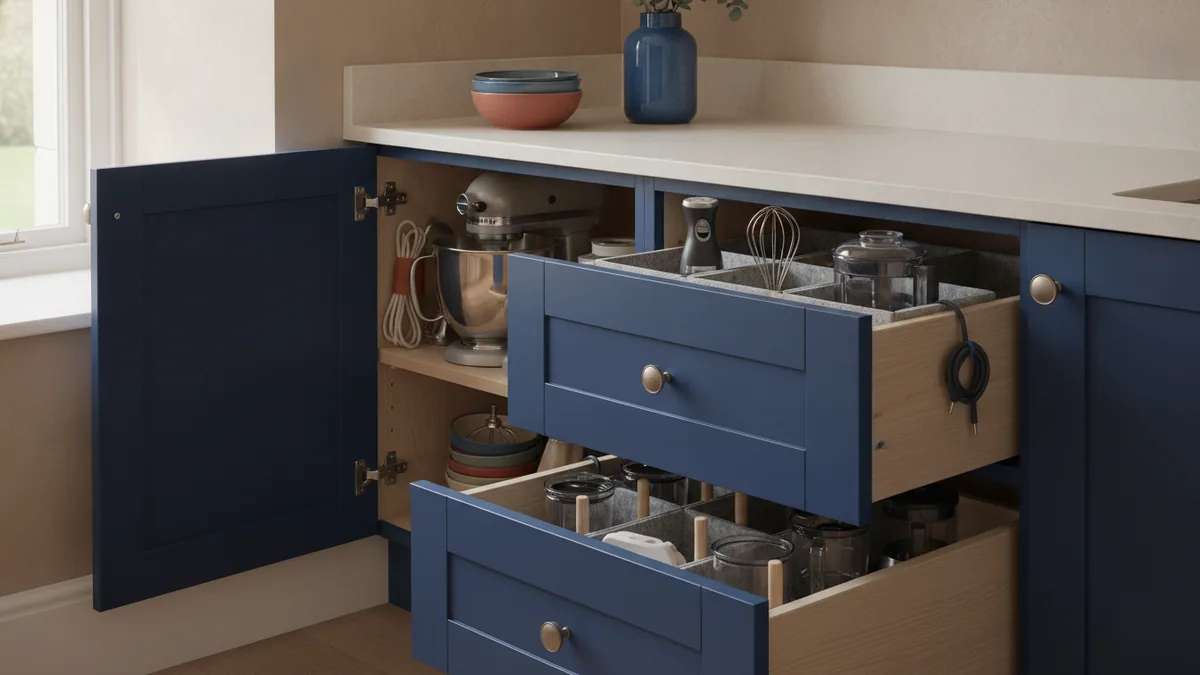
Use full-extension drawers for blenders, mixers, and food processors. These drawers let you see the whole space. Add a drawer organizer for blades, cords, and small parts.
An appliance garage can hide a toaster, coffee maker, or kettle. Choose one with a nearby outlet. Then you can use the appliance without lifting it onto the counter each time.
- Fit a pull-out shelf inside a lower cabinet for heavy tools.
- Use a two-tier riser for small tools in a deep cabinet.
- Store cords in soft ties to stop them from tangling.
- Keep manuals and spare parts in one labeled box outside the work zone.
Make Better Use of Vertical and Hidden Space
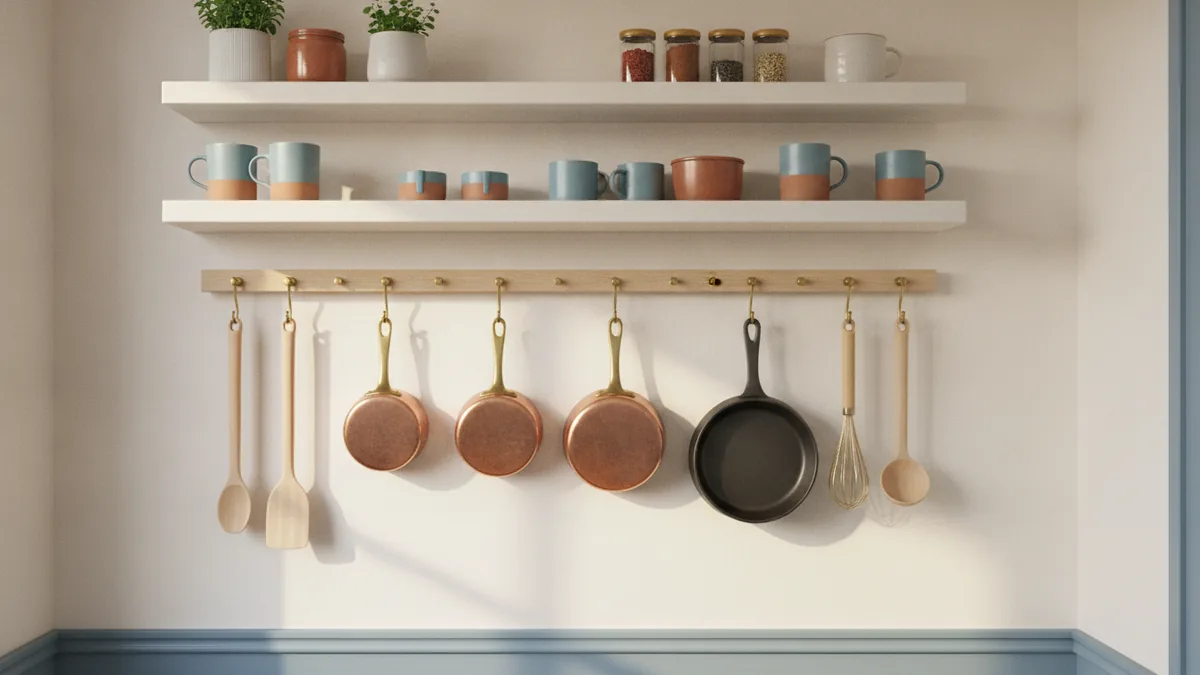
Walls can hold useful storage without taking counter space. Add wall-mounted shelves for mugs, jars, or light tools. Keep the lowest shelf above head and hand traffic near the counter.
A peg rail can hold pans, strainers, and measuring cups. Use hooks that match the weight of each item. Leave room between tools so you can remove one item without moving the rest.
Look below the counter as well. A narrow pull-out unit can hold baking trays or cutting boards. A toe-kick drawer can store flat items, such as placemats or serving boards.
- Use the cabinet door for measuring spoons or pot lids.
- Add a slim shelf above the fridge for backup goods.
- Use stackable bins in tall cabinets.
- Place a magnetic strip on a safe wall for small metal tools.
Give Frequent Appliances the Best Spots
The most-used appliances deserve the easiest access. Count how often you use each tool over one week. Keep daily tools within one step of their work area.
A coffee maker may earn a permanent counter spot. A blender used twice a month should not claim prime space. Store it in a nearby lower cabinet instead.
Choose multi-functional appliances when they replace several tools. A small food processor may chop, blend, and mix. One compact tool can save a cabinet shelf and reduce clutter.
| Use pattern | Storage choice |
|---|---|
| Several times each day | Open counter space or an appliance garage |
| Several times each week | Easy-access drawer or front shelf |
| Less than once each month | High shelf, pantry, or another room |
Organize Bread and Other Small Essentials
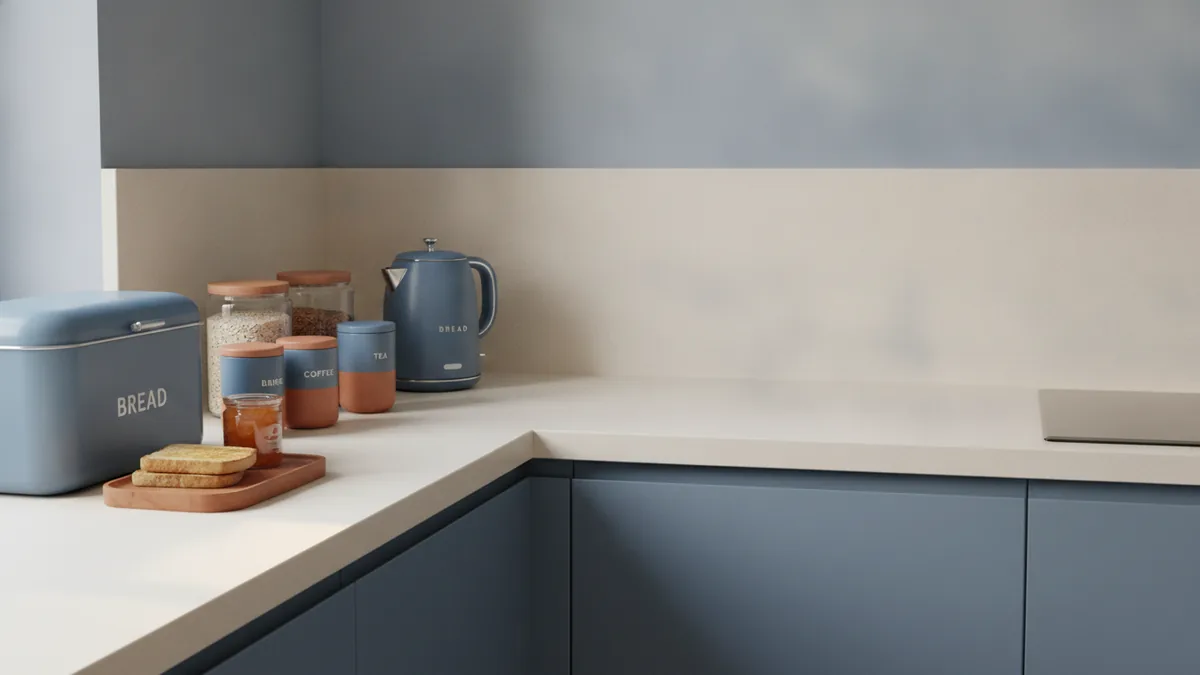
When deciding where to store bread in a small kitchen, keep it in a cool, dry spot. A bread box can sit on a shelf, above the fridge, or inside a deep cabinet. Avoid storing bread beside the stove, where heat can dry it out.
Use clear bins for snacks, tea, and breakfast foods. Store often-used items between waist and eye level. Put backup supplies in higher cabinets or a pantry shelf.
Keep the counter clear by giving each small item a home. A tray can group the kettle, tea, and sugar. A narrow bin can hold oils near the stove without spreading bottles across the counter.
- Keep one open area for cutting and mixing.
- Move rarely used gadgets out of the cooking zone.
- Store matching parts together in one bin.
- Remove duplicate tools before buying another organizer.
Finish With a Simple Small-Kitchen Reset
Declutter the counters before changing cabinets. Remove anything you do not use each week. Then test the new layout during a normal meal.
Watch for blocked doors, long walks, and tools that need constant moving. Fix one problem at a time. Small changes often improve kitchen flow efficiency more than a full remodel.
Review your storage every few months. Donate duplicate tools and recycle broken items. Keep the best space for tools that help you cook often.
- Measure your storage and work zones.
- Group appliances by task.
- Move heavy tools into low storage.
- Use walls, doors, and toe-kick space.
- Keep the counter clear for food prep.
That is how to store kitchen appliances in a small kitchen without losing useful workspace. Store each tool near its task, and let your daily habits guide the final layout.
Frequently asked questions
- How should I arrange appliances in a small kitchen?
- Keep the fridge near the entry, the sink between work zones, and the stove near prep space. This layout reduces steps and keeps cooking safer.
- How do I store appliances in a small kitchen?
- Store heavy appliances in low drawers or lower cabinets. Keep daily tools in an appliance garage or on a clear counter spot.
- Where should I store appliances in a small kitchen?
- Use full-extension drawers, pull-out shelves, wall-mounted racks, and cabinet-door hooks. These options add storage without taking much counter space.
- Where should I store bread in a small kitchen?
- Store bread in a cool, dry cabinet, bread box, or shelf above the fridge. Keep it away from stove heat and damp sink areas.
- Which kitchen appliances should stay on the counter?
- Keep appliances used each day within easy reach. Store weekly tools in front cabinets and rare tools on high shelves or in a pantry.
- How can multi-purpose appliances save space?
- Choose one tool that handles several tasks when possible. A compact food processor can replace separate chopping, blending, and mixing tools.
Related reading
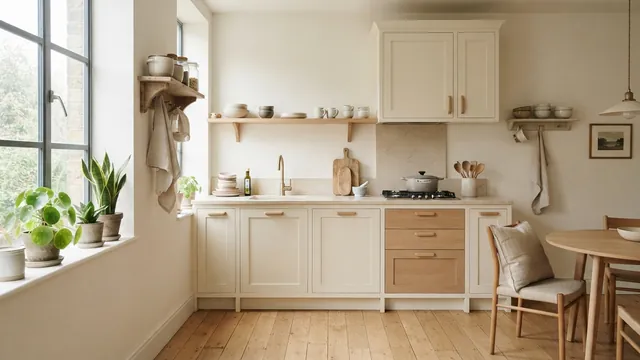
Small Kitchen Design — Light, Space and Smart Storage
Use light, smart storage, and slim furnishings to make a small kitchen feel more open.
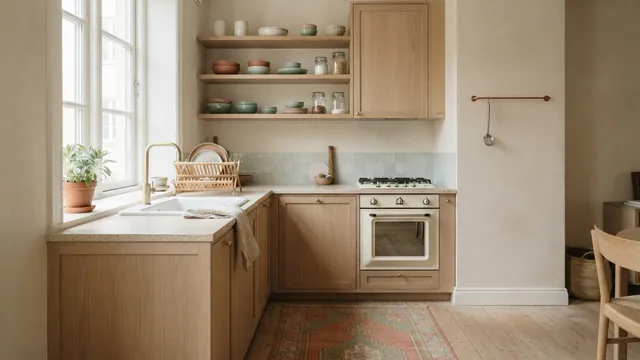
Small Kitchen Costs — Prices, Choices and Budget Tips
Compare small kitchen prices, key cost drivers, and ways to keep a remodel on budget.
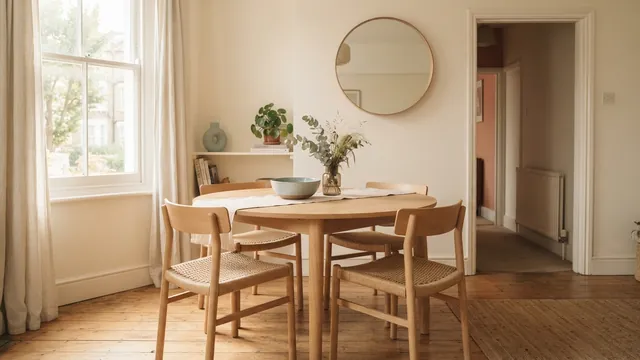
Dining Table Clearance — Space for Chairs and Walkways
Plan table and chair clearances for a dining area that feels comfortable.