What Color Light Works Best in Each Room of Your Home?
Choose the right kitchen light color for work, meals, and mood.
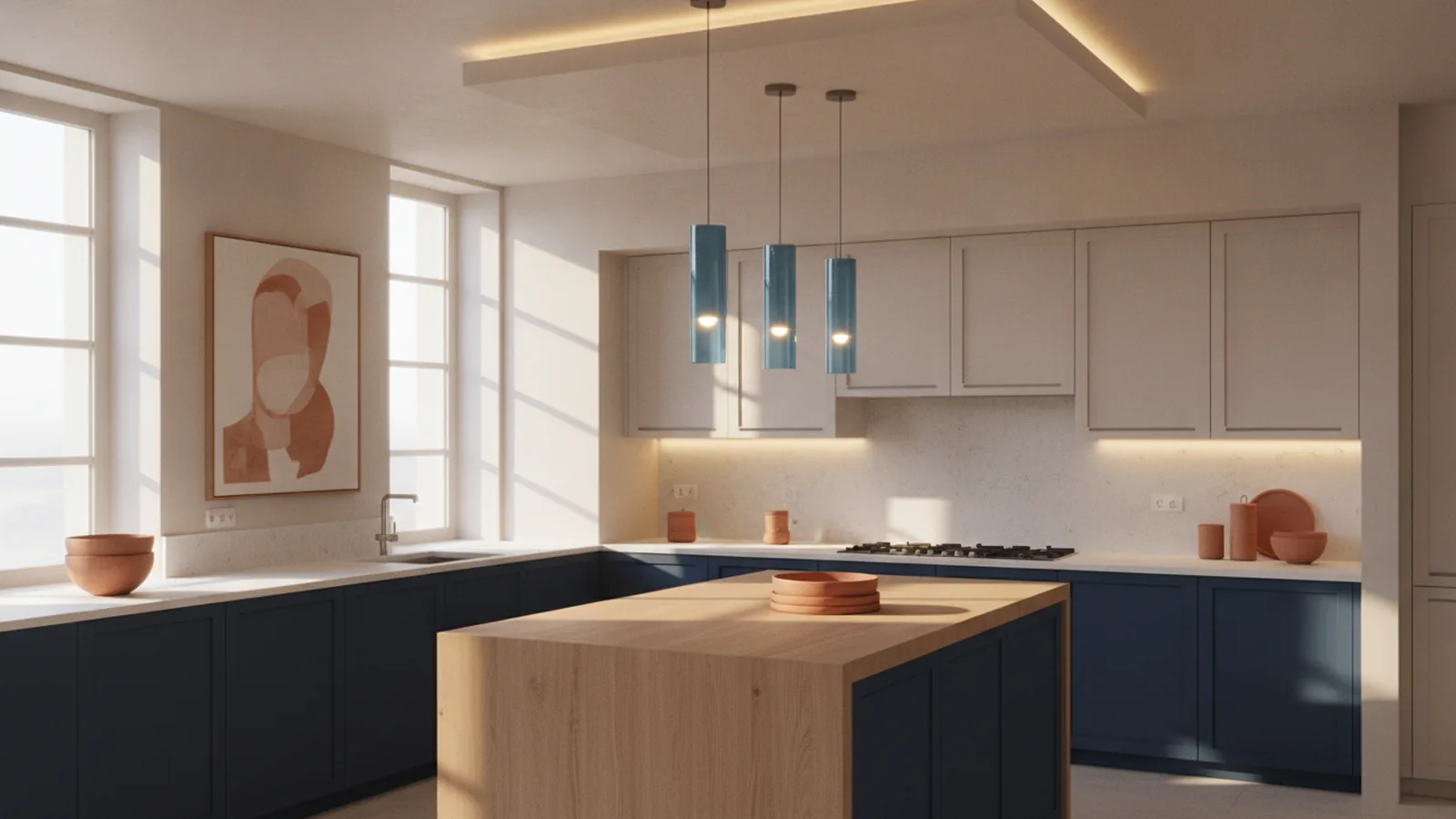
Why Kitchen Lighting Matters
The best color light for kitchen spaces is usually neutral white between 3,000K and 4,000K. This range keeps food colors clear and work areas bright. Choose 3,000K for a soft, warm room. Choose 4,000K for sharper task light and a clean look.
Kitchen lighting must serve more than one job. Ambient light covers paths and open floor space. Task lighting brightens worktops, sinks, islands, and cookers.
A single ceiling fitting often leaves dark spots beneath wall cabinets. Shadows can make chopping and food prep harder. A layered plan gives each area the light it needs.
- Ambient light supports safe movement and general use
- Task light helps with cooking, washing, and food prep
- Accent light adds depth around shelves, islands, and display areas
- Dimmers let one room suit both work and rest
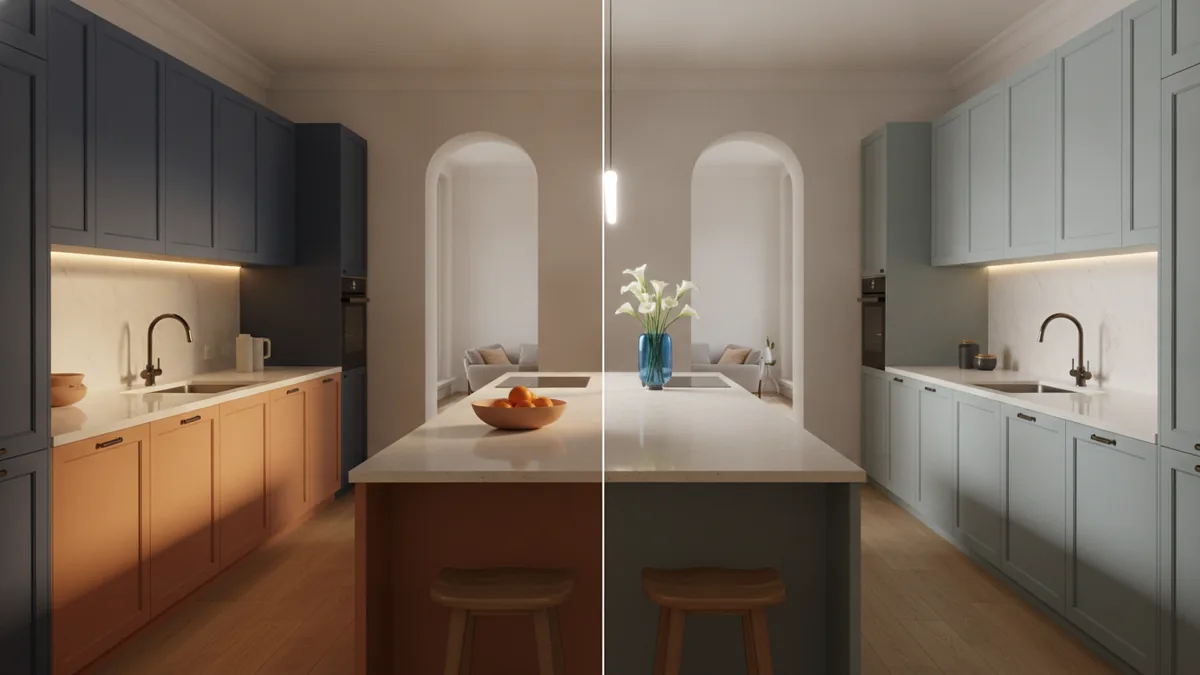
Good light can also shape the room's mood. Warm light makes wood, brass, and cream finishes feel rich. Neutral light suits white cabinets, stone worktops, and modern lines.
Choosing the Best Kitchen Light Color Temperature
Color temperature describes how warm or cool a light looks. It is measured in Kelvin, shown as K. Lower Kelvin values look warmer. Higher values look cooler.
Warm white light often sits between 2,700K and 3,000K. It gives a yellow glow that feels calm and homely. Neutral white usually runs from 3,500K to 4,000K. It looks clean without feeling harsh.
Cool white often starts near 4,000K and can reach 5,000K or more. It gives a crisp, blue-white effect. This look can help in a busy prep space. It may feel stark at night.
| Light range | Kelvin range | Best kitchen use |
|---|---|---|
| Warm white | 2,700K–3,000K | Open-plan dining areas and relaxed kitchens |
| Neutral white | 3,500K–4,000K | General use, worktops, and food prep |
| Cool white | 4,000K–5,000K | Detailed prep work and utility zones |
For most homes, 3,000K is the safest starting point. It balances comfort with clear sight. If your kitchen gets little daylight, 3,500K or 4,000K may work better.
If you ask what color LED light is best for kitchen use, start with a dimmable LED near 3,000K. Pick 4,000K when you need a brighter work feel. Check the whole room before choosing a cooler setting.
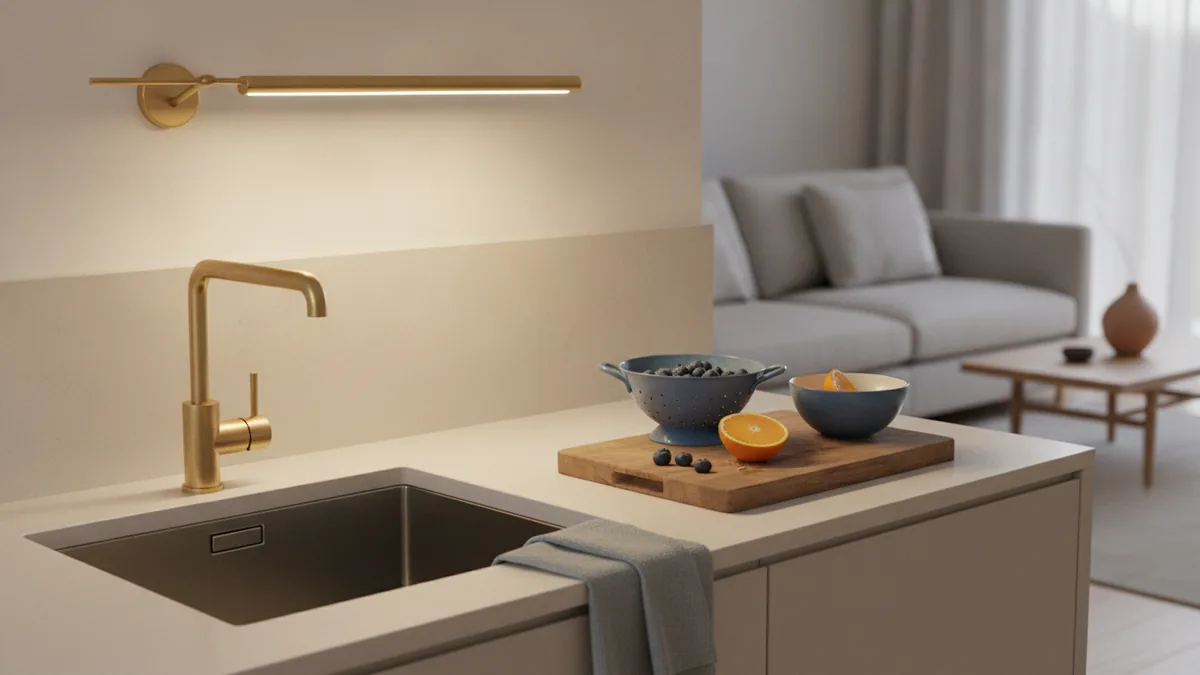
LED lighting makes these choices easier. Many LED bulbs offer steady output with low power use. The U.S. Department of Energy's LED lighting guide explains why LEDs can use less energy than older bulbs.
How Light Color Changes Mood and Function
Warm light creates a soft and friendly mood. It works well in kitchens that connect to dining or living spaces. It also suits evening meals and quiet family time.
Neutral light gives a more balanced feel. It shows cabinet tones and food colors with less yellow cast. This makes it a strong choice for cooking, cleaning, and homework.
Cool light feels active and bright. It can suit sleek kitchens with steel, glass, or pale surfaces. Too much cool light may make dark rooms feel cold.
Light quality also depends on color rendering. Color rendering shows how close objects look to their true colors. Look for a high CRI, or color rendering index, when food and finishes matter.
- Use warm white for comfort and a softer evening mood
- Use neutral white for clear work areas and balanced decor
- Use cool white in small zones that need fine visual detail
- Avoid mixing very warm and very cool bulbs in one sightline
Light direction matters as much as light color. A bright bulb behind you can still cast a shadow over the worktop. Place task fittings in front of the user when possible.
Practical Kitchen Lighting Tips
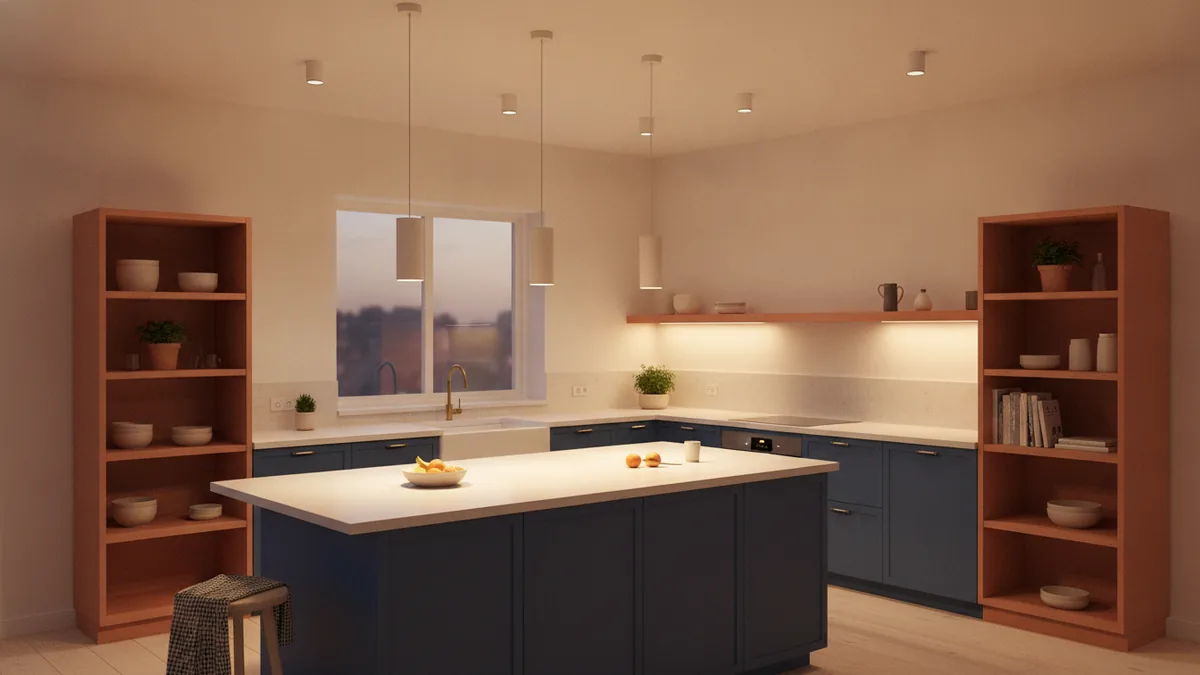
Start with the room's main jobs. Mark the sink, cooker, island, breakfast bar, and prep zones. Then plan ambient light and task light for each area.
Use ceiling fittings for broad ambient light. Add under-cabinet strips or downlights above worktops. Pendant lights can brighten an island and add a clear design feature.
Keep the main ceiling lights near 3,000K to 4,000K. Match under-cabinet lights to that range. Matching bulbs prevent odd color shifts across the room.
- Choose the main color range before buying fixtures.
- Place ambient fittings over paths and open floor space.
- Add task lighting above every key work surface.
- Check light output after fitting cabinets and shelves.
- Use dimmer switches for cooking, dining, and evening use.
Dimmers give one light scheme more than one purpose. Set a higher level for prep and cleaning. Lower the level for meals or late-night snacks.
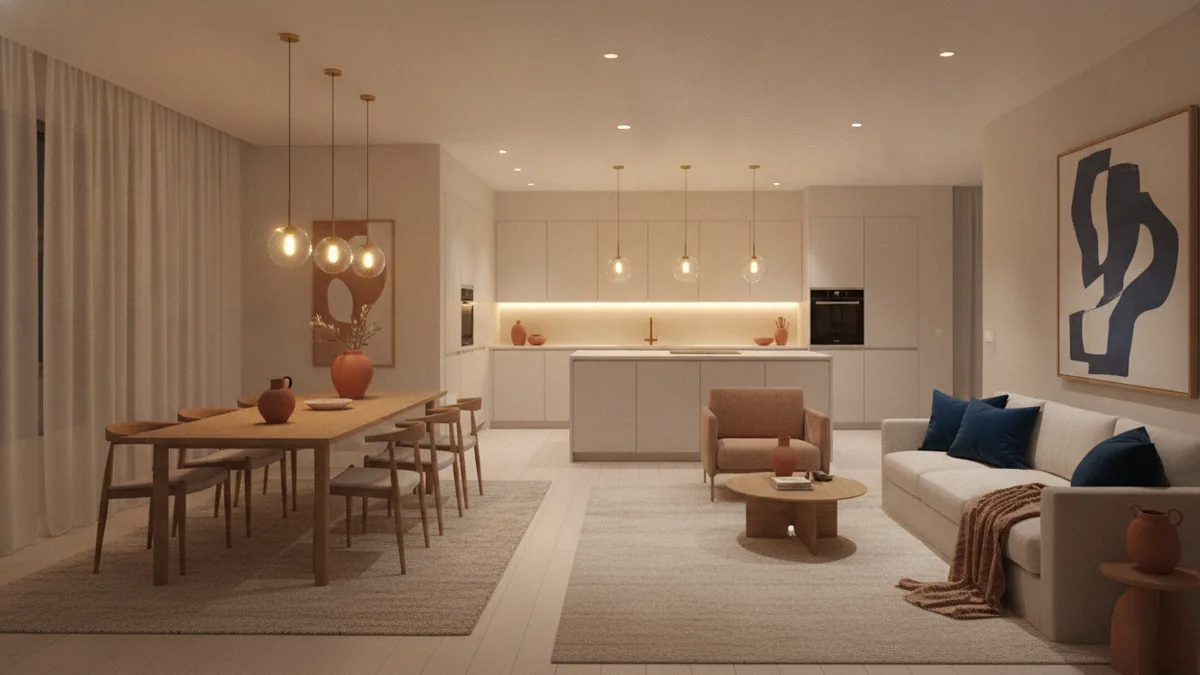
Check the fixture before fitting a dimmer. Some LED bulbs need a matching dimmer to avoid flicker. Also check the beam angle. A narrow beam can create bright spots.
Daylight should guide your choice too. A sunny kitchen may need less cool light during the day. A north-facing room may benefit from a neutral tone that feels brighter.
Comparing Light Choices Across the Home
Kitchen choices often raise questions about nearby rooms. The answer depends on each room's task, finish, and mood. The same bulb rarely suits every space.
For the question, what color light for bathroom use, choose neutral white near 3,500K to 4,000K. It gives a clean view for grooming and washing. Avoid very warm light near mirrors because it can shift skin and makeup tones.
For what color light in bathroom areas used at night, add a warm light near 2,700K to 3,000K. Keep it on a separate switch. This avoids a harsh burst of light during late visits.
Many readers ask what color light for bedroom use. Warm white near 2,700K to 3,000K often feels calm. Use dim lamps for reading. Avoid strong blue-white light close to bedtime.
If you ask what color light is best for bedroom spaces, choose warm white first. A soft amber lamp can work well for winding down. A neutral reading lamp may help when you need sharper detail.
The question which colour LED light is best for bedroom use has a similar answer. Choose a dimmable warm-white LED. The word colour means the same light hue as color.
For what color light is best for living room use, warm white near 2,700K to 3,000K is a strong choice. It supports rest and makes wood or soft fabrics look inviting. Neutral light can work in a living room that doubles as a study.
For what color light is best for dining room use, warm white near 2,700K to 3,000K usually works well. It makes meals feel relaxed and helps warm finishes stand out. A dimmer lets the room shift from dinner to cleanup.
These ranges are starting points, not strict rules. Test bulbs beside your cabinets, worktops, and paint. The best kitchen light color is the one that gives clear work light without harming the room's mood.
- Kitchen: neutral white for most work, with warm dimming for meals
- Bathroom: neutral white for grooming, with warm night light
- Bedroom: warm white for rest and soft reading light
- Living room: warm white for comfort and relaxed evenings
- Dining room: warm white with dimming for flexible meals
In short, what color light is best for kitchen use depends on balance. Start near 3,000K. Add task fittings where shadows fall. Then use dimming to fit the room's changing needs.
Frequently asked questions
- What color light is best for a kitchen?
- Neutral white between 3,000K and 4,000K suits most kitchens. Choose 3,000K for warmth or 4,000K for sharper work light.
- What color LED light is best for kitchen use?
- A 3,000K dimmable LED works well for most kitchens. Choose 4,000K when the room needs a brighter work feel.
- What color light is best for a bedroom?
- Warm white near 2,700K to 3,000K usually suits a bedroom. It creates a calm mood and works well with dim lamps.
- What color light is best for a bathroom?
- Neutral white near 3,500K to 4,000K helps with grooming and mirror tasks. Add warm light for night use.
- What color light is best for a living room?
- Warm white near 2,700K to 3,000K suits most living rooms. Neutral light can help when the room also serves as a study.
- What color light is best for a dining room?
- Warm white near 2,700K to 3,000K creates a relaxed dining mood. A dimmer gives more control during meals and cleanup.
Related reading
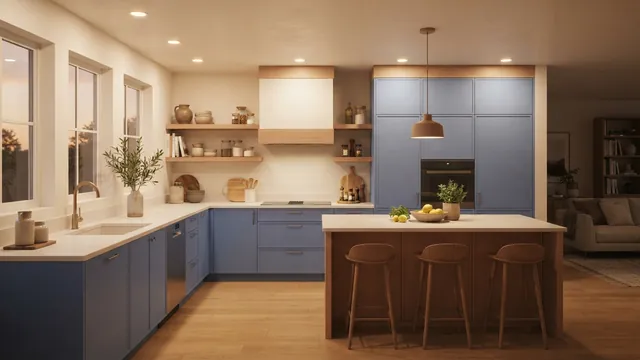
Plan a Kitchen Recessed Lighting Layout That Lights the Counters
Plan brighter counters, fewer shadows, and a warmer kitchen with recessed lights.
Room Painting Costs — What Shapes Your Quote
Room painting often costs $200–$1,000. See what drives the price and how to compare quotes.
Kitchen Cabinet Tops — Style, Texture and Seasonal Charm
Style cabinet tops with balanced layers, useful texture, and decor that suits your kitchen.