Living Room Picture Hanging — Height, Layout, and Style
Set the right height, spacing, and layout for living room pictures.
Find the Ideal Height for Living Room Pictures
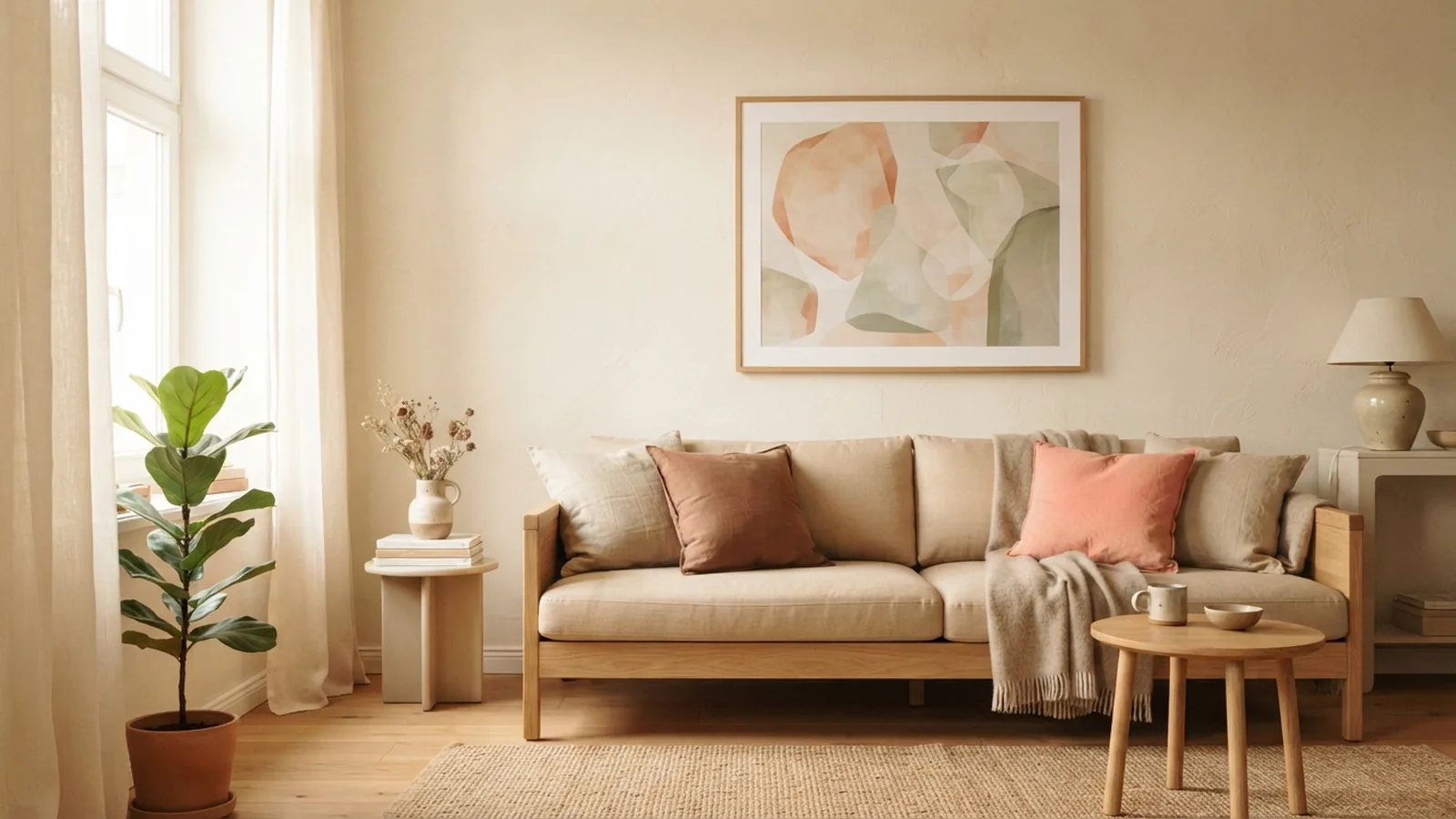
The best height for most living room pictures is 57 to 60 inches from the floor to the artwork’s center. This places the middle of the piece near eye level. It also gives the room a balanced, relaxed feel.
Measure to the center of the picture, not its top edge. For example, a 24-inch-tall frame should sit about 12 inches above its center point. If the center should reach 58 inches, place the frame’s lower edge at 46 inches.
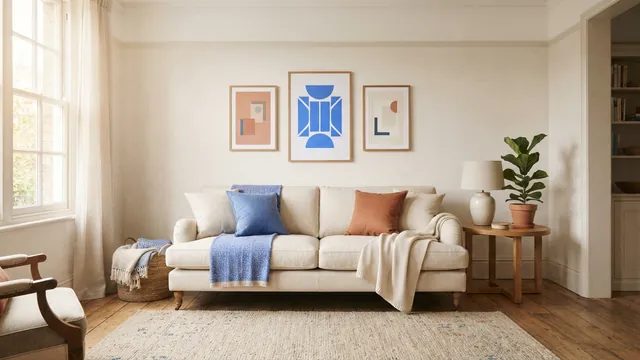
Furniture changes the rule. Hang art above a sofa with 6 to 10 inches of space between the frame and the cushion. The picture should feel linked to the sofa, not float near the ceiling.
Large art may need a lower position. Its size adds visual weight to the wall. Smaller pictures can sit a little higher, especially when they hang over a low console.
- Small art: aim for the 57 to 60-inch center point
- Art above a sofa: leave 6 to 10 inches above the back
- Large art: lower it slightly if the room feels top-heavy
- Low furniture: keep the picture tied to the furniture below
Plan a Balanced Wall Arrangement
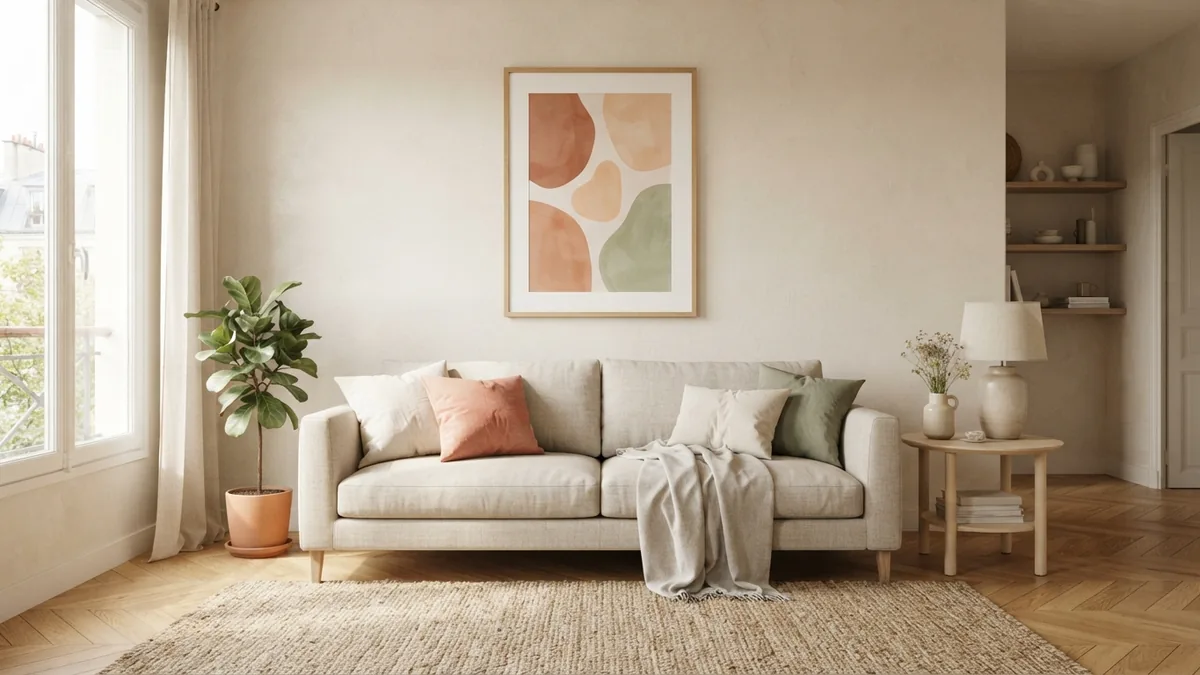
Before you hang anything, measure the wall and the furniture below it. Mark the full width of the display with painter’s tape. This shows how the group will fill the space.
Odd-numbered groups often look more natural than even groups. Try three, five, or seven pictures in one display. Odd groups create a clear center and feel less stiff.
Keep the gaps between frames consistent. A space of 2 to 4 inches works well for most walls. Use smaller gaps for tiny frames and wider gaps for large art.
When planning how to arrange pictures on a living room wall, treat the group as one shape. The outside edges should form a clean square or rectangle. The inner edges can vary when the style is relaxed.
Use a paper layout first
Trace each frame on kraft paper or spare wrapping paper. Cut out the shapes and tape them to the wall. Step back at least 8 feet before you judge the layout.
Move the paper pieces until the group feels even. Mark each picture’s hook point before removing the paper. This simple test prevents many extra holes.
Choose a Style That Fits Your Living Room
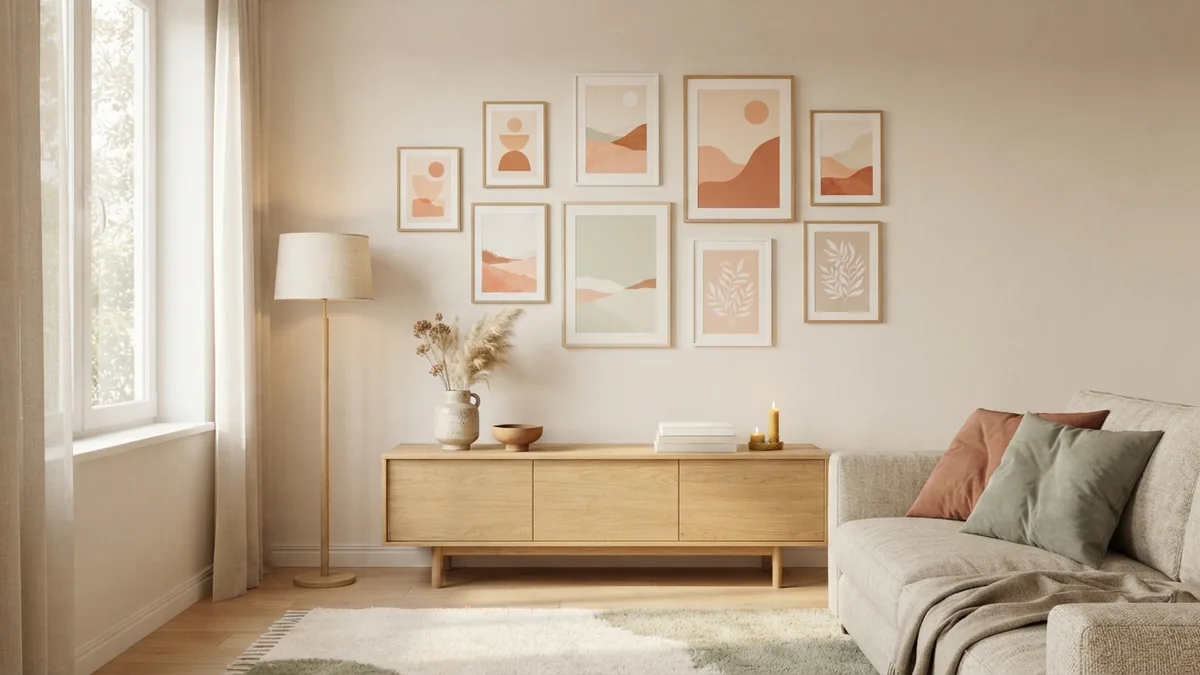
A gallery wall suits an eclectic room. Mix prints, paintings, family pictures, and small objects. Keep one feature in common, such as warm colors or light wood frames.
For a calm Scandinavian room, use simple frames and a small color range. Soft cream, pale oak, sage, and muted terracotta work well together. Leave more empty wall space around each piece.
Japandi rooms benefit from fewer, larger pieces. Choose quiet shapes, natural textures, and soft earth tones. One large print above a sofa may work better than many small frames.
You can also build a neat grid. Use matching frames and equal gaps between each piece. This style creates order and suits a room with simple furniture.
Mix frames with a clear link
Different frame styles can add depth. Mix wood, painted, and thin metal frames with care. Repeat one color so the display still feels planned.
Varying frame sizes adds interest. Keep the largest piece near the middle or lower third of the group. Smaller pieces can fill the gaps around it.
Pick Pictures That Work in the Space
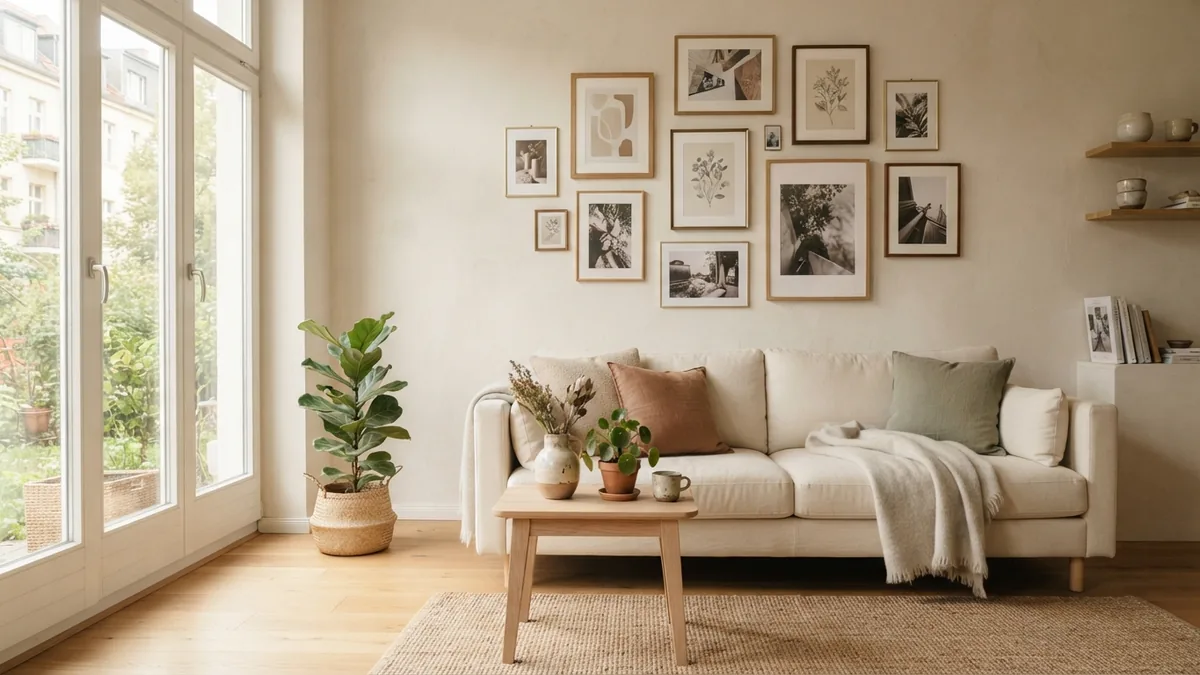
Start by asking what the room needs. A bold print can create a focal point above a plain sofa. A calm landscape can soften a room with strong furniture shapes.
Choose pictures that share at least one visual link. This link might be color, subject, frame finish, or line shape. It does not need to be an exact match.
Think about scale before you buy. A single small print may look lost above a wide sofa. A wide canvas or a group of three can fill that space with better balance.
Color coordination helps, but the art should not copy every fabric in the room. Pick one or two shades from the rug, curtains, or cushions. Then add a related shade for contrast.
If you wonder what pictures to hang in a living room, consider these options:
- Landscape prints for a calm, open feeling
- Abstract shapes for a modern focal point
- Botanical art for soft color and natural detail
- Family pictures for a warm personal touch
- Small line prints for a quiet gallery wall
Check the picture from different seats before you commit. Glass can catch window glare from one side of the room. A matte finish often looks better in bright living rooms.
Hang Pictures Safely and Neatly
Use the right wall fixing for the frame’s weight. A light print may need one picture hook. A wide or heavy frame may need two fixings for better support.
Check for pipes and cables before drilling. Keep fixings away from wall edges and damaged plaster. Ask a skilled fitter for help with very heavy art or fragile walls.
Measure twice before you make a hole. Mark the hook point on masking tape. The tape can also protect the wall from small pencil marks.
For a gallery wall, start with the center piece. Build outward from there. This keeps the main shape steady as you add each frame.
Avoid These Common Picture Hanging Mistakes
Hanging art too high is the most common mistake. A large gap above the sofa breaks the link between the furniture and the wall. Lower the picture until the full setup feels joined.
Another mistake is using gaps that change from frame to frame. Uneven spacing can make a group look accidental. Measure each gap with a ruler or a strip of card.
Do not fill every empty wall at once. Some open space helps the room breathe. Add one piece, live with it, and then decide if the wall needs more.
Avoid choosing frames without checking the room’s scale. Tiny frames can disappear on a broad wall. Oversized frames can crowd a narrow sofa or small room.
Finally, do not force perfect symmetry into an eclectic display. A relaxed group can still have order. Repeat colors, keep the outer shape clear, and let the inner pieces vary.
The easiest way to learn how to hang pictures in a living room is to work from the furniture outward. Set the center height first. Then check scale, spacing, frame mix, and sight lines.
Frequently asked questions
- How high should I hang pictures in a living room?
- Place the picture center about 57 to 60 inches above the floor. Above a sofa, leave 6 to 10 inches between the frame and the sofa back.
- How far apart should pictures be on a living room wall?
- Leave about 2 to 4 inches between most frames. Use smaller gaps for small art and wider gaps for large pieces.
- Should living room pictures be centered over the sofa?
- Yes, center the artwork or the full group over the sofa. The display should usually span about two-thirds of the sofa width.
- How do I arrange pictures on a living room wall?
- Treat the group as one shape, then keep the outer edges balanced. Start with the center piece and build outward with even gaps.
- What pictures should I hang in a living room?
- Choose art that suits the room’s scale and mood. Landscapes, abstract prints, botanical art, and family pictures can all work well.
- Is a gallery wall good for a small living room?
- Yes, if the group stays compact and the gaps remain clear. Use fewer pieces, lighter frames, and one shared color link.
Related reading
How Many Paintings Should You Hang in Each Room?
Find the right painting count, layout, and height for every room.
How to Decorate White Walls With Color and Texture
Make white walls feel warm with color, texture, art, and smart lighting.
Bathroom Paint — Moisture, Finishes and Cost
Choose bathroom paint based on dampness, airflow, surface prep and finish.