How Many Paintings Should You Hang in Each Room?
Find the right painting count, layout, and height for every room.
How Many Paintings Should Be in a Room?
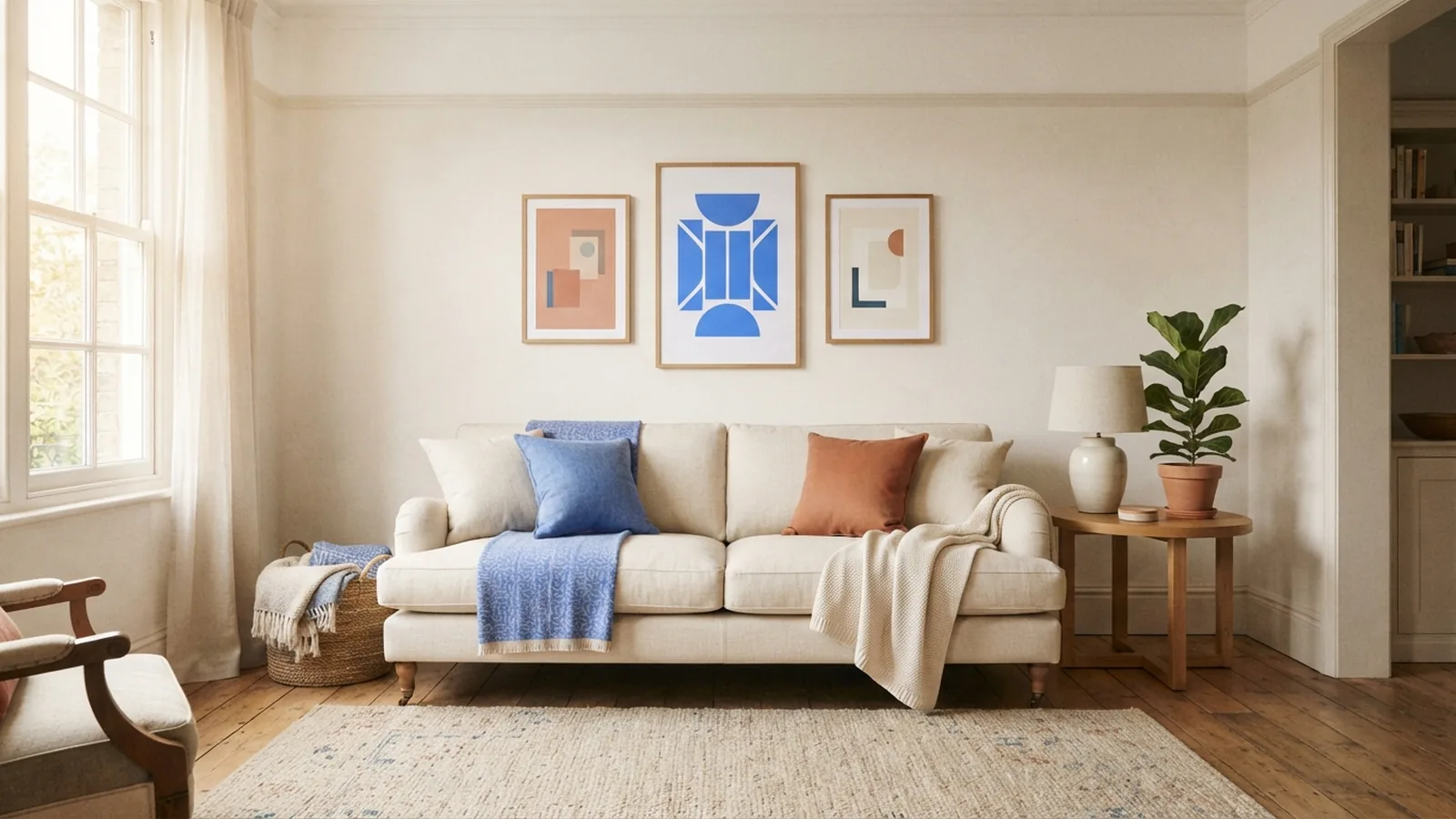
There is no fixed number of paintings that suits every room. Start with the wall size, furniture scale, and amount of open space. One large painting often suits a narrow wall. A wide wall may need three or five smaller works.
Use the furniture below the wall as your guide. Artwork should span about two-thirds of a sofa, console, or bed. This keeps the wall and furniture in visual balance. Leave enough blank space around each piece so the display can breathe.
- Small wall: one small or medium painting
- Medium wall: one large work or three small works
- Wide wall: three, five, or seven works in a planned group
- Large open wall: a gallery wall or one oversized statement piece
These numbers are starting points, not strict rules. A single bold canvas can fill a wall with more power than several small pieces. The best choice depends on the art, the room, and the mood you want.
Why Odd Numbers Often Work Better
Odd numbers often create a relaxed and pleasing arrangement. Three paintings feel less rigid than two matching pieces. Five works can form a strong group without looking too formal.
Odd numbers also give the eye a clear center. The middle piece can act as the main focus. Smaller works can then support it on both sides. This method works well when the paintings share a color, subject, or frame style.
Balance matters more than perfect symmetry. Pair a dark work with a lighter one on the other side. Match a busy pattern with a calmer image nearby. Keep the visual weight even across the full group.
When even numbers make sense
Two paintings can work well above twin tables or matching chairs. Four pieces suit a neat grid with equal gaps. Use an even group when the room has a formal style or strong symmetry.
Test the layout before making holes. Place paper shapes on the wall first. Step back several feet and check the full group. This simple test can reveal weak gaps or an uneven edge.
Simple Ways to Arrange Paintings on a Wall
Start by measuring the wall and the furniture below it. Mark the center of the furniture with a small piece of tape. Build the painting group around that point. Keep the outside edges clear and easy to read.
For a row, keep the top or center line level. Leave about two to five inches between frames. Use smaller gaps for small pieces. Wider gaps can help large works feel less crowded.
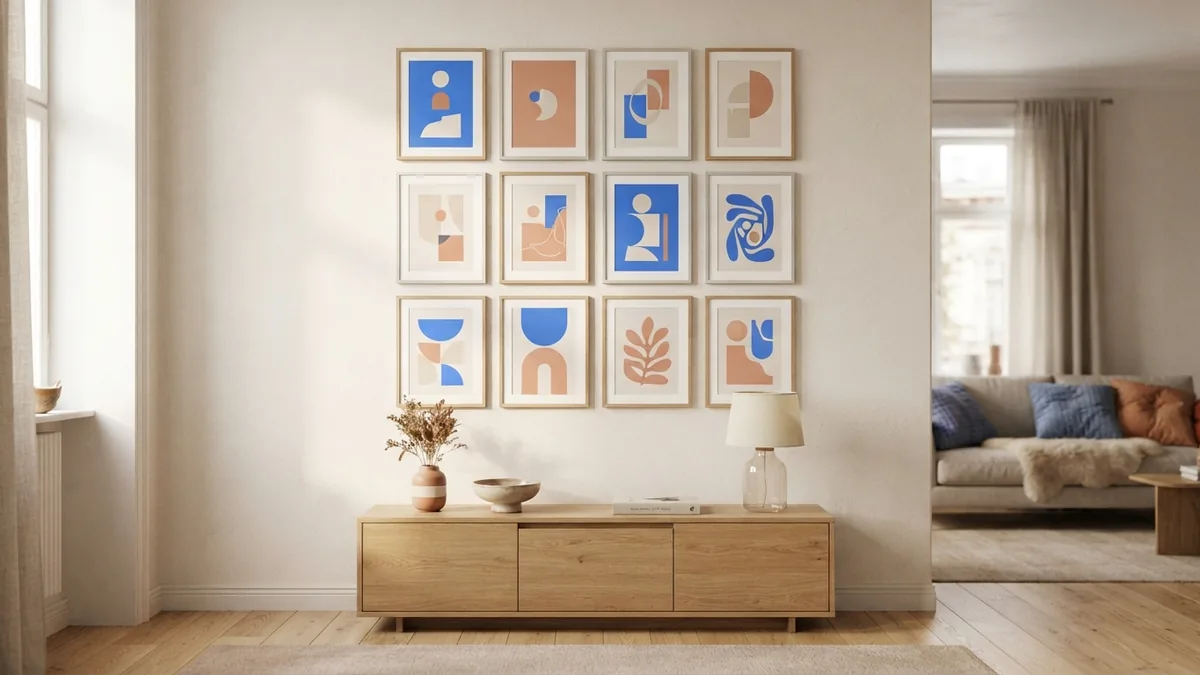
A grid gives a room a clean and calm look. Align both the top and bottom edges of each row. A salon-style group feels more relaxed. Keep the center of the group near eye level, then fill outward.
- Measure the full wall and the furniture below it.
- Lay the art on the floor and try two or three layouts.
- Cut paper shapes that match each frame size.
- Tape the shapes to the wall and review them from across the room.
- Mark each hook point before drilling or hammering.
Grouping smaller artworks can create stronger impact than separating them. Treat the group as one large piece. Keep its total width close to two-thirds of the furniture below. This creates a clear wall art arrangement.
Choosing Paintings for Different Rooms
The room style should guide both subject and frame choice. Modern rooms often suit bold shapes, simple lines, or large blocks of color. Traditional rooms may suit landscapes, portraits, still life, or ornate frames.
Use the room color scheme as a guide, not a strict limit. Pick one or two colors from the rug, curtains, or sofa. Let the art repeat those colors in a fresh way. A small contrast color can add energy without making the room feel loud.
Think about the room’s purpose before choosing a subject. Calm landscapes suit bedrooms and reading spaces. Bright shapes can add energy to playrooms or work areas. Food, plants, and soft nature scenes can work well in kitchens and dining rooms.
| Room | Useful art choices | Design note |
|---|---|---|
| Living room | Large abstract, landscape, or grouped prints | Match the sofa scale |
| Bedroom | Soft colors and calm scenes | Avoid overly busy images |
| Dining room | Still life, botanical, or rich color art | Echo the table or light fixture |
| Hallway | Small groups or a long horizontal work | Keep the path clear |
How to Arrange Paintings on a Living Room Wall
The sofa is the main anchor for most living room art. Center one large work over it, or center a group over the sofa. Keep the art about six to ten inches above the sofa back. Adjust this gap when the sofa has a very tall back.
Where to hang paintings in living room spaces depends on sight lines. Hang the center of the display about 57 to 60 inches from the floor. This places the art near average eye level. In a room used mostly while seated, lower the group slightly.
For a wide sofa, use one wide canvas or three related pieces. For a small sofa, choose one medium work or two narrow works. Do not let the art extend far beyond the furniture. The display should feel tied to the seating area.
Before you choose a layout, ask what type of paintings should be in living room spaces. Abstract art suits a modern setting with clean shapes. Landscapes suit rooms with natural textures. Portraits and classic scenes work well in more traditional spaces.
- Choose one focal piece before adding supporting art.
- Repeat one color across the group for a joined look.
- Mix sizes, but keep frame styles related.
- Leave clear space between the art and nearby shelves.
Can You Put Paintings in a Bathroom?
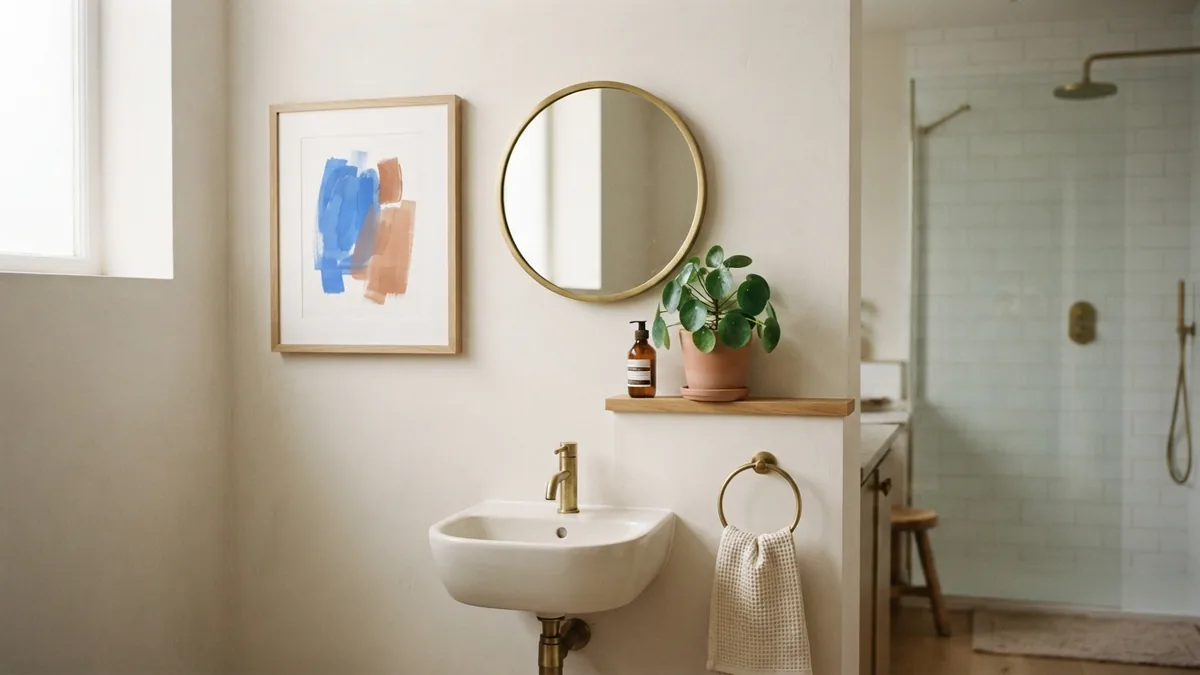
Yes, you can put paintings in a bathroom. Moisture is the main risk. Steam can soften paper, warp wood, and damage some paints. Choose the wall with the least direct spray and strongest airflow.
Bathrooms suit sealed prints, ceramic pieces, metal art, and works behind glass. Use a frame with a sealed back when possible. Keep valuable originals out of small, damp bathrooms. A well-vented guest bathroom gives you more choice.
Hang art away from the shower or bath splash zone. Leave space above the sink if water may reach the frame. Run the fan during showers and for several minutes afterward. Wipe damp surfaces soon after they form.
Bathroom placement checklist
- Choose moisture-safe materials and sealed frames.
- Keep art away from direct spray and wet towels.
- Check the wall for leaks before hanging anything.
- Use a secure hook on tile, plaster, or drywall.
- Review the frame after a few weeks for swelling or marks.
A small bathroom may need only one compact piece. A larger bathroom can hold a pair or a small group. Keep the colors simple if the tile already has a strong pattern. The goal is interest without a crowded wall.
Final Checks Before You Hang the Art
Review the full room from the doorway and from the main seat. The art should feel connected to the furniture below it. Check the height, spacing, color links, and frame weight. These details shape the room more than the number alone.
Use removable hooks or paper templates during the planning stage. Take a quick phone picture from several angles. A layout that feels balanced on the floor may look heavy on the wall. Make small changes before you commit.
The right answer to how many paintings should be in a room comes from scale and balance. Start with one clear focal point. Add art only when it improves the room’s rhythm and mood.
Frequently asked questions
- How many paintings should be in a room?
- Begin with one large work or a small group that spans about two-thirds of the furniture below. Wall size, furniture scale, and room style should guide the final number.
- Can you put paintings in a bathroom?
- Yes, but choose sealed prints, ceramic pieces, metal art, or framed works that resist moisture. Keep them away from direct spray and use the bathroom fan.
- How do you arrange paintings on a living room wall?
- Center the display over the sofa and keep it about six to ten inches above the sofa back. Place the center near eye level, usually 57 to 60 inches from the floor.
- What type of paintings should be in a living room?
- Choose art that fits the room style and color scheme. Abstract works suit modern rooms, while landscapes, portraits, and classic scenes suit traditional spaces.
- Where should you hang paintings in a living room?
- Hang paintings over the sofa, console, or another main anchor. Keep the center near eye level and avoid placing art where water, heat, or heavy traffic can damage it.
Related reading
Living Room Picture Hanging — Height, Layout, and Style
Set the right height, spacing, and layout for living room pictures.
How to Decorate White Walls With Color and Texture
Make white walls feel warm with color, texture, art, and smart lighting.
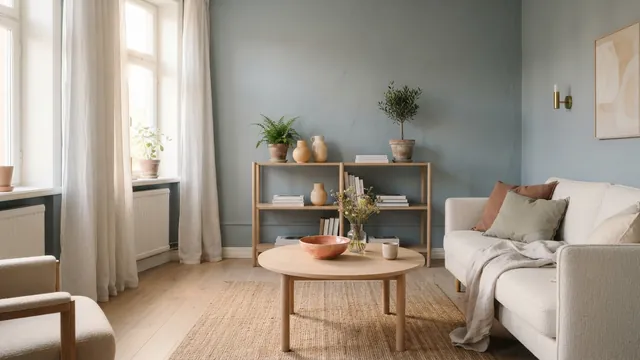
Curtains for a Blue Room — Color, Texture and Scale
Pair blue walls with curtains that suit your light, style, and room size.