Curtains for a Blue Room — Color, Texture and Scale
Pair blue walls with curtains that suit your light, style, and room size.
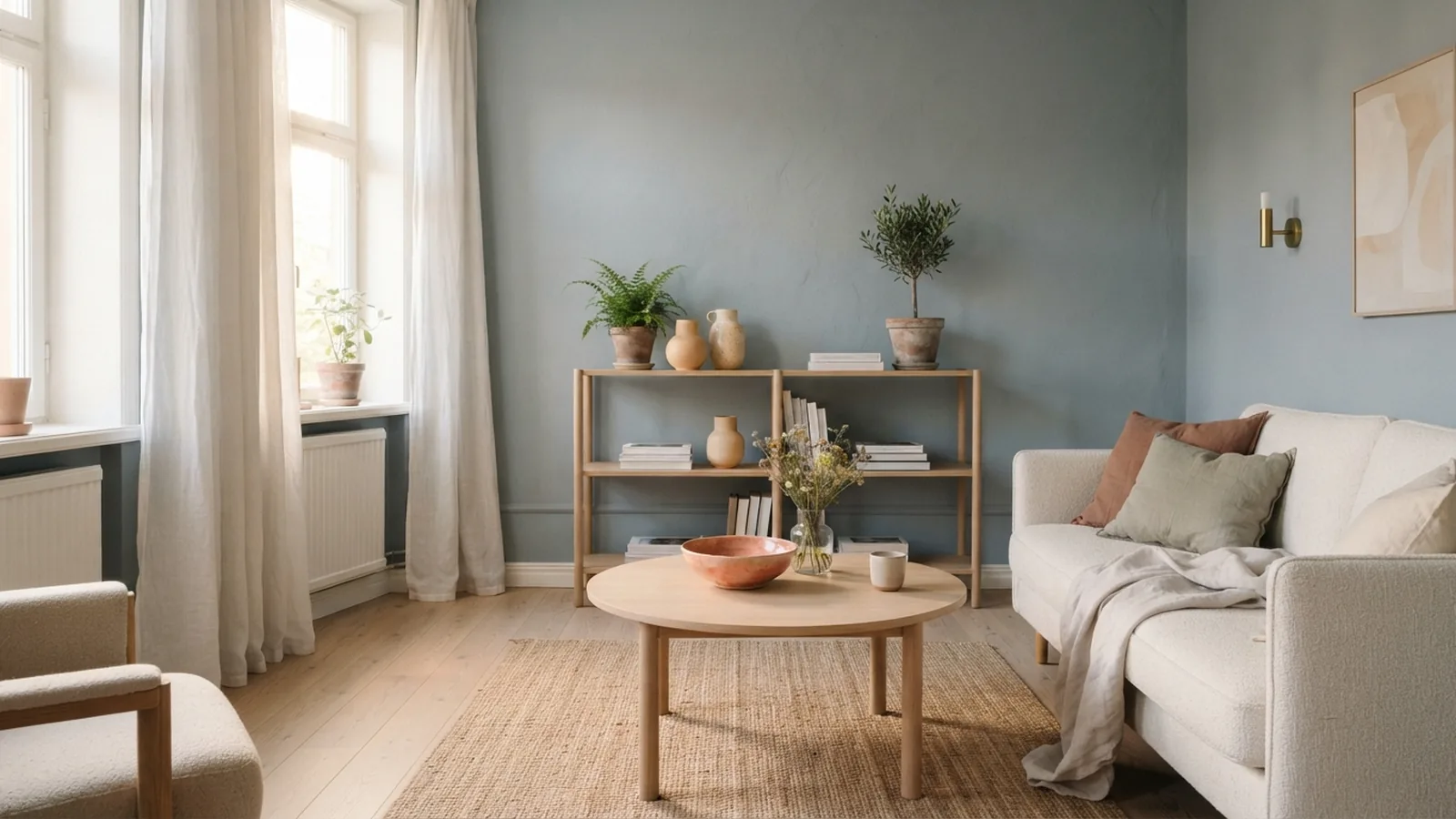
Best Curtain Colors for Blue Rooms
For a blue room, white, soft neutrals, deeper blues, and warm accents all work well. Choose based on the room’s light, the blue’s strength, and the mood you want. White curtains bring a fresh contrast, while beige or taupe soften the walls. For a bold look, try mustard yellow, blush, or muted brick.
Think about the whole room, not just the wall color. A pale blue bedroom can take oatmeal linen or soft white cotton. Navy walls pair well with cream, warm grey, or a dusty blue curtain. Repeat one curtain color in a cushion, rug, or lampshade to make the scheme feel joined up.
- White: Brightens blue walls and suits coastal, modern, and farmhouse rooms.
- Blue: Creates a calm, layered look when the shades vary in depth.
- Grey, beige, or taupe: Adds a quiet contrast and works with many furnishings.
- Yellow, blush, or brick: Brings warmth and a lively counterpoint to blue.
For a blue-on-blue scheme, avoid matching the curtain and wall shade too closely. A clear difference in tone adds depth. For instance, pair pale blue walls with navy curtains, or navy walls with a soft blue fabric. This keeps the room cohesive without making it feel flat.
How Curtain Color Changes the Room
Curtain color affects how a room feels because curtains cover a large area near the window. White and pale shades reflect more daylight. They can make a small, dark room feel more open. Dark curtains add weight and can make a tall room feel more settled.
Blue already brings a cool note to a space. Warm curtain colors can balance it. Try a soft yellow with powder blue, or muted terracotta with a deep, smoky blue. Keep the warm shade dusty rather than bright if you want a calm bedroom.
Neutrals are useful when the room has strong patterns or many wood tones. Grey can suit a crisp, modern blue room, while beige and taupe bring a softer, warmer feel. Check fabric samples beside the wall in morning and evening light. The same neutral can look quite different through the day.
Patterns or Solids: What Works Best?
Solid curtains are a reliable choice when the blue walls already carry a strong color. They let the wall remain the main feature. A textured weave adds interest without adding another busy pattern. This works especially well in small rooms or bedrooms meant for rest.
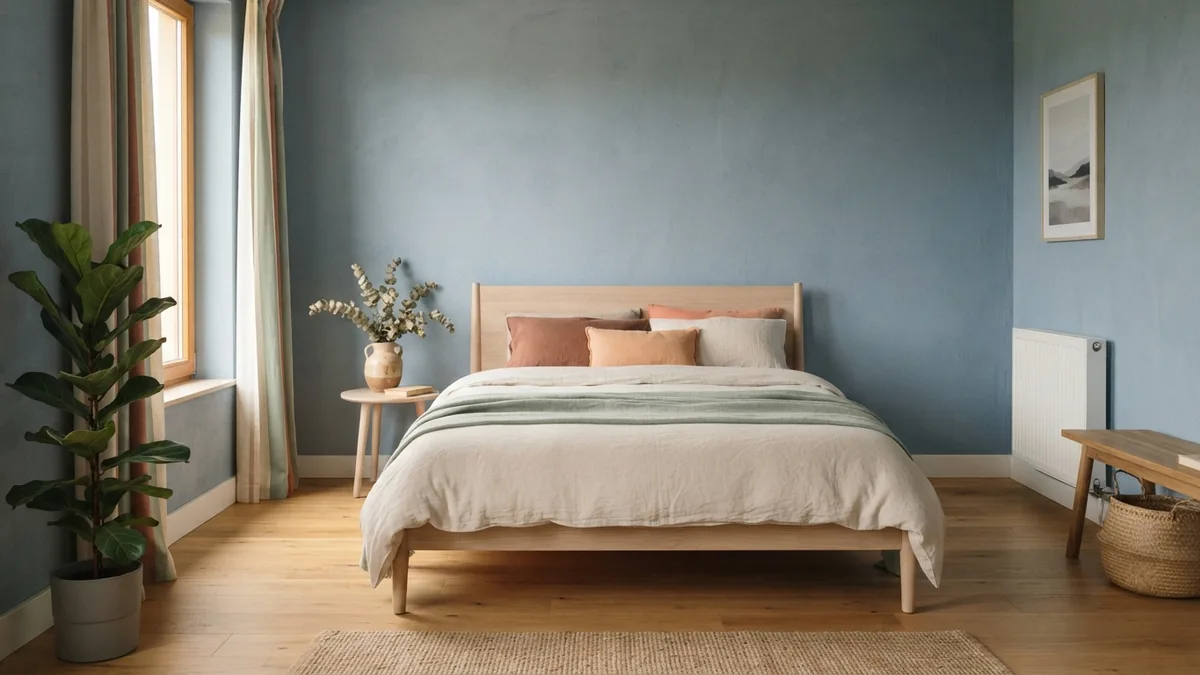
Patterned curtains can add character, but give the eye room to rest. If the wallpaper or rug has a bold print, choose curtains with a small-scale motif or a plain fabric. If the walls are solid blue, a larger floral or geometric print can become the room’s focal point.
Use a simple color link to keep patterns in balance. A curtain print might include blue, cream, and one warm accent already found elsewhere in the room. Avoid matching every pattern exactly. A mix of scale, such as a small curtain print and a larger rug design, feels more natural.
Choose Fabric for Light and Privacy
Fabric changes both the look and the job of a curtain. Sheer cotton or linen lets daylight pass through, but offers little privacy at night. Medium-weight cotton gives more cover while keeping a relaxed feel. Lined curtains block more light and help a bedroom feel private.
Consider how the window faces and how you use the room. A sunny bedroom may need a lined curtain to reduce early light. In a living room, a light linen blend can soften glare without making the space feel closed. For a street-facing window, pair a sheer layer with a heavier curtain.
Check how the fabric hangs before you buy. Linen often has a relaxed drape and can crease. Cotton blends tend to hold a neater shape. If you want curtains to reach the floor, measure from the planned rod height and leave a small gap above the floor, or let the hem just skim it.
Hang Curtains High for a Taller Look
Mount the curtain rod close to the ceiling to draw the eye upward. This makes the wall seem taller and gives the window a more generous frame. Place the rod about 10 to 15 centimetres above the window trim when ceiling height allows. In a low room, set it nearer the ceiling.
Extend the rod beyond each side of the window by about 15 to 25 centimetres. This lets the open curtains sit beside the glass instead of covering it. More visible glass can bring in more daylight. Wider rods also make a narrow window seem broader.
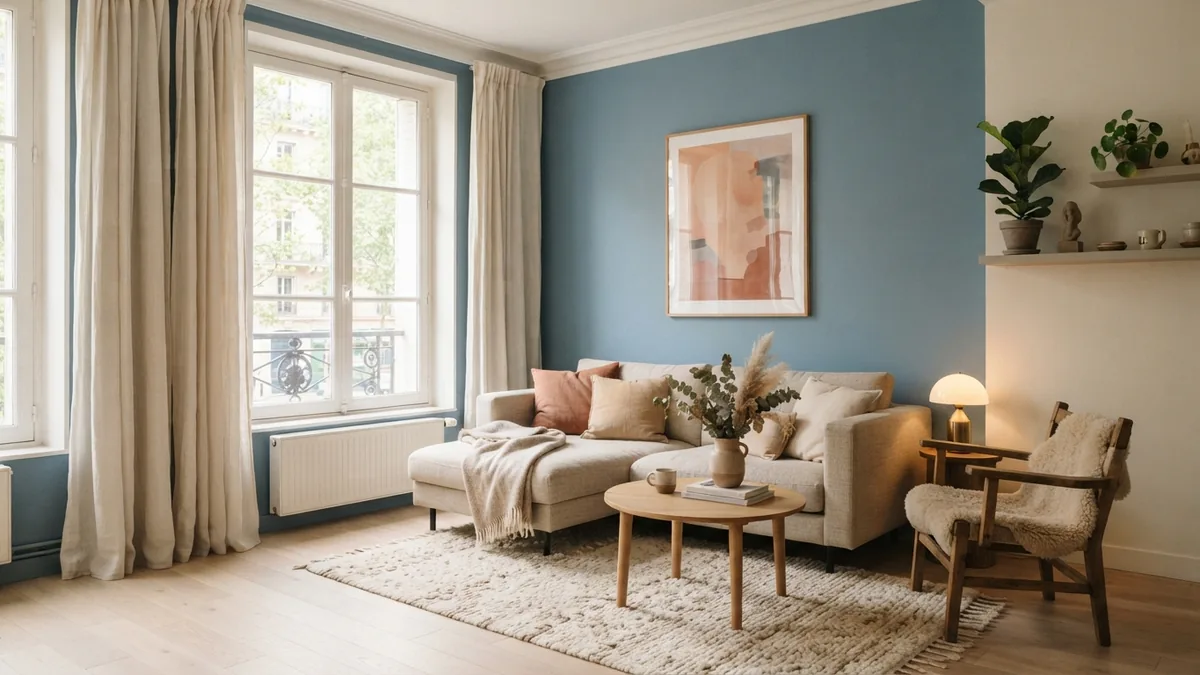
Measure before drilling, and check that the rod stays level. Choose brackets that suit the wall and curtain weight. For a ceiling-mounted track, mark both ends first, then add support points at even gaps. A ceiling track can also divide a studio room, but use a light curtain so the area still feels airy.
Make a Small Room Feel More Open
Light curtains can help a small blue room feel bigger, especially when they hang high and wide. White, ivory, pale beige, and soft grey are good starting points. They keep the window area bright and avoid a sharp block of color. Choose a shade that relates to the trim or bedding.
Keep the curtain fabric close in tone to the wall when you want fewer visual breaks. This can make the wall feel more continuous. If you prefer contrast, use a narrow stripe or subtle texture rather than a large, bold print. Keep the hem near the floor for a clean vertical line.
Room size is only one factor. In a large room, rich blue or warm brick curtains can add comfort and make the window feel grounded. In a small room, a dark curtain can still work if the space has ample daylight and the rest of the palette stays light.
Find the Right Match for Your Blue Room
The best curtains for blue walls depend on the shade of blue, the light, and the room’s purpose. White gives crisp contrast, blue creates a layered scheme, and beige or taupe softens the look. Warm shades add energy when the room needs a stronger accent.
Start with two or three fabric samples, then view them beside the wall at different times of day. Check how each option works with the floor, bedding, and other large pieces. Finish by hanging the curtains high and wide where the room allows. That small change can make the whole window feel better framed.
Frequently asked questions
- What color curtains look best with blue walls?
- White, beige, taupe, and soft grey are versatile choices. For more contrast, try muted yellow, blush, or brick.
- Do blue curtains work with blue walls?
- Yes. Choose curtains several shades lighter or darker than the walls to add depth and avoid a flat look.
- What curtains make a small blue room look bigger?
- Light curtains in white, ivory, or pale beige can keep the window area bright. Hang them high and extend the rod beyond the window.
- Should curtains in a blue bedroom be patterned or plain?
- Plain curtains suit rooms with busy rugs or bedding. A restrained pattern can add interest when the walls and furnishings are mostly solid.
- How high should I hang curtains to make a room look taller?
- Place the rod near the ceiling when possible, or about 10 to 15 centimetres above the window trim. Let the curtains reach close to the floor.
Related reading
Furnishing a New House — Spend Wisely, Settle In
Plan your budget, buy the essentials first, and make each room feel like home.
Couch Placement — Comfort, Flow, and Style
Arrange couches for easy movement, good conversation, and a balanced room.
Small Kitchen Design — Light, Space and Smart Storage
Use light, smart storage, and slim furnishings to make a small kitchen feel more open.