How to Store Blankets in Your Living Room: Smart Ideas
Simple ways to store and organize living room blankets neatly.
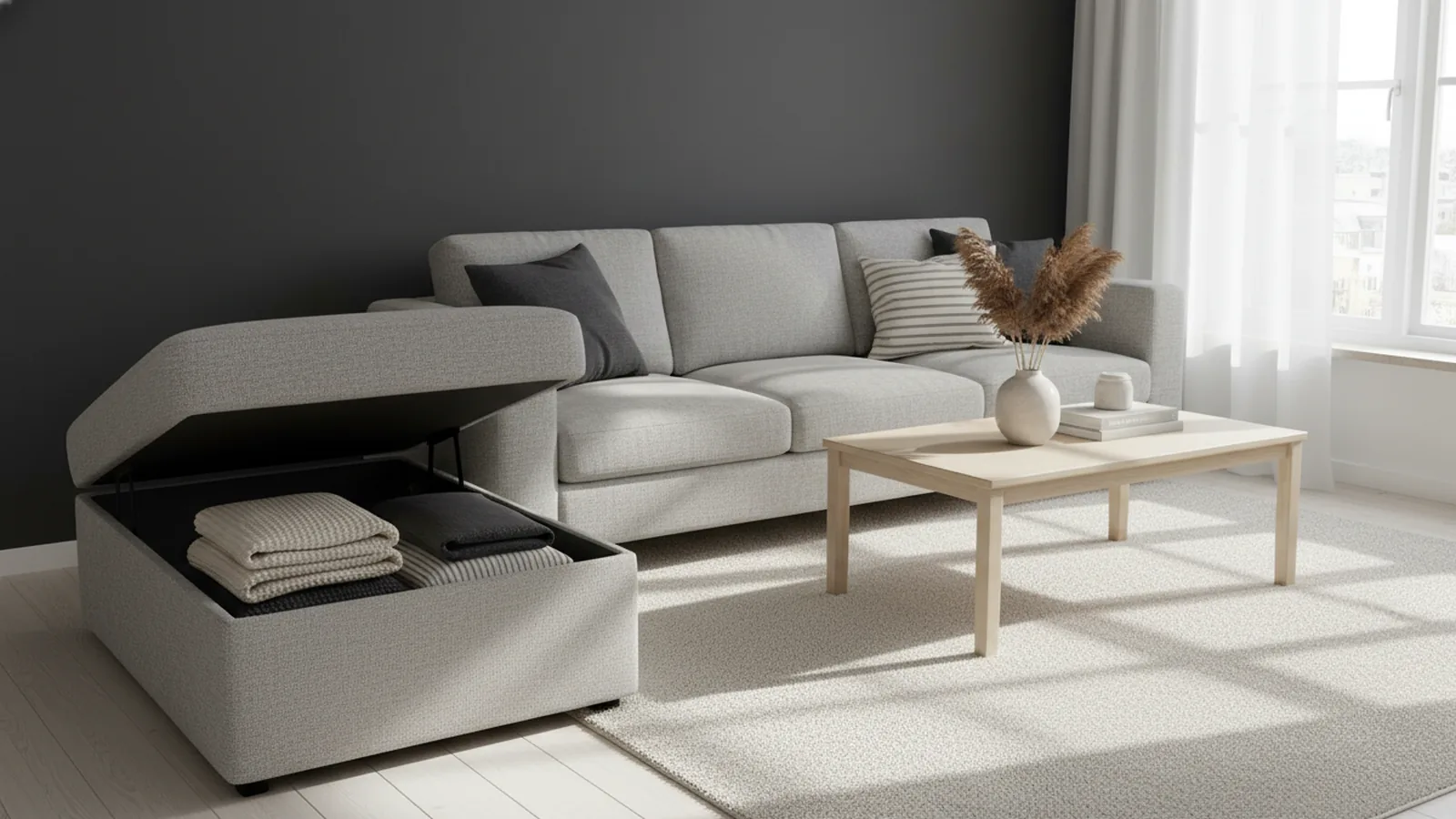
How to store blankets in your living room without clutter
The quickest win for blanket storage is to pick a home for every blanket type. Keep everyday throws within arm’s reach. Move the rest to deeper storage like baskets, shelves, or cabinets.
Use storage that matches how you actually use blankets. If you grab a throw during movie nights, choose a pull-and-go spot near the sofa. If you rotate seasonal blankets, store them where access is slower but still easy.
This guide shows how to store living room blankets so your space looks tidy. You will also learn how to organize blankets in living room with folding tricks and functional decor.
Understanding blanket storage needs
Before you buy anything, measure two things: the space you have and the blankets you own. Many living rooms struggle because storage is chosen for looks, not for real use. Start by listing your blanket sizes and how often you reach for them.
Think about the “grab path.” You should be able to reach a throw without moving cushions or opening doors. That is what makes blanket organization feel effortless. When access is hard, blankets pile up on chairs and end up visually messy.
Also consider how many throw blankets belong in one room. A common sweet spot is 2–5 throws on display or in easy reach. More can look layered, but it can also overwhelm the sofa and seating area. Store the extra so the room stays calm.
- Everyday throws: within reach of the sofa or reading chair
- Seasonal blankets: deeper storage with clear labeling
- Special use: travel, camping, or “saved for guests” blankets
Best storage solutions for living room blankets
The best where to store blankets in living room is determined by your layout and sightlines. Pick storage that sits near the places you use blankets. Place it where it looks intentional, not like an overflow bin.
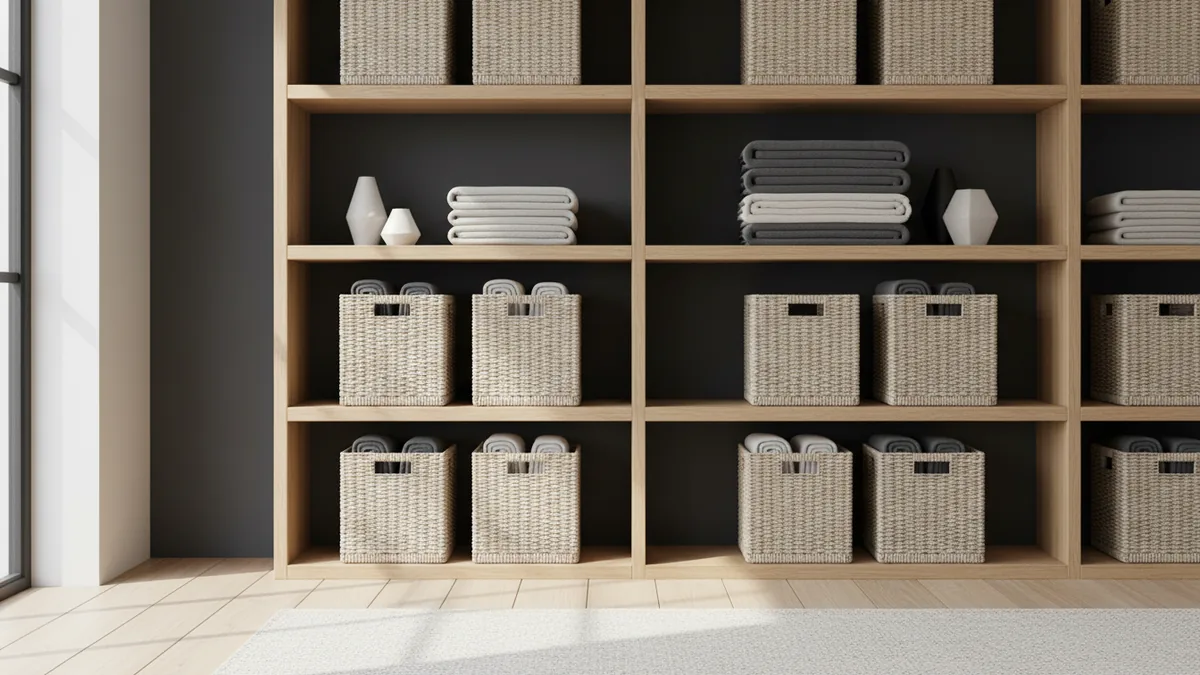
Baskets work well because they hide texture and keep throws contained. Shelves are great for folded blankets if you can keep stacking neat. Ottomans add seating and storage in one piece. Cabinets are best when you want everything out of sight.
Here are practical options and when each one shines. Choose based on available space, aesthetics, and accessibility.
| Storage option | Best for | Access level |
|---|---|---|
| Decorative baskets | Living room blankets that you use weekly | Easy |
| Open shelves | Folded throws with consistent sizes | Easy to medium |
| Storage ottomans | Bulky blankets and extra throws | Easy |
| Cabinets or media consoles | Keeping blankets fully out of view | Medium |
If you are wondering how to store throw blankets in living room, folding consistency matters. When blankets match in size and thickness, they stack neatly and look curated. If they vary a lot, baskets or a cabinet prevent lumpy piles.
Creative ways to organize throw blankets
Organization is easier when you treat each blanket like a category, not a loose item. Build a system that repeats. That way, the living room stays tidy even on busy weeks.
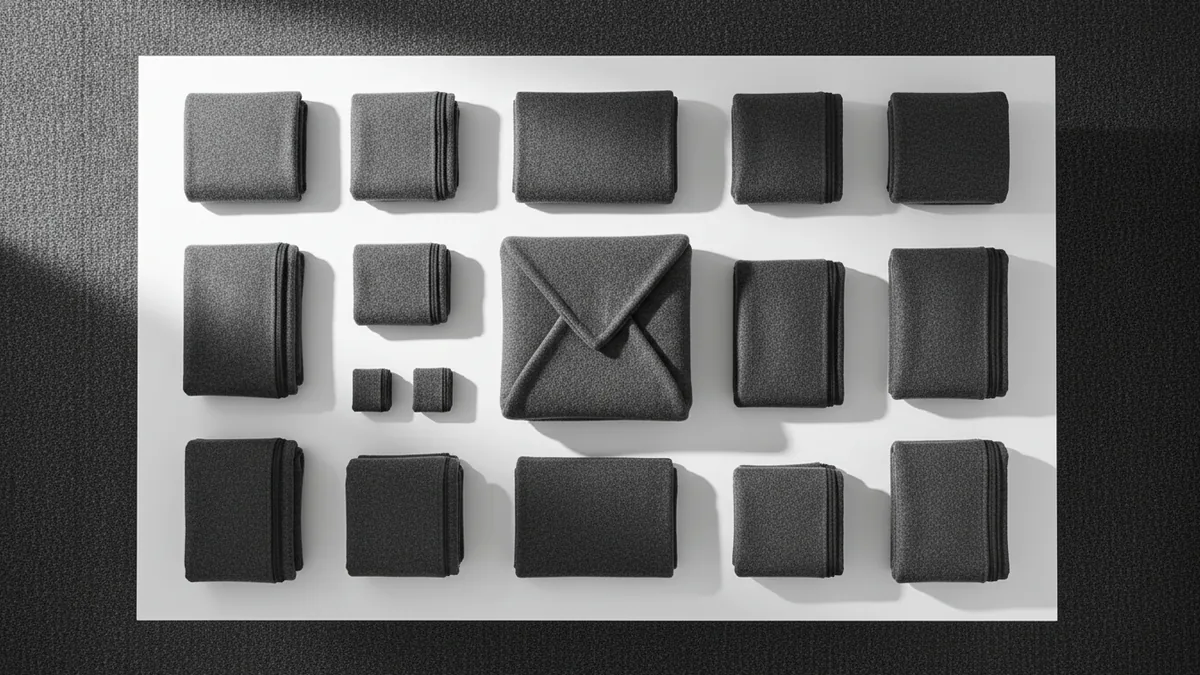
Start with folding techniques that save space and keep blankets stable. Aim for folds that fit your chosen container. For shelves and baskets, use folds that stay “flat” rather than rolling.
- Envelope fold: fold lengthwise, then tuck the ends like an envelope. This keeps edges from unfolding.
- Rectangle fold: fold into a consistent rectangle for stacking on shelves.
- Roll for bins: roll thinner throws and stand them upright in baskets.
- Bundle by thickness: thicker blankets in baskets, thinner ones on shelves.
Next, organize by visual access. Put the most used throws in the most visible spots. Store “seasonal” throws in under-sofa or cabinet areas.
- One basket per category: movie-night throws vs. guest throws
- Use separators: small dividers inside shelves or baskets prevent sliding
- Keep a “do not fold” zone: very textured throws can be draped over a blanket ladder
If you are learning how to organize blankets in living room, remember the goal is repeatable. You should be able to reset the system in under five minutes after a movie night.
Functional decor: blankets as design elements
Blankets can look like part of your living room design when they are placed with intention. Use throws to add color and texture, not to create a permanent pile. One folded throw on each seat looks styled. A stack on the floor usually looks accidental.
Try “planned drape” instead of random placement. Fold a throw once, then place it over the back or armrest in a way that shows the pattern. For neutral rooms, choose a textured throw to add depth. For bold spaces, keep the blanket style simpler and let other decor carry the color.
If you like the look of more throws, rotate them. Keep only a few on display at a time. Store the rest so the sofa stays breathable and the room feels open.
- Back-of-sofa rule: one folded throw per main seating spot
- Ottoman highlight: leave a corner throw visible when the ottoman lid opens
- Blanket ladder: display a single throw for easy grab
This approach helps with both living room design and blanket organization. It also supports accessibility in storage, because you do not need to dig for the right texture.
Tips for accessing blankets easily
Easy access is the difference between storage that works and storage that becomes clutter. Keep the most used blankets closest to where you sit. If your sofa is the main hangout, prioritize storage beside or under it.
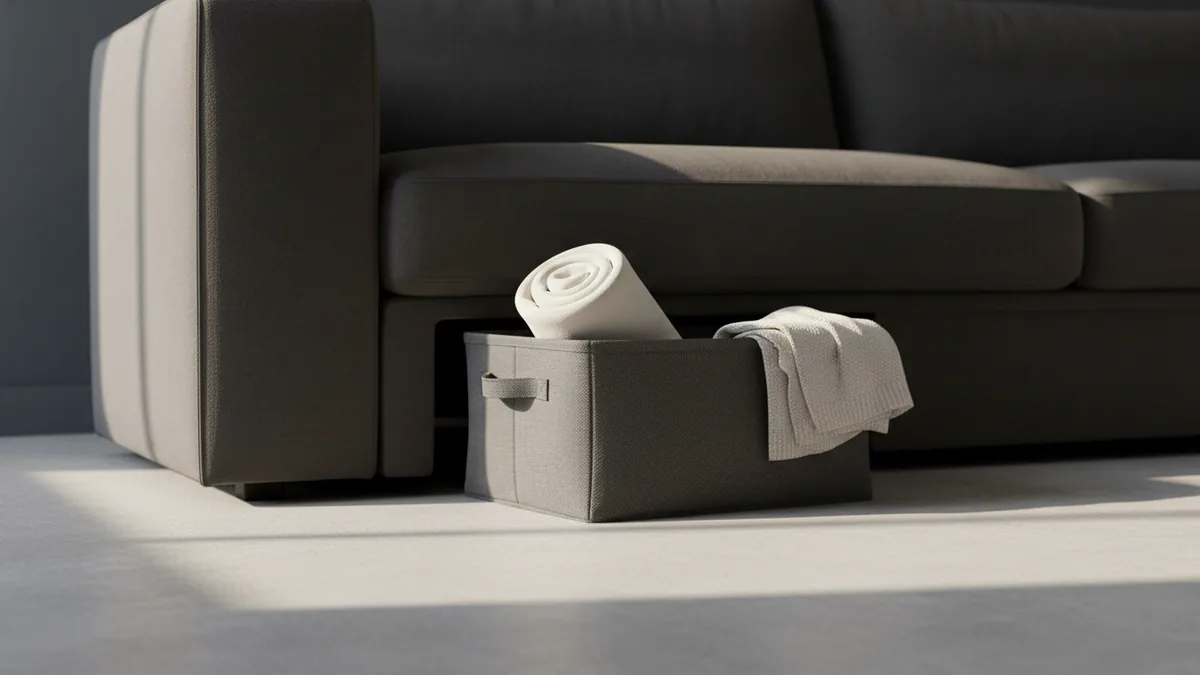
Under-sofa and under-coffee table storage are great because they hide bulk. Use shallow containers if clearance is tight. For deeper spaces, choose bins that pull out smoothly.
Here are specific ways to use under-sofa and under-coffee table space. These tricks make how to store living room blankets feel natural.
- Under-sofa bins: use low-profile fabric bins so they slide in and out.
- Lidded plastic or fabric: helps protect from dust while keeping items contained.
- Pull-forward access: store blankets at the front of the bin so you do not have to move everything.
- Double-duty under coffee tables: lift-out trays or hinged panels work well for quick grab.
If you store blankets in an ottoman, make it consistent. Put your “regular” throws on top. Store seasonal blankets deeper inside so you are not fishing for them mid-evening.
Folding is also part of access. A stack that looks tidy but falls over when you open it will cause a mess later. Aim for stable folds and containers that keep them supported.
Common mistakes to avoid in blanket storage
Most storage problems come from two issues: too much stuff and storage that does not match use. Over-stuffing is the biggest mistake. When bins are packed tight, blankets turn into a messy clump and become hard to pull out.
Try leaving a small gap in each container. If you cannot open the lid without wrestling, you need a bigger space. If baskets are so full that blankets spill over the rim, downsize what stays in that spot.
Another common issue is mixing blanket types in the same pile. Thicker and thinner blankets behave differently. Mixing them can make stacks unstable and can also lead to stretching or wrinkles over time.
Finally, avoid storage that is visually hidden but physically awkward. A cabinet that is too far from seating makes blankets feel like “work.” Even if the room looks neat, clutter returns because access is slow.
- Do not over-stuff storage: keep easy pull space for at least one blanket
- Do not mix thick and thin blankets in the same stack
- Do not hide your only storage far away from the sofa
With a clear system, you will learn how to store throw blankets in living room in a way that stays tidy. You will also see that good storage supports real comfort, not just neat surfaces.
A quick reference for choosing your setup
If you want a fast decision, match containers to your access needs. Use open shelves or baskets for daily throws. Use ottomans or cabinets for bulk and seasonal rotation. Then fold consistently so every blanket “fits the plan.”
That is how you get a living room that looks styled, stays organized, and keeps blankets ready when you need them.
Frequently asked questions
- How many throw blankets should you keep in a living room?
- A common guideline is 2–5 throws for easy reach or display. Store extras out of sight so the sofa stays uncluttered.
- Where should you store blankets in a living room?
- Store everyday throws near the sofa or reading chair. For bulk or seasonal blankets, use under-sofa bins, ottomans, or cabinets.
- What are the best blanket storage solutions for living rooms?
- Baskets for quick access, shelves for neat stacks, and ottomans for dual-purpose storage work well. Cabinets are ideal when you want everything hidden.
- How do you organize blankets in a living room so they stay neat?
- Fold consistently, then group blankets by use or thickness. Use one container per category to make resetting easy.
- How to store throw blankets in living room spaces with limited floor room?
- Use under-sofa or under-coffee table storage with low-profile bins. Choose containers that pull out easily without rearranging everything.
- What is a good way to avoid clutter when storing living room blankets?
- Do not over-stuff any storage. Leave space so blankets can be pulled out smoothly without spilling.
Related reading

Couch Placement — Comfort, Flow, and Style
Arrange couches for easy movement, good conversation, and a balanced room.
Small Kitchen Design — Light, Space and Smart Storage
Use light, smart storage, and slim furnishings to make a small kitchen feel more open.
Living Room Paint — Measurements and Buying Tips
Measure your walls, count coats, and buy the right amount of living room paint.