How to Fit a King Bed in a Small Bedroom Without Losing Comfort
King bed, small room. Here’s how to fit it with smart measurements and low-profile choices.
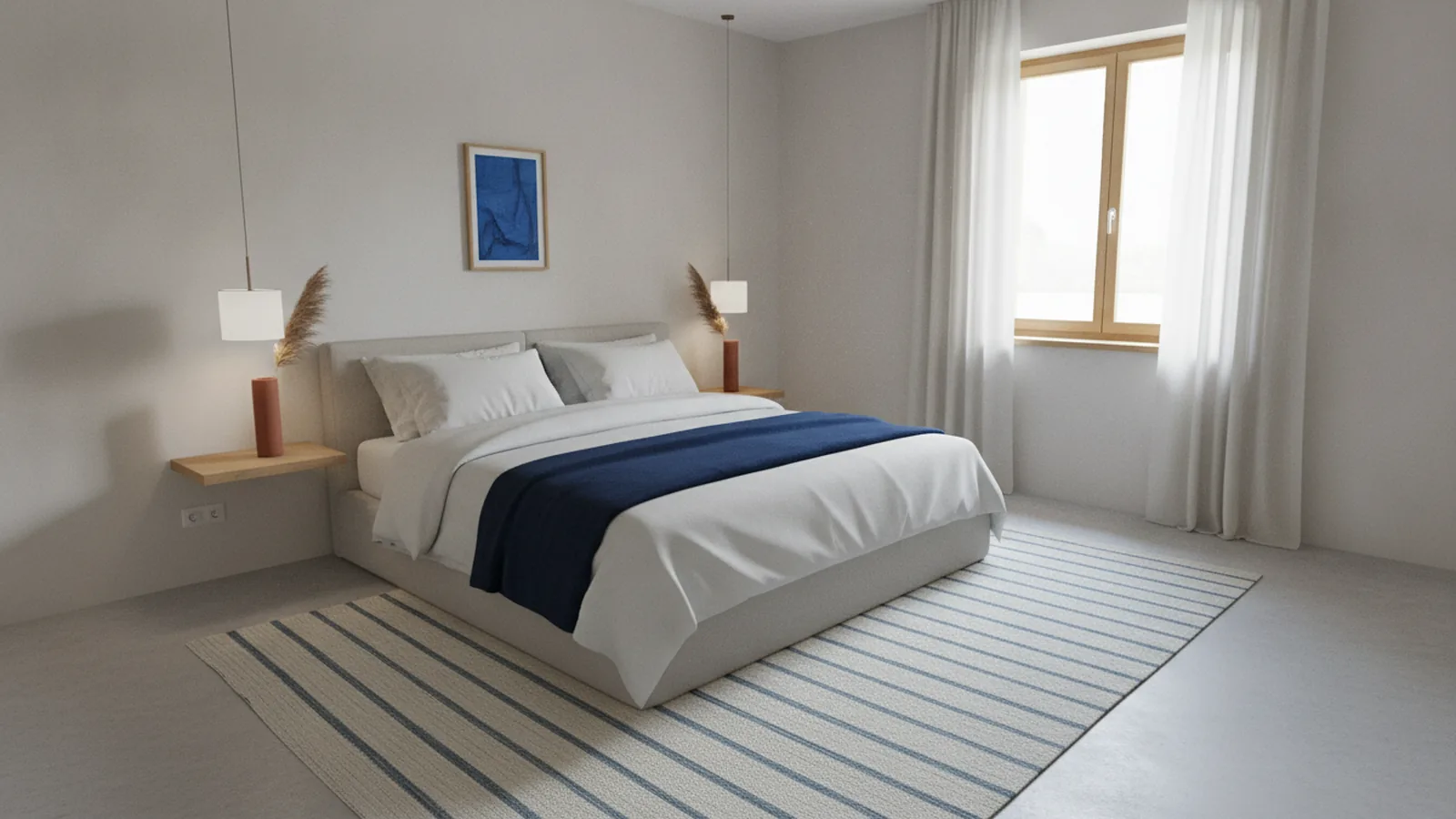
If you want how to fit a king bed in a small room, start with accurate measurements and pick a low, light bed setup. A king bed can work in tight bedrooms when the mattress and furniture heights stay low. You also need clear walk paths so the room feels usable, not blocked.
This guide walks you through the key decisions: room sizing, bed frame options, mattress height, and the furniture arrangement around the bed. You will end with a practical bedroom layout plan you can measure and refine.
Assessing your room dimensions before you buy anything
The fastest way to fail is to shop first and measure later. Instead, measure your room with the king bed size in mind and plan around doors, windows, and built-ins. In most homes, the limiting factor is not the bed footprint alone. It is the space needed for doors to swing and for people to pass by.
Start by confirming the king bed size you mean. In the US, a standard king bed is typically 76 in x 80 in (about 193 cm x 203 cm). In other regions, “king” can vary. Get the exact dimensions from the seller, then write them down.
Next, measure these items and record them in one spot:
- Room width and length wall-to-wall
- Door openings, including swing clearance
- Window locations and any radiator or baseboard protrusions
- Closet or built-in doors and how much they open
- Any awkward corners like angled walls or columns
When you draft your bedroom layout, treat clearance like a “usable strip,” not an optional extra. A good rule for comfort is leaving at least 50 cm of walkable space on either side of the bed. If you can only manage one side at that width, prioritize that side for daily use and access.

Choosing the right bed frame for a small bedroom
The bed frame affects how tall the bed looks, how much visual weight it adds, and how easily you can move around it. Many people assume that if the footprint fits, the room will feel fine. In reality, a heavy frame can make a small room feel tighter even when the floor space checks out.
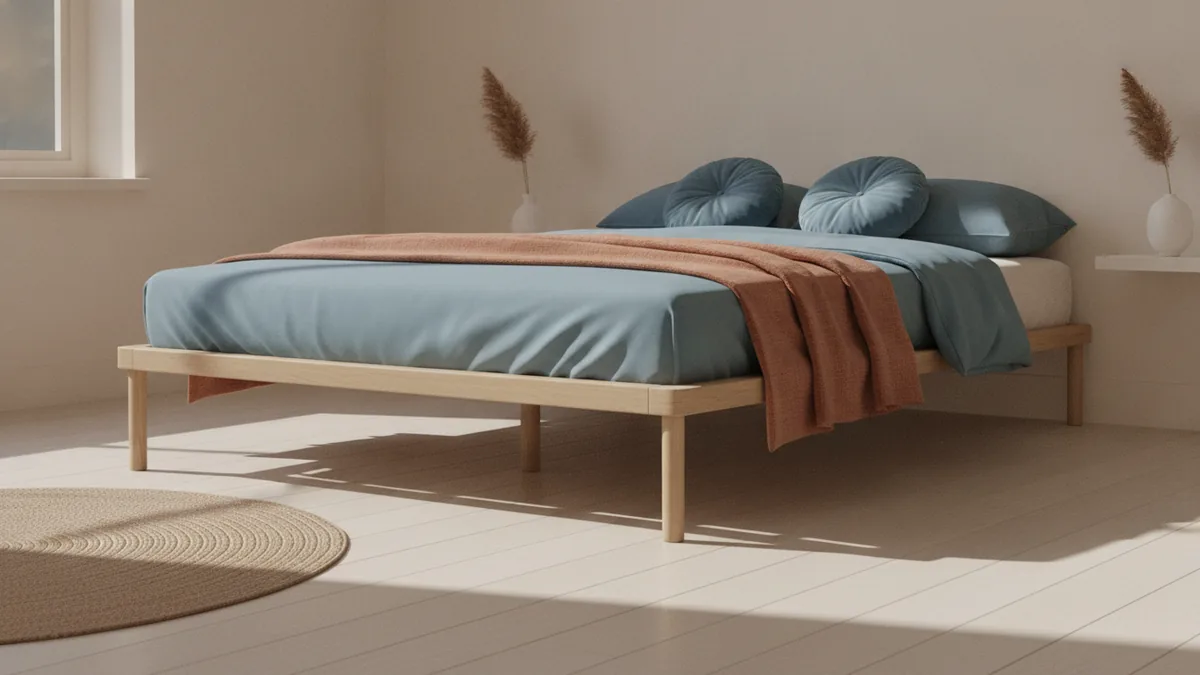
Look for bed frame options that keep the overall height down and the lines open. Thin rails and slatted designs reduce how much “bulk” you see. Also consider the leg style. Thin-legged furniture can make the bed look more “floaty,” which helps the room feel less crowded.
Be careful with frames that include tall storage or large headboard sections. Storage beds, high-profile ensemble beds, or frames with bulky drawers often add height and visual mass. In a small bedroom, that height can swallow your clearance and make the room feel boxed in.
Here is a quick guide to common bed frame choices and their small-room fit:
| Bed frame type | Why it works | Watch-outs |
|---|---|---|
| Low platform frame | Creates a calmer visual line and less height | Confirm the mattress depth still fits your target |
| Low profile with thin legs | Improves sight lines and keeps the floor feeling open | Check stability with your mattress type |
| High storage frame | Extra storage can be useful | Tends to overwhelm small rooms with height |
| Ensemble / tall headboard style | Strong style statement | Can reduce breathing room, especially near windows |
Plan the placement before you finalize the frame. If the bed blocks a door swing, you will feel cramped every day. Choose a frame height that keeps the top of the headboard from visually dominating the room.
Opting for a low profile mattress thickness
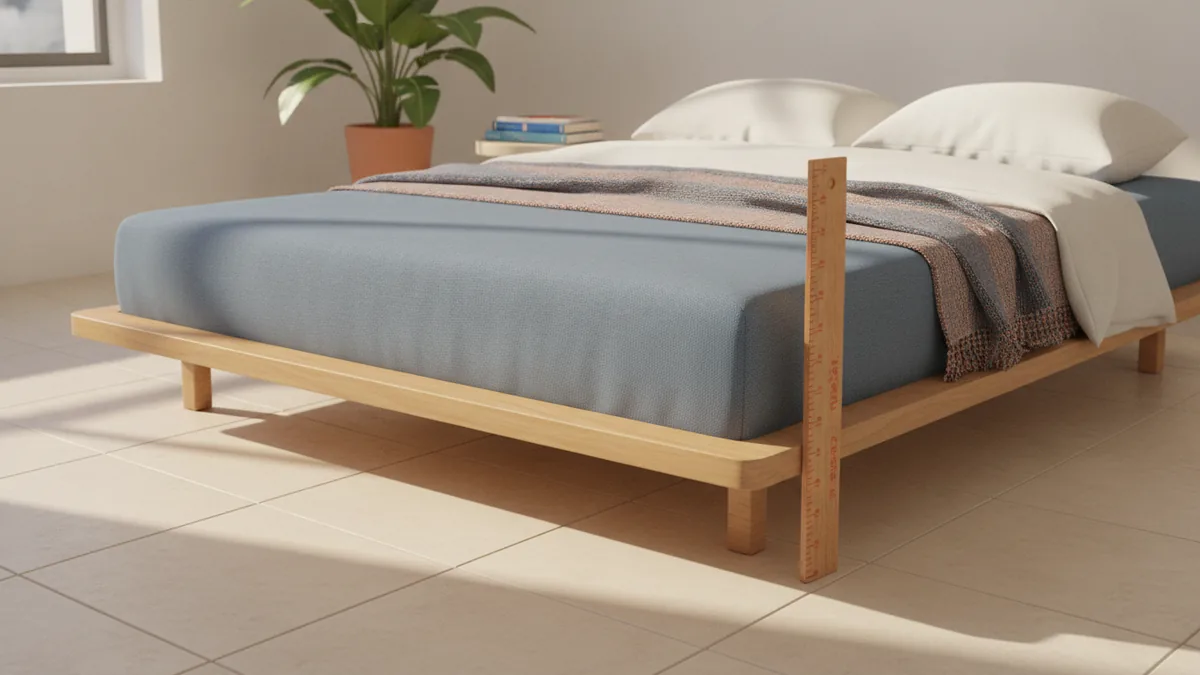
Even if your bed frame fits, mattress thickness can quietly ruin the plan. For small rooms, you want the bed to feel lower and lighter. As a practical limit, ensure the mattress height does not exceed 60 cm for a better fit in small rooms.
“Mattress height” can mean different things. Some sellers list total height including the mattress topper. Others list only the mattress. To avoid surprises, ask for the exact measurement and confirm whether it includes any foam topper.
If you are comparing options, look at how the mattress height changes the room’s visual balance. A taller mattress raises your sightline and can make the rest of the furniture seem too high. That is especially noticeable with wardrobes, dressers, and bedside tables.
Here is a simple way to stay in control while shopping:
- Measure from your planned floor surface to the top of the headboard you want.
- Subtract the frame height from that total.
- Use the remaining number to set a hard ceiling for mattress thickness.
- If you are close to the 60 cm target, choose a thinner profile or a lower frame.
This approach keeps your bedroom decor coherent. It also helps you match the bed to other furniture heights without guessing.
Maximizing walkable space with smart furniture arrangement
Walkable space is what makes a small bedroom feel livable. A king bed takes up a lot of area, so you need a space-saving furniture layout that prioritizes movement. The 50 cm walkable space rule on either side helps, but you can do more by choosing where you place the bed.
Try these placement strategies. Each one aims to keep paths clear and reduce bottlenecks around doors.
- Place the bed so the main path is through the open side, not around the foot
- Avoid placing the bed directly in front of a closet door unless the door clearance is proven
- Align the bed to a long wall when it reduces door interference
- Keep the foot of the bed clear for daily movement
Beside the bed, think about how you access drawers, outlets, and lamps. If you need to step around a bedside table to sit down, the layout will feel awkward. You can prevent that by keeping one side slightly more open and using that side as your daily entry point.
Round bedside tables can also help with small bedroom decor. Their curved edges reduce how “sharp” corners feel in a tight space. That subtle effect can make the room look more open, even if the measurements are unchanged.
Also keep furniture low and light. When possible, use bed frame options with thin rails and low lines. Pair them with low-profile dressers and light curtains. The goal is to preserve sight lines across the room.
Selecting bedding and accessories that don’t add visual bulk
Once the bed is placed and the heights are right, your bedding and accessories finish the look. In a small bedroom, the wrong choices can add height and make the room feel cramped again. You want your setup to feel streamlined and cohesive.
Start with bedding thickness. A thick comforter can visually widen the bed and raise the perceived height, especially against a low headboard. Instead, consider a tailored duvet cover and a slim layer that still feels cozy. If you use a topper, match its loft to the look you want while staying within the mattress thickness limit.
Next, choose pillow quantities and sizes that fit the scale. For example, a king bed often looks best with fewer, larger pillows instead of many small ones. That reduces clutter and helps the bed feel calmer. Keep accent colors consistent with the wall tone so the bedroom layout feels intentional.
For bedside accessories, prioritize function over items. Use a single lamp, keep cords tidy, and avoid tall decor stacks. If you want a headboard display, keep it low and minimal so the bed stays the focal point without dominating the room.
Finally, check the room from the door viewpoint. Stand where you enter and look at the bed height, the walking path, and how furniture lines meet. Small tweaks, like switching to round bedside tables or swapping a taller lamp, can make the room feel bigger without changing the bed.
Quick reality check: If you cannot walk past the bed on your planned route without turning sideways, it is too tight. Reducing clutter helps, but clearance is still the foundation.
Frequently asked questions
- What size room do I need to fit a king bed in a small bedroom?
- Start with the king bed footprint, then add clearance for doors and walking paths. Plan for at least 50 cm of space on either side to avoid a cramped feel.
- How low does a mattress need to be for a small room king bed?
- Keep the mattress height to a total under 60 cm. Confirm whether seller measurements include toppers so you do not overshoot.
- What bed frame options work best for small bedrooms?
- Use low platform frames or low frames with thin legs. Avoid high storage or bulky ensemble frames because they add height and visual weight.
- Can I fit a king bed if my bedroom is narrow?
- Sometimes, if you place the bed carefully and protect clear walk paths. Prioritize one open side and keep the foot area clear for easy movement.
- Do round bedside tables really help in a small bedroom?
- Yes, they can make tight corners feel less harsh. They also pair well with thin-legged furniture to keep the room visually open.
- How do I choose bedding for a king bed in a small room?
- Use slimmer bedding layers and tidy pillow arrangements. Keep accessories low so the bed stays the main focus without adding height.
Related reading
Couch Placement—Flow, Focus and Comfort
Place your couch to frame a focal point, keep paths clear, and make the room feel balanced.
Master Bedroom — Color, Comfort and Personal Style
Build a calm, personal bedroom with smart choices and a budget that works.
Room Painting Labor Costs — Rates and Budget Factors
See typical room-painting labor rates and learn what drives the final price.