How to Get Rid of Small Ants in the Kitchen
Learn how to remove small kitchen ants with cleaning, safe baits, natural repellents, and simple steps that block new trails and nests.

How to Get Rid of Small Ants in the Kitchen
To get rid of small ants in the kitchen, remove food and water first. Then wipe away ant trails, seal entry points, and place ant bait near active paths. Bait works best when ants carry it back to the colony.
Do not rely on spray alone. Spray may kill ants that you see. It often leaves the nest untouched. A steady plan works better than a quick burst of insect spray.
- Store food in sealed containers.
- Clean crumbs, grease, and sticky spills.
- Dry the sink and fix leaks.
- Wipe trails with soapy water.
- Place bait beside active trails.
- Seal cracks after ant activity drops.
Watch the trail for one day before moving bait. This shows where ants enter and what food they seek. Keep children and pets away from all pest products.
Why Ants Choose Kitchens
Ants enter kitchens for two main reasons. They find food and water there. Even tiny crumbs can feed a large group over time.
Ants use scent trails to guide nest mates. One scout finds a food source. Other ants then follow the same route. The trail may run along a wall, cabinet edge, pipe, or window frame.
Warm weather can raise ant activity. Rain can also push nests toward dry indoor spaces. A kitchen sink offers both moisture and hidden gaps.
- Food residue on counters attracts scouts.
- Pet bowls can leave water and crumbs.
- Wet sponges create a steady water source.
- Cracks near pipes can hide entry routes.
Follow the trail instead of wiping only the visible ants. The trail often leads to a gap behind a cabinet or baseboard.
How to Identify Small Kitchen Ants
Correct ant ID helps you choose the right control plan. Color can offer a clue. Body shape and nest location can help too.
Small black ants often look dark brown or black. They may form long trails near sweets. Small brown ants can look tan, brown, or amber. They often seek sugar and damp spots.
Small red ants may have a reddish body or head. Some types can sting. Avoid crushing large groups with bare hands. A pest expert can confirm the type when color seems unclear.
| Ant type | Common kitchen clue | Best first step |
|---|---|---|
| Small black ants | Dark trails near sweet food | Clean residue and bait the trail |
| Small brown ants | Activity near sinks and cabinets | Dry damp areas and seal gaps |
| Small red ants | Reddish bodies and fast movement | Use care and seek expert help if needed |
Color alone does not prove the species. If ants return after baiting, the nest may sit inside a wall or under the floor.
Clean Surfaces and Break Ant Trails
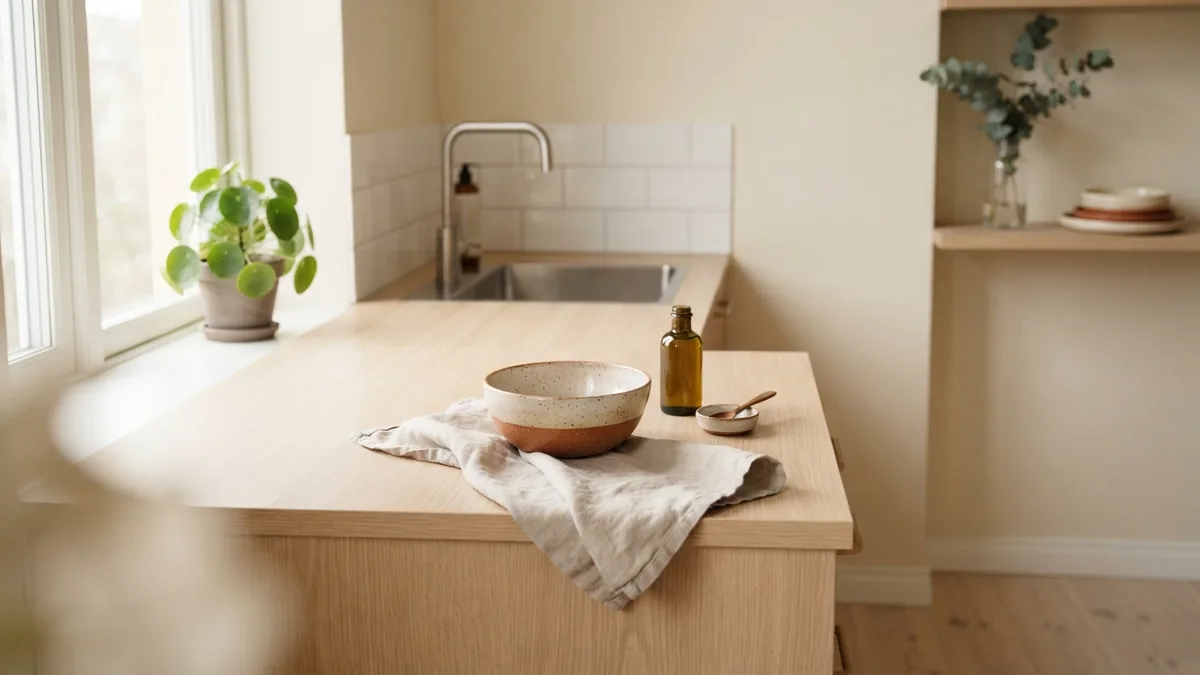
Cleaning is the first key step for small ants in the kitchen. Clear the counter, then wipe it with warm soapy water. Pay close attention to syrup, jam, oil, and drink spills.
Use a clean cloth around the sink rim and tap base. Empty crumbs from drawers and toaster trays. Sweep under appliances. Clean the floor beside bins and pet bowls.
Soapy water removes the scent trail left by ants. Vinegar water may help too. Never mix vinegar with bleach or other cleaners.
- Wipe counters after each food prep session.
- Rinse recycling before placing it in a bin.
- Wash reusable cloths and sponges each day.
- Clean under small appliances once each week.
- Empty indoor bins before food waste builds up.
To get rid of small ants on a kitchen counter, remove every food trace first. Then watch for new activity for several hours. Fresh ants may reveal a second route.
Natural Ways to Deter Kitchen Ants
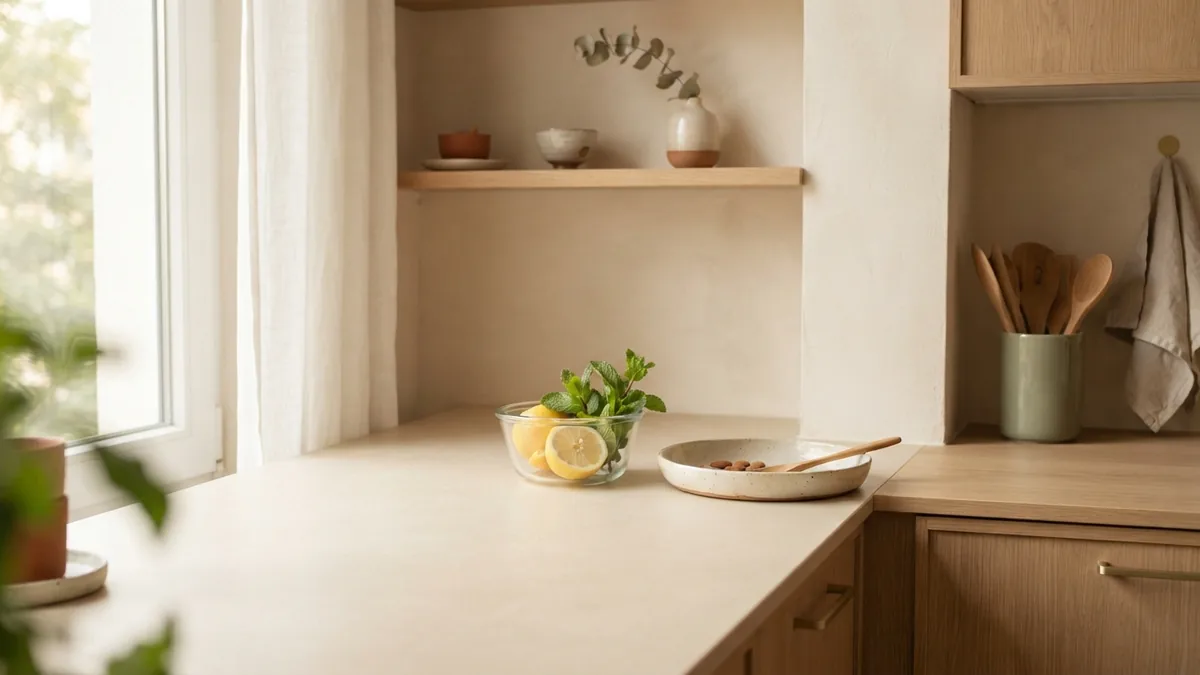
You can try natural methods after cleaning the area. Vinegar and lemon juice can help mask scent trails. They do not remove a nest on their own.
Mix equal parts water and vinegar for a basic wipe. Test it on a hidden surface first. Acidic liquids can harm stone, wood, or some painted finishes.
Lemon juice can suit some sealed surfaces. Peppermint oil may also deter ants for a short time. Add a few drops to water and wipe a small area first.
- Use vinegar water on sealed counters and floors.
- Place lemon peel near a dry entry gap.
- Use diluted peppermint oil away from pets.
- Refresh scent based methods every few days.
Keep oils away from cats, dogs, children, and food. Natural does not mean risk free. Stop use if a person or pet shows irritation.
Natural repellents work best as a support step. They can push ants toward another route. Bait remains the stronger choice when a nest keeps sending ants inside.
Use Ant Baits to Reach the Colony
Ant bait targets the colony rather than single ants. Worker ants take the bait back to the nest. Other ants then eat it, including ants that never enter the kitchen.
Place bait beside an active trail. Do not spray ants near the bait. Spray can stop workers from carrying the bait home.
Leave the bait in place for several days. Activity may rise at first. That often means more workers have found the food source. Activity should then fall.
- Choose bait made for indoor ant control.
- Place small amounts beside active trails.
- Keep bait away from food and wet areas.
- Do not disturb the trail for several days.
- Replace dry or empty bait as directed.
Different ants prefer different bait types. Some favor sugar based bait. Others prefer protein or grease. If one bait fails, try a product with a different food base.
Read the product label before use. Follow its limits for placement and storage. Never place open bait where children or pets can reach it.
Seal Entry Points and Prevent New Infestations
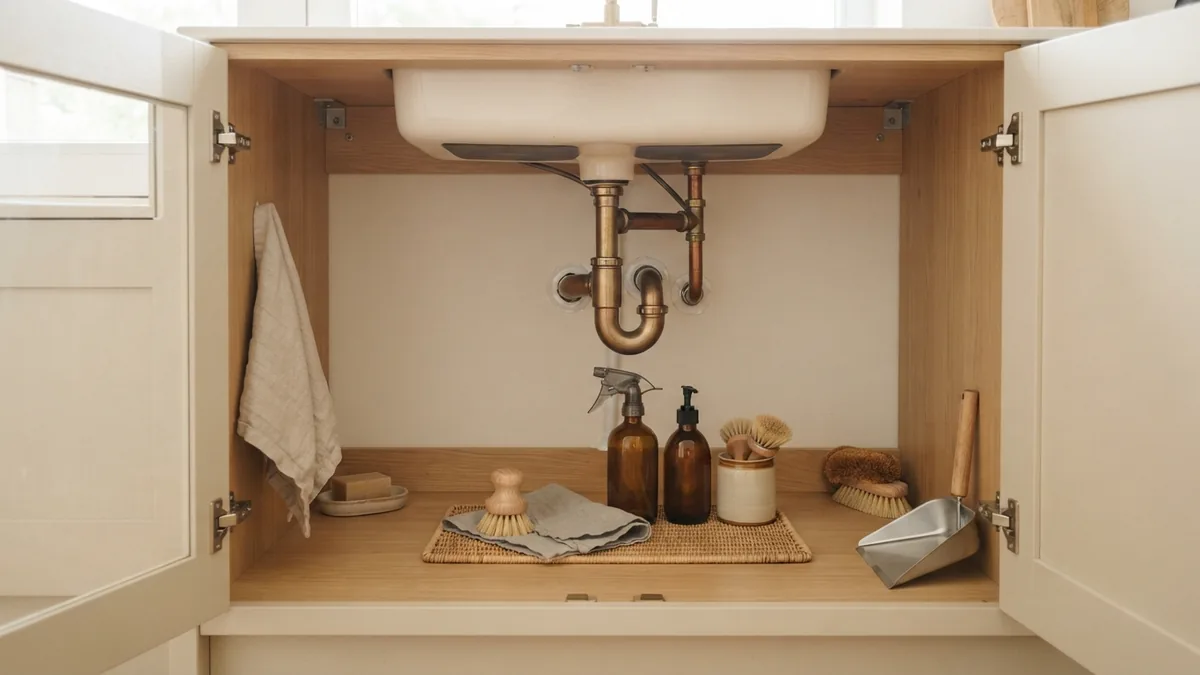
After ant numbers drop, block the routes they use. Check gaps beside pipes, cabinets, windows, and baseboards. Seal small cracks with suitable caulk.
Look under the sink first. This spot often has pipe gaps and damp wood. Dry leaks, repair loose seals, and keep the cabinet floor clear.
Regular upkeep stops many repeat problems. Store sugar, flour, cereal, and treats in tight containers. Keep fruit in the fridge when it starts to soften.
- Check door and window seals each season.
- Trim plants that touch the outside wall.
- Keep firewood and leaf piles away from walls.
- Fix dripping taps and slow pipe leaks.
- Wipe the kitchen sink dry each night.
These steps also help with ants in nearby rooms. If you need to get rid of ants in the living room, check snacks, plants, windows, and skirting boards. If ants reach the bathroom, focus on moisture, drains, and pipe gaps.
To get rid of small ants around a kitchen sink, dry the basin each night. Then clean the drain area and seal gaps around pipes. A dry sink removes one of the main reasons ants stay.
When Professional Ant Control Makes Sense
Call a pest professional when ants return after two weeks of careful control. Seek help sooner when you see winged ants indoors. Winged ants may point to a nest inside the building.
Professional help also makes sense when ants appear in many rooms. Repeated trails can mean several nests or a hidden wall nest. Red ants that sting need extra care.
Keep a short record before the visit. Note the rooms, times, trail sites, and bait used. Photos can help the expert spot patterns.
- Ask which ant type they found.
- Ask where the nest may sit.
- Ask which products they plan to use.
- Ask when you can clean treated areas.
- Ask how to stop the next entry route.
A good plan combines nest control with home repairs. Clean habits then keep food and water scarce. That is the best long term answer to small ants in the kitchen.
Step-by-step
- 01 Remove food and water
Store food in sealed containers. Clean crumbs, spills, bins, pet bowls, and damp areas.
- 02 Find and clean trails
Watch the ants for one day. Wipe each trail with warm soapy water.
- 03 Place ant bait
Set bait beside active trails. Keep spray away so workers can carry bait to the nest.
- 04 Seal entry points
After activity drops, caulk gaps around pipes, cabinets, windows, and baseboards.
- 05 Maintain the kitchen
Dry the sink each night and clean counters after food prep. Check for new trails each week.
Frequently asked questions
- How do I get rid of small ants in my kitchen fast?
- Clean food residue, dry wet areas, wipe trails with soapy water, and place bait beside active trails. Avoid spray near bait.
- How do I get rid of small ants around my kitchen sink?
- Dry the sink each night, fix leaks, clean the drain area, and seal gaps around pipes. Place bait near the trail if ants remain.
- How do I get rid of small ants in my kitchen naturally?
- Clean all food traces, then try diluted vinegar, lemon juice, or peppermint oil on safe surfaces. These methods may deter ants but may not kill the nest.
- How do I get rid of small ants in the bathroom?
- Remove standing water, fix leaks, clean drains, and seal pipe gaps. Use indoor ant bait when trails continue.
- How do I get rid of ants in the living room?
- Remove crumbs and pet food, inspect windows and skirting boards, and follow each trail to an entry gap. Use bait when ants keep returning.
- How long does ant bait take to work?
- Many baits need several days to reduce activity. Workers must carry the bait back to the colony before numbers fall.
Related reading

How to Paint a Bathroom for a Clean, Lasting Finish
A clear guide to painting bathroom walls, ceilings, trim, tubs, and tile.

Why Interior Design Matters in Everyday Life
See how thoughtful design makes spaces work, feel, and look better.

How to Price Painting a Room and Estimate Interior Costs
Estimate room painting costs with clear steps for labor, paint, prep, and cleanup.