How to Paint a Bathroom for a Clean, Lasting Finish
A clear guide to painting bathroom walls, ceilings, trim, tubs, and tile.
Preparation Steps for Painting a Bathroom
How do you paint a bathroom well? Start with clean, dry surfaces and good airflow.
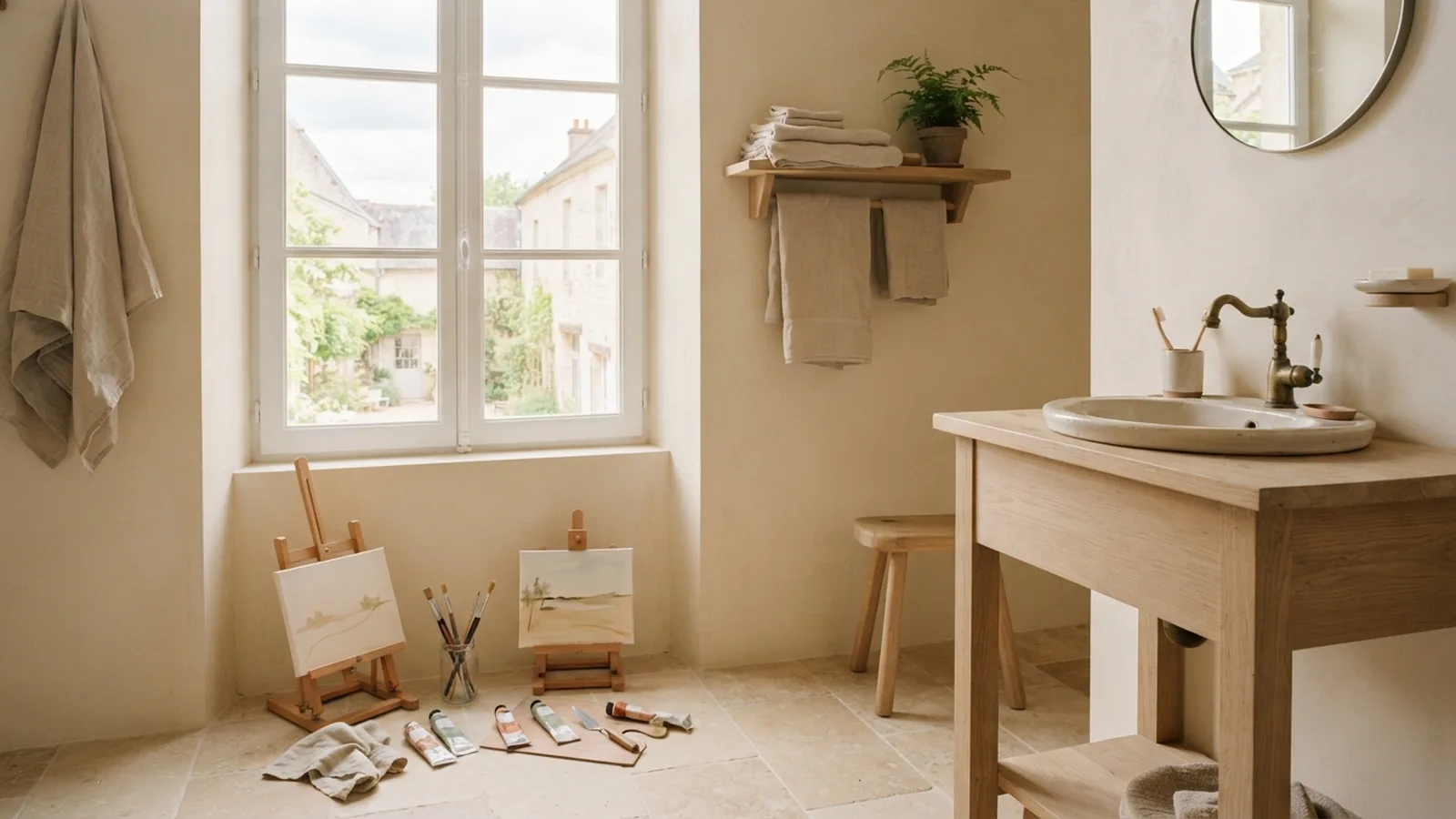
Remove art, shelves, shower curtains, and loose fittings. Cover the floor with a drop cloth. Open a window or run the fan.
Clean bathroom walls with warm water and mild cleaner. Remove soap film, grime, and dust. Treat mildew before painting. Let every surface dry fully.
Wear gloves during cleanup. Follow the EPA's mold cleanup guidance when mold covers a large area or follows water damage.
- Fill small holes with patching compound.
- Sand rough patches until they feel smooth.
- Scrape loose paint from walls and trim.
- Wipe away sanding dust with a damp cloth.
- Fix leaks before you prime or paint.
Do not paint over damp drywall. New paint cannot fix a wet wall or poor airflow.
These steps form the base of how to DIY bathroom renovations. Small surface repairs often improve the room more than new paint alone.
Choosing the Right Paint and Sheen
Choose high-quality paint made for bathrooms. Look for a washable finish with mildew resistance.
The best bathroom paint sheen is often satin or semi-gloss. Both finishes handle damp air and light scrubbing.
Can you use satin paint in a bathroom? Yes. Satin works well on most walls and hides small flaws.
Can you use eggshell paint in a bathroom? Yes, but use it in low-splash areas. Eggshell has less water resistance than satin.
| Finish | Best use | Main trade-off |
|---|---|---|
| Matte | Low-touch walls | Harder to wash |
| Eggshell | Dry powder rooms | Less water resistance |
| Satin | Most bathroom walls | Shows some wall flaws |
| Semi-gloss | Trim and wet zones | Highlights rough patches |
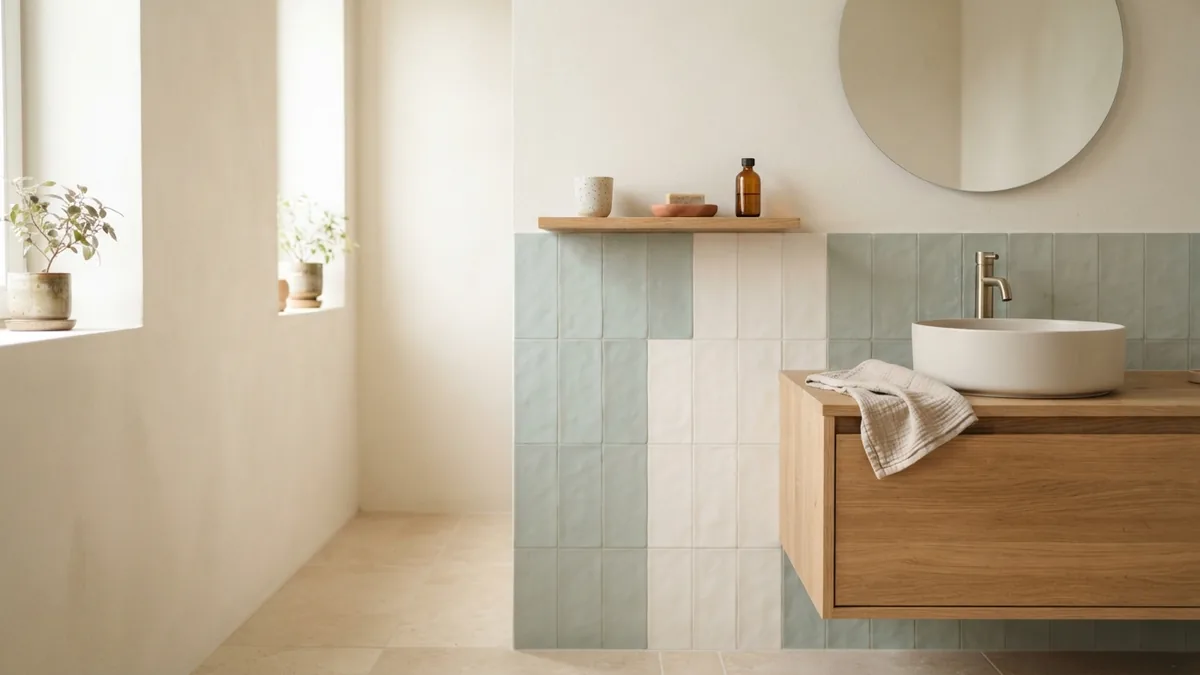
Should I paint my bathroom white? White can make a small room feel bright. Soft sage, warm cream, and pale beige also suit bathroom light.
Choose a color that works with tile, flooring, and wood. Buy enough paint for two thin coats.
How to Paint Bathroom Walls
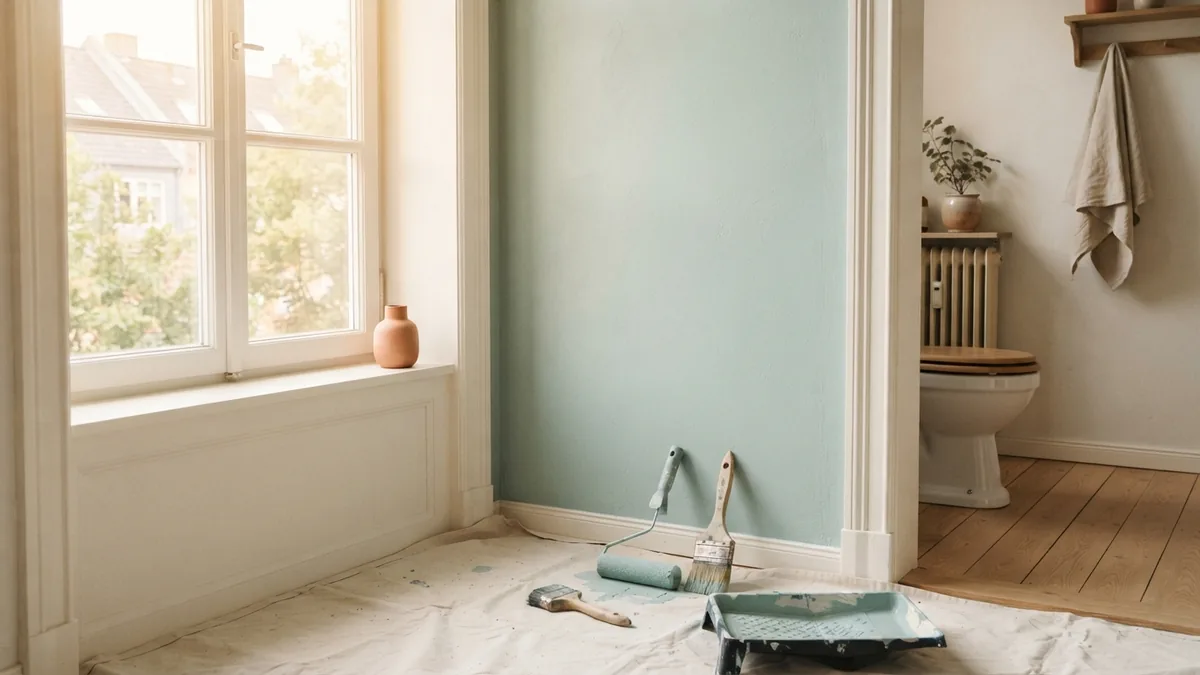
Start with primer when stains, bare spots, or dark paint show through. Use stain-blocking primer for water marks.
Prime patched areas first. Prime the full wall when the old color looks bold or uneven.
Use a sash brush for edges near trim and corners. Use a short-nap roller on broad, smooth walls.
- Stir the paint slowly until the color looks even.
- Apply painter's tape beside trim, tile, and fixed fittings.
- Cut in one wall edge at a time.
- Roll small sections from top to bottom.
- Keep a wet edge to stop lap marks.
- Let the first coat dry before adding the second.
Do not overload the roller. Thin coats dry faster and look smoother.
Remove tape while the last coat stays slightly soft. Pull it back at a slow angle.
That is the core of how to paint your bathroom. Work in a steady order, and keep paint off seals.
Painting the Bathroom Ceiling
How to paint bathroom ceiling areas depends on their condition. Clean the ceiling first. Check for brown marks, peeling paint, soft plaster, mold, or mildew.
How to remove peeling paint from bathroom ceiling areas? Scrape every loose edge with a wide scraper. Sand the border smooth. Wipe away dust, then let the ceiling dry.
How to paint a bathroom ceiling with mold or mildew starts with the cause. Fix leaks and improve airflow. Clean the growth with a suitable product before painting.
Never seal active mold beneath fresh paint. Ask a mold specialist when growth is broad or keeps returning.
Use a primer on stains and repaired spots. Choose a ceiling paint rated for damp rooms.
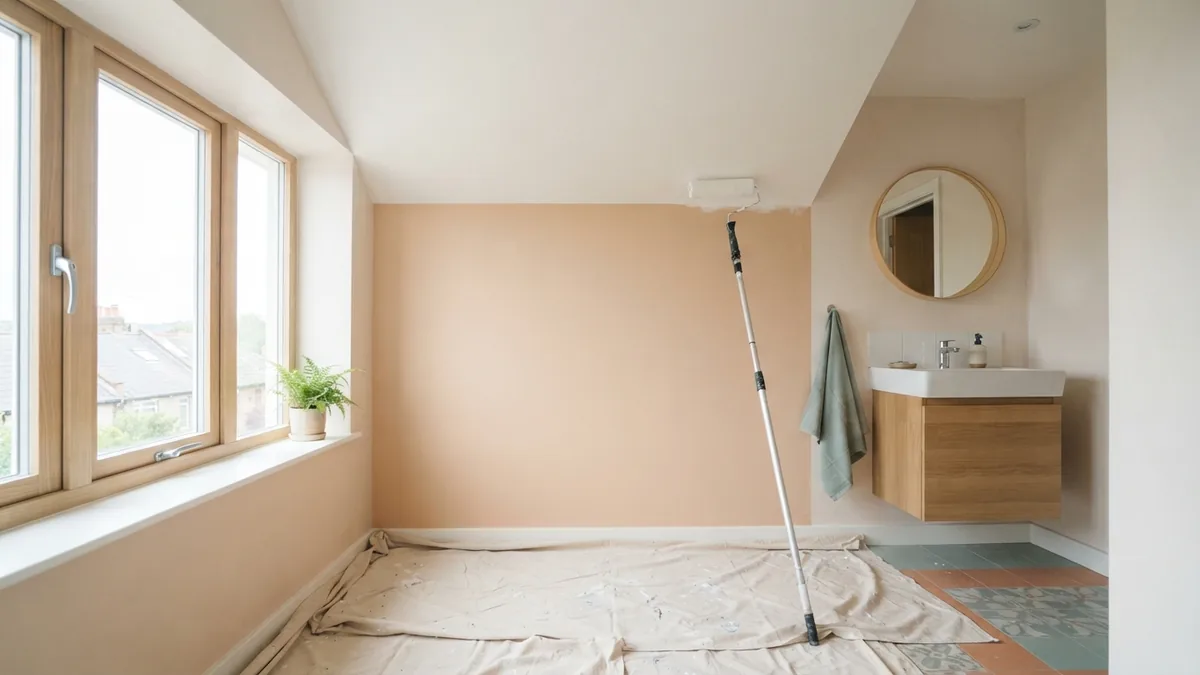
How to paint the ceiling of a room is simple after prep. Cut around the edges, then roll in small strips with an extension pole.
How to paint a cathedral ceiling room takes extra care. Use a stable platform and a long pole. Do not stretch from a ladder.
Allow extra drying time after ceiling work. Warm steam can mark fresh paint.
How to Paint a Bathroom Tub, Tile, and Wallboard
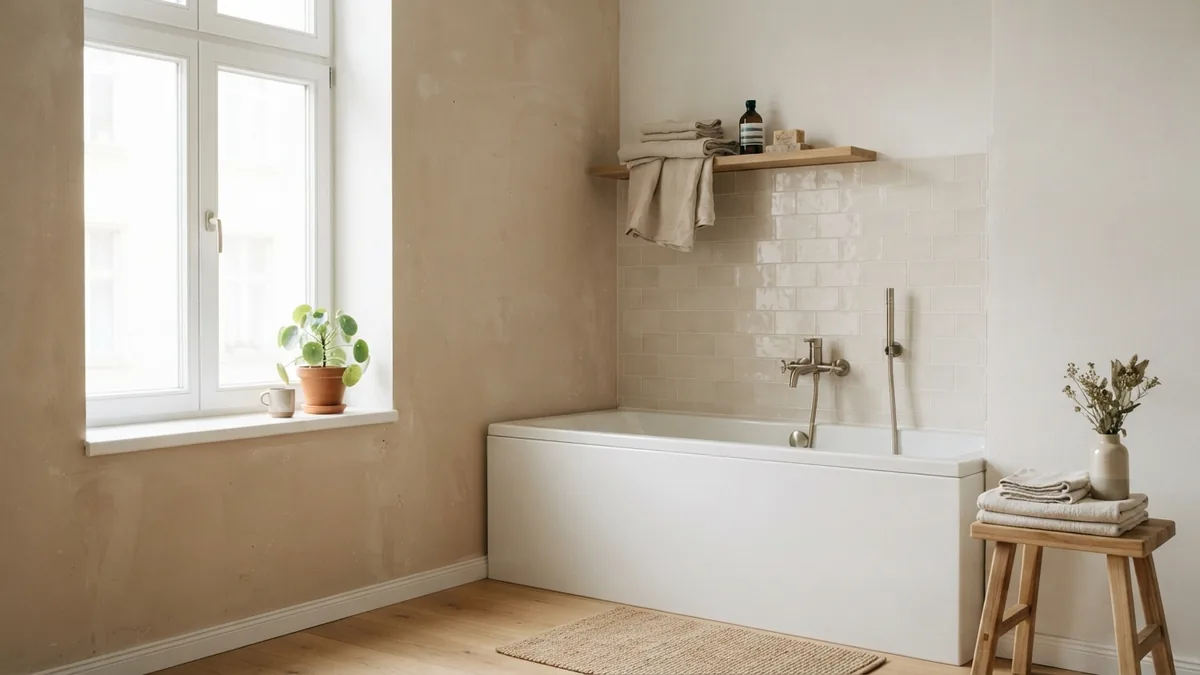
How to paint bathroom tub surfaces starts with the right coating. Most tub paints are made for refinishing, not standard wall paint.
Clean, sand, and dry the tub before use. Follow the coating maker's steps for primer, coats, and cure time.
Do not paint areas that stay under water unless the product allows it. A tub surface needs a hard, water-safe coating.
Can you paint bathroom wallboard? Yes, if the board is sound and dry. Prime exposed paper, patch damage, and use paint made for damp rooms.
Can you paint over bathroom paneling? Yes, after cleaning and sanding it. Use a bonding primer so the new coat can grip.
How to paint bathroom ceramic wall tile takes more prep than wallboard. Remove soap film, scuff the glaze, and use tile primer.
Keep grout lines clean and dry. Do not paint flexible caulk because the coating may crack.
Tips for Painting Around Fixtures
Painting around fixtures takes patience. Turn off power before removing a light fitting.
How to paint a bathroom door? Remove the knob when possible. Clean the door, sand dull areas, prime bare spots, and use thin coats.
How to paint bathroom hardware depends on the metal. Remove each piece, clean it, scuff it, and use metal primer.
How to paint a bathroom light fixture needs extra care. Remove the fixture only if safe. Never paint wires, sockets, bulbs, or heat vents.
- Use tape beside mirrors, tile, and metal fittings.
- Cover taps, handles, and drains with plastic.
- Use a small angled brush near tight edges.
- Keep a damp cloth nearby for fresh drips.
- Paint behind removable fittings before replacing them.
Do not paint over silicone seals. Paint will crack or peel from flexible sealant.
Press tape edges down with a clean cloth. Paint slowly near grout lines.
Common Mistakes to Avoid
Rushed prep causes most bathroom paint problems. Dust, grease, and dampness weaken the bond.
Do not skip primer over stains or dark colors. Do not add a thick coat to hide rough work.
How to sponge paint a bathroom safely? Use a dry sponge and a small test area first. Keep the pattern light so the walls remain easy to clean.
How to sponge paint a room follows the same method. Pick two close colors, and practice on scrap board.
Some searches ask, “why don t you paint the bathroom in spanish.” The wording may seek a Spanish translation. For this guide, the task is painting the room itself.
A bathroom where the whole room is a bath is usually called a wet room. Its walls need coatings suited to repeated water contact.
- Do not paint over mold that still grows.
- Do not close the room before coats have dried.
- Do not use wall paint on a tub without product approval.
- Do not rely on tape to cover wet or dirty surfaces.
Maintenance and Cleaning Tips for Painted Bathrooms
Let fresh paint cure before heavy cleaning. The label gives the safest wait time.
Wipe splashes with a soft cloth and mild cleaner. Avoid harsh pads that dull the sheen.
Run the fan during showers and for several minutes afterward. Dry air helps prevent mildew and peeling.
How often should you paint your bathroom? Many rooms need a new coat every three to five years. Repaint sooner when paint peels, stains return, or the finish will not clean.
Should bathroom ceiling be same color as walls? It can be. A matching color makes the room feel calm and large.
Should I paint bathroom ceiling same color as walls? Use a lighter ceiling when you want more height. Use the same shade when the room has strong trim or tile.
How much is it to paint a bathroom? A small DIY job may cost about $50 to $200 for paint and supplies. A hired painter may charge several hundred dollars.
How much to paint a bathroom ceiling depends on size, access, repairs, and local labor rates. How much to paint a ceiling in a room also rises with height and stain work.
Measure the walls and ceiling before buying paint. Keep a small sealed tin for later touch-ups.
Step-by-step
- 01 Clear and protect the room
Remove loose fittings and cover the floor. Open a window or run the exhaust fan.
- 02 Clean and repair surfaces
Wash away grime, soap film, and mildew. Fill holes, scrape peeling paint, and let all areas dry.
- 03 Choose paint and primer
Use bathroom paint with mildew resistance. Add primer over stains, bare areas, dark colors, tile, or paneling.
- 04 Paint the ceiling and walls
Cut in with a sash brush, then use a roller. Apply thin coats and keep a wet edge.
- 05 Finish trim and fixtures
Paint the door and trim with care. Keep paint off seals, wires, sockets, and areas under standing water.
- 06 Let the room cure
Follow the label for drying and cure times. Ventilate the room before taking long, steamy showers.
Frequently asked questions
- How do you paint a bathroom?
- Clean and dry the room first. Repair damage, prime as needed, then apply two thin coats with a brush and roller.
- Can you use satin paint in a bathroom?
- Yes. Satin paint suits most bathroom walls because it handles light cleaning and damp air.
- Can I use eggshell paint in bathroom areas?
- Yes, in low-splash areas such as a powder room. Satin or semi-gloss is safer near showers and tubs.
- How do you paint a bathroom ceiling with mildew?
- Fix the damp source and clean the mildew first. Scrape loose paint, let the ceiling dry, then prime and paint it.
- Can you paint over bathroom paneling?
- Yes. Clean and sand the paneling, then apply a bonding primer before painting.
- How often should you paint your bathroom?
- Many bathrooms need paint every three to five years. Repaint sooner when peeling, stains, or poor cleaning appear.
Related reading
Is Matte Paint a Good Choice for Your Bathroom?
Learn when matte paint works in bathrooms and when satin is the safer choice.
Piano Room Decor — Style, Sound and Everyday Use
Make your piano room feel calm, useful, and beautifully connected to the rest of your home.
Room Squaring — Set the Floor Lines Right
Set accurate floor lines before you start laying planks or boards.