How to Fit Two or More Beds in a Small Room
Smart layouts and storage ideas for fitting two or more beds in a small room.
Measure the Room Before You Plan
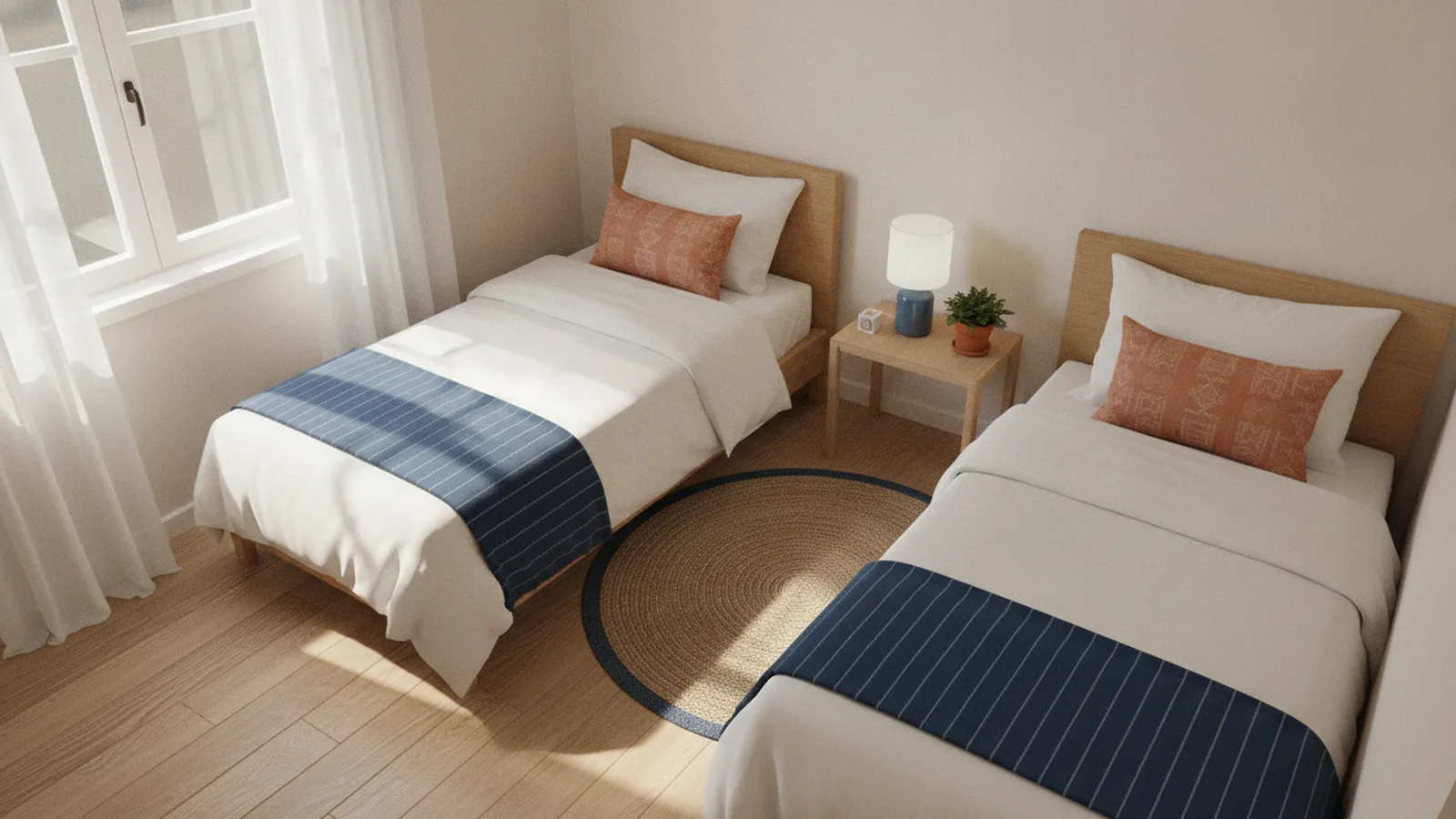
The best answer to how to fit 2 beds in a small room starts with exact measurements. Measure each wall from corner to corner. Record the door, windows, closets, vents, and heat sources.
Measure the bed frames, not just the mattresses. A twin mattress is 38 by 75 inches. Its frame may add several inches on each side.
Draw the room on graph paper. You can also use a simple floor plan app. Mark every fixed feature before testing a bedroom layout.
Keep a clear path from the door to each bed. Aim for about 24 inches on main walking routes. Leave space for drawers, doors, and closet access.
- Measure every wall and corner
- Mark door swings and window openings
- Note outlets, vents, radiators, and shelves
- Record the full size of each bed frame
- Mark drawer and closet clearance
Use painter's tape to mark bed outlines on the floor. This quick test shows whether the room feels cramped. It also helps you spot blocked paths before buying furniture.
Choose Bed Types That Save Floor Space
Twin beds suit most shared small rooms. They give each sleeper a full bed surface while using less width. Twin XL beds add five inches of length without adding width.
Bunk beds save the most floor space for two sleepers. They work best when the ceiling allows safe clearance. Check the maker's height rules before placing one near a ceiling fan.
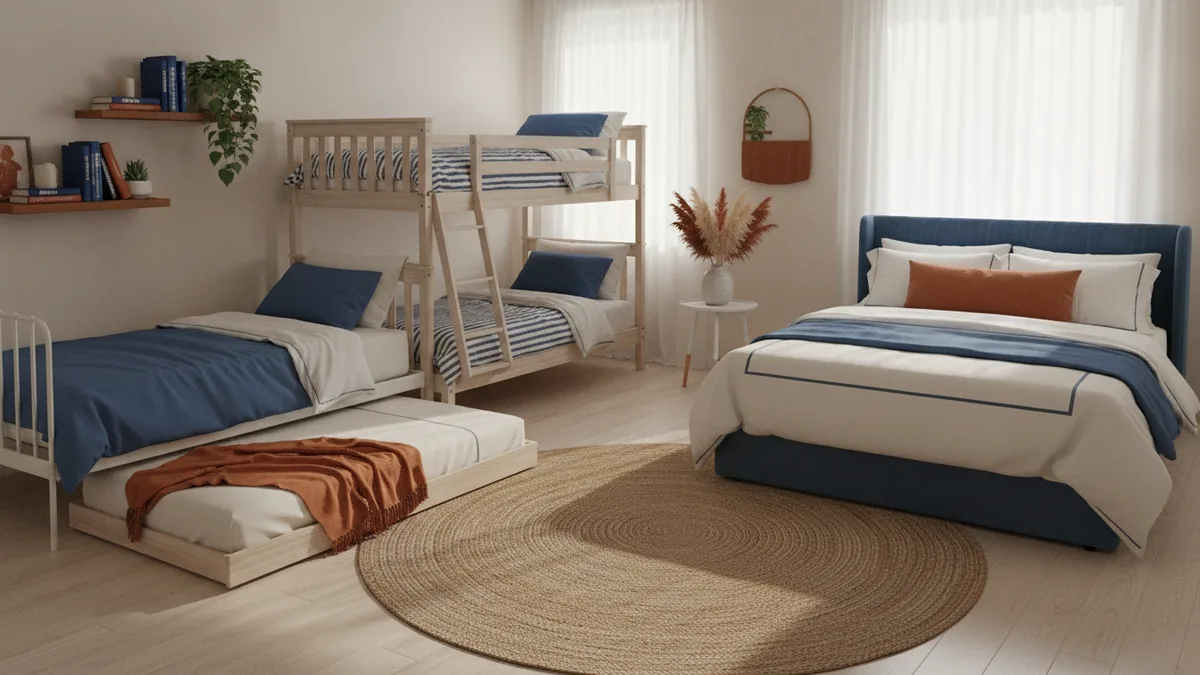
A trundle bed can add a second or third sleep spot. The lower bed slides under the main frame during the day. It needs open floor space when you pull it out.
Full beds need more width than twin beds. If you wonder how to fit 2 full beds in a small room, measure both frames first. Keep headboards and side rails in your plan.
The right bed type depends on sleep needs and daily use. A bunk bed may free space, but some sleepers need separate beds. A trundle may work well for guests, but less well for daily use.
- Twin: Best for two side-by-side beds
- Twin XL: Useful for taller sleepers
- Bunk bed: Best for open floor space
- Trundle bed: Useful when one bed can hide
- Storage bed: Helpful when closets are small
Test Layouts for Two, Three, or Four Beds
Side-by-side beds
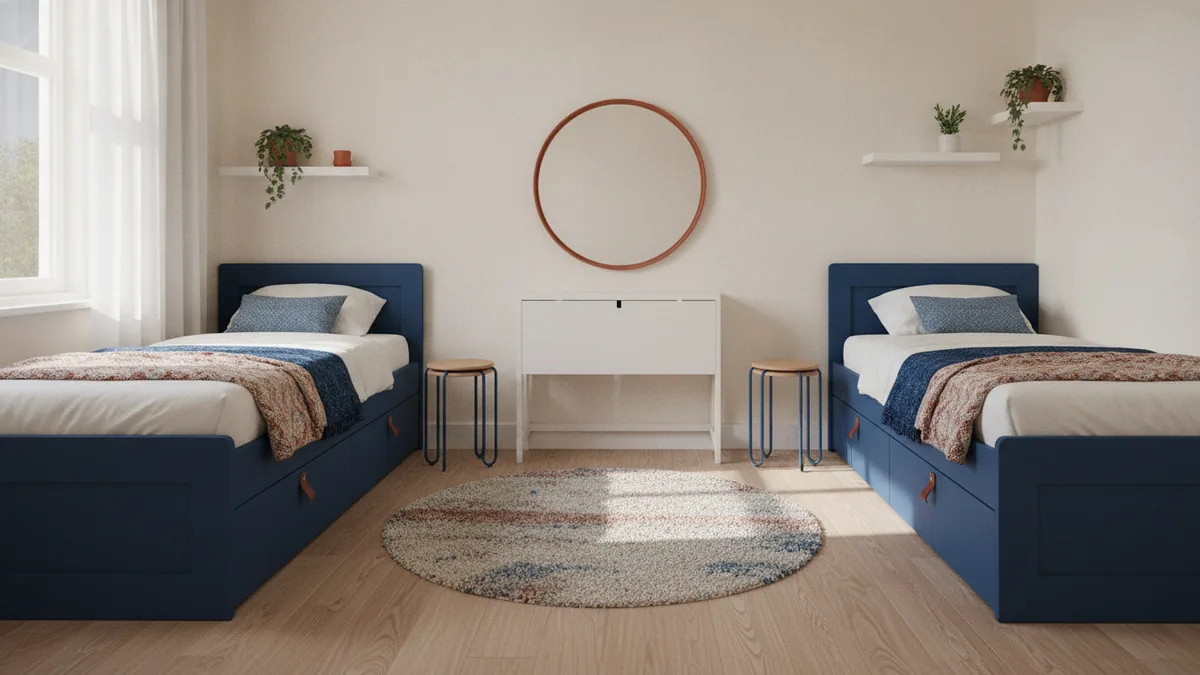
Place two twin beds along the longest wall when the room is wide enough. Keep a narrow table between them if space allows. This plan gives both sleepers easy access.
This is a simple way to put two beds in a small room. It also suits people searching for how to fit two beds in a small bedroom. Keep the beds close, but leave room to make each bed.
Corner arrangements
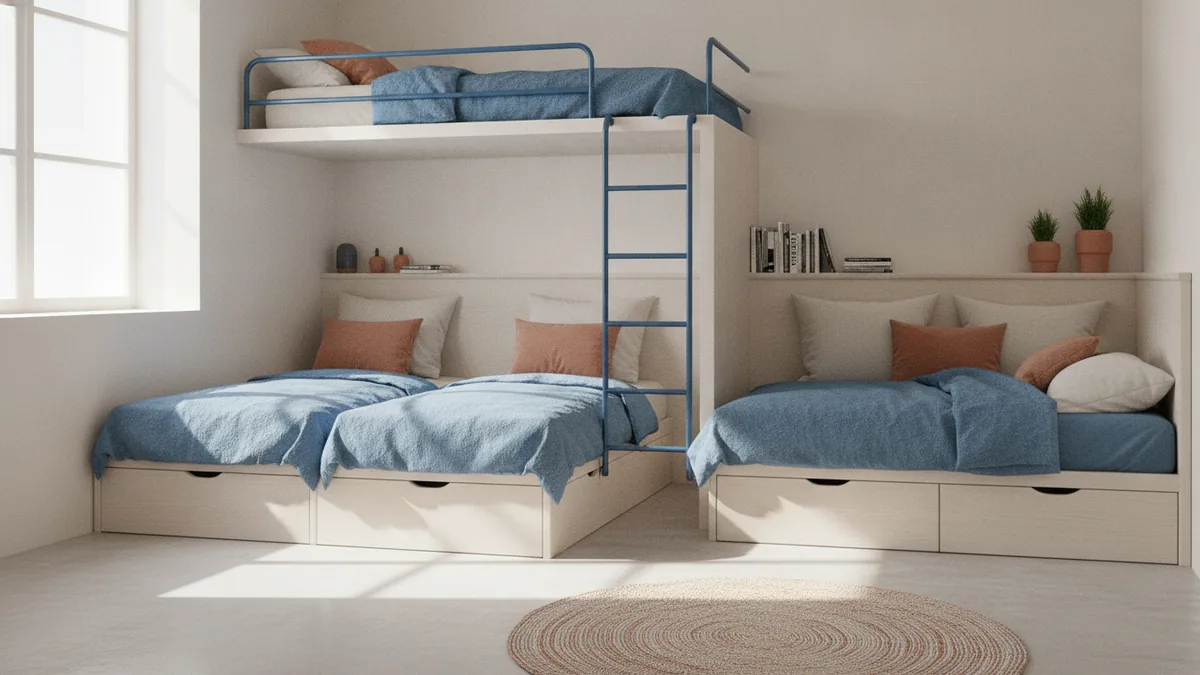
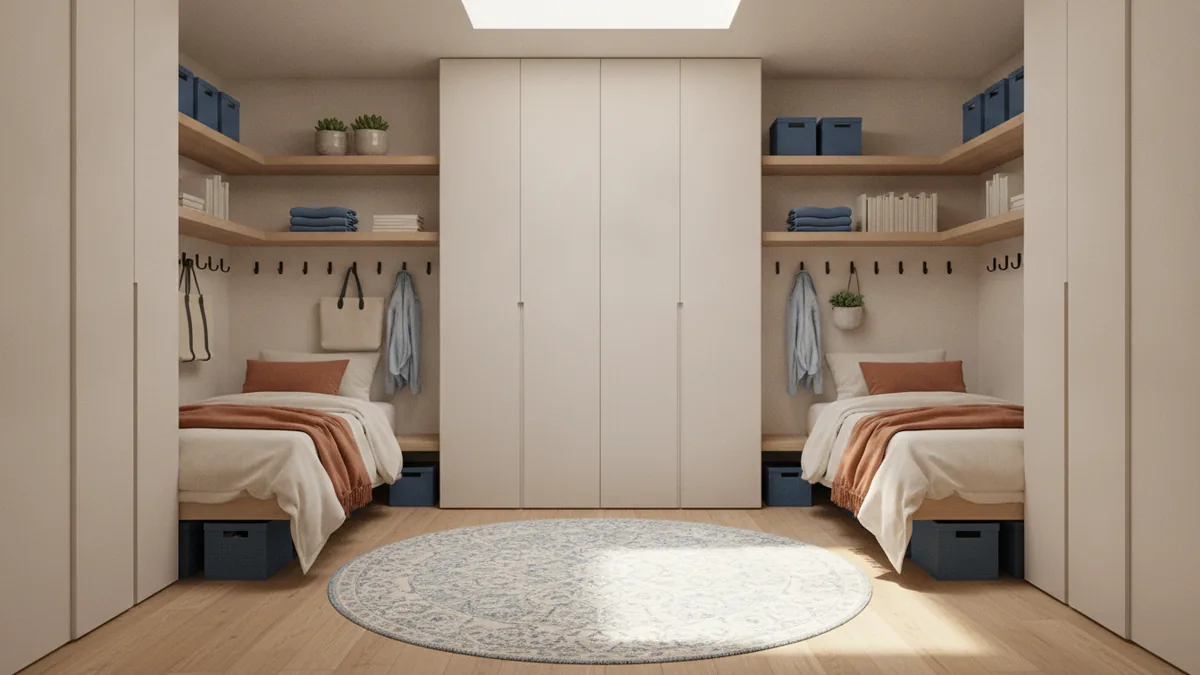
Place one bed along each wall to form an L shape. This plan opens the center of the room. It gives each sleeper a clear personal zone.
For anyone asking how to arrange 2 full beds in small room, test an L shape first. Put the long sides against separate walls. Keep headboards away from the door swing and heat source.
Bunk and loft layouts
Place bunk beds against a solid wall. Keep the ladder side open. Avoid windows, cords, ceiling fans, and door swings.
When learning how to arrange bunk beds in a small room, start with the ladder. Make sure each sleeper can climb down without hitting furniture. Add slim shelves instead of bulky bedside tables.
Plans for three or four beds
To fit 3 beds in a small room, use one bunk bed and one twin bed. Place the single bed along the opposite wall. This plan keeps a central path open.
People asking how to fit three beds in a small room can also use a bunk bed with a trundle. The trundle stays hidden when not in use. Check the pull-out space before choosing this plan.
To arrange 3 beds in one small room, use two bunks only when the ceiling and paths allow it. To arrange 4 beds in one small room, use two bunk beds with care. Never force four full beds into a room without safe walkways.
These layouts answer how to put 2 beds in a small room and how to put 3 beds in a small room. They also show how to fit 3 beds in one small room without filling every inch. Safety and access matter more than the bed count.
- Test the largest bed along the longest wall
- Try a bunk bed against a solid wall
- Keep the door path open
- Mark drawer clearance with tape
- Walk through each plan before choosing
Use Furniture With More Than One Job
Small rooms need furniture that earns its floor space. Choose beds with drawers beneath the mattress. These drawers can hold sheets, shoes, toys, or clothes.
A trundle bed can add a third sleep spot without taking floor space all day. A daybed with drawers can serve as a seat during the day. It can still work as a bed at night.
Use a slim desk that folds against the wall. Choose stools that slide beneath it. A wall-mounted nightstand can replace a wide table.
If you need to fit two full beds in a small room, limit extra furniture. Use one shared dresser instead of two. Keep the center open for walking and bed access.
Choose light furniture that you can move for cleaning. Heavy pieces make tight rooms feel blocked. Simple shapes leave more room for beds and storage.
- Bed drawers for clothes and bedding
- Trundles for guests or a third sleeper
- Fold-down desks for study space
- Stacking stools instead of wide chairs
- Wall-mounted tables beside beds
Make Use of Wall and Ceiling Height
Vertical storage frees floor space for beds and walking paths. Mount shelves above desks or beside headboards. Keep heavy items low and light items high.
Wall cabinets can hold clothes, books, and spare bedding. Choose doors when the room feels busy. Open shelves work well for items used each day.
Use the space above a wardrobe for boxes. Add hooks behind the door for bags and robes. A tall, narrow dresser can hold more than a wide one.
Do not place shelves where sleepers may hit them. Keep bunk ladders and upper beds clear. Secure tall units to wall studs before daily use.
Vertical storage helps when you fit two beds in a small space. It also keeps the floor clear for trundles and drawers. The room will feel calmer when each item has a set place.
Build a Storage Plan That Keeps Paths Clear
Start with the items used every day. Keep clothes near the beds and school items near the desk. Store spare bedding in less handy places.
Under-bed storage boxes work well for shoes, toys, and seasonal clothes. Pick boxes with lids when dust is a concern. Choose low bins that slide out without moving the bed.
Use drawer dividers for small items. Add labeled baskets to shared shelves. Give each sleeper one clear storage zone.
Do not fill every shelf or box. Leave some spare space for new items. A full room becomes hard to clean and hard to rearrange.
- Use low boxes under standard beds
- Store spare blankets above the wardrobe
- Add hooks behind the door
- Give each sleeper a marked shelf
- Keep the main walking path empty
Review the plan after a week. Notice which drawers feel hard to reach. Move those items to a better spot before clutter builds.
Check Safety and Daily Comfort
A layout must work at night, not only on paper. Walk from the door to each bed in low light. Check that no corner or basket blocks the route.
Keep beds away from heaters and vents. Do not block windows that serve as exits. Follow the bed maker's rules for guardrails, ladders, and ceiling clearance.
Leave enough room to change sheets. Test every drawer, cabinet, and trundle after placing the beds. If one feature stays blocked, the layout needs another change.
Use the smallest bed type that meets each sleeper's needs. Then add storage without narrowing the path. That method gives you the best chance to fit two beds in a small room with comfort.
Frequently asked questions
- How to fit 2 beds in a small room?
- Measure the room and bed frames first. Then test twin beds side by side, in an L shape, or in a bunk layout.
- How to fit 3 beds in a small room?
- Use one bunk bed and one twin bed, or choose a bunk bed with a trundle. Check the pull-out space and keep a clear walking path.
- How to arrange 2 full beds in small room?
- Place the headboards on one wall if the room is wide enough. An L-shaped plan may work better in a narrow room.
- How to arrange 3 beds in one small room?
- Use one bunk bed and one single bed along the opposite wall. Keep the center path open and check ladder access.
- How to arrange 4 beds in one small room?
- Use two bunk beds only when the ceiling, ladders, and walking paths allow safe use. Do not force four beds into an unsafe layout.
- How to arrange bunk beds in a small room?
- Place the bunks against a solid wall with the ladder side open. Keep them away from windows, heaters, fans, and door swings.
Related reading
Couch Placement—Flow, Focus and Comfort
Place your couch to frame a focal point, keep paths clear, and make the room feel balanced.
Master Bedroom — Color, Comfort and Personal Style
Build a calm, personal bedroom with smart choices and a budget that works.
Room Painting Labor Costs — Rates and Budget Factors
See typical room-painting labor rates and learn what drives the final price.