How Earth’s Interior Is Like an Apple (Layer by Layer)
Use the apple idea to understand Earth’s crust, mantle, and cores.
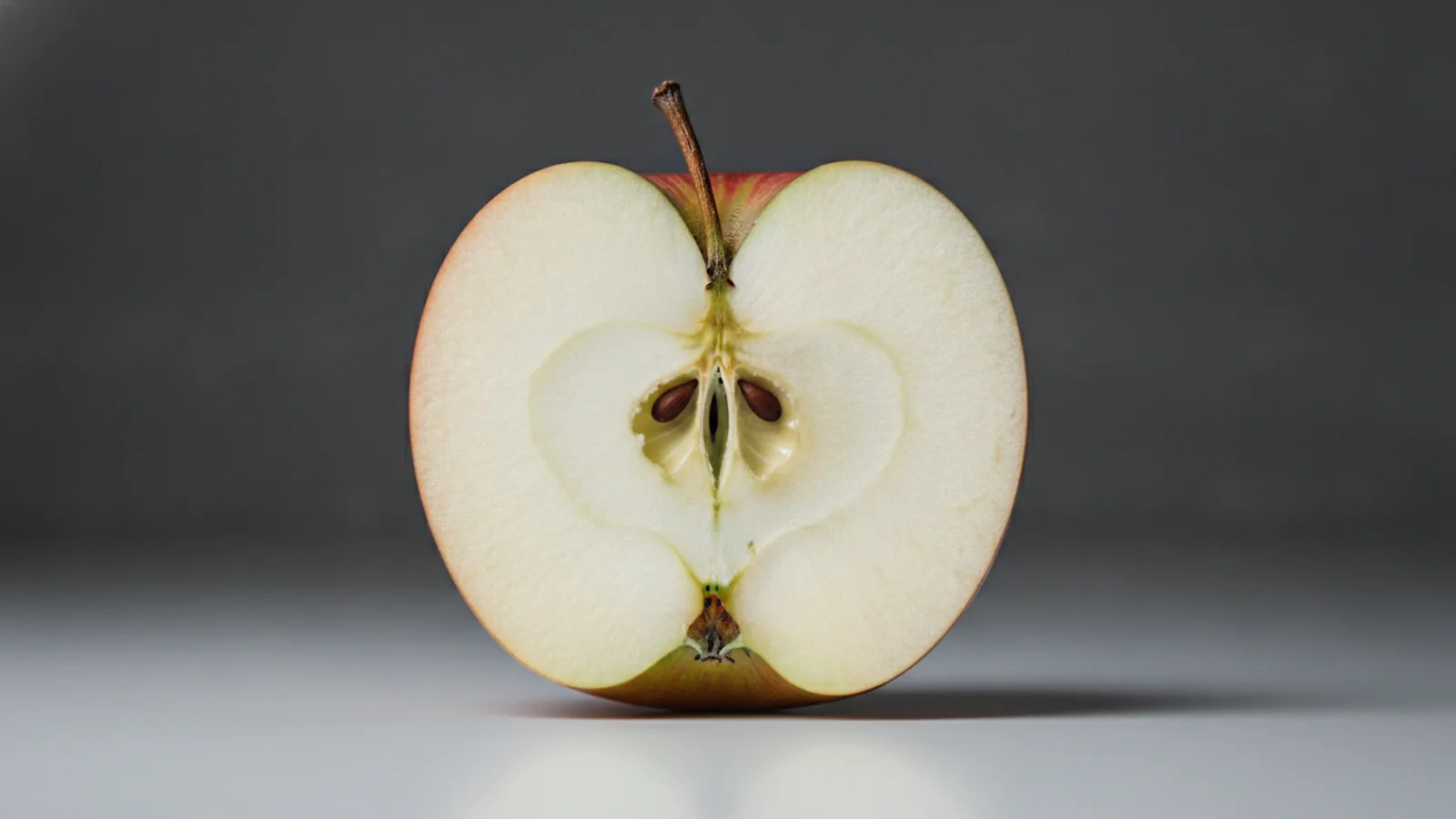
Introduction: how is earth’s interior like an apple?
People ask how is earth’s interior like an apple because it gives a clean mental picture. You can hold the comparison in your head while you learn the real science. Earth is not an apple, but the layering idea is useful.
The core of the earth crust mantle core analogy is structure. Earth has a thin outer shell, a thick middle region, and a concentrated center. That same “outside to inside” feeling matches how an apple is built.
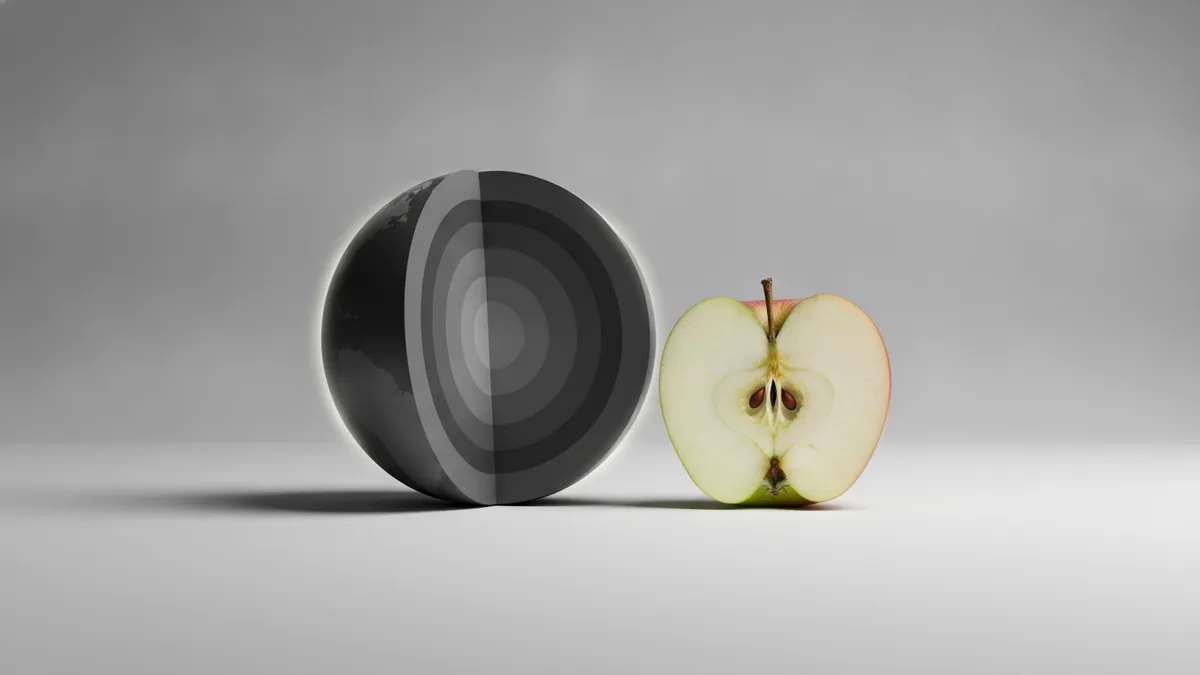
In this guide, you will connect earth’s layers compared to an apple with the real terms. You will also see where the analogy fits best. Then you will learn what changes when you move from pictures to measurements.
- Earth has four main layers: crust, mantle, outer core, inner core
- Analogy goal: build intuition, not replace facts
- How to read it: outside first, then deeper layers
Earth’s crust compared to apple skin: thin and rock-filled
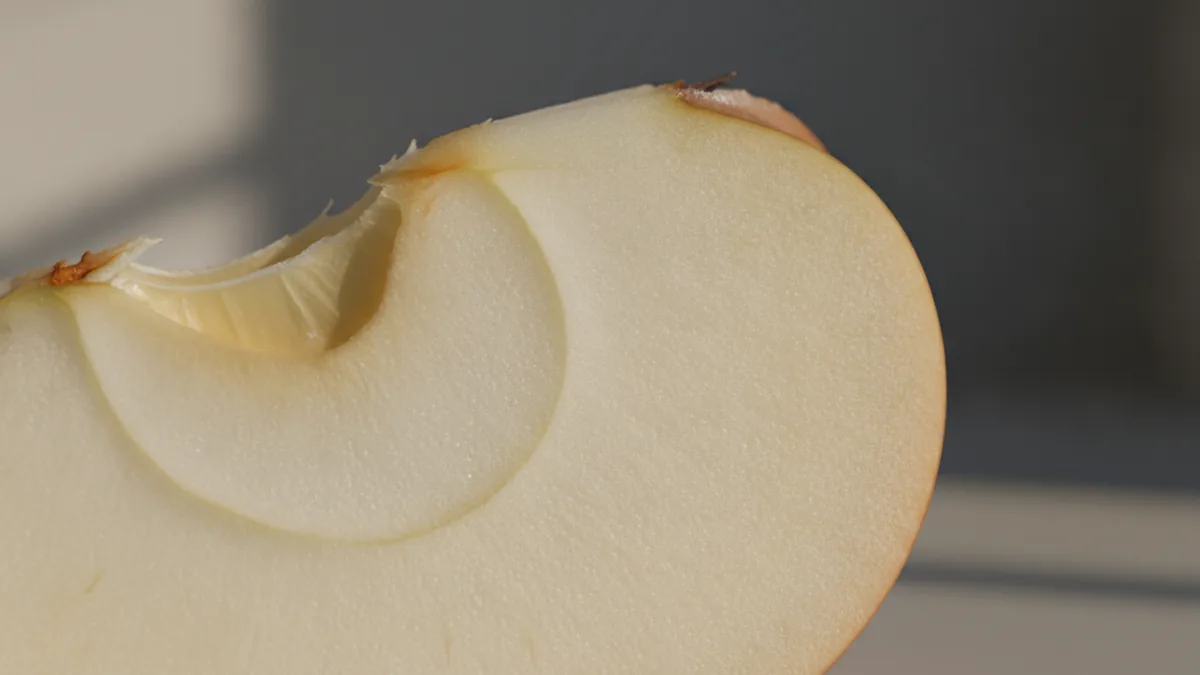
The crust is Earth’s outer layer. It is thin compared to the mantle and core depths. That thinness is why the crust is often compared to the skin of an apple.
Crust thickness varies by place. Ocean crust is often about 5 to 10 km thick. Continental crust can be roughly 30 to 70 km thick. Even the thickest crust is still small next to the layers below.
The crust matters for another reason. It is where we can directly sample rocks and measure them in labs. When you stand outside, you mainly interact with the crust, even if you never think about it.
- Crust thickness: ~5–10 km (ocean) and ~30–70 km (continents)
- Crust role: forms the surface and hosts most exposed rocks
- Apple match: a thin protective skin over the inside
The mantle and apple flesh: dense, semi-solid rock that flows slowly
The mantle sits below the crust and makes up most of Earth’s volume. It is not liquid in the way water is. It is dense and can deform like a very slow-moving solid under pressure.
This is where the earth’s layers compared to an apple idea becomes more than skin-deep. Many people map the mantle to apple flesh because both are thick middle regions. The apple flesh changes under heat and pressure, even if it does not behave like a poured liquid.
On Earth, heat and pressure drive long-term movement. Pressure increases with depth as layers stack above. Heat coming from deeper regions helps the mantle creep and rearrange over geologic time.
- Mantle state: dense, semi-solid rock that can deform
- Big drivers: heat plus pressure
- Time scale: slow motion over millions of years
Convection currents and plate tectonics: the engine of mantle motion
Inside the mantle, warmer material can rise, and cooler material can sink. That slow circulation is called convection currents. It helps move heat through Earth’s interior.
This flow connects to plate tectonics. The tectonic plates ride on the upper part of the mantle. When mantle flow changes stress, it affects how plates move at the surface.
In the apple picture, you can think of “change in the flesh” as a helpful metaphor. Moisture and texture shift in apples when you cook them or bruise them. Earth uses different physics, but both involve a thick middle layer that changes condition over time.
- Convection currents: slow circulation that moves heat
- Plate tectonics link: mantle flow sets stresses for plate motion
- Apple analogy: the thick middle layer is where change happens
Outer and inner cores: the apple core comparison
Below the mantle is the core. The outer core starts around 2,900 km depth. It extends to about 5,150 km. It is mostly iron and nickel, and it behaves like a liquid layer.
The liquid metal matters because it helps create Earth’s magnetic field. Motion in conducting liquid iron and nickel generates magnetism. That magnetic field helps protect Earth from much of the solar wind’s impact. This “shielding” role has no direct apple twin.
Deeper still is the inner core. It is solid and extremely hot. High temperature is part of the story, but crushing pressure keeps the center solid. In the analogy, the inner core fits best with the apple’s hard center idea.
- Outer core: liquid iron and nickel
- Magnetic field: linked to motion in the outer core
- Inner core: solid, extremely hot, under huge pressure

Impact of Earth’s layers on surface activity
Understanding the internal structure of Earth like apple layers helps you predict surface behavior. Plate tectonics shapes continents and ocean basins. It also drives mountains, volcanoes, and many earthquakes.
Seismic waves give scientists another way to test the model. When earthquakes send waves through Earth, the waves change speed and direction at layer boundaries. These patterns help confirm where the crust ends and where the mantle and core begin.
So, the earth crust mantle core analogy is not just a fun picture. It is a doorway to evidence-based thinking. You learn what each layer does, then you check it with seismic waves.
| Layer | Best apple match | Main idea |
|---|---|---|
| Crust | Skin | Thin outer shell; accessible rocks |
| Mantle | Flesh | Dense, semi-solid; slow deformation |
| Outer core | Center region | Liquid metals; powers magnetic field |
| Inner core | Hard center | Solid under extreme heat and pressure |
Conclusion: why the apple analogy works
The earth’s layers compared to an apple framing works because it matches structure, not chemistry. You get a simple outside-to-inside model that stays clear as you go deeper. That makes it easier to remember crust, mantle, and core roles.
Still, the analogy has limits. The mantle does not behave like apple flesh in a kitchen sense. The core does not create magnetism in the same way as anything in an apple. Use the apple idea as a starting model, then anchor it in evidence.
If you want one takeaway, it is this: Earth’s internal structure is layered for a reason. Each layer has different materials and different motion. Once you see that pattern, the comparison becomes more than a metaphor.
Quick note about “design” keywords
This page stays on the science topic you asked for. It does not include unrelated interior design phrases like how to dress up a living room or why do you like interior design.
Frequently asked questions
- How is Earth’s interior like an apple?
- Both have an outside layer, a thick middle, and a concentrated center. Earth’s layers are real materials, but the apple shape helps you remember the order.
- What is the earth crust mantle core analogy?
- It is a layered comparison between Earth’s crust, mantle, and core and an apple’s skin, flesh, and center. Use it to build intuition, then confirm with measurements like seismic waves.
- Is the mantle like apple flesh in a kitchen sense?
- Not exactly. The mantle is dense and semi-solid and moves slowly under heat and pressure, while apple flesh changes under cooking or damage.
- What does the outer core do in Earth?
- It is liquid iron and nickel. Its motion helps generate Earth’s magnetic field.
- Why is the inner core solid even though it is very hot?
- Extreme pressure keeps it solid. High temperature is part of the picture, but pressure dominates at the center.
Related reading

Room Painting Costs — What Shapes Your Quote
Room painting often costs $200–$1,000. See what drives the price and how to compare quotes.

Kitchen Cabinet Tops — Style, Texture and Seasonal Charm
Style cabinet tops with balanced layers, useful texture, and decor that suits your kitchen.

Couch Placement—Flow, Focus and Comfort
Place your couch to frame a focal point, keep paths clear, and make the room feel balanced.