How to Arrange Plants in a Living Room
Learn how to arrange plants in a living room with smart groupings, shelves, stands, Feng Shui tips, and care ideas for every room size.

Why Indoor Plants Improve a Living Room
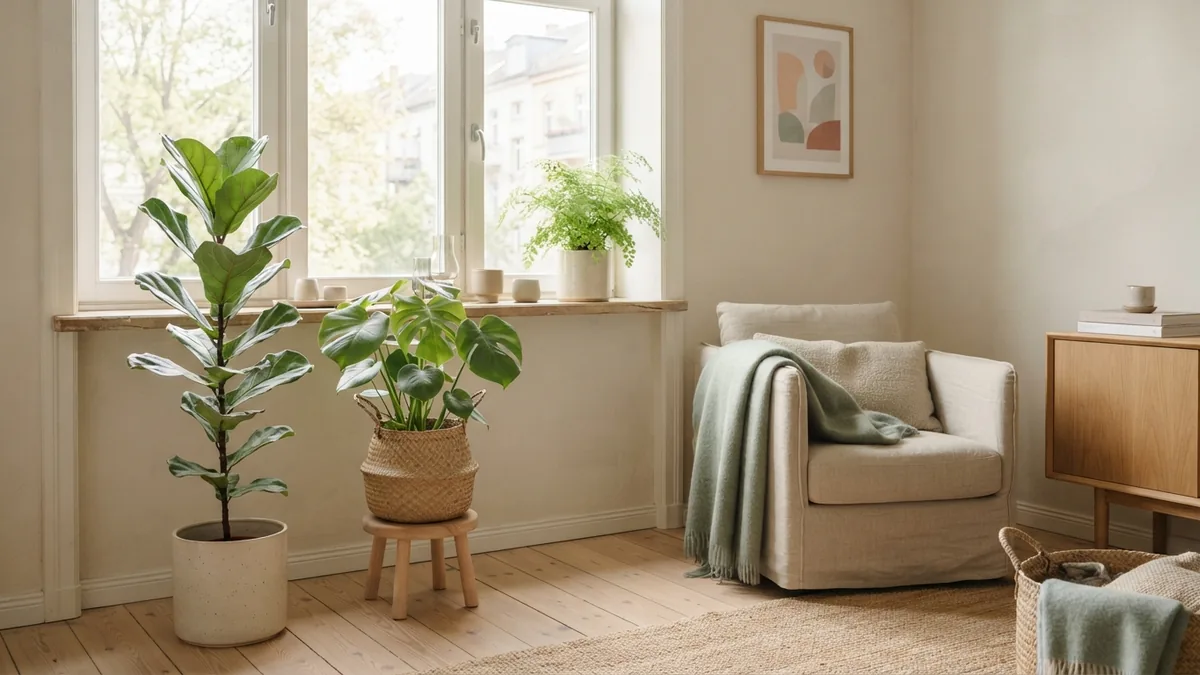
The best way to arrange plants in a living room is to vary height, shape, and color. Place one tall plant near a sofa or empty corner. Add a medium plant beside a chair. Finish with a small plant on a table or shelf.
This mix gives the room a clear focal point. It also keeps plants from looking scattered. Green leaves soften hard lines from cabinets, tables, and windows.
Plants can also make a room feel fresher and more restful. They add color without the weight of large furniture. Some plants may help trap dust on their leaves. Still, fresh air and good cleaning matter more for indoor air quality.
Think of your plants as part of the room plan. Their pots should match the room, but they need not look identical. Warm terracotta, pale oak, cream ceramic, and woven baskets suit calm home styles.
- Use a tall plant to fill an empty vertical area
- Use broad leaves to soften sharp furniture lines
- Repeat one pot color for a neat visual link
- Leave space around each plant for a clean look
Choose Plants That Fit Your Room
Start with light, space, and care needs. A bright window suits a rubber plant, bird of paradise, or jade plant. A darker corner may suit a snake plant, pothos, or cast iron plant.
Check the light at different times of day. Bright light does not always mean direct sun. A sheer curtain can soften strong rays and protect thin leaves.
Next, study each plant's size and shape. Tall plants draw the eye upward. Round plants bring a soft, full form. Trailing plants add movement from a shelf or stand.
Color matters too. Deep green leaves work well with pale walls. Silver or patterned leaves can brighten a quiet corner. Use one strong leaf color as an accent, not as a theme.
Match Plants With Your Home Style
Scandinavian rooms suit simple pots, light wood, and plants with clean forms. Japandi rooms work well with one sculptural plant and a low stand. Farmhouse rooms can handle fuller plants in woven baskets.
Keep the pot size close to the plant's scale. A tiny pot below a large plant looks weak. A huge pot can make a small plant seem lost.
Arrange Plants by Height and Form
Use a three-level plan for a balanced display. Place the tallest plant on the floor. Set a medium plant on a low stool. Place a small plant on a table or shelf.
Group plants in odd numbers, such as three or five. Odd groups often feel less stiff than pairs. Keep one plant as the main focus, then let the others support it.
Vary leaf size within each group. Pair narrow leaves with broad leaves. Add one trailing plant to break up a still display.
Leave about 15 to 30 centimeters between pots. This gap lets each plant breathe visually. It also makes watering and leaf checks much easier.
| Room spot | Plant scale | Useful shape |
|---|---|---|
| Empty corner | Tall | Upright or spreading |
| Beside a chair | Medium | Full and rounded |
| Coffee table | Small | Compact or low |
| Open shelf | Small | Trailing or fine-leafed |
Use Shelves, Stands, and Vertical Space
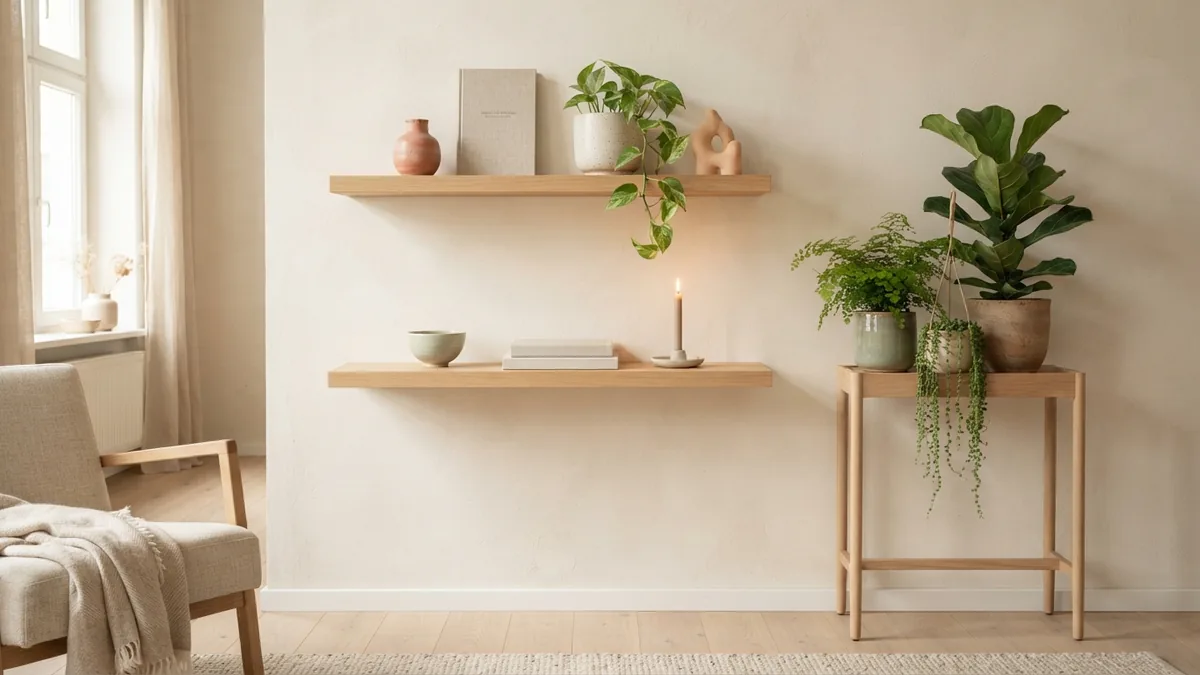
Plants do not need to stay on the floor. Shelves turn a blank wall into a living display. Use two or three shelves with space between them.
Keep heavy pots on lower shelves. Place light pots on higher shelves. A trailing plant can hang over an edge without blocking nearby objects.
Plant stands also help fill unused corners. Choose stands with different heights for a layered look. Keep the tallest stand away from walkways and door swings.
Protect wood and plaster from water. Place a saucer under every pot. Check the saucer after watering, then empty standing water.
Build a Simple Shelf Display
- Choose a shelf near suitable natural light
- Place the largest plant near one end
- Add a smaller plant at the other end
- Fill the middle with one trailing plant
- Step back and remove any crowded item
Keep shelves below eye level when possible. This keeps the display easy to enjoy. It also makes dusting and plant care less tiring.
Apply Feng Shui Ideas With Care
Feng Shui uses placement to support flow, calm, and balance. For a Feng Shui approach to arranging plants in a living room, avoid blocking doors or paths. Clear movement can make the room feel more open.
Healthy plants are the best choice for this style. Remove yellow leaves and dead stems quickly. A weak plant can make a display feel neglected.
Place rounded leaves in areas that need a softer mood. Use upright plants near corners that feel still or empty. Avoid placing thorny plants beside seats or in narrow walkways.
Some people place plants near windows or entry points. These spots can mark a shift from outdoors to indoors. Use the idea as a design guide, not a strict rule.
- Keep paths open around sofas and doors
- Use healthy plants in shared living areas
- Soften sharp corners with rounded leaves
- Choose calm green tones for restful rooms
Ideas for Small Living Rooms
For small spaces, think upward before adding more floor pots. A narrow stand can use a corner without crowding the sofa. A small shelf can hold two compact plants.
Choose plants with a slim shape when floor space is tight. Snake plants and upright palms take less width than broad plants. Small pothos plants work well on shelves.
Use one larger plant instead of many tiny pots. Too many small items can make a room feel busy. One strong plant gives the eye a clear place to rest.
Keep plants away from radiators and heavy drafts. Both can dry leaves and stress roots. Leave a clear path of at least 60 centimeters through the main walkway.
Mirrors can reflect greenery and make a small room feel deeper. Do not place a plant where its reflection creates visual clutter. One reflected plant is often enough.
Keep Living Room Plants Healthy
Good plant care keeps an arrangement looking fresh. Check the soil before watering. Push one finger about two centimeters into the top layer.
Water when the plant needs it, not on a fixed weekly plan. Bright rooms may dry soil faster than shaded rooms. Pot size, season, and room heat also change water needs.
Wipe broad leaves every few weeks. Dust can block light and dull the plant's color. Turn pots a quarter turn each week for even growth.
Watch for yellow leaves, soft stems, pests, or dry edges. Move the plant if light seems too strong. Follow the Royal Horticultural Society's houseplant care guide for clear care advice.
Keep a small care kit near your plants. Include pruning scissors, a cloth, a saucer, and a watering can. This makes small jobs quick and prevents missed care.
- Check soil before each watering
- Clean leaves to remove dust
- Turn pots for even growth
- Trim dead leaves with clean scissors
- Inspect new plants before placing them nearby
A Simple Plant Plan to Try Today
Begin with the room's main view, such as the sofa or entry. Pick one corner for a tall plant. Then find one table or shelf for a smaller plant.
Build a group with three heights and two leaf shapes. Match the pots to one or two room colors. Keep enough space for cleaning, watering, and movement.
Finally, view the room from several seats. The arrangement should look balanced from each angle. Move only one item at a time until the room feels calm.
The strongest ideas for arranging plants in a living room stay simple. Use healthy plants, clear space, and varied height. A thoughtful group can change the room without adding clutter.
Frequently asked questions
- How should I arrange plants in my living room?
- Use one tall plant, one medium plant, and one small plant. Group them near a window or empty corner, then leave space around each pot.
- How many plants should I group together?
- Start with three plants in different heights and shapes. Odd-number groups often look more relaxed and balanced.
- How do I arrange plants in a small living room?
- Use narrow plants, wall shelves, and slim stands. Choose one larger focal plant instead of many small pots.
- What are Feng Shui tips for arranging living room plants?
- Keep doors and walkways clear. Use healthy plants with soft, rounded leaves near seating areas and sharp corners.
- Which plants are best for a living room with low light?
- Snake plants, pothos, and cast iron plants can handle lower light. Their needs still vary, so watch leaf color and growth.
- How often should I care for living room plants?
- Check soil and leaves every few days. Water only when the top soil feels dry, then wipe leaves and turn pots as needed.
Related reading

How to Get Rid of Small Ants in Your Kitchen
Clear ant trails, use bait, and seal your kitchen against new pests.

A Practical Guide to Displaying Plants in Your Living Room
Create a greener living room with smart placement and simple styling ideas.

How Do You Say “Dining Room” in Spanish?
Learn the Spanish word for dining room, with examples and easy memory tips.