How to Display Plants in a Living Room
Learn how to display plants in a living room with smart placement, style ideas, light tips, and simple care steps for a calm, useful space.

Start With the Right Plant Display
The best way to display plants in a living room is to match each plant with its light, size, and purpose. Place tall plants in empty corners. Set small plants on shelves, tables, or window sills. Use hanging plants when floor space is tight.
Think of plants as part of the room’s layout. They can soften hard lines, fill unused space, and draw the eye toward a window. A good display should also leave clear paths around sofas, doors, and storage units.
Start with one main plant. Then add smaller plants at different heights. This approach looks calm and avoids a crowded feel.
Why Living Rooms Benefit From Plants
Plants add color, shape, and texture to living room decor. Their leaves bring a soft contrast to wood, plaster, linen, and metal. They also make plain corners feel more finished.
Indoor plants can improve air quality in small ways. They release moisture and may help trap some airborne dust on their leaves. Their strongest everyday value comes from beauty, comfort, and a closer link to nature.
Plants can also help divide an open room. A tall plant beside a chair marks a reading spot. A low group near a media unit can frame the space without adding bulky furniture.
- Use plants to soften sharp furniture edges
- Fill empty corners without adding more cabinets
- Add height beside low sofas and tables
- Bring natural color into neutral rooms
Choose Plants That Fit Your Light and Space
Light should guide your plant choice. Watch the room for a full day before you buy anything. Note which spots get bright sun, soft daylight, or little direct light.
Low-light plants suit rooms with north-facing windows or shaded areas. Snake plants, pothos, cast iron plants, and ZZ plants often cope well there. They still need some daylight, so avoid very dark corners.
High-light plants need a bright window or strong filtered sun. Fiddle leaf figs, rubber plants, aloe, and many palms can suit these places. Keep sensitive leaves away from cold glass and harsh afternoon rays.
Plant size matters as much as light. A large plant can anchor a wide room, but it may overwhelm a small one. Choose a pot and plant that leave at least 30 centimeters of clear space around nearby furniture.
| Room condition | Good plant choices | Useful display spot |
|---|---|---|
| Low light | Snake plant, pothos, ZZ plant | Bookcase or shaded corner |
| Bright filtered light | Rubber plant, palm, fiddle leaf fig | Near a bright window |
| Small floor area | Trailing plant or compact fern | Shelf or hanging planter |
Place Plants Where They Support the Room
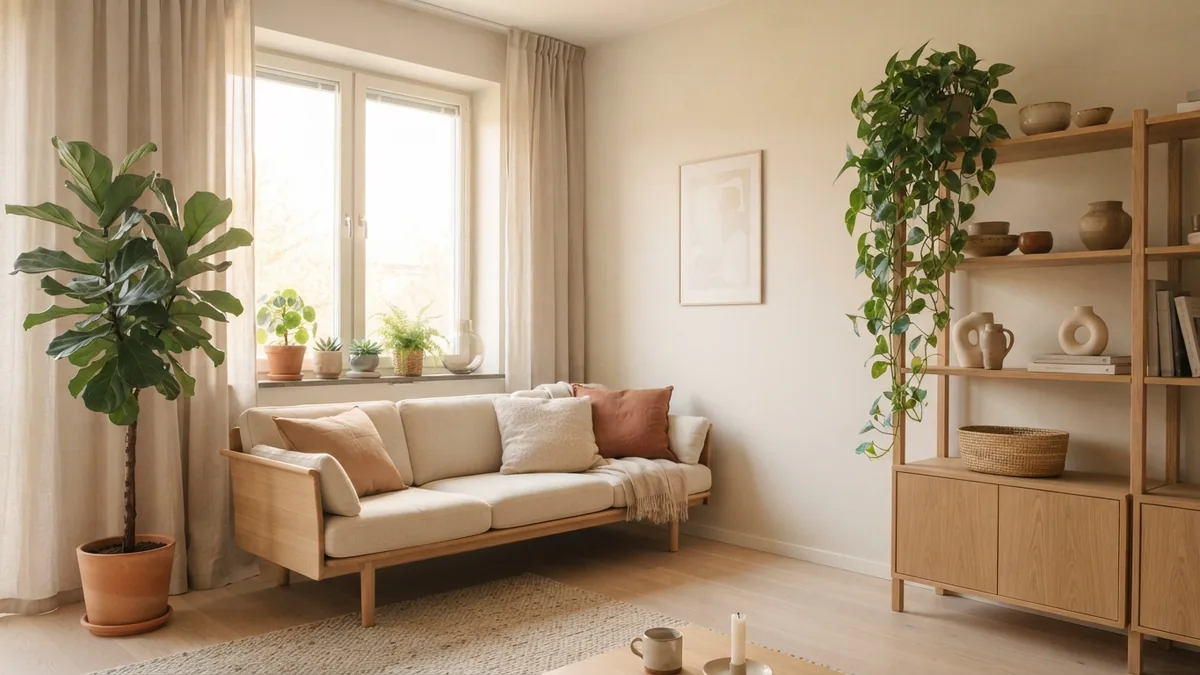
To learn how to place plants in a living room, study the room’s empty zones first. Corners, window sills, shelves, and the space beside a sofa often work well. Avoid blocking doors, heating vents, and walkways.
A tall plant works best where a room needs height. Place it beside a sofa, console, or empty corner. Leave enough room for the leaves to spread without brushing people as they pass.
Window sills suit small plants that enjoy bright light. Group two or three pots with different leaf shapes. Keep the group low enough to preserve the view and avoid blocking the window.
Shelves create useful levels for small plants. Put trailing plants near an edge so their stems can fall freely. Keep heavier pots on lower shelves to reduce the risk of falls.
- Place tall plants in open corners
- Use window sills for small light-loving plants
- Keep plants clear of vents and radiators
- Leave walkways open around every display
Use Height and Layers to Build a Better Display
Hanging plants add vertical interest without taking floor space. Hang a trailing pothos near a bright window or beside a tall bookcase. Check the hook and ceiling before adding a heavy pot.
Plant stands and side tables help create varied heights. Try one tall plant on the floor, one medium plant on a stand, and one small plant on a table. This layered setup feels more balanced than a row of matching pots.
Keep the tallest point near the back of the group. Place medium plants in the middle and low plants at the front. This simple rule lets each plant remain visible.
Use odd numbers when a group feels too formal. Three plants often create a relaxed shape. Vary leaf size while keeping the pot colors linked.
Style Plants With the Rest of Your Decor
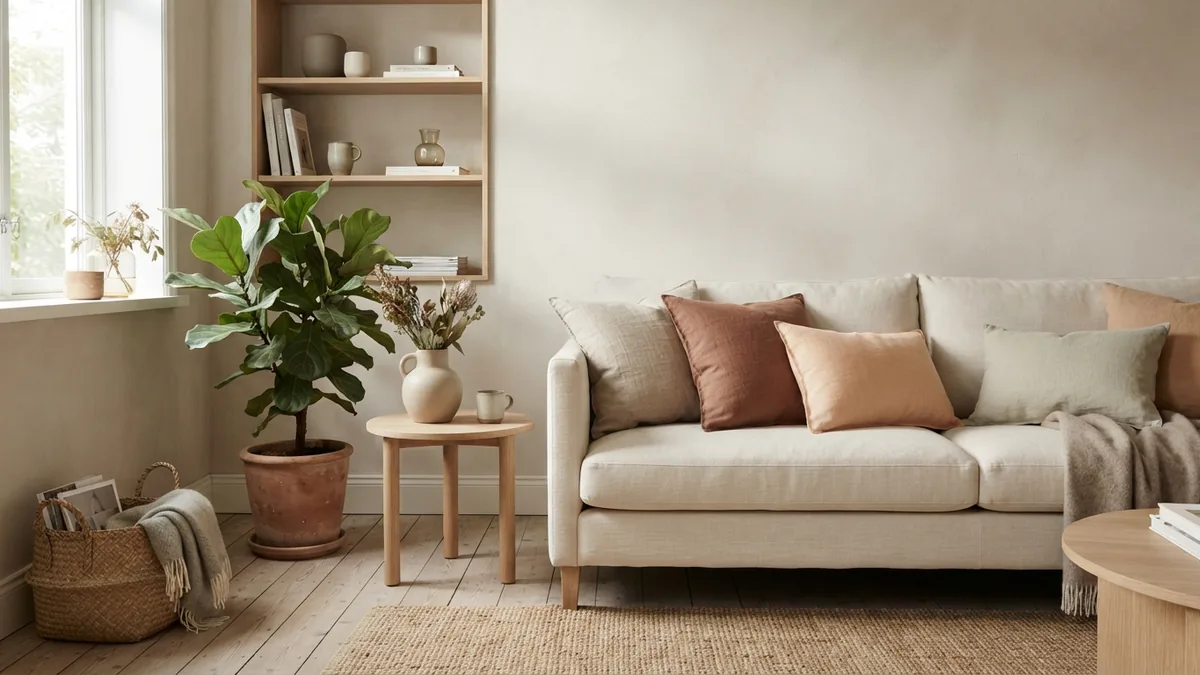
To understand how to style plants in a living room, treat pots as part of the decor. Choose finishes that repeat nearby materials. Pale ceramic suits a soft neutral room, while terracotta adds warm color.
Mix plants with books, baskets, art, and small ceramics. Keep some empty space around each item. A plant display needs room to breathe.
Match the plant shape to the furniture shape. Round leaves can soften a room with many straight lines. Tall, narrow leaves can echo slim legs and vertical shelving.
Use one shared color across several pots. Sage, cream, oat, and muted terracotta work well with pale wood. Avoid too many bright colors, since they can make the display feel scattered.
Three easy styling formulas
- Corner anchor: Use one tall plant, a woven basket, and a small floor lamp.
- Shelf group: Pair one trailing plant with a compact plant and two books.
- Table set: Add one small plant beside a ceramic bowl and a warm lamp.
Keep Living Room Plants Healthy
Good placement makes plant care easier. Put each plant where you can check its soil and leaves. A plant hidden behind furniture often gets missed.
Water by soil feel, not by a fixed weekly rule. Push one finger about two centimeters into the soil. Water when the top layer feels dry, unless the plant needs damp soil.
Let excess water drain fully. Empty the saucer after a short wait. Standing water can harm roots and mark wood surfaces.
Turn plants a quarter turn every few weeks. This helps growth stay even. Wipe broad leaves with a soft, damp cloth when dust builds up.
- Check light changes across the seasons
- Keep leaves away from cold drafts
- Use pots with drainage holes
- Trim damaged leaves with clean scissors
- Move plants if leaves scorch or growth slows
Final Tips for a Calm Plant Arrangement
The best place for plants in a living room balances light, scale, and daily use. Start with one strong focal plant. Then fill smaller gaps with shelf, table, or hanging plants.
Keep the display useful as well as attractive. Do not block a lamp, window, vent, or walking route. Choose pots that protect floors and tables from damp soil.
Step back and view the room from the main seating area. Remove one item if the display feels busy. A few well-placed plants often create more impact than a crowded collection.
With the right light and varied height, plants can shape the whole room. They add life without demanding a full redesign.
Frequently asked questions
- Where should I put plants in my living room?
- Place tall plants in open corners and small plants on shelves or window sills. Keep paths, vents, and doors clear.
- How do I display plants in a small living room?
- Use hanging plants, narrow stands, and shelves. Choose compact plants that add height without taking much floor space.
- Which living room plants need low light?
- Snake plants, pothos, ZZ plants, and cast iron plants often suit low-light rooms. They still need some daylight.
- How many plants should I put in my living room?
- Start with one focal plant and two or three smaller plants. Add more only when the room still feels open.
- How can I style plants with living room decor?
- Repeat pot colors with nearby textiles, wood, or ceramics. Mix leaf shapes and plant heights for a relaxed display.
Related reading

How Do You Say “Dining Room” in Spanish?
Learn the Spanish word for dining room, with examples and easy memory tips.

How to Remove Paint Odor From a Room Safely
Clear paint fumes with fresh air, safe absorbers, and the right purifier.

How to Learn Interior Design on Your Own or Online
Learn interior design through clear principles, free courses, and hands-on home projects.